Brent Crude Oil Price : $100+ surge, Iran war shock, global fuel crisis
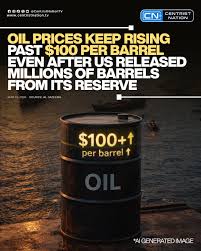
The Brent crude oil price has surged above $100 per barrel, sending shockwaves across global markets and triggering fears of a major fuel crisis. The dramatic rise in oil prices is largely driven by the escalating Iran war, disruptions in Middle East shipping routes, and growing uncertainty over global energy supplies.
Energy markets around the world are reacting rapidly to these developments. Governments, investors, and consumers are all feeling the pressure as fuel costs rise, inflation risks grow, and global supply chains face new challenges.
This article explores the reasons behind the Brent crude surge, how the Iran conflict is affecting oil markets, and what the price spike means for economies and consumers worldwide.
Brent Crude Oil Price Crosses $100
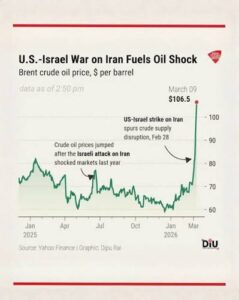
The global oil benchmark Brent crude recently climbed above $100 per barrel, marking its highest levels in over a year and signaling a serious disruption in energy markets.
Recent reports show Brent trading around $102–$105 per barrel, while West Texas Intermediate (WTI) crude has hovered near $95–$100 amid ongoing geopolitical tensions.
The surge reflects a sharp increase in risk premiums as investors worry about:
Oil supply disruptions
Middle East shipping threats
Escalating military conflict
Potential long-term energy shortages
Since the conflict escalated, oil prices have reportedly jumped more than 40%, intensifying concerns about a global energy shock.
Iran War Triggers Oil Market Shock
The ongoing 2026 Iran war has become the main catalyst behind the sudden spike in oil prices.
The conflict intensified after military strikes, retaliatory attacks, and disruptions across key energy infrastructure in the Middle East. Shipping routes, export hubs, and oil production facilities have all been affected.
One of the most significant developments was the escalation around Kharg Island, a crucial Iranian oil export hub that handles up to 90% of the country’s crude exports.
Military strikes and retaliatory threats surrounding the island have raised fears that Iranian oil exports could collapse, tightening global supply.
At the same time, attacks and tensions in the Persian Gulf have shaken investor confidence, causing rapid price volatility across energy markets.
Strait of Hormuz Disruption Fuels Panic
Another major factor driving the Brent crude price surge is the instability around the Strait of Hormuz, one of the most critical oil transit routes in the world.
Nearly 20% of global oil supply passes through this narrow waterway every day.
Any threat to shipping in this region instantly impacts global markets.
Recent reports indicate that military activity and security risks have slowed or disrupted tanker traffic, leaving hundreds of vessels waiting to move oil shipments.
This bottleneck has triggered fears of a supply crunch and pushed traders to drive prices higher.
Oil Infrastructure Attacks Increase Market Volatility
The energy crisis has worsened due to attacks on oil infrastructure across the region.
A notable example was a drone attack targeting a major Saudi oil refinery, which caused temporary shutdowns and further disrupted global supply chains.
Although damage was limited, the incident highlighted how vulnerable energy infrastructure has become during the conflict.
Even small disruptions can trigger dramatic market reactions because global oil markets operate on tight supply-demand balances.
Global Fuel Prices Rise
As Brent crude prices rise, consumers worldwide are beginning to feel the effects.
Fuel costs have increased rapidly in several countries. For example:
U.S. gasoline prices recently climbed to about $3.72 per gallon.
Diesel prices surged to nearly $5 per gallon, raising transportation costs.
Higher fuel prices have ripple effects across the global economy, including:
Increased transportation costs
Higher food prices
Rising airline fares
More expensive goods and services
These price pressures are already contributing to renewed fears of global inflation.
Impact on Global Economy
The oil shock is not just an energy issue — it could become a broader economic crisis.
Economists warn that sustained oil prices above $100 per barrel could trigger:
Slower global economic growth
Higher inflation
Stock market volatility
Increased recession risks
Experts also warn that rising fuel costs could significantly affect food production and supply chains because oil is essential for fertilizer production and agricultural logistics.
If the conflict continues, the energy shock could spread into multiple sectors of the global economy.
Why Oil Markets React So Strongly to War
Oil prices are extremely sensitive to geopolitical risks, especially in the Middle East.
The region controls a large share of the world’s oil reserves and production capacity. When war threatens these resources, markets react immediately.
Several key factors explain the current surge:
1. Supply Risk
Traders fear that war could reduce global oil production.
2. Shipping Disruptions
Energy exports rely on vulnerable maritime routes.
3. Infrastructure Attacks
Refineries and pipelines become strategic targets during conflict.
4. Investor Speculation
Financial markets amplify price movements during geopolitical crises.
Together, these factors create a powerful upward pressure on oil prices.
Countries Most Affected by the Oil Surge
The impact of the Brent crude surge varies across countries.
Major Importers
Countries that rely heavily on imported oil face the biggest economic pressure:
India
Japan
South Korea
European Union nations
These economies must spend more on energy imports, which increases inflation and weakens currency stability.
Oil Exporting Nations
Meanwhile, oil-producing countries may temporarily benefit from higher prices.
However, even these countries face risks if shipping routes or production facilities are disrupted.
Emergency Oil Reserves Released
To stabilize markets, several governments and international agencies have started releasing strategic petroleum reserves.
Energy authorities recently announced one of the largest emergency reserve releases ever, involving hundreds of millions of barrels of oil.
The goal is to:
Reduce price volatility
Maintain supply stability
Calm investor panic
However, experts warn that these reserves can only provide temporary relief if the conflict continues.
Could Oil Prices Reach $150?
Some analysts believe the Brent crude price could climb even higher.
If the conflict intensifies or the Strait of Hormuz remains blocked, prices could potentially reach $120–$150 per barrel.
Several scenarios could drive further increases:
Expanded military strikes in the Gulf
Destruction of major oil facilities
Long-term shipping disruptions
Broader regional war
These risks mean energy markets may remain volatile for months.
Energy Transition and the Oil Crisis
Interestingly, the current crisis is also reviving discussions about renewable energy.
Many experts argue that the oil price shock highlights the importance of reducing global dependence on fossil fuels.
Countries are accelerating investment in:
Solar energy
Wind power
Electric vehicles
Battery storage technologies
However, the global economy still relies heavily on oil, making short-term alternatives difficult.
What Happens Next for Brent Crude Oil Price?
The future direction of Brent crude prices will depend largely on geopolitical developments.
Three possible scenarios could unfold:
Scenario 1: Conflict De-Escalation
If diplomatic negotiations succeed, oil prices may gradually fall below $90.
Scenario 2: Prolonged Conflict
Prices could remain around $100–$120 for months.
Scenario 3: Major Escalation
A wider regional war could push oil prices beyond $150.
For now, uncertainty remains the biggest driver of market volatility.
Conclusion
The Brent crude oil price surge above $100 marks one of the most significant energy shocks in recent years. The escalation of the Iran war, disruptions to shipping routes, and attacks on oil infrastructure have combined to create a powerful supply shock in global energy markets.
Consumers are already feeling the impact through higher fuel costs, while governments and investors are scrambling to stabilize markets.
If tensions continue, the world could face a prolonged global fuel crisis, renewed inflation, and economic instability. The coming weeks will be critical in determining whether oil markets stabilize or move into an even more volatile phase.
FAQs
Why did Brent crude oil price rise above $100?
Brent crude rose above $100 mainly due to the Iran war, disruptions to oil shipments through the Strait of Hormuz, and attacks on energy infrastructure that threatened global supply.
How does the Iran war affect global oil prices?
The conflict creates supply risks because the Middle East produces a large share of global oil. Military activity can disrupt exports, pipelines, and shipping routes.
What is the Strait of Hormuz and why is it important?
The Strait of Hormuz is a key shipping route through which about 20% of the world’s oil supply passes, making it one of the most critical chokepoints in global energy trade.
Will fuel prices continue to rise?
Fuel prices may remain high if the conflict continues and oil supply remains constrained. Prices could stabilize if diplomatic solutions reduce geopolitical tensions.
Could oil prices reach $150?
Yes, some analysts warn that if the conflict escalates further or shipping routes remain blocked, Brent crude prices could climb toward $150 per barrel.
How useful was this post?
Click on a star to rate it!
Average rating 0 / 5. Vote count: 0
No votes so far! Be the first to rate this post.
About the Author

usa5911.com
Administrator
Hi, I’m Gurdeep Singh, a professional content writer from India with over 3 years of experience in the field. I specialize in covering U.S. politics, delivering timely and engaging content tailored specifically for an American audience. Along with my dedicated team, we track and report on all the latest political trends, news, and in-depth analysis shaping the United States today. Our goal is to provide clear, factual, and compelling content that keeps readers informed and engaged with the ever-changing political landscape.