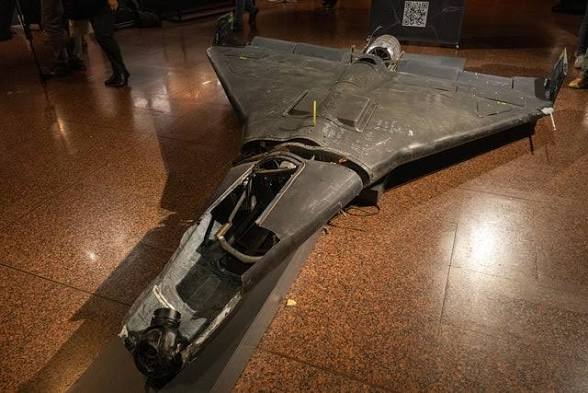
Ukraine has reached a significant milestone in modern military technology after reportedly using a combat laser to destroy a Russian jet-powered attack drone. The development represents an important moment in the evolution of air defence, particularly as Russia continues to launch large-scale drone attacks against Ukrainian cities and critical infrastructure.
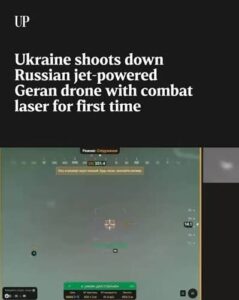
On November 25, 2026, Ukrainian presidential adviser Serhii Beskrestnov, also known as Serhii Flash, announced that a Ukrainian laser weapon had successfully destroyed a Russian Geran-series jet-powered drone. The weapon, called Blysk, was reportedly protecting a critical infrastructure facility when the engagement took place.
The Kyiv Independent+2
The announcement attracted international attention because laser weapons have long been considered promising technology for countering inexpensive unmanned aerial vehicles. However, successfully engaging a faster, jet-powered attack drone presents a different challenge from destroying a small recreational or first-person-view drone.
Ukraine’s reported achievement could offer valuable lessons for other countries developing directed-energy weapons. It also highlights Kyiv’s efforts to find affordable ways to defend its airspace while managing shortages of conventional air-defence ammunition.
Nevertheless, the development remains at an early stage. Ukrainian officials have cautioned that further testing is necessary before large-scale production can begin.
Ukraine Combat Laser History: How the Technology Developed
Ukraine’s interest in combat laser technology did not begin with the latest drone interception. The country has been exploring directed-energy weapons as part of its wider effort to modernise its military capabilities and respond to Russia’s expanding drone campaign.
Since Russia launched its full-scale invasion in February 2022, Ukraine has faced repeated attacks involving cruise missiles, ballistic missiles, reconnaissance drones and one-way attack drones.
These threats have placed considerable pressure on conventional air-defence systems.
Missile interceptors can be expensive, and using sophisticated weapons against relatively inexpensive drones creates a financial challenge. Ukraine therefore has strong reasons to explore alternative interception technologies.
Laser weapons offer one possible solution.
Unlike conventional missiles, directed-energy weapons use concentrated light energy to damage or disable a target. They do not require a traditional explosive interceptor for every engagement.
Ukraine has pursued this technology through domestic defence companies and government-supported research programmes.
The Earlier Tryzub Laser Development
One of Ukraine’s earlier publicly discussed laser projects was called Tryzub, meaning trident in Ukrainian.
The system attracted international attention in 2024 and 2025 after Ukrainian military officials discussed the country’s progress in developing laser-based air-defence technology.
In March 2025, Ukrainian military representatives claimed that the country had developed a laser weapon capable of engaging aerial targets. However, detailed technical information remained limited, and independent confirmation of its operational performance was unavailable.
Military Times
Tryzub demonstrated Ukraine’s interest in developing domestic directed-energy capabilities.
However, it is important not to confuse Tryzub with the newer Blysk system. They are separately reported Ukrainian laser projects, and publicly available information does not establish that they are the same weapon.
The Emergence of Blysk
The newer Blysk laser system represents another development in Ukraine’s efforts to create practical counter-drone capabilities.
The system was developed by Ukrainian defence technology company Carmine Sky.
Reports indicate that Blysk was deployed to protect critical infrastructure in the Kyiv region in November 2026.
Its operational purpose is to provide another layer of protection against incoming aerial threats, particularly drones that might otherwise require conventional air-defence ammunition.
The system reportedly entered operational use during testing rather than after the completion of a large-scale production programme.
SOFX+2
This distinction is important because an experimental system can demonstrate impressive results without necessarily being ready for widespread military deployment.
Ukraine’s Blysk Laser Shoots Down a Russian Jet-Powered Drone
The most important development came on November 25, 2026.
Serhii Beskrestnov announced that a Ukrainian combat laser had destroyed a Russian jet-powered Geran drone while protecting a critical infrastructure site.
He described the incident as the first successful combat use of a laser weapon against this type of jet-powered Russian drone.
Footage shared alongside the announcement appeared to show the laser system tracking its target before engaging it.
The drone subsequently lost control and fell from the sky.
Militarnyi+2
The reported interception is significant because jet-powered drones generally move faster than their propeller-driven counterparts.
Their speed can reduce the amount of time available for air-defence operators to identify, track and engage them.
A laser weapon must also maintain its beam on a specific part of the target for sufficient time to produce damage.
Consequently, the reported Blysk interception represents an important technical achievement.
However, independent verification of the engagement remains limited. The claim of a world-first should therefore be attributed to Ukrainian officials and reporting rather than treated as an independently established fact.
What Is the Blysk Combat Laser System?
Blysk is a Ukrainian-developed directed-energy weapon designed to engage aerial threats.
Unlike conventional air-defence systems that launch missiles or projectiles, it uses a concentrated laser beam to damage a target.
The system reportedly combines a laser unit with a tracking and aiming mechanism.
Its operator must identify the incoming drone, maintain a lock and direct energy toward the target.
According to published reporting, Blysk has a reported power output of approximately four kilowatts.
Its stated engagement range is around one kilometre, although actual performance depends on environmental conditions and the characteristics of the target.
SOFX+2
These specifications suggest that Blysk is designed primarily for relatively short-range air defence.
It is not intended to replace every missile system protecting Ukrainian cities.
Instead, it could become an additional tool within a layered defence network.
How Does a Combat Laser Destroy a Drone?
A combat laser works by concentrating energy into a narrow beam.
When directed at a drone, the beam transfers heat to the illuminated area.
If the energy remains focused long enough, it can damage the drone’s outer structure, electronic components or other critical systems.
The resulting damage may cause the aircraft to malfunction or lose the ability to remain airborne.
The process involves several important stages:
Detection: The system identifies an incoming aerial target.
Tracking: Sensors follow the drone and calculate its position.
Targeting: The operator or control system directs the laser toward the selected area.
Engagement: The laser remains focused on the target.
Damage: Concentrated energy heats and damages critical components.
Interception: The damaged drone may lose control and crash.
This approach differs considerably from conventional missile interception.
A missile physically travels toward its target, while a directed-energy weapon sends energy through the air.
That difference creates potential advantages in speed and operating costs, although it also introduces technical limitations.
Why Shooting Down a Jet-Powered Russian Drone Matters
Russia has increasingly relied on different types of attack drones during its war against Ukraine.
The Geran family includes drones associated with Russia’s use of Iranian-designed Shahed technology, as well as newer and modified variants.
Some newer models use jet engines, making them faster than traditional propeller-driven attack drones.
This creates additional challenges for Ukrainian air-defence operators.
Faster targets can reduce interception windows and require more responsive detection and tracking systems.
The reported Blysk interception is therefore important for three reasons.
1. A New Defence Option Against Faster Drones
Ukraine needs multiple ways to protect its airspace.
Machine guns, interceptor drones, electronic warfare equipment and missile systems all have different strengths and weaknesses.
A laser could add another option, particularly around infrastructure facilities.
Its reported success against a jet-powered Geran suggests that directed-energy technology may have applications beyond small, slow-moving drones.
2. Reducing Dependence on Expensive Missiles
One of Ukraine’s major defence challenges is the cost of intercepting repeated aerial attacks.
Advanced missiles require manufacturing capacity, funding and reliable supplies.
A laser weapon does not consume a conventional interceptor missile each time it fires.
Once deployed, its operating requirements are primarily related to electricity, maintenance, cooling and system support.
This could make repeated engagements more economical under suitable conditions.
However, the total cost of purchasing, installing and maintaining a combat laser must also be considered.
3. Protecting Critical Infrastructure
Russia’s attacks have repeatedly targeted energy facilities, transport infrastructure and other important locations.
Protecting these sites requires defence systems capable of responding to different aerial threats.
Blysk reportedly operated in this role when it destroyed the jet-powered drone.
If further testing demonstrates consistent performance, similar systems could help strengthen protection around selected infrastructure sites.
The Kyiv Independent+2
Russia’s Drone Strategy and Ukraine’s Air Defence Challenge
Russia’s drone campaign has become a central part of the wider conflict.
Attack drones can be launched in large numbers and directed toward military facilities, energy infrastructure and populated areas.
Their relatively low production costs can create difficulties for defenders who rely heavily on expensive missile interceptors.
Russia has also adapted its drone technology.
Jet-powered variants introduce additional speed and interception challenges, forcing Ukraine to continue improving its detection and response capabilities.
Ukraine has responded with a combination of conventional and emerging technologies.
These include:
Surface-to-air missile systems.
Mobile anti-aircraft gun units.
Electronic warfare equipment.
Interceptor drones.
Automated gun platforms.
Directed-energy weapons.
No single technology can protect every target against every type of attack.
Instead, a combination of systems provides more flexibility.
The Blysk laser could become a useful addition to this wider network if its performance remains reliable outside controlled testing conditions.
The Role of Ukraine’s Private Air Defence Programme
Ukraine’s laser development is connected to a broader effort to involve private companies in protecting the country’s airspace.
The government-backed Private Air Defence programme allows participating businesses to establish air-defence capabilities under the operational coordination of Ukraine’s Air Force.
The initiative recognises that protecting a country facing repeated drone attacks requires more than traditional military resources.
Private companies can contribute technology, personnel and specialised equipment.
The programme has also created opportunities for domestic defence manufacturers to test innovative systems under operational conditions.
Blysk’s reported deployment demonstrates how this approach can support the development of new military technologies.
The Brave1 defence technology cluster has also supported Ukraine’s wider defence innovation ecosystem.
Its objective is to connect government institutions, military users, technology developers and private manufacturers.
This cooperation could help accelerate the development of new equipment while allowing Ukrainian forces to evaluate its practical performance.
However, successful testing does not automatically guarantee mass production. Manufacturers must still demonstrate reliability, affordability and the ability to produce systems at scale.
Euromaidan Press+2
Advantages of Laser Weapons in Modern Warfare
Laser weapons are attracting interest from military organisations around the world.
Their potential advantages make them particularly relevant to countries facing large numbers of relatively inexpensive aerial threats.
Here are some of the main benefits.
Lower Cost Per Engagement
One of the biggest attractions of laser technology is its potential operating cost.
Conventional air-defence missiles can cost thousands or even millions of dollars, depending on their type.
A laser system uses electricity rather than a new missile for every engagement.
Although the equipment itself can be expensive, repeated use may offer financial advantages.
This is particularly important when defending against drone attacks involving large numbers of targets.
Rapid Target Engagement
A laser beam travels at the speed of light.
This means the energy reaches a target almost immediately after the system establishes an engagement.
However, immediate energy delivery does not mean immediate destruction.
The weapon may need to maintain focus on a particular area for several seconds to produce sufficient damage.
Reduced Dependence on Ammunition
Traditional air-defence systems depend on physical ammunition.
Their operational capacity can become limited when supplies are delayed or exhausted.
Laser systems do not require conventional interceptor missiles for each shot.
They can therefore provide another option when ammunition availability becomes a concern.
Precision Around Important Facilities
Laser systems can be directed toward specific aerial targets.
This may offer advantages when defending important infrastructure in areas where falling missile debris could create additional risks.
Nevertheless, lasers are not automatically harmless to surrounding areas. Operators must consider the potential consequences of a damaged drone falling to the ground.
Limitations of Ukraine’s Combat Laser Technology
Despite the reported success of Blysk, laser weapons face several important limitations.
These challenges explain why Ukraine is continuing to test the system instead of immediately moving toward mass production.
Weather Conditions Can Reduce Effectiveness
Weather is one of the biggest obstacles to directed-energy weapons.
Rain, fog, dust and cloud cover can interfere with a laser beam.
Atmospheric particles can scatter or absorb some of its energy before it reaches the target.
This makes laser weapons less reliable during certain weather conditions.
For Ukraine, where winter weather can include heavy cloud cover, fog and precipitation, this limitation is particularly relevant.
Limited Engagement Range
Blysk reportedly has an effective range of approximately one kilometre.
That makes it a short-range defence option rather than a replacement for long-range air-defence systems.
Incoming drones may travel beyond the laser’s effective engagement distance.
Consequently, Ukraine still needs conventional weapons to defend larger areas and intercept threats farther away.
Continuous Power Requirements
A combat laser requires a dependable electricity supply.
Its supporting equipment must also manage heat and maintain stable operation.
These requirements can make the system more complicated than its relatively simple firing mechanism might suggest.
Power generation, cooling and maintenance are essential parts of the overall weapon.
Tracking Fast-Moving Targets
A laser must remain accurately directed at its target.
This becomes more difficult when a drone is moving quickly, changing direction or approaching from an unexpected angle.
The system needs effective sensors, tracking equipment and responsive controls.
A successful interception is therefore not simply a matter of pointing a laser toward the sky.
Production and Maintenance Challenges
Developing a working prototype is different from manufacturing hundreds of reliable systems.
Ukraine must establish whether Blysk can operate consistently, withstand battlefield conditions and remain affordable.
The country’s defence technology officials have acknowledged that it is too early to discuss serial production.
Further testing will be essential before its wider deployment can be evaluated.
thetimes.com+2
How Ukraine’s Laser Compares With Other Countries’ Weapons
Ukraine is not the only country investing in directed-energy weapons.
The United States, Israel, the United Kingdom and several other countries have explored or developed laser systems for military applications.
Their programmes demonstrate that laser technology is becoming an increasingly important part of future air-defence planning.
Israel’s Iron Beam
Iron Beam is one of Israel’s best-known directed-energy defence programmes.
It was developed to complement existing air-defence systems by engaging incoming aerial threats using concentrated laser energy.
The system reflects Israel’s interest in reducing the cost of intercepting certain rockets, mortars and drones.
Its development also highlights the importance of integrating laser weapons into a wider air-defence network.
The UK’s DragonFire
DragonFire is a British laser weapon developed for military air defence.
The programme has focused on precision engagement and the potential to provide a more economical alternative to conventional ammunition.
The UK has been working toward operational deployment of the system aboard Royal Navy vessels.
The United States’ Directed-Energy Programmes
The United States has also invested heavily in laser weapons.
Its military research programmes have examined how directed-energy systems could protect military bases, vehicles and naval platforms from drones and other aerial threats.
These developments reflect a broader shift toward combining conventional weapons with electronic warfare and advanced energy-based systems.
Ukraine’s Position in the Global Race
Ukraine’s reported achievement with Blysk is particularly interesting because it emerged during an active war.
Unlike many experimental programmes developed primarily in controlled environments, Ukrainian defence companies face immediate operational demands.
The country must develop equipment that can respond to real battlefield requirements.
However, the available evidence does not establish that Blysk is more advanced than the systems developed by other countries.
Its reported interception is a significant milestone, but comparisons require more information about reliability, power, range and operational performance.
Military Times+2
What the First Reported Laser Interception Means for Russia
The reported destruction of a Russian jet-powered drone could create additional challenges for Russia’s aerial campaign.
Moscow has invested in expanding its drone capabilities, including faster models designed to complicate Ukrainian interception efforts.
If Ukrainian laser systems become more reliable, Russia may need to consider additional measures to counter them.
These could include changes in flight profiles, greater use of multiple attack routes or other technological adaptations.
However, there is currently insufficient evidence to suggest that one laser interception will significantly change Russia’s overall drone strategy.
The immediate importance is technological rather than strategic.
Ukraine has demonstrated a potential new method of engaging a type of aerial target that presents difficulties for conventional air defence.
The next challenge will be proving that the system can repeat this performance consistently.
Could Ukraine Expand Its Laser Defence Network?
The future of Blysk will depend on the results of continued testing.
If the system demonstrates reliable performance, Ukraine could consider deploying additional units around important infrastructure.
Potential locations could include energy facilities, industrial sites and other strategically important installations.
However, deployment decisions would depend on several factors.
First, the equipment must operate effectively in different weather conditions.
Second, manufacturers must demonstrate that the systems can track a variety of drone designs.
Third, Ukraine must determine whether the financial and maintenance requirements justify wider deployment.
Finally, laser weapons must be integrated with existing radar, surveillance and interception networks.
This integration will be essential because a laser system with limited range cannot independently protect an entire city or region.
A layered approach remains the more practical solution.
What Happens Next in Ukraine’s Combat Laser Programme?
The next phase will focus on operational testing and technical improvements.
Ukraine will need to establish how well Blysk performs against different types of drones and under changing environmental conditions.
The reported destruction of a jet-powered Geran drone provides an important starting point.
However, one successful engagement cannot establish the system’s overall effectiveness.
The military and manufacturers will need to evaluate:
How consistently the laser can damage incoming drones.
How it performs against faster and more manoeuvrable targets.
Whether it can operate during fog, rain and cloudy weather.
How quickly it can engage multiple targets.
Whether the equipment can be manufactured at an affordable cost.
How easily it can integrate with existing air-defence systems.
Ukraine’s defence industry is also exploring other laser technologies.
This suggests that Blysk is part of a broader domestic research effort rather than an isolated experiment.
For now, Ukrainian officials have indicated that mass production remains premature.
The priority is to establish whether the technology can provide dependable protection in real combat conditions.
Euromaidan Press+2
Conclusion: A New Chapter in Ukraine’s Combat Laser History
Ukraine’s reported use of the Blysk combat laser against a Russian jet-powered Geran drone marks an important development in modern air defence.
The November 25, 2026, announcement highlights the growing role of domestic defence innovation as Ukraine searches for more affordable and flexible ways to counter Russian aerial attacks.
The system’s reported four-kilowatt output and approximately one-kilometre engagement range demonstrate the potential of short-range laser defence.
However, important challenges remain.
Weather conditions, limited range, power requirements, tracking difficulties and production costs could restrict its wider deployment.
The reported interception should therefore be viewed as an important technological milestone rather than proof that lasers can replace conventional air-defence weapons.
If further testing confirms its effectiveness, Blysk could become another valuable component of Ukraine’s layered defence network.
More broadly, the development demonstrates how the war in Ukraine is accelerating innovation in drone warfare and the technologies designed to counter it.
Frequently Asked Questions (FAQs)
1. What is Ukraine’s Blysk combat laser?
Blysk is a Ukrainian-developed laser air-defence system created by Carmine Sky. It uses concentrated laser energy to damage and destroy aerial threats, including attack drones.
2. Did Ukraine shoot down a Russian jet-powered drone with a laser?
According to Ukrainian presidential adviser Serhii Beskrestnov, the Blysk laser system destroyed a Russian jet-powered Geran drone on November 25, 2026. Ukrainian officials described the incident as a world first.
3. Which company developed Ukraine’s Blysk laser weapon?
The Ukrainian defence technology company Carmine Sky developed the Blysk laser air-defence system.
4. What is the reported power of the Blysk laser?
Published reports place its laser output at approximately four kilowatts. Its reported effective engagement range is around one kilometre.
5. What is the difference between Blysk and Tryzub?
Blysk and Tryzub are separate Ukrainian laser defence projects. Tryzub was publicly discussed earlier, while Blysk is the system associated with the November 2026 reported interception of a Russian jet-powered drone.
6. How do laser weapons destroy drones?
Laser weapons concentrate energy onto a specific part of an aerial target. The resulting heat can damage its structure or electronic components, potentially causing the drone to lose control and crash.
7. Can laser weapons replace traditional air-defence missiles?
No. Laser weapons have limitations involving weather, power requirements and engagement range. They are better understood as additional protection alongside conventional missiles, guns and interceptor drones.
8. Why is Ukraine developing laser weapons?
Ukraine is developing laser technology to improve protection against Russian drone attacks, reduce dependence on expensive interceptor ammunition and strengthen its domestic defence capabilities.
9. Is Ukraine’s Blysk laser ready for mass production?
Not yet. Ukrainian officials have indicated that testing is continuing and that it is too early to discuss serial production.
10. Which other countries are developing combat laser weapons?
The United States, Israel and the United Kingdom are among the countries developing military laser technology. Their programmes include Iron Beam and DragonFire.
11. Can weather affect the performance of laser weapons?
Yes. Fog, rain, dust and cloud cover can weaken or scatter laser energy. These conditions can reduce the effective range and reliability of directed-energy weapons.
12. What does Ukraine’s laser achievement mean for future warfare?
It demonstrates the growing potential of directed-energy weapons in counter-drone operations. If further testing proves successful, laser systems could become an important part of future air-defence networks.
About the Author