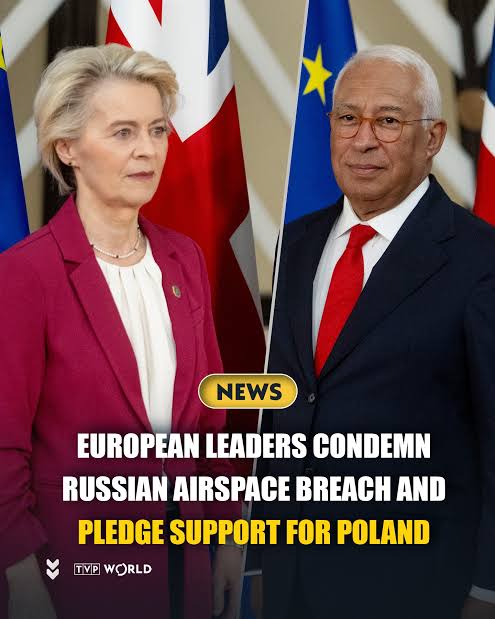
A new NATO airspace breach has intensified security concerns across Europe after Russian missiles and a suspected jet-powered drone entered Polish airspace during a major Russian assault on Ukraine. The incident has prompted strong reactions from NATO allies, renewed demands for stronger air defenses, and warnings about the growing risks along Europe’s eastern border.
Poland has described the incident as a serious provocation. Its government believes the timing raises questions about Russia’s intentions, particularly because the violation occurred while several allied countries were participating in military exercises near the Polish-Ukrainian border.
The incident happened overnight on November 19–20, 2026, as Russia launched a massive wave of attacks against Ukrainian cities and infrastructure. Polish officials reported that three Russian aerial objects, believed to include two missiles and one jet-powered drone, entered the country’s airspace.
NATO aircraft responded by taking to the skies, while Polish air-defense systems were placed on heightened alert. Fortunately, Polish authorities reported no casualties or damage to critical infrastructure from the objects that came down on Polish territory.
CBS News+2
The situation has become another major test of NATO’s ability to protect its eastern members while avoiding a wider military confrontation with Russia.
What Happened During the NATO Airspace Breach?
The incident unfolded during one of Russia’s largest reported attacks against Ukraine in recent months.
According to Polish Defence Minister Władysław Kosiniak-Kamysz, three Russian aerial objects crossed into Polish airspace. The objects were believed to consist of two missiles and a jet-powered drone.
Polish officials identified one of the missiles as a Russian Kh-101 cruise missile. The other object was also believed to be a missile, while the third was suspected to be a jet-powered drone.
The objects came down at locations in southeastern Poland, including areas near Nowy Lipowiec, Rudnik nad Sanem and Mołodycz.
Authorities immediately began examining the debris and investigating the circumstances surrounding the violations.
Poland’s military responded by activating defensive measures. Fighter aircraft were scrambled, and ground-based air-defense systems were placed on alert to protect sensitive locations.
The incident was particularly concerning because Poland shares a border with Ukraine and serves as a major logistical route for Western assistance to Kyiv.
Any military object entering Polish territory therefore creates serious questions about the security of NATO’s eastern frontier.
Although the objects did not cause reported casualties, the breach demonstrated how Russia’s ongoing war against Ukraine can create direct security risks for neighboring NATO countries.
CBS News+2
Poland Accuses Russia of Deliberate Provocation
Polish Prime Minister Donald Tusk responded strongly to the incident, describing the entry of Russian weapons into Polish territory as a possible intentional provocation.
Tusk said Poland had established that the objects came from Russia. He also indicated that international partners, including NATO members, shared concerns about the circumstances.
The Polish government believes the timing deserves particular attention.
The airspace violation happened while Poland was hosting military exercises involving countries supporting Ukraine. Officials questioned whether the incident was designed to intimidate Poland and weaken cooperation among Western allies.
Polish Defence Minister Kosiniak-Kamysz argued that the incident should not be treated as an ordinary accident. He pointed to the combination of military exercises, international visitors and the large Russian attack against Ukraine.
However, the precise circumstances and intentions behind the airspace violations remain subject to investigation.
Poland has made clear that it wants a stronger international response. The government is seeking additional military resources to protect its territory and improve NATO’s ability to identify potential threats.
Warsaw’s position is that the alliance must demonstrate unity and readiness whenever a member’s security is threatened.
The incident also reinforces Poland’s argument that European countries cannot treat the war in Ukraine as a conflict isolated from their own security interests.
Investing.com+2
NATO Allies Rally Behind Poland
The NATO airspace breach quickly triggered expressions of solidarity from several Western governments.
NATO Secretary General Mark Rutte condemned the incident and confirmed that alliance aircraft had been scrambled in response.
Rutte described the violation as dangerous and connected it to Russia’s continuing war against Ukraine. He also stressed that NATO members remained united in their commitment to collective defense.
Ukraine also expressed support for Poland.
Ukrainian Foreign Minister Andrii Sybiha said the presence of Russian missiles and a drone on Polish territory demonstrated the wider threat created by Russian aggression.
He argued that Moscow’s military campaign was undermining European security and the existing international order.
The United Kingdom and France also voiced support for Warsaw.
British Defence Secretary Wes Streeting described the incident as another example of Russian provocation. He warned against allowing Moscow to divide European countries or weaken their support for Ukraine.
French officials similarly expressed solidarity with Poland and emphasized the importance of maintaining cooperation between allied governments.
Representatives from Lithuania and Estonia also criticized Russia’s actions and highlighted the importance of Western unity.
These statements demonstrate that the incident is being treated as a wider European security concern rather than simply a bilateral disagreement between Poland and Russia.
English Section+2
Mark Rutte Promises to Defend Every Inch of Polish Territory
One of the strongest messages following the incident came from NATO Secretary General Mark Rutte.
During his November 21 visit to Warsaw, Rutte pledged that NATO would defend every inch of Polish territory.
His statement was intended to reassure Poland that the alliance remained committed to its security obligations.
Rutte also emphasized that the circumstances surrounding the airspace violation needed to be established before further decisions were made.
He said NATO’s Supreme Allied Commander Europe, General Alexus Grynkewich, would examine potential weaknesses in the alliance’s defense and deterrence capabilities.
The investigation could help determine whether NATO needs to adjust its military posture, surveillance arrangements or defensive deployments along its eastern border.
Rutte also addressed questions about the possibility of increasing American troops and military bases in Poland. He explained that decisions about such deployments involved discussions between Warsaw and Washington.
His comments reflected NATO’s effort to balance two priorities: reassuring Poland and preventing unnecessary escalation with Russia.
The promise to defend Polish territory sends a clear message that an attack on a NATO member would have consequences for the entire alliance.
Reuters+1
Poland Requests Additional NATO Military Support
Following the NATO airspace breach, Poland announced plans to seek additional military assistance from its allies.
Defence Minister Kosiniak-Kamysz specifically highlighted the need for stronger surveillance and air-defense capabilities.
One of Poland’s priorities is obtaining additional AWACS aircraft.
AWACS, or Airborne Warning and Control System aircraft, provide airborne surveillance and help military commanders identify potential threats over large geographical areas.
These aircraft can detect and track aerial activity, coordinate defensive responses and provide important information to fighter aircraft.
Poland also wants greater participation from allied fighter jets, including advanced aircraft such as the F-35.
The government believes additional surveillance and defensive resources would improve its ability to respond to Russian missiles, drones and other aerial threats.
Warsaw also intends to seek additional forces and resources through NATO’s Eastern Sentry operation.
Eastern Sentry is designed to strengthen the alliance’s eastern flank and improve its ability to respond to potential threats.
The Polish government wants this operation to provide stronger protection following the latest incident.
The request reflects a broader concern among Eastern European countries: Russia’s military operations increasingly create challenges that extend beyond Ukraine’s internationally recognized borders.
united24media.com+2
NATO Aircraft Scrambled as Polish Defenses Go on Alert
The military response to the airspace breach demonstrated the importance of cooperation between NATO members.
Poland scrambled F-16 fighter jets after receiving warnings about the incoming objects.
Swedish JAS 39 Gripen aircraft also participated in the allied response.
A Dutch A330 Multi Role Tanker Transport aircraft provided additional aerial support, while NATO surveillance aircraft monitored the situation.
Ground-based defensive systems were also activated.
Poland placed Patriot air-defense systems on alert around important locations, including the Rzeszów-Jasionka Airport area and the region near Świdnik.
These locations are strategically important because southeastern Poland plays a significant role in supporting Ukraine.
NATO AWACS aircraft also conducted patrols over Poland.
The coordinated response demonstrated how different alliance members can contribute aircraft, surveillance systems, refueling capabilities and ground-based defenses during a developing security incident.
Such cooperation is particularly important when military threats emerge close to NATO territory.
The incident also highlighted the importance of rapid communication between national military commands and NATO’s wider defense structure.
Although the response helped protect Polish territory, officials recognize that improving early-warning capabilities remains essential.
CBS News+2
Russia’s Massive Attack on Ukraine Intensifies European Concerns
The NATO airspace breach occurred during a devastating Russian assault against Ukraine.
Ukrainian President Volodymyr Zelenskyy reported that Russia launched more than 400 drones and 110 missiles during the overnight attack.
The strikes targeted Kyiv and several other Ukrainian regions.
At least eight people were reported killed, while dozens more were wounded.
Critical infrastructure, including bridges, water facilities and commercial buildings, suffered damage.
The attack also affected diplomatic locations in Kyiv. Reports indicated that the Austrian embassy was struck and that Russian weapons landed near the Netherlands embassy.
Ukraine’s air-defense forces intercepted many incoming missiles, but the country continued facing difficulties defending against ballistic missiles.
The scale of the attack raised fresh questions about Russia’s military strategy and the possibility of further escalation during the winter months.
For Poland and other NATO members, the most concerning development was that weapons launched during the assault crossed into allied territory.
The incident illustrated how quickly the conflict could create a dangerous situation beyond Ukraine’s borders.
It also strengthened calls from European governments for continued military assistance to Kyiv.
Western officials increasingly view Ukraine’s ability to defend itself as an important part of protecting the wider European security system.
CBS News+2
Military Exercises Add Another Layer to the Crisis
The timing of the NATO airspace breach has attracted considerable attention because Poland was hosting major military exercises involving countries supporting Ukraine.
The exercises, known as Coalition 26.2, brought together approximately 5,000 troops from 11 countries.
Around half of the participating personnel were Polish soldiers. Other participants included forces from Britain, France, Germany and Sweden.
The training was designed to test how quickly allied forces could move troops, coordinate logistics and operate together in a potential future security mission involving Ukraine.
Polish officials argued that the Russian airspace violations occurred at a particularly sensitive moment.
They suggested that Moscow could be attempting to undermine confidence among Western governments and discourage further support for Ukraine.
European representatives rejected the idea that intimidation should weaken their cooperation.
The United Kingdom and France emphasized their continued commitment to European security, while Baltic officials highlighted the importance of resisting Russian pressure.
The exercises continued despite the incident, sending a message that Poland and its partners would not abandon their military cooperation because of threats.
For NATO, the situation demonstrated why joint exercises and coordinated defense planning remain essential along the eastern flank.
English Section+1
Trump’s China Summit Adds Diplomatic Complexity
The incident also occurred just hours after a high-profile meeting involving US President Donald Trump, Russian President Vladimir Putin and Chinese President Xi Jinping in China.
The meeting attracted international attention because of its potential implications for global diplomacy and the war in Ukraine.
However, Russia’s subsequent military assault against Ukraine created a sharp contrast with the diplomatic atmosphere surrounding the summit.
The timing raised questions about whether diplomatic engagement could produce meaningful changes in Moscow’s military behavior.
Ukraine’s leadership criticized Russia’s continued attacks and argued that international discussions should not distract from the situation on the battlefield.
For Washington, the latest developments create another difficult foreign-policy challenge.
The United States must maintain its commitment to NATO’s collective defense while navigating diplomatic relations with Moscow.
European governments also face pressure to strengthen their own military capabilities rather than relying entirely on American support.
The Polish incident could therefore influence discussions about NATO’s future military posture and the responsibilities of individual member states.
What Is NATO’s Article 5 and Could It Be Invoked?
One of the biggest questions following the NATO airspace breach concerns Article 5 of the North Atlantic Treaty.
Article 5 is the alliance’s collective-defense provision. It states that an armed attack against one NATO member is considered an attack against all members.
This principle forms the foundation of NATO’s security structure.
However, an airspace violation does not automatically trigger Article 5.
NATO members would need to assess the circumstances, including the nature of the incident, the intentions behind it and whether it qualifies as an armed attack.
The alliance also has Article 4, which allows members to request consultations when their territorial integrity, political independence or security is threatened.
Poland’s latest incident could lead to further discussions within NATO about defensive measures and collective security.
The alliance must carefully examine the evidence before deciding whether additional political or military action is necessary.
For now, NATO’s public response has focused on solidarity, investigation and strengthening deterrence.
The distinction is important because NATO wants to protect its members without allowing every border incident to develop into a direct military confrontation with Russia.
Why Poland Is Strategically Important to NATO
Poland occupies a critical position in European security.
Its geographical location places it directly along NATO’s eastern frontier, close to Ukraine, Belarus and Russia’s Kaliningrad region.
The country also serves as an important transportation and logistics hub for Western military assistance reaching Ukraine.
This makes Polish infrastructure, airports, roads and military facilities strategically significant.
Poland has invested heavily in expanding its armed forces and improving its defensive capabilities.
Its military modernization includes investments in fighter aircraft, missile-defense systems, artillery and other advanced equipment.
The country also hosts allied forces and participates in NATO operations designed to strengthen the eastern flank.
The latest airspace violation highlights why these investments matter.
Russian missiles and drones operating near Polish territory create challenges that require constant surveillance and rapid responses.
A stronger Polish defense system also benefits neighboring NATO members, including Lithuania, Latvia and Estonia.
Consequently, Poland’s security is closely connected to the stability of the entire region.
Could the NATO Airspace Breach Lead to a Wider Conflict?
The possibility of a wider confrontation remains one of the most serious concerns.
NATO and Russia possess substantial military capabilities, and a direct conflict between them could have consequences far beyond Eastern Europe.
However, the latest incident does not mean that a NATO-Russia war is inevitable.
Both sides have strong reasons to avoid an uncontrolled escalation.
NATO’s strategy generally combines military deterrence with diplomatic communication.
The alliance wants Russia to understand that violations of member territory will be taken seriously.
At the same time, NATO governments must ensure that their responses remain proportionate and based on verified information.
Poland’s request for additional surveillance aircraft and defensive resources fits within this approach.
Improved detection systems can help identify incoming threats earlier and reduce the risk of miscalculation.
Nevertheless, repeated airspace violations could increase political pressure on European governments to adopt stronger defensive measures.
The coming days will therefore be important for determining how NATO responds to the latest developments.
What Happens Next?
NATO’s immediate priority is to investigate the airspace violation and identify any weaknesses in its defensive arrangements.
Secretary General Mark Rutte has indicated that NATO’s military leadership will examine whether adjustments are necessary.
Poland is also expected to continue discussions about additional resources under the Eastern Sentry operation.
Another important development is the planned meeting of NATO’s North Atlantic Council on Monday, November 23, to discuss the incident.
The meeting could provide an opportunity for member states to review the situation and coordinate their response.
Meanwhile, Poland will continue investigating the objects that landed on its territory.
European governments are likely to maintain close communication as the investigation progresses.
The wider question is whether Russia’s military campaign against Ukraine will produce further incidents affecting neighboring NATO countries.
For Poland, stronger air defenses and international cooperation remain immediate priorities.
For NATO, the challenge is to demonstrate credible deterrence while avoiding a direct confrontation that could destabilize the entire continent.
Reuters+2
Conclusion: NATO Unity Faces Another Major Test
The latest NATO airspace breach has placed European security back in the international spotlight.
Russian missiles and a suspected drone entering Polish airspace have raised serious concerns about the risks created by the ongoing war in Ukraine.
Poland has received strong support from NATO allies, including the United Kingdom, France, Sweden and other European partners.
Mark Rutte’s promise to defend every inch of Polish territory reinforces the alliance’s commitment to collective security.
However, the incident also demonstrates the importance of stronger surveillance, improved air-defense systems and closer military coordination.
As NATO investigates what happened, Poland is seeking additional military support to protect its borders.
The coming diplomatic and military discussions will help determine whether the alliance needs to strengthen its eastern defenses further.
One thing is clear: European governments are increasingly concerned that Russia’s war against Ukraine could create security threats far beyond the battlefield.
Frequently Asked Questions (FAQs)
1. What happened during the NATO airspace breach in Poland?
On November 20, 2026, three Russian aerial objects, believed to include two missiles and a jet-powered drone, entered Polish airspace during a major Russian attack against Ukraine.
2. Did Russian missiles hit Poland?
Yes. Polish officials reported that two suspected Russian missiles and a jet-powered drone entered Polish airspace and came down at locations in southeastern Poland. No casualties or critical infrastructure damage were reported.
3. How did NATO respond to the airspace violation?
NATO and allied aircraft were scrambled. Polish F-16s, Swedish Gripen fighters and other allied aircraft participated in the response. Ground-based air-defense systems were also placed on alert.
4. What did Mark Rutte say about Poland?
NATO Secretary General Mark Rutte pledged on November 21 that the alliance would defend every inch of Polish territory.
5. Why is Poland asking NATO for additional military support?
Poland wants stronger air defenses, additional surveillance capabilities, AWACS aircraft and greater allied participation to protect its territory against potential Russian threats.
6. Will NATO invoke Article 5 against Russia?
Article 5 has not automatically been triggered by the airspace violation. NATO must assess whether an incident qualifies as an armed attack before considering collective-defense measures.
7. What is NATO’s Eastern Sentry operation?
Eastern Sentry is a NATO initiative focused on strengthening the alliance’s eastern flank through improved surveillance, military coordination and defensive capabilities.
8. How many people died in Russia’s latest attack on Ukraine?
Ukrainian President Volodymyr Zelenskyy reported at least eight deaths following Russia’s massive overnight attack on November 20, 2026.
9. Why does the incident threaten European security?
The incident demonstrates that weapons used in the Russia-Ukraine war can cross into NATO territory. This increases the risk of military escalation and creates additional pressure on European defense systems.
10. What happens next after the NATO airspace breach?
NATO will investigate the incident, assess potential weaknesses in its defenses and discuss possible adjustments. The North Atlantic Council is scheduled to meet on November 23, 2026.
About the Author