President Donald Trump’s latest White House shakeup has renewed questions about the direction of his administration and how it compares with his first term in office.
The departure of White House Chief of Staff Susie Wiles and the promotion of longtime Trump adviser Stephen Miller have placed the administration’s leadership structure under fresh scrutiny.
The changes have attracted attention from political commentators, journalists and former government officials. Among those examining the developments is CNN anchor Laura Coates, whose coverage has focused on the political consequences of Trump’s decisions following the Republican Party’s major midterm setback.
The comparison with Trump’s first administration is particularly important. His first term, from 2017 to 2021, was marked by frequent personnel changes, internal disagreements and disagreements over policy. His second administration has also experienced significant changes, although its political circumstances and leadership structure are different.
The latest shakeup raises an important question: Is Trump returning to the confrontational management style that defined his first presidency, or is he building a more centralized administration around his most trusted advisers?
The answer could shape the final years of his presidency.
1. Susie Wiles’ Departure Marks a Major Leadership Change

One of the biggest developments behind the White House shakeup is the departure of Susie Wiles.
Trump announced on November 6, 2026, that Wiles would leave her position as chief of staff. He also confirmed that Stephen Miller would take over the powerful role.
Wiles had become one of the most influential figures in Trump’s second administration. She was also the first woman to serve as White House chief of staff.
Her departure represents a significant change in the president’s inner circle.
Trump praised Wiles for her service and described her work positively. He indicated that she would move to his political operation rather than completely leave his political orbit.
However, the timing of the announcement attracted considerable attention.
The leadership change came just days after Republicans suffered major losses in the midterm elections. Democrats gained control of both chambers of Congress, creating a difficult political environment for the president.
That electoral setback increased pressure on the White House to reconsider its political strategy.
Some observers viewed Wiles’ departure as an opportunity for Trump to reorganize his administration. Others interpreted the decision as evidence that the president wanted a more aggressive leadership team.
According to reporting by The Washington Post, Trump had been considering changes involving Wiles and other advisers. Her departure also raised questions about whether additional personnel changes would follow.
The Washington Post+1
2. Stephen Miller’s Promotion Signals a New Direction
Stephen Miller’s appointment is arguably the most important part of the White House shakeup.
Miller has been one of Trump’s closest political advisers for years. He previously served in the first Trump administration and returned to a senior position during the president’s second term.
He has played a major role in shaping immigration policy, domestic initiatives and the administration’s broader political agenda.
His promotion to chief of staff gives him greater responsibility for coordinating White House operations and managing the president’s priorities.
Unlike some traditional Washington political strategists, Miller is closely associated with Trump’s most ambitious policy objectives.
His influence has extended beyond immigration. He has also been involved in discussions about federal authority, national security and the administration’s approach to domestic political conflicts.
The appointment therefore sends a message about the president’s priorities.
Rather than responding to electoral losses by moving toward a more moderate political position, Trump appears prepared to maintain an aggressive approach.
Reuters reported that Miller’s promotion could signal a more confrontational strategy during the administration’s remaining years. The report also highlighted concerns among some Republicans about the consequences of this approach.
Investing.com+1
For Laura Coates and other political commentators, this leadership decision provides an opportunity to examine how Trump’s second administration is evolving.
It also brings back memories of the internal power struggles that characterized his first presidency.
3. Laura Coates’ Analysis Brings Trump’s First Term Back Into Focus
The comparison between Trump’s first and second administrations is central to understanding the latest White House developments.
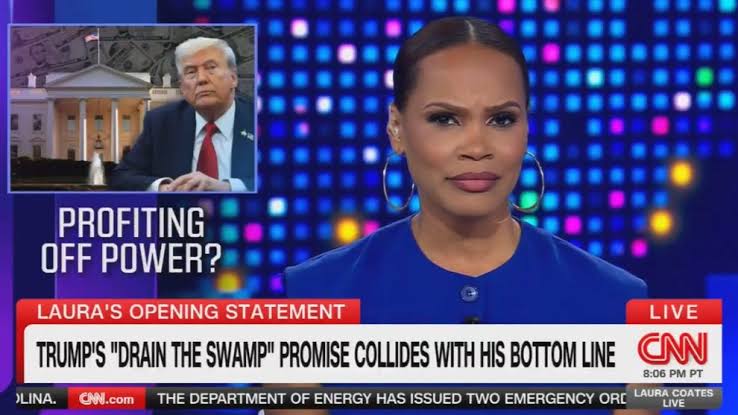
Laura Coates has examined the leadership changes through her CNN coverage, particularly following the Republican midterm defeat.
In her November 7, 2026, Laura Coates Live broadcast, she opened the discussion by highlighting the dramatic changes inside Trump’s political circle.
She focused on the departure of Wiles and Miller’s continued presence, now in the position of chief of staff.
Her program also featured discussion about the election results and the political challenges facing the administration.
The broader comparison with Trump’s first term is significant because the president’s approach to staffing and decision-making has evolved over time.
During his first presidency, Trump experienced repeated departures involving senior advisers, cabinet officials and communications personnel.
Several high-profile officials left after disagreements over policy, management or the president’s leadership style.
The second administration began with a different structure. Many of Trump’s advisers had previous experience working with him, and the president entered office with a clearer understanding of the political system.
However, the latest personnel changes suggest that internal stability remains a challenge.
The promotion of Miller also raises questions about whether the administration is becoming more dependent on a smaller group of loyal advisers.
Coates’ November 7 broadcast provides a useful starting point for understanding this debate. The available episode transcript documents her discussion of the shakeup, although it does not establish a specific verbatim comparison between the two administrations.
Podscan+1
4. How Trump’s First Administration Differed From His Second
Trump’s first administration faced considerable uncertainty as it adjusted to governing Washington.
Between 2017 and 2021, several prominent officials left their positions. The White House frequently experienced disagreements involving senior advisers, cabinet members and communications staff.
The administration also faced challenges coordinating its message and maintaining a consistent policy strategy.
Some of the most noticeable differences between the two administrations include the following.
Leadership and staff management
During Trump’s first term, the president relied on advisers with different political backgrounds and approaches.
Some officials supported traditional Republican policies, while others promoted Trump’s more populist political agenda.
These competing perspectives sometimes created disagreements inside the White House.
During his second term, Trump returned with a stronger network of loyal political allies.
Stephen Miller, for example, had already worked closely with Trump during his first presidency. His appointment as chief of staff demonstrates the importance of long-standing relationships.
Policy coordination
The first administration experienced disagreements over several major policy decisions.
Immigration, trade, foreign policy and presidential authority frequently created tensions among senior officials.
The second administration has generally pursued a more coordinated approach to implementing Trump’s priorities.
However, the departure of Wiles and the elevation of Miller could change the balance of influence among senior advisers.
Political experience
Trump’s first presidency introduced him to the challenges of managing federal agencies and navigating Washington’s political institutions.
By his second term, he had considerably more experience with presidential decision-making.
That experience may explain why he is placing greater trust in advisers who understand his political preferences.
Nevertheless, experience does not necessarily guarantee stability.
The latest shakeup demonstrates that even an administration built around familiar allies can experience major personnel changes.
5. Midterm Election Defeat Adds Pressure to the White House
The timing of the leadership change is particularly important.
Republicans suffered a major setback in the November 2026 midterm elections. Democrats gained control of both chambers of Congress, creating a difficult situation for Trump’s remaining legislative agenda.
The election results also increased pressure on Republican leaders to explain what went wrong.
For the White House, the challenge is no longer simply implementing presidential policies. It must also respond to congressional investigations, political criticism and growing opposition from Democratic lawmakers.
A Democratic-controlled Congress can use its oversight powers to investigate administration decisions and demand information from federal officials.
This could affect several areas of Trump’s agenda, including immigration enforcement, spending, national security and executive authority.
The change in congressional control also makes negotiations more complicated.
Trump will need to decide whether to work with Democratic lawmakers on selected issues or confront them through political messaging and executive action.
The appointment of Miller suggests that the president is comfortable maintaining a combative political strategy.
According to Reuters, administration officials and Republican figures expect Miller’s leadership to reinforce Trump’s existing approach rather than produce a major shift toward compromise.
Investing.com+1
This creates a difficult situation for the president.
He must maintain support among his political base while responding to voters who supported a different direction in the midterm elections.
6. Could the White House Experience More Personnel Changes?
Another important question concerns the possibility of additional departures.
Wiles’ exit has encouraged speculation about the future of other senior officials.
A chief of staff plays a central role in managing access to the president, coordinating meetings and ensuring that government departments follow White House priorities.
When someone new takes over, the internal balance of power can change quickly.
Miller may prefer to work with advisers who share his policy priorities and understand his management style.
This does not automatically mean that every official associated with Wiles will leave.
However, personnel changes often follow major leadership transitions.
Axios reported on November 7 that White House deputy chief of staff Richard Walters was preparing to leave. The report described his departure as the first major exit in an expected staff shakeup following Miller’s appointment.
Axios
This development suggests that the transition could extend beyond the chief of staff position.
The coming weeks may reveal whether Miller plans to maintain the existing White House structure or introduce a broader reorganization.
For political observers, the issue is important because staffing decisions can influence how presidential policies are developed and implemented.
7. Why Stephen Miller’s Leadership Matters
The chief of staff is one of the most powerful positions in the federal government.
Although the president makes the final decisions, the chief of staff helps determine how those decisions are organized and communicated.
The position also influences which advisers receive access to the president.
Miller’s appointment is especially significant because of his strong ideological connection to Trump’s political movement.
His work on immigration policy has made him a prominent figure in debates over border security and federal enforcement.
He has also supported an expansive interpretation of presidential authority.
His supporters view him as a committed strategist who understands the president’s objectives.
Critics, meanwhile, worry that his appointment could make the administration less willing to compromise.
The disagreement reflects a larger political debate about the direction of Trump’s second presidency.
If Miller strengthens the White House’s existing policy structure, the administration could become more consistent in pursuing its priorities.
However, a more centralized approach could also reduce the influence of advisers who favor moderation or traditional political negotiations.
The consequences will depend on how Miller manages relationships across the administration.
8. The Importance of a Strong White House Chief of Staff
The latest shakeup also highlights the importance of the chief of staff in presidential government.
The position is not simply an administrative job.
A successful chief of staff must manage competing personalities, organize presidential priorities and prevent unnecessary disagreements from disrupting government operations.
The role requires political judgment and strong communication skills.
Wiles was widely regarded as an influential figure in Trump’s second administration.
Her departure therefore creates a significant transition.
Miller now faces the challenge of maintaining control over a complicated political organization.
He must coordinate senior advisers, work with cabinet officials and respond to pressure from Congress.
He must also help the president navigate the consequences of the midterm elections.
These responsibilities will test his ability to move from policy adviser to the person responsible for managing the entire White House operation.
The transition could also reveal whether Trump’s second administration has developed stronger internal systems than his first.
9. Democrats Prepare for a More Difficult Relationship With Trump
The leadership change has also attracted strong criticism from Democratic lawmakers.
Many Democrats view Miller’s promotion as a sign that Trump intends to pursue a more aggressive political strategy.
They have raised concerns about his influence over immigration policy and other controversial administration decisions.
Senate Democratic leader Chuck Schumer criticized the appointment, while House Democratic leader Hakeem Jeffries also expressed strong opposition.
Their reactions indicate that relations between the White House and congressional Democrats could become increasingly tense.
Democrats will have greater opportunities to investigate administration policies and challenge presidential decisions through congressional oversight.
The White House, meanwhile, will need to defend its actions and maintain political support.
This creates the possibility of frequent clashes over executive authority, federal spending and government accountability.
The relationship could become one of the defining features of Trump’s remaining presidency.
For Laura Coates and other journalists covering Washington, these developments provide an important opportunity to examine the political consequences of the administration’s changing leadership structure.
10. What the White House Shakeup Means for Trump’s Political Future
The latest changes could have consequences extending beyond the immediate leadership transition.
Trump’s decision to promote Miller after a major Republican election setback suggests that he is not necessarily interested in changing his political identity.
Instead, he appears prepared to rely on advisers who have consistently supported his agenda.
That decision could strengthen his relationship with loyal supporters.
However, it could also make it harder to attract voters who want a less confrontational political environment.
The administration must now manage several challenges simultaneously:
Congressional oversight: Democratic lawmakers are preparing to exercise greater scrutiny over federal agencies and administration decisions.
Political messaging: The White House must explain the midterm results and defend its policy record.
Internal stability: Miller must manage personnel changes without disrupting daily government operations.
Policy implementation: The administration must continue pursuing its priorities despite a more hostile Congress.
Public confidence: Trump must respond to concerns about leadership, accountability and government performance.
These challenges will determine whether the latest shakeup strengthens the administration or creates additional political problems.
The first months of Miller’s leadership will be especially important.
His ability to manage the White House could influence how effectively Trump handles congressional opposition.
11. Laura Coates’ Coverage Highlights Questions About Presidential Leadership
The discussion surrounding Trump’s White House shakeup goes beyond one personnel announcement.
It raises questions about presidential leadership, political loyalty and the importance of experienced advisers.
Comparing the first and second administrations helps explain why the departure of Wiles has attracted so much attention.
During Trump’s first term, frequent personnel changes often created uncertainty about the administration’s direction.
His second presidency began with a more experienced political team. Yet the latest developments demonstrate that internal disagreements and leadership transitions remain important issues.
Coates’ coverage places these developments within the wider political story following the Republican midterm defeat.
The appointment of Miller could represent a continuation of Trump’s established political approach rather than an attempt to change direction.
However, the real impact will depend on how the new chief of staff manages the White House and responds to growing congressional opposition.
Conclusion: A New Chapter for Trump’s White House
The White House shakeup marks an important moment in Trump’s second presidency.
Susie Wiles’ departure and Stephen Miller’s promotion have changed the administration’s leadership structure at a particularly difficult political moment.
Laura Coates’ coverage brings renewed attention to the similarities and differences between Trump’s first and second administrations.
The comparison is important because the president now faces challenges that combine familiar leadership questions with a dramatically different congressional environment.
Miller’s appointment could bring stronger ideological coordination to the White House. However, it could also increase political tensions with Democrats and moderate Republicans.
Ultimately, the success of this leadership change will depend on whether the new team can maintain stability, implement policies and respond effectively to congressional scrutiny.
One thing is clear: Trump’s latest White House shakeup has created another major test for his administration, and Washington will be watching closely.
Frequently Asked Questions (FAQs)
1. Why is the White House experiencing a major shakeup?
The White House is undergoing a leadership change after President Donald Trump announced that Susie Wiles would leave her position as chief of staff. Stephen Miller was selected to replace her following the Republican Party’s major midterm election losses.
2. Who is Laura Coates?
Laura Coates is an American journalist, legal analyst and CNN anchor. She hosts Laura Coates Live, where she covers political developments, legal issues and major national stories.
3. What is Laura Coates examining about Trump’s administration?
Her coverage examines Trump’s changing White House leadership, the departure of Susie Wiles and Stephen Miller’s promotion. These developments also invite comparisons between Trump’s first and second administrations.
4. Who replaced Susie Wiles as White House chief of staff?
Stephen Miller replaced Susie Wiles. Trump announced the appointment on November 6, 2026, with Miller beginning his new role on November 9.
5. Why is Stephen Miller’s appointment significant?
Miller is a longtime Trump adviser who has played an important role in immigration and domestic policy. His appointment gives him greater influence over White House operations and presidential priorities.
6. How was Trump’s first administration different from his second?
Trump’s first administration experienced frequent staff departures and disagreements among senior officials. His second administration began with a more experienced team of loyal advisers, although recent departures demonstrate continuing leadership challenges.
7. Why did Susie Wiles leave the White House?
Trump announced that Wiles would leave her chief of staff position and move to his political operation. The leadership change followed significant Republican losses in the 2026 midterm elections.
8. How will the leadership change affect Democrats?
Democrats now control both chambers of Congress and have greater opportunities to investigate administration decisions. Miller’s appointment could also contribute to a more confrontational relationship between Congress and the White House.
9. Could more White House officials leave?
Additional departures are possible following Miller’s appointment. Axios reported that deputy chief of staff Richard Walters was preparing to leave, suggesting that the transition could involve other senior personnel.
10. What does the White House shakeup mean for Trump’s presidency?
The shakeup suggests that Trump intends to maintain a strong focus on his existing political priorities. However, his administration must now manage congressional opposition, personnel changes and the political consequences of the midterm elections.
About the Author