The Trump-Xi Summit in Shenzhen has become one of the most closely watched diplomatic events of 2026. US President Donald Trump and Chinese President Xi Jinping met in China ahead of an unprecedented three-way gathering involving Russian President Vladimir Putin.
The meeting brought together the leaders of three major global powers at a time of significant international uncertainty. Trade disagreements, military tensions, the war in Ukraine, nuclear security and competition over advanced technology have placed Washington, Beijing and Moscow at the centre of global diplomacy.
The discussions took place on November 19 on the sidelines of the Asia-Pacific Economic Cooperation (APEC) summit in Shenzhen, China.
Trump held separate meetings with Xi and Putin before joining both leaders for historic trilateral discussions. The gathering attracted international attention because it offered an unusual opportunity for the three governments to address major geopolitical challenges directly.
According to reporting by Reuters, the discussions included Ukraine and nuclear arms control. However, significant disagreements remain between the three countries, making a major diplomatic breakthrough uncertain.
Reuters+1
The summit also raised important questions about the future of international relations. Could personal diplomacy improve relations between Washington, Beijing and Moscow? Or will competing national interests prevent meaningful progress?
Trump Arrives in Shenzhen as China Hosts Historic APEC Summit
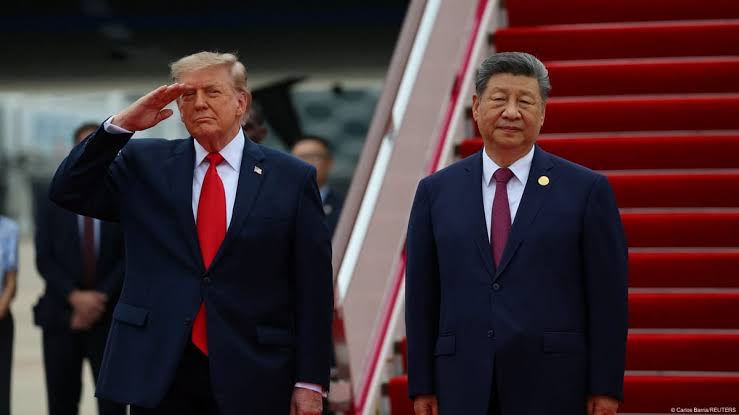
Trump’s arrival in Shenzhen marked an important moment in his administration’s diplomatic engagement with China.
Chinese officials gave the American president a high-profile welcome. Xi personally greeted Trump when Air Force One arrived, creating a striking diplomatic image before the scheduled meetings.
The welcome attracted attention because relations between the United States and China have experienced repeated tensions over trade, technology, military competition and regional security.
However, both governments have shown interest in maintaining communication and avoiding another major economic confrontation.
The APEC summit provided an opportunity for leaders from across the Asia-Pacific region to discuss economic cooperation, international trade and regional stability.
For China, hosting the gathering offered an opportunity to demonstrate its diplomatic influence. For Trump, the visit provided an opportunity to pursue American economic and security priorities directly with the Chinese leadership.
The presence of Putin made the summit even more significant.
Rather than limiting discussions to the traditional US-China relationship, the gathering expanded into a broader conversation involving three countries with enormous influence over international security.
According to Al Jazeera, Trump, Xi and Putin gathered in Shenzhen for an unprecedented formal trilateral meeting.
Al Jazeera+1
Trump and Xi Discuss Trade and Economic Relations
Trade remains one of the most important issues in the relationship between Washington and Beijing.
The United States and China are major economic powers. Their commercial relationship affects international manufacturing, technology supply chains, agriculture, financial markets and consumer prices.
During the Trump-Xi Summit, economic cooperation and trade tensions featured prominently in discussions.
Trump has repeatedly argued that American businesses and workers should receive fair treatment in international trade. His administration has also used tariffs and other economic measures to pressure foreign governments.
China, meanwhile, wants predictable access to international markets and greater stability for its export-driven economy.
Tariffs Remain a Major Concern
The two countries have experienced serious tariff disputes in recent years.
Higher import duties can increase costs for businesses, disrupt supply chains and affect consumers. They can also create uncertainty for companies that depend on international manufacturing.
A trade truce has helped reduce some immediate tensions. However, important disagreements remain.
According to CBS News, the existing tariff arrangement is expected to expire on January 10, 2027, making future trade negotiations particularly important.
CBS News
Trump wants China to purchase more American agricultural products and support American exporters.
China, on the other hand, wants a stable commercial relationship that does not expose its companies to sudden restrictions.
Both governments have reasons to avoid a renewed trade confrontation.
American Farmers Watch the Negotiations
Agriculture is another important part of the economic relationship.
China is a significant market for American agricultural exports, including products such as soybeans.
American farmers can be affected when trade tensions interrupt export agreements or reduce demand.
Trump has highlighted agricultural trade during his discussions with Chinese officials.
Additional Chinese purchases could provide economic benefits for American producers. However, any lasting agreement would depend on commercial demand, pricing and the wider political relationship.
For now, agricultural trade remains an important part of the Trump-Xi diplomatic agenda.
Historic Trump, Xi and Putin Trilateral Meeting Begins
The most significant moment of the Shenzhen gathering came when Trump, Xi and Putin joined the same diplomatic meeting.
The three leaders represent countries with enormous military, economic and political influence. Their first formal trilateral meeting therefore carried considerable international significance.
The discussions were closely watched by governments across Europe, Asia and the Middle East.
Trump described the gathering as historic, while Putin highlighted the shared responsibility of the three countries for maintaining international peace and security.
Xi also stressed the importance of preventing a nuclear conflict.
According to The Guardian’s live coverage, the three leaders discussed international security, including the possibility of nuclear arms control and the war in Ukraine.
The Guardian+1
Why the Three-Way Meeting Matters
The United States, China and Russia have different strategic priorities.
The United States: Washington wants to protect its global influence, strengthen nuclear security and address conflicts involving American interests.
China: Beijing wants greater international influence, economic stability and recognition of its role in global diplomacy.
Russia: Moscow wants to strengthen its international position and advance its interests in negotiations over Ukraine and wider security issues.
Bringing these competing priorities into one meeting represents a major diplomatic development.
However, a meeting between powerful leaders does not automatically produce agreements.
Each country must consider its national interests, domestic political pressures and long-term strategic objectives.
The Shenzhen summit could therefore become an important diplomatic milestone even if the participants fail to announce major policy changes.
Putin Talks With Trump Before the Trilateral Summit
Before the joint gathering, Trump held a separate meeting with Putin.
The two presidents discussed the war in Ukraine and relations between Washington and Moscow.
Trump publicly described Putin as a friend and expressed optimism about the possibility of progress.
The Kremlin also offered a positive assessment of the discussion.
Russian presidential aide Yuri Ushakov said the meeting went well and lasted approximately 35 to 40 minutes, according to reporting from Russian state media cited by Al Jazeera and The Guardian.
However, officials did not announce a major breakthrough following the bilateral conversation.
Al Jazeera+1
Ukraine War Remains a Central Issue
The war in Ukraine remains one of the biggest obstacles to improving relations between Russia and Western countries.
Since Russia launched its full-scale invasion in February 2022, the conflict has created significant political, military and economic consequences.
The United States has played an important role in supporting Ukraine and influencing international diplomatic efforts.
Russia, meanwhile, wants negotiations to address its security demands and territorial objectives.
Trump has repeatedly expressed interest in ending the conflict through negotiations.
His meeting with Putin offered another opportunity to discuss possible diplomatic solutions.
However, Ukraine’s absence from the three-way meeting creates an important concern.
Any discussion about Ukraine’s future must consider the interests and sovereignty of the Ukrainian government.
European countries also have significant security interests connected to the conflict.
Consequently, an agreement reached without Ukrainian participation could face serious political and diplomatic challenges.
Can Trump Influence Putin?
Trump’s personal relationship with Putin has attracted considerable attention.
The American president has suggested that direct communication can help reduce tensions and create opportunities for negotiations.
Supporters of this approach believe personal diplomacy can open channels that traditional diplomatic processes sometimes struggle to establish.
Critics, however, warn that friendly conversations cannot replace clear agreements and enforceable commitments.
Russia’s objectives in Ukraine remain difficult to reconcile with the positions of Kyiv and its Western partners.
The Shenzhen meeting may help establish communication, but a lasting settlement would require much more detailed negotiations.
Nuclear Arms Control Becomes a Major Summit Priority
Nuclear security was another important issue surrounding the Trump-Xi Summit.
The United States, Russia and China are three of the world’s most significant nuclear powers.
Their decisions about weapons development, military strategy and arms control can have consequences for global security.
Trump has indicated that he wants the three countries to discuss reducing nuclear weapons.
This objective reflects growing concerns about the future of international arms control.
Why Nuclear Negotiations Matter
Nuclear weapons remain among the most destructive military capabilities in existence.
Even a limited nuclear conflict could create catastrophic humanitarian, environmental and economic consequences.
For decades, arms control agreements have helped establish limits, transparency measures and communication channels between major nuclear powers.
However, the international arms control environment has become increasingly complicated.
Russia and the United States have maintained large nuclear arsenals, while China continues to expand its nuclear capabilities.
Trump wants Beijing and Moscow to participate in discussions about reducing nuclear risks.
Nevertheless, China has repeatedly resisted joining negotiations structured around the much larger American and Russian arsenals.
This difference creates a major obstacle.
Xi’s Position on Nuclear Security
Xi has emphasised the importance of avoiding nuclear conflict.
During the trilateral discussions, he called for every effort to prevent nuclear war, according to The Guardian’s live reporting.
The Guardian
However, agreeing that nuclear war must be prevented is different from accepting specific restrictions on military capabilities.
China wants negotiations to recognise differences between national arsenals and security requirements.
The United States, meanwhile, wants a broader framework that addresses the capabilities of all three powers.
For that reason, nuclear arms control remains a complicated subject.
The Shenzhen meeting could encourage further discussions, but expectations of an immediate agreement should remain cautious.
US-China Technology Competition Adds Another Challenge
Technology competition has become a defining feature of the relationship between Washington and Beijing.
Both countries want leadership in artificial intelligence, advanced semiconductors, supercomputing and other emerging technologies.
These industries are important not only for economic growth but also for national security.
Artificial Intelligence Takes Centre Stage
Artificial intelligence is changing industries across the world.
Companies are investing heavily in advanced computing systems, while governments are considering how AI could affect military capabilities, economic competitiveness and national security.
The United States wants to maintain its position in advanced semiconductor technology.
China, meanwhile, is investing in domestic research and manufacturing to reduce dependence on foreign technology.
Restrictions on advanced chips have become a major source of disagreement.
Washington argues that certain technology exports could strengthen China’s military and strategic capabilities.
Beijing views American restrictions as attempts to limit its economic and technological development.
The two governments must therefore balance commercial cooperation with national security concerns.
Why Semiconductor Restrictions Matter
Semiconductors are essential components in modern technology.
They power smartphones, computers, vehicles, industrial equipment and advanced AI systems.
Restrictions affecting semiconductor exports can influence global technology companies and manufacturing networks.
American businesses also depend on international markets, making the issue economically important for both sides.
The summit provided an opportunity to discuss these disagreements at the highest political level.
However, major differences over technology policy are unlikely to disappear after a single meeting.
China Seeks a Stronger Role in Global Diplomacy
Hosting the Trump-Xi-Putin meeting offered Beijing an important opportunity to demonstrate its growing international influence.
China has increasingly presented itself as a major diplomatic player capable of engaging countries with competing political and economic interests.
The Shenzhen summit supports that ambition.
By bringing Trump and Putin together on Chinese soil, Xi gained an opportunity to position Beijing as an important centre of international diplomacy.
China’s Relationship With Russia
China and Russia have developed closer economic and diplomatic relations in recent years.
Their governments share concerns about American influence and have expanded cooperation in several areas.
Energy, trade, military coordination and international institutions remain important parts of their relationship.
However, China also maintains extensive commercial interests with Western countries.
Beijing must therefore balance its relationship with Moscow against its economic connections with the United States and Europe.
This balancing act makes China’s position particularly important during discussions about Ukraine and international security.
Beijing Wants Stability With Washington
Despite disagreements, China has strong economic reasons to maintain stable relations with the United States.
A renewed trade conflict could affect businesses, international investors and global manufacturing.
Both countries also have interests in preventing military misunderstandings.
Xi’s participation in the summit suggests that Beijing remains interested in maintaining high-level communication with Washington.
Nevertheless, important disagreements over Taiwan, technology exports, tariffs and regional security remain unresolved.
Taiwan and Regional Security Remain Important Issues
Although Ukraine and nuclear weapons attracted considerable attention, Taiwan remains one of the most sensitive issues in US-China relations.
China considers Taiwan part of its territory and opposes moves towards formal independence.
The United States maintains unofficial relations with Taiwan and provides support for its defensive capabilities.
This disagreement creates a persistent source of tension.
Any military confrontation in the Taiwan Strait could have serious consequences for international trade and regional security.
The United States and China must therefore manage their differences carefully.
The Shenzhen summit provided an opportunity for broader diplomatic communication, although there was no indication that the leaders had resolved their fundamental differences over Taiwan.
Other regional security concerns also remain important.
The South China Sea, military exercises and competition for influence across the Indo-Pacific continue to shape the relationship between Washington and Beijing.
For countries in the region, stability between the three major powers is essential.
Iran and Middle East Security Could Influence Wider Discussions
The Middle East represents another area where the interests of Washington, Beijing and Moscow intersect.
China has important energy and commercial interests in the region.
Russia maintains diplomatic and strategic relationships with several Middle Eastern countries.
The United States also has major security commitments and economic interests across the region.
These overlapping interests make regional conflicts relevant to broader international diplomacy.
The three countries may disagree over how conflicts should be managed, but all have reasons to avoid wider instability.
Iran’s relationship with Russia and China also creates additional complications for American foreign policy.
Although the Shenzhen meeting’s main reported focus included Ukraine and nuclear security, wider geopolitical issues remain part of the international environment surrounding the summit.
International Leaders Watch the Shenzhen Summit Closely
The meeting attracted attention well beyond Washington, Beijing and Moscow.
European governments, Asian economies and other international partners have significant interests in the decisions made by the three countries.
For Europe, the most immediate concern is the future of the Ukraine war.
European leaders have repeatedly stressed that Ukraine’s sovereignty and security must remain central to any peace settlement.
For Asian countries, relations between Washington and Beijing are especially important.
Many regional economies depend on international trade and American security partnerships while maintaining extensive commercial relationships with China.
Concerns Among Smaller Countries
The presence of three powerful leaders also created concerns about the interests of smaller countries.
Some governments worry that major powers could make decisions affecting international security without giving smaller nations an adequate voice.
The Guardian reported that the summit had attracted scepticism from countries concerned that their interests might be overlooked.
The Guardian
These concerns highlight an important issue.
Global stability cannot depend entirely on agreements between three powerful governments.
International institutions, regional alliances and affected countries must also have opportunities to participate in decisions that influence their security.
Can the Trump-Xi Summit Produce a Lasting Diplomatic Breakthrough?
The biggest question surrounding the Shenzhen summit is whether the discussions will lead to concrete results.
Diplomatic meetings can create important opportunities.
They can reduce misunderstandings, establish communication channels and help governments identify areas where cooperation is possible.
However, lasting progress requires more than positive public statements.
Three Major Challenges Remain
1. Conflicting positions on Ukraine
Russia wants negotiations that address its demands, while Ukraine and its supporters insist that the country’s sovereignty must be respected.
2. Different approaches to nuclear weapons
The United States wants China involved in broader nuclear arms control discussions, but Beijing has reservations about joining negotiations under the same framework as Washington and Moscow.
3. Economic and technological competition
Trade disagreements, semiconductor restrictions and competition over artificial intelligence continue to create tensions between Washington and Beijing.
These challenges make a comprehensive agreement difficult.
Nevertheless, maintaining communication between the three governments could help prevent future misunderstandings.
What Happens After the Shenzhen Summit?
The conclusion of the historic trilateral meeting does not mean that negotiations are over.
Officials from all three countries will need to assess the discussions and determine whether further diplomatic engagement is possible.
The next stage will depend on whether the leaders can translate their statements into practical measures.
Possible areas for continued engagement include:
Nuclear risk reduction and arms control.
Diplomatic discussions concerning Ukraine.
Trade stability between Washington and Beijing.
Communication between military establishments.
Cooperation on international economic challenges.
Measures to prevent regional security crises.
A successful diplomatic process would require continued discussions between government officials.
It would also require realistic expectations.
The United States, China and Russia are not traditional allies. Their strategic priorities frequently conflict, and none is likely to abandon its major national interests simply to reach a symbolic agreement.
Still, the willingness of their presidents to meet represents an important diplomatic development.
Conclusion: Shenzhen Becomes a Major Moment in Global Diplomacy
The Trump-Xi Summit in Shenzhen has placed three of the world’s most influential leaders at the centre of an extraordinary diplomatic event.
Trump’s separate discussions with Xi and Putin, followed by their historic trilateral gathering, brought trade, Ukraine, nuclear security and international relations into the spotlight.
For Trump, the summit offered an opportunity to pursue American economic and security priorities.
For Xi, it demonstrated China’s ability to host high-level international diplomacy.
For Putin, it provided an opportunity to reinforce Russia’s position as an important participant in global affairs.
However, the meeting has not eliminated the deep disagreements separating the three countries.
The Ukraine war remains unresolved, nuclear arms control faces major obstacles, and economic competition continues to challenge US-China relations.
The real significance of the Shenzhen summit will ultimately depend on what happens next.
If the discussions lead to sustained negotiations, the meeting could become an important step towards improving international stability.
If competing national interests prevent meaningful progress, it may be remembered primarily for its historic photographs and diplomatic symbolism.
Either way, the Trump-Xi-Putin gathering has created a major moment in 2026 international politics.
Frequently Asked Questions (FAQs)
1. Why did Donald Trump and Xi Jinping meet in Shenzhen?
Donald Trump and Xi Jinping met in Shenzhen during the 2026 APEC summit to discuss bilateral relations, trade, economic cooperation and international security.
2. Did Vladimir Putin also attend the Shenzhen summit?
Yes. Russian President Vladimir Putin attended the summit and joined Trump and Xi for an unprecedented formal trilateral meeting on November 19, 2026.
3. What was discussed during the Trump-Xi Summit?
The discussions included trade relations, tariffs, advanced technology, economic cooperation and regional security.
4. Why is the Trump-Xi-Putin meeting historic?
It is the first formal trilateral meeting involving the leaders of the United States, China and Russia, bringing three major nuclear powers together for direct discussions.
5. Did Trump and Putin discuss the Ukraine war?
Yes. Their separate bilateral meeting included discussions about the Ukraine conflict and relations between Washington and Moscow.
6. Was nuclear disarmament discussed?
Yes. Trump wanted nuclear arms control to feature prominently in the discussions, while Xi stressed the importance of preventing nuclear war.
7. Where was the 2026 APEC summit held?
The relevant APEC summit meetings took place in Shenzhen, Guangdong province, China.
8. Will the Shenzhen summit improve US-China relations?
The summit created an opportunity for improved communication. However, disagreements over trade, Taiwan, technology and security remain significant obstacles.
9. Why is China important to negotiations over Ukraine?
China maintains close economic and diplomatic relations with Russia and has significant international influence. Its position could therefore affect wider diplomatic efforts, although Ukraine’s participation remains essential to any meaningful settlement.
10. Did the three leaders announce a major peace agreement?
The reported discussions did not establish a comprehensive peace agreement. Further negotiations would be necessary to resolve the major international disagreements.
About the Author