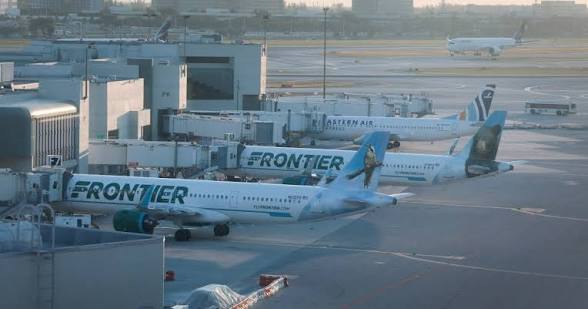
The Trump administration is facing fresh questions about America’s aviation infrastructure after a nationwide Federal Aviation Administration (FAA) ground stop disrupted air travel across the United States on Friday, November 13, 2026.
Thousands of flights experienced delays, cancellations and diversions after serious technical problems affected air traffic control communications and radar systems. The incident raised immediate concerns about the reliability of America’s aviation network and whether a cyberattack could have played a role.
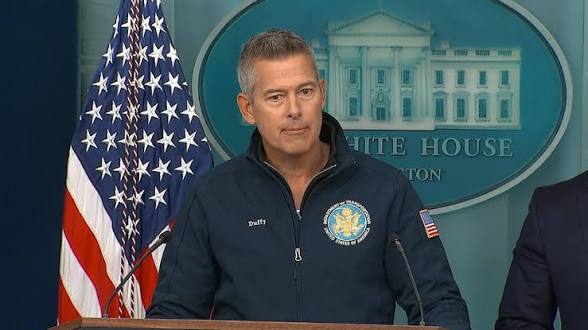
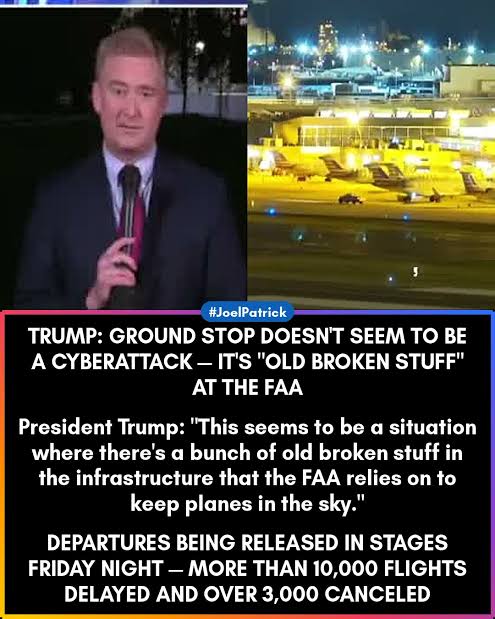
However, officials have pointed toward a different explanation. Transportation Secretary Sean Duffy blamed aging aviation technology, including outdated switches, routers and telecommunications infrastructure. Homeland Security Secretary Markwayne Mullin said investigators had found no evidence of a cyberattack, although the investigation was continuing.
President Donald Trump’s administration now faces pressure to explain why critical aviation systems remain dependent on aging technology and what steps are necessary to prevent another nationwide disruption.
The FAA eventually lifted the ground stop, allowing flights to resume gradually. Nevertheless, the consequences continued across major airports as airlines worked to reposition aircraft, restore schedules and assist stranded passengers.
The incident has also renewed debate about federal spending, aviation modernization and cybersecurity preparedness.
FAA Ground Stop Triggers Nationwide Aviation Disruption
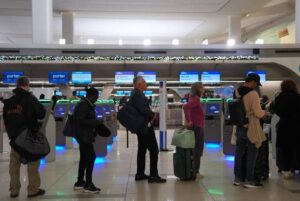
The FAA ordered a nationwide ground stop on November 13 after reporting serious communications problems affecting the US air traffic control system.
The decision forced airlines to pause departures while aviation authorities assessed the situation. The disruption affected airports across the country, creating uncertainty for passengers, airline employees and airport operators.
According to Reuters, the outage began at approximately 3:36 p.m. Eastern Time. Air traffic control centres experienced instability involving radar and communications systems.
Transportation Secretary Sean Duffy explained that switches and routers became overloaded with data. This created inconsistencies that made it difficult for controllers to rely on the information being transmitted through the network.
The government decided that continuing normal operations would create unnecessary safety risks.
At the time of the disruption, thousands of aircraft were already in American skies. Officials said aircraft were able to land safely, but the system could not support normal operations with the required level of reliability.
The FAA subsequently lifted the nationwide ground stop at approximately 8:15 p.m. Eastern Time, according to Reuters.
However, reopening the airspace did not immediately restore normal flight schedules.
Airlines needed time to move aircraft, locate available crews and manage passengers whose journeys had been interrupted.
Reuters reported that nearly 10,000 flights had been cancelled by late Friday, demonstrating the enormous scale of the disruption.
Reuters+1
Sean Duffy Blames Aging Aviation Technology
Transportation Secretary Sean Duffy identified outdated infrastructure as a major factor behind the FAA ground stop.
According to Duffy, the country’s air traffic control network still depends on legacy technology that struggles to handle modern operational demands.
He specifically highlighted aging switches, routers and older telecommunications connections.
These systems are essential because air traffic controllers depend on reliable information to coordinate aircraft movements. They must communicate with pilots, monitor aircraft positions and maintain safe distances between planes.
When communications become inconsistent, controllers cannot operate with their usual level of confidence.
Duffy explained that the network experienced data overload, resulting in inconsistent information from switches and routers.
Officials then implemented fixes designed to reduce the overload and restore the affected systems.
The Transportation Secretary also argued that the incident demonstrated why America needs a comprehensive aviation technology upgrade.
He called on Congress to provide additional funding to modernize the country’s air traffic control infrastructure.
Duffy discussed a potential $50 billion investment to address the wider modernization challenge.
His comments placed renewed attention on the condition of federal aviation equipment and the government’s responsibility to maintain critical transportation systems.
The incident also raised questions about whether existing modernization efforts are moving quickly enough to keep pace with growing air traffic demand.
Reuters+2
Cyberattack Concerns Emerge After the FAA Outage
Although officials initially focused on technical failures, the nationwide ground stop quickly generated cybersecurity concerns.
Aviation infrastructure is an important part of national security. Its communication networks support millions of passengers and thousands of flights.
A successful cyberattack against critical aviation systems could potentially create serious operational problems.
Consequently, the sudden communications failure raised questions about whether an outside actor could have interfered with the FAA network.
However, the Trump administration has not confirmed a cyberattack.
Homeland Security Secretary Markwayne Mullin said there was no evidence at that stage indicating that hackers had caused the disruption.
He described the incident as appearing to be mechanically driven while emphasizing that investigators were still examining the available information.
This distinction is important.
A communications failure does not automatically indicate malicious activity. Equipment overload, outdated infrastructure, software problems and configuration errors can also cause serious disruptions.
Nevertheless, officials cannot dismiss cybersecurity concerns without examining the systems involved.
The investigation reportedly involved federal security agencies, including the National Security Agency and the Department of Homeland Security.
The goal is to establish what happened, identify the underlying technical failure and determine whether any unauthorized activity contributed to the incident.
For now, the available evidence points toward an aging infrastructure problem rather than a confirmed cyberattack.
Reuters+2
Why America’s Aging Air Traffic Control System Is a Concern
The FAA ground stop has exposed a longstanding problem facing American aviation.
Modern aircraft operate with advanced navigation systems, digital communications and sophisticated safety technology. However, parts of the infrastructure supporting air traffic control remain outdated.
This creates a technological imbalance.
Airlines continue investing in modern aircraft and digital services, while some critical government systems still depend on older equipment.
The problem is not simply the age of the equipment. It is also about maintenance, compatibility, replacement parts and the ability to handle increasing traffic.
Older systems can become difficult to maintain when manufacturers stop producing essential components.
Technicians with specialized knowledge may also retire, making repairs more complicated.
The Government Accountability Office has previously warned about these challenges.
Its 2026 report on air traffic control modernization described aging FAA systems, maintenance difficulties and the growing demands placed on aviation infrastructure.
The report also highlighted earlier system failures, including the January 2023 outage involving the Notice to Air Missions system.
That incident forced the FAA to temporarily halt departing flights across the country.
These repeated problems suggest that aviation modernization is not simply a political talking point. It is an important operational requirement.
The latest ground stop has made that requirement more urgent.
gao.gov+1
Did New Technology Cause the FAA Ground Stop?
Another major question concerns the relationship between the outage and recent aviation technology upgrades.
The FAA has been working to introduce newer tools designed to improve air traffic management and operational efficiency.
One system attracting attention was SMART, an artificial intelligence-powered air traffic forecasting and planning tool developed by Air Space Intelligence.
The wider rollout of this technology generated speculation online after the nationwide ground stop.
Some people questioned whether the new AI system had created compatibility problems or contributed to the communications failure.
However, Air Space Intelligence publicly rejected claims that its SMART system caused the incident.
The company said the ground stop was not based on or caused by its product or its integration with FAA and air traffic control operations.
Microsoft also said it had no indication that the aviation disruption was connected to its services.
These statements matter because the incident occurred during a week that also featured major technology disruptions.
Nevertheless, officials have distinguished the FAA communications problem from those unrelated events.
Duffy also said the newly installed equipment was not responsible for the failure. Instead, the administration identified older legacy equipment as the central concern.
The available reporting therefore does not establish a connection between the AI rollout, Microsoft’s outage and the nationwide aviation disruption.
Business Insider+2
Thousands of Flights Affected as Airlines Face Operational Challenges
The FAA ground stop created a major challenge for airlines operating across the United States.
Even after the agency reopened the airspace, carriers faced a complicated recovery process.
Aircraft and flight crews were no longer necessarily positioned where airlines needed them.
A cancelled departure can affect several later flights because aircraft frequently operate multiple routes throughout the day.
For example, an aircraft scheduled to travel from New York to Chicago may have a later departure from Chicago to another destination.
If the first journey is cancelled, the second flight can also face disruption.
Crew scheduling creates another problem.
Pilots and flight attendants have regulated working-hour limits. Unexpected delays can push crews beyond their scheduled duty periods.
Airlines may therefore need replacement personnel before restarting certain routes.
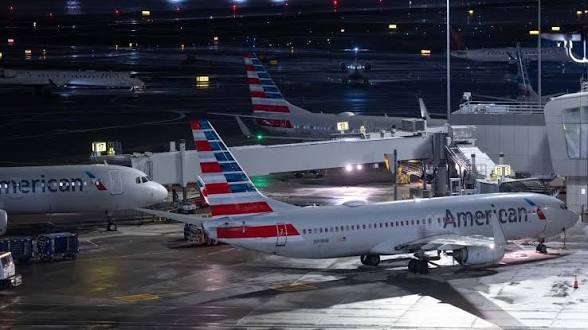
Reuters reported that Delta Air Lines and American Airlines each experienced more than 2,200 cancellations, while United Airlines recorded more than 1,800 cancellations by late Friday.
These figures illustrate how quickly a nationwide technical failure can spread through the commercial aviation industry.
Reuters+1
Passengers Face Delays, Cancellations and Uncertainty
For passengers, the disruption meant missed connections, unexpected overnight stays and uncertainty about when flights would resume.
Airport departure boards displayed extensive delays and cancellations.
Some travellers had to contact airlines repeatedly to obtain updated departure information.
Others faced the possibility of missing important personal or professional commitments.
International passengers connecting through American airports were also vulnerable to disruptions.
A delayed domestic flight can cause someone to miss an international departure, potentially creating additional accommodation and rebooking expenses.
The disruption also affected passengers travelling for sporting events, family gatherings and business commitments.
The federal government said emergency coordination was necessary to help passengers who might need assistance.
Officials also highlighted concerns about travellers carrying essential medication and other urgent supplies.
The situation demonstrated that aviation disruptions can extend beyond airport operations.
They can affect hotels, rental car services, cargo deliveries and businesses that depend on reliable transportation.
Although the FAA lifted its ground stop, the wider recovery required cooperation between airlines, airports and federal authorities.
Passengers were advised to check directly with their airlines because flight status could change even after operations resumed.
Trump Administration Faces Pressure to Modernize Aviation Infrastructure
The incident has placed the Trump administration’s aviation modernization agenda under renewed scrutiny.
President Donald Trump and his administration have argued that America’s air traffic control infrastructure requires substantial investment.
Duffy has made modernization a priority, calling attention to outdated systems and the need for reliable communications.
The Transportation Secretary also urged Congress to approve additional funding.
He discussed a $50 billion modernization requirement while pointing to existing funding commitments for aviation infrastructure.
The administration has faced the challenge of balancing immediate repairs with long-term improvements.
Replacing an entire air traffic control network is a complicated process.
It involves installing new equipment, updating communications infrastructure, training personnel and ensuring that new systems work with existing operations.
Officials must also prevent modernization projects from introducing additional risks.
Air traffic control cannot simply be switched off while new technology is installed.
Instead, upgrades must be carefully tested and introduced without compromising safety.
The latest outage could strengthen arguments for faster investment.
However, lawmakers will likely want detailed explanations about project costs, implementation schedules and accountability before approving additional spending.
The central question is whether the federal government can modernize aviation infrastructure quickly enough to prevent similar disruptions.
Could Another Nationwide FAA Ground Stop Happen?
One of the biggest concerns following the incident is whether another nationwide ground stop could occur.
Duffy acknowledged that additional problems could happen if the underlying infrastructure is not fully modernized.
Although officials restored operations, repairing an immediate technical problem does not necessarily eliminate the weaknesses that allowed it to happen.
The FAA operates a complex network involving communication systems, radar equipment, control centres and supporting technology.
A failure in one important part of this network can affect multiple facilities.
The risk becomes more significant when older equipment must handle increasing amounts of information.
There are several measures that could help reduce future disruptions:
Replacing outdated telecommunications equipment.
Installing modern switches and routers.
Improving backup communication networks.
Strengthening cybersecurity monitoring.
Conducting regular system stress tests.
Improving coordination between aviation and security agencies.
Training additional technicians to maintain modern equipment.
These improvements would require significant funding and careful planning.
The latest incident provides a clear reminder that aviation safety depends on more than aircraft and airport infrastructure. Reliable communication between pilots and air traffic controllers is equally important.
Cybersecurity Remains a Major Concern for American Aviation
Even without evidence of a cyberattack, the incident highlights the importance of protecting America’s aviation infrastructure.
Air traffic control networks are critical national infrastructure. Their reliability affects public safety, economic activity and national transportation security.
Cybersecurity experts have repeatedly warned that essential services must prepare for both technical failures and malicious attacks.
Aviation networks require several layers of protection.
These include secure communications, access controls, continuous monitoring and effective recovery procedures.
However, cybersecurity is only one part of the challenge.
An outdated system can experience serious problems even when no attacker is involved.
Therefore, modernizing equipment and strengthening digital security should happen together.
The federal investigation will be important in determining whether the November 13 outage involved any security vulnerability.
Until investigators provide additional findings, claims that hackers caused the ground stop should be treated cautiously.
The Trump administration must also communicate clearly with the public about what investigators discover.
What Happens Next for the FAA and US Airlines?
The immediate priority is restoring normal airline operations and preventing further disruption.
Airlines must reposition aircraft, arrange replacement crews and accommodate passengers affected by cancellations.
The FAA must continue monitoring the repaired systems while examining the underlying cause.
Federal investigators also need to determine whether the network requires additional emergency improvements.
Congress will face questions about the funding needed to replace aging aviation technology.
The debate could become particularly important as the United States approaches the busy Thanksgiving travel period.
Millions of Americans are expected to travel during the holiday season.
Aviation authorities will therefore face pressure to demonstrate that the systems supporting national air travel are reliable.
The Trump administration will also need to explain how it plans to prevent another major failure.
The outcome could influence future aviation spending and the government’s broader approach to critical infrastructure modernization.
Conclusion: Trump FAA Ground Stop Highlights America’s Aviation Technology Problem
The nationwide FAA ground stop has exposed serious concerns about the condition of America’s air traffic control infrastructure.
Although early speculation raised questions about a possible cyberattack, the Trump administration has pointed toward overloaded, aging communications equipment as the primary explanation.
Transportation Secretary Sean Duffy has called for major modernization investment, while Homeland Security Secretary Markwayne Mullin has said investigators found no evidence of a cyberattack at that stage.
The FAA has lifted the ground stop, but the disruption has demonstrated how quickly a technical problem can affect thousands of flights and millions of travellers.
The incident also raises an important question about America’s aviation future.
Can the country continue relying on aging technology while air traffic demand increases?
The answer will depend on the government’s willingness to invest in modern equipment, strengthen backup systems and improve long-term maintenance.
For now, the FAA investigation remains important. Its findings will help determine exactly what failed and what must change to protect America’s aviation network.
Frequently Asked Questions (FAQs)
1. Why did the FAA issue a nationwide ground stop?
The FAA issued a nationwide ground stop on November 13, 2026, after communications and radar instability affected air traffic control operations. Officials said outdated switches and routers became overloaded with data, creating inconsistencies in the system.
2. Was the FAA ground stop caused by a cyberattack?
There is currently no confirmed evidence that a cyberattack caused the disruption. Homeland Security Secretary Markwayne Mullin said the incident appeared to be mechanically driven, although the investigation was continuing.
3. Did Donald Trump order the FAA ground stop?
The FAA implemented the nationwide ground stop for safety reasons following technical problems. The administration discussed the incident with President Donald Trump, but available reporting does not establish that Trump personally ordered the grounding.
4. What did Sean Duffy say about the aviation outage?
Transportation Secretary Sean Duffy blamed aging aviation infrastructure, including outdated switches, routers and telecommunications equipment. He also called for significant investment to modernize the air traffic control system.
5. When was the FAA ground stop lifted?
The FAA ground stop was lifted on Friday, November 13, 2026, at approximately 8:15 p.m. Eastern Time, according to Reuters.
6. How many flights were affected by the FAA ground stop?
Nearly 10,000 flights had been cancelled by late Friday, according to Reuters. Thousands of additional flights experienced delays and other operational disruptions.
7. Was Microsoft’s outage connected to the FAA ground stop?
There is no confirmed connection between the two incidents. Microsoft said it had no indication that its services were related to the FAA disruption.
8. Did artificial intelligence technology cause the aviation disruption?
There is no evidence establishing that the FAA’s new SMART AI system caused the outage. Air Space Intelligence, the company behind the system, publicly denied that its technology was responsible.
9. Why does the FAA need modernization?
Parts of the FAA’s infrastructure rely on aging technology that can be difficult to maintain and upgrade. Modernization could improve communications, reliability, operational efficiency and resilience.
10. Could another nationwide flight disruption happen?
Yes. Officials have warned that additional technical problems remain possible without comprehensive modernization. However, the timing and likelihood of another nationwide ground stop cannot currently be predicted.
About the Author