The decision could shape the next phase of the conflict and have significant consequences for regional security, international energy markets and American foreign policy.
Recent reporting indicates that Trump has not completely ruled out another major military operation. However, he has also signaled that he is willing to give negotiations more time if Iran demonstrates a willingness to make meaningful concessions.
According to reporting published on November 9, American and Israeli military planners have examined a short but intensive campaign involving several categories of strategic targets. Nevertheless, officials have acknowledged that additional strikes would not necessarily bring about the collapse of Iran’s government.
Inquirer.com+1
The White House therefore faces a complicated calculation. Another military operation could weaken Iran’s remaining military capabilities, but it could also trigger retaliation, disrupt international shipping and increase the economic costs of an already prolonged conflict.
For Trump, the challenge is determining whether further military action would produce a lasting strategic advantage or make an eventual settlement even more difficult.
Trump Faces a Critical Decision Over Iran
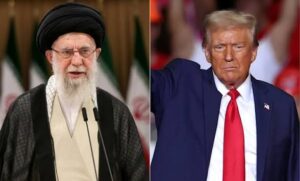
The latest developments have placed Iran near the center of Washington’s foreign policy agenda.
Trump has repeatedly argued that preventing Iran from developing nuclear weapons remains a central American objective. His administration has also maintained that economic pressure and military deterrence are necessary to force Tehran toward an agreement.
However, the possibility of renewed large-scale strikes creates difficult questions about the next stage of the conflict.
The president must consider whether existing military operations and economic restrictions are producing sufficient results. He must also evaluate whether another round of bombing would achieve objectives that previous operations could not fully secure.
On November 5, Trump met with national security advisers to discuss the next steps. According to Axios, the president was considering three broad approaches: renewed military strikes, continued economic pressure and a negotiated agreement with Iran.
Trump indicated that he would make a decision soon, while expressing reluctance to destroy additional parts of the country if a diplomatic solution remained possible.
Axios
This leaves the administration balancing military readiness with diplomatic opportunities.
Three Major Options Under Consideration
The Trump administration has several possible approaches to the Iranian conflict. Each option offers potential advantages, but each also carries significant risks.
1. Renewed Military Strikes Against Iran
The most aggressive option involves restarting major combat operations through a concentrated campaign against selected Iranian targets.
Reporting published on November 9 described a potential operation lasting several days. The campaign could focus on energy infrastructure, nuclear facilities and Iran’s missile and drone capabilities.
According to the report, American and Israeli military planners have considered a broad operation involving aircraft based on carriers, regional airbases and long-range bombers.
However, officials have reportedly cautioned against assuming that a short military campaign would bring down Iran’s government.
Inquirer.com
A renewed campaign could weaken Iran’s ability to threaten American forces and commercial shipping. It might also increase pressure on Tehran to accept restrictions on its nuclear program.
Nevertheless, military action would not automatically produce a political settlement.
Iran could retaliate against American positions and regional partners. Such a response could widen the conflict and create additional security challenges for Washington.
2. Continuing Economic Pressure
A second option involves maintaining sanctions, financial restrictions and maritime pressure rather than immediately launching another large-scale military operation.
Trump has repeatedly argued that economic pressure is weakening Iran’s ability to sustain the conflict.
In an interview with Axios on November 2, he said he was in no rush to decide whether to resume bombing. He pointed to the economic pressure facing Tehran and suggested that negotiations could still produce an agreement.
Axios
This approach would allow Washington to maintain pressure without immediately accepting the risks of another major bombing campaign.
However, economic pressure also has limitations.
Sanctions can weaken government finances, restrict access to international markets and increase the cost of maintaining military operations. Yet they do not guarantee that Iranian leaders will accept American demands.
The longer the standoff continues, the greater the possibility of additional confrontations involving shipping, regional infrastructure and military forces.
3. Reaching a Diplomatic Agreement
The third option involves pursuing negotiations through regional mediators.
Qatar and other regional governments have been involved in efforts to bring Washington and Tehran closer to an agreement.
Axios reported on November 5 that mediators were discussing a proposal involving confidence-building measures, including arrangements connected to sanctions, frozen Iranian funds, nuclear inspections and the Strait of Hormuz.
The proposal could create a framework for restarting broader nuclear negotiations. However, major disagreements remain over the conditions each side must accept.
Axios+1
Diplomacy offers an opportunity to reduce the risk of further destruction.
However, an agreement would require verifiable commitments, particularly regarding Iran’s nuclear activities and regional security.
For Trump, negotiations could provide a way to claim progress without committing American forces to another extended military campaign.
Why Iran’s Nuclear Program Remains Central
Iran’s nuclear program remains one of the most important issues shaping Trump’s decision.
Washington has consistently argued that Tehran must not obtain a nuclear weapon. American officials have therefore emphasized the need for strict monitoring and verifiable restrictions on Iran’s nuclear activities.
Previous military operations targeted important elements of Iran’s nuclear infrastructure. However, the administration continues to face questions about the condition of the country’s remaining nuclear capabilities.
The challenge is not simply destroying facilities. It is ensuring that Iran cannot rebuild its nuclear program after military operations end.
The Problem of Underground Nuclear Facilities
Some Iranian nuclear facilities are located deep underground or protected by substantial layers of rock and concrete.
These locations present considerable challenges for military planners.
The November 9 reporting discussed the possibility of targeting Pickaxe Mountain, a deeply buried facility that has attracted attention because of its potential connection to Iran’s nuclear activities.
Trump has previously discussed using the Massive Ordnance Air Blast bomb, commonly known as the MOAB, against deeply buried targets.
However, weapons specialists have questioned whether such a weapon would be effective against a facility protected by substantial underground structures.
The distinction matters because destroying a visible entrance or nearby infrastructure does not necessarily eliminate the capabilities housed underground.
Even a successful bombing campaign could leave Iran with technical knowledge, personnel and equipment that might support future reconstruction.
Therefore, military planners must consider whether another operation would deliver lasting results or simply delay Iran’s nuclear ambitions.
Inquirer.com+1
The Pentagon’s Military Preparations
While diplomatic discussions continue, American military planners are preparing for different possible outcomes.
The United States maintains substantial military capabilities in the Middle East. These include aircraft, naval forces, air-defence systems and personnel assigned to regional security operations.
According to the November 9 report, a potential renewed campaign could involve:
Aircraft operating from American aircraft carriers.
Fighter jets based at regional military installations.
Long-range B-1 and B-2 bombers.
Intelligence, surveillance and reconnaissance capabilities.
Air-defence systems designed to protect American forces and regional partners.
Naval forces supporting operations across the Gulf.
The report also described preparations involving thousands of military personnel and several warships.
These deployments provide Washington with options if Trump authorizes further action.
However, military readiness does not necessarily mean an attack is imminent.
The Pentagon must consider the availability of weapons, aircraft maintenance, logistical requirements and the protection of American personnel.
The administration must also evaluate the possible response from Iran before authorizing any major operation.
Why Military Readiness Matters
Military preparations serve several purposes.
First, they provide the president with the ability to respond quickly if negotiations collapse.
Second, they communicate that Washington retains the capability to increase pressure on Tehran.
Third, they may strengthen America’s negotiating position by demonstrating that continued confrontation carries significant costs.
However, military pressure can also produce unintended consequences.
Iran could interpret additional deployments as preparations for an imminent attack. This might encourage Tehran to increase its own military readiness or take actions that make diplomatic progress more difficult.
The situation therefore requires careful communication between Washington, Tehran and regional governments.
Iran Could Retaliate Against American Interests
One of the biggest concerns surrounding another American strike campaign is the possibility of Iranian retaliation.
Tehran has repeatedly warned that attacks against Iranian territory could produce a response.
Such retaliation could involve American military positions, regional partners or commercial shipping routes.
The potential consequences extend beyond the immediate battlefield.
American bases and facilities across the Middle East could face additional security threats. Regional governments could also find themselves under pressure to defend their territory while avoiding direct involvement in a wider war.
Iran’s response could also involve missile and drone capabilities.
Even if American forces successfully destroy additional military infrastructure, Tehran may retain the ability to launch limited retaliatory attacks.
This creates a difficult calculation for the White House.
A military operation might achieve important tactical objectives while simultaneously increasing the risks facing American personnel.
The Danger of a Wider Regional Conflict
The Middle East contains several overlapping security disputes.
An expanded confrontation involving Iran could affect countries that are not directly participating in American military operations.
Regional governments have strong reasons to avoid a prolonged conflict.
They depend on stable trade routes, secure energy infrastructure and predictable international investment conditions.
Another round of fighting could threaten these interests.
It could also create additional pressure on governments attempting to maintain diplomatic relationships with both Washington and Tehran.
For this reason, regional mediation remains important even while military preparations continue.
Strait of Hormuz Becomes a Major Strategic Concern
The Strait of Hormuz remains one of the most important geographical factors in the conflict.
The narrow waterway connects the Persian Gulf with international shipping routes through the Gulf of Oman.
It is particularly important for global oil and gas transportation.
Any disruption could affect energy supplies, shipping costs and international markets.
Iran has repeatedly used its geographical position around the strait as a source of strategic leverage.
The ongoing conflict has already created uncertainty for commercial vessels operating in the region.
Recent reporting has described attacks and threats involving shipping, as well as competing claims from Washington and Tehran about maritime security.
Reuters reported on November 8 that the conflict continued to affect shipping activity and energy exports, while diplomatic efforts remained underway.
Reuters
Why the Strait Matters to Trump
A major American objective is protecting freedom of navigation.
The United States has an interest in ensuring that commercial vessels can move through international shipping routes without facing threats or restrictions.
If the Strait of Hormuz becomes increasingly dangerous, the consequences could extend far beyond the Middle East.
Higher shipping insurance costs could increase transportation expenses. Energy markets could experience further volatility, while businesses could face uncertainty over fuel supplies.
Trump must therefore consider the economic consequences of military escalation.
A successful operation that weakens Iranian military capabilities might improve maritime security. However, retaliation could produce the opposite result.
This is one reason why military planners cannot evaluate the potential campaign solely by the number of targets destroyed.
The wider economic and strategic consequences are equally important.
Oil Prices and the Global Economic Impact
The Iran conflict has significant implications for international energy markets.
Oil prices respond to expectations about supply, shipping security and the possibility of disruptions.
Even the threat of another major military campaign can influence market sentiment.
If traders believe that fighting could spread across the Persian Gulf, they may anticipate higher supply risks.
That uncertainty can affect oil prices, transportation costs and inflation expectations.
For countries that import substantial quantities of energy, prolonged instability can create additional economic pressure.
India is particularly exposed to international energy-market developments because it imports a significant share of its crude oil requirements.
Higher global oil prices could increase India’s import bill and place pressure on fuel-related expenses.
Other economies across Asia and Europe could also face higher costs.
However, oil prices do not move in response to military headlines alone. Production decisions, inventories, demand forecasts and broader economic conditions also matter.
Could Another Strike Increase Inflation?
A renewed military campaign could create inflationary pressure if it significantly disrupts energy supplies.
Higher crude oil prices can increase costs across several industries, including:
Aviation and transportation.
Manufacturing and industrial production.
Agriculture and food distribution.
Shipping and logistics.
Electricity and energy-intensive businesses.
These effects could eventually reach consumers.
For the Trump administration, this creates a domestic political challenge.
The president must consider whether military action would improve American security enough to justify the potential economic consequences.
The calculation becomes more complicated when voters are already concerned about the cost of living.
Political Pressure on the Trump Administration
The Iran conflict is also creating political challenges for Trump at home.
The November 2026 midterm elections have added another dimension to the president’s foreign policy decisions.
According to Axios, the administration viewed the period after the elections as an important moment for deciding whether to resume major military operations.
The conflict has become a political liability for some Republicans because of concerns about rising costs and prolonged military involvement.
Trump has acknowledged that the war contributed to Republican electoral difficulties. Vice President JD Vance has also discussed the conflict in connection with the party’s election performance.
Axios+1
Pressure to Demonstrate Results
Trump has repeatedly presented his Iran policy as an effort to prevent a nuclear threat and protect American interests.
However, continuing military operations without a clear end to the conflict could create political difficulties.
American voters may question the financial costs of another campaign, particularly if the operation does not produce a lasting agreement.
The administration therefore faces pressure to demonstrate that its strategy is delivering measurable results.
A diplomatic agreement could provide one possible solution.
Alternatively, Trump could authorize additional military action and argue that further pressure is necessary to achieve American objectives.
Neither approach is politically risk-free.
What Are America’s Allies Saying?
Regional governments have strong reasons to support a diplomatic resolution.
Countries across the Gulf face potential security and economic consequences if fighting expands.
They also have important relationships with Washington and cannot ignore the implications of an extended conflict.
According to recent reporting, several regional governments have encouraged diplomatic engagement rather than another major escalation.
Qatar has played an important role in facilitating communication between the United States and Iran.
Saudi Arabia, Turkey, the United Arab Emirates and Egypt have also been involved in regional diplomatic discussions.
These efforts reflect a wider concern that another military campaign could create instability across the region.
Axios+1
Israel’s Security Concerns
Israel remains another important factor in Trump’s decision-making.
Israeli leaders have consistently expressed concern about Iran’s nuclear program and missile capabilities.
From Israel’s perspective, allowing Iran to rebuild strategic military capabilities could create additional security threats.
However, the interests of Washington and Jerusalem do not necessarily align on every tactical or diplomatic question.
The United States must consider its broader regional relationships, the safety of American forces and the possibility of a prolonged conflict.
Consequently, coordination with Israel will remain important as the administration evaluates its next steps.
Could Trump Choose a Limited Strike Instead?
A limited military operation represents another possible approach.
Rather than launching a broad campaign against several categories of infrastructure, Washington could authorize strikes against selected military capabilities.
The objective would be to impose costs on Iran while attempting to avoid a larger regional war.
The Center for Strategic and International Studies discussed several possible American approaches in its November 2 analysis of military options in Iran.
These included coercive diplomacy, limited counter-force strikes and attacks targeting high-value nuclear facilities.
The analysis emphasized that every option carries trade-offs, particularly the risk of escalation.
csis.org
A limited operation could offer the White House greater flexibility.
However, there is no guarantee that Iran would interpret a limited strike as a reason to negotiate.
Tehran might instead respond with its own military action.
This could create a cycle in which both sides repeatedly increase pressure without reaching a lasting settlement.
Therefore, even a limited operation would require a clear political objective and a realistic plan for what happens afterward.
What Happens If Negotiations Fail?
The diplomatic process remains uncertain.
Washington wants meaningful restrictions on Iran’s nuclear activities, while Tehran has its own demands involving sanctions, financial restrictions and security arrangements.
These disagreements make a comprehensive agreement difficult.
Iran has also indicated that it will not accept negotiations conducted under what it considers unacceptable pressure.
The United States, meanwhile, wants assurances that Iran will not use diplomatic discussions to rebuild its nuclear capabilities.
If negotiations fail, Trump could face renewed pressure to authorize military action.
However, failure would not automatically make another major bombing campaign the best available option.
The administration could continue economic pressure, strengthen regional defences or pursue another diplomatic framework.
The key question is whether either side believes that continuing the conflict is more beneficial than reaching an agreement.
What to Watch in the Coming Days
Several developments could indicate which direction the Trump administration is moving.
1. White House announcements: Statements from Trump and senior national security officials could provide clues about the president’s priorities.
2. Military deployments: Additional aircraft carriers, bombers and defensive systems could indicate preparations for different operational scenarios. However, deployments alone would not confirm an imminent attack.
3. Diplomatic meetings: Further discussions involving Qatar and other regional mediators could indicate that negotiations remain active.
4. Iranian statements: Responses from Iranian officials could reveal whether Tehran is willing to consider additional concessions.
5. Shipping activity: Developments around the Strait of Hormuz could influence the urgency of Washington’s security decisions.
6. Energy markets: Significant movements in oil prices could reflect changing expectations about the likelihood of further escalation.
Together, these developments will help explain whether Trump is moving toward diplomacy, economic pressure or renewed military operations.
Final Decision Could Shape the Future of the Middle East
Trump’s Iran decision represents a major test of American foreign policy.
The president has several options, but none offers a guaranteed solution.
Renewed military strikes could weaken Iran’s remaining military capabilities. Continued economic pressure could increase the financial cost of maintaining the conflict. Diplomacy could create an opportunity for a negotiated settlement.
However, every approach carries risks.
The most ambitious military option could produce further destruction without achieving a lasting political outcome. Meanwhile, negotiations could fail if Washington and Tehran cannot agree on nuclear restrictions, sanctions and regional security.
For now, the available reporting indicates that Trump is keeping multiple options open rather than committing publicly to another major campaign.
The coming days could prove particularly important as American officials assess military preparations and diplomatic proposals.
Ultimately, the administration must determine whether another strike would make the United States and its regional partners safer or create a wider conflict that becomes increasingly difficult to control.
The decision will have consequences not only for Washington and Tehran but also for global energy markets, regional governments and international security.
Frequently Asked Questions (FAQs)
1. Why is Trump considering another strike against Iran?
Trump is weighing further military action because of continuing concerns about Iran’s nuclear program, missile capabilities and threats to regional security. The administration is also evaluating whether additional pressure could produce a more favourable agreement.
2. Has Trump officially ordered a new major attack on Iran?
Available reporting as of November 9, 2026, does not establish that Trump has ordered the proposed major campaign. Officials are weighing options, while diplomatic discussions continue.
3. What military options is Trump considering?
Reported options include a short but intensive military campaign targeting selected Iranian energy, nuclear and military infrastructure. Other possibilities include limited strikes and continued military pressure alongside negotiations.
4. Could the United States use the MOAB against Iran?
The MOAB has been discussed in reporting about possible military options. However, there is no confirmed decision to use it. Weapons specialists have also questioned its effectiveness against deeply buried underground facilities.
5. Why is the Strait of Hormuz important?
The Strait of Hormuz is a major international shipping route for oil and gas. Any serious disruption could affect global energy supplies, shipping costs and international economic stability.
6. Could Iran retaliate against American forces?
Yes. Iran has warned that it could respond to attacks against its territory. Possible retaliation could threaten American military positions, regional partners and commercial shipping.
7. Are the United States and Iran still negotiating?
Yes. Recent reporting indicates that diplomatic discussions involving regional mediators, including Qatar, are continuing. However, significant disagreements remain.
8. How could another Iran strike affect oil prices?
Another military campaign could increase concerns about disruptions to energy supplies and shipping routes. This could push oil prices higher, although actual market movements would depend on supply, demand and the scale of the conflict.
9. What role is Israel playing in the situation?
Israel remains an important American security partner and has strong concerns about Iran’s nuclear and missile capabilities. Coordination between Washington and Jerusalem could influence military and diplomatic decisions.
10. When will Trump announce his final Iran decision?
Trump has indicated that he expects to make a decision soon. However, no confirmed deadline for a final decision on a renewed major military campaign has been established in the reporting available on November 9.
About the Author