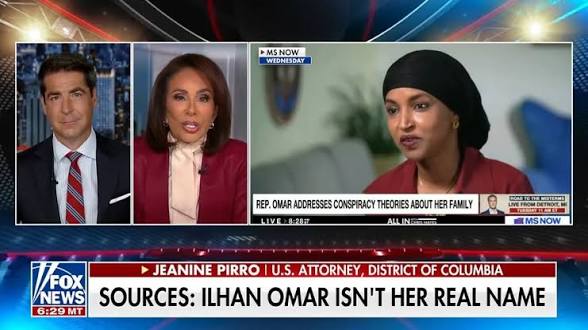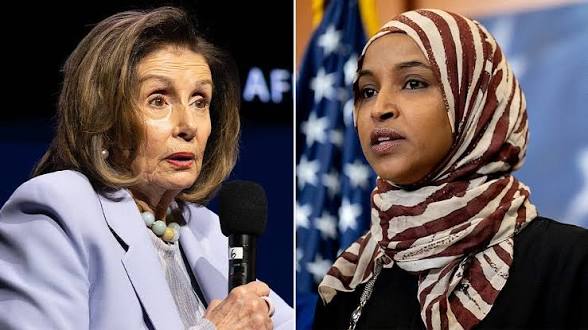
The Democratic Party is facing renewed internal divisions after former House Speaker Nancy Pelosi declined to sign a letter defending Representative Ilhan Omar following a federal search of Omar’s Washington, D.C., residence. The decision has attracted attention because more than 175 House Democrats supported the letter, while Pelosi and several other prominent lawmakers kept their names off the document.
The development has raised questions about the limits of Democratic unity, particularly as Omar faces a federal investigation involving historical immigration paperwork. While Democratic leaders have criticized the investigation and questioned its timing, Pelosi’s decision highlights a different approach among members of the party.
The controversy also comes at a politically sensitive moment. With the 2026 midterm elections approaching, Democrats are balancing their criticism of the Trump administration against the political risks of defending individual lawmakers facing federal scrutiny.
Importantly, Pelosi’s decision not to sign the letter does not establish that she supports the investigation or believes Omar committed wrongdoing. Her office had not publicly explained the decision in the reporting available on October 31, 2026.
According to reporting published by Fox News on October 29, Pelosi was among nearly 40 House Democrats who did not sign the letter. Former House Majority Leader Steny Hoyer also declined to add his name.
Fox News+1
Pelosi’s Decision Puts Democratic Unity Under the Spotlight

Nancy Pelosi’s decision has become a talking point because of her long-standing influence within the Democratic Party. As a former House Speaker, she remains one of the most recognizable figures in Democratic politics.
Her decision not to sign the letter stands out because the document received support from a substantial majority of House Democrats.
Representative Pramila Jayapal of Washington led the effort alongside several senior Democratic lawmakers. The letter was supported by 175 members of Congress and addressed to Attorney General Todd Blanche and Homeland Security Secretary Markwayne Mullin.
The lawmakers demanded that the Trump administration stop what they described as a politically motivated investigation into Omar.
However, Pelosi was not among the signatories.
Former House Majority Leader Steny Hoyer also withheld his signature. Their absence has encouraged questions about whether Democratic lawmakers share the same strategy when responding to controversies involving members of their party.
Pelosi’s position is particularly interesting because she previously served as one of the party’s most influential leaders. Her decision may reflect a desire to avoid endorsing a specific political argument, although no public explanation has established her reasoning.
It is also important to distinguish between refusing to sign a political letter and supporting the underlying federal investigation. Those are not necessarily the same position.
Nevertheless, the decision has created an opening for political opponents to question the strength of Democratic support for Omar.
What Was in the Letter Defending Ilhan Omar?
The letter was organized by Democratic lawmakers who objected to the federal investigation and the search of Omar’s residence.
According to an October 26 announcement from the House Homeland Security Committee Democrats, 175 members joined the effort.
The signatories included Jayapal, Jamie Raskin, Robert Garcia, Bennie Thompson, Yvette Clarke and Greg Casar.
The lawmakers argued that federal authorities were using law enforcement inappropriately against an elected representative.
They also raised concerns about the timing of the investigation.
Their argument focused on the fact that Omar was seeking reelection in Minnesota’s Fifth Congressional District. They suggested that a high-profile federal search shortly before an election could influence voters.
The letter called on the administration to avoid additional actions that could affect the election.
It also criticized the decision to execute a search warrant at Omar’s home over immigration documents connected to her family’s earlier arrival in the United States.
The Democratic lawmakers maintained that the investigation should not become a political instrument.
However, the letter represented the position of its signatories. It did not establish that the federal investigation was unlawful or that investigators had acted improperly.
The full announcement is available through the House Democrats’ official statement about the Omar raid.
democrats-homeland.house.gov+1
Nearly 40 Democrats Declined to Sign the Letter
Pelosi was not the only Democrat who stayed away from the effort.
Fox News reported that nearly 40 House Democrats did not sign the letter, despite its support from approximately 175 members.
The missing names included several lawmakers representing politically competitive districts.
Among those identified in the reporting were:
Nancy Pelosi of California.
Steny Hoyer of Maryland.
Henry Cuellar of Texas.
Tom Suozzi of New York.
Marie Gluesenkamp Perez of Washington.
Don Davis of North Carolina.
Other lawmakers also reportedly declined to participate.
Their decisions are significant because Democrats are approaching a major election period. Members representing competitive districts often face different political pressures from lawmakers representing reliably Democratic constituencies.
For some representatives, signing a letter defending a controversial colleague could become an issue in their own campaigns.
However, the absence of a signature should not automatically be interpreted as opposition to Omar or support for the Trump administration.
A lawmaker might disagree with the wording, timing or political strategy of a letter without agreeing with the investigation itself.
That distinction matters when assessing the broader Democratic response.
Still, the number of lawmakers who declined to sign demonstrates that the party did not present a completely unified public position.
Fox News+1
Why Is Ilhan Omar Facing a Federal Investigation?
The controversy surrounding Pelosi’s decision is connected to a federal investigation into historical immigration paperwork involving Omar and her family.
Omar arrived in the United States as a Somali refugee during the 1990s. The investigation reportedly examines whether incorrect information about her birth year was provided in immigration documents.
The central question concerns the circumstances surrounding her father’s immigration paperwork and the age Omar was when her family obtained legal status.
According to reporting, investigators are examining allegations that Omar or relatives may have provided inaccurate information about her age or other details in immigration documents.
The distinction between being 17 and 18 at the relevant time is important to the reported inquiry.
If Omar was 17 when her father obtained citizenship, she may have qualified for citizenship automatically through the applicable family process. If she was already 18, different immigration requirements could have applied.
These are allegations under investigation, not established findings of criminal wrongdoing.
Omar has rejected accusations of wrongdoing and described the investigation as politically motivated.
Reuters reported on October 16 that federal agents were examining decades-old immigration records and that the investigation included allegations involving possible false statements and immigration fraud.
The report also described the unusual legal and political implications of investigating a sitting member of Congress over historical naturalization records.
No criminal charge against Omar was established by the reporting cited here.
Reuters+1
Federal Agents Searched Omar’s Home on October 12
The federal investigation attracted greater attention after agents executed a search warrant at Omar’s Washington, D.C., residence on October 12, 2026.
The search became a major political controversy because Omar is an elected member of Congress and a prominent critic of President Donald Trump.
According to Fox News reporting, federal agents seized multiple phones and notebooks during the search.
The search was authorized through a judicial warrant.
That detail is important because a search warrant involves legal authorization. At the same time, the existence of a warrant does not establish that the person being investigated committed a crime.
The search also raised questions about how investigators would handle potentially sensitive congressional materials.
Reuters reported that the investigation involved subpoenas and concerns about protecting legislative materials from improper examination.
Democratic lawmakers questioned why such a search took place shortly before an election.
They argued that the timing could influence public opinion and potentially affect Omar’s reelection campaign.
Omar also criticized the search, describing it as an attempt to intimidate her and politically target her.
The Trump administration’s actions have therefore become part of a wider debate about federal law enforcement, political accountability and the independence of investigations.
Reuters+2
Democrats Face a Difficult Political Calculation
The disagreement over the letter reflects a larger challenge for Democrats.
On one side, party leaders want to defend their colleagues against what they consider politically motivated investigations.
On the other side, lawmakers representing competitive districts must consider how their public positions will be received by voters.
Omar is a prominent progressive Democrat. Her political views and public statements have attracted both strong support and significant criticism.
Some Democrats may believe that defending her against an investigation is necessary to protect congressional independence.
Others may prefer to focus on broader issues rather than becoming directly associated with a politically sensitive controversy.
This creates a difficult balancing act.
If Democrats unite completely behind Omar, Republicans may use that support to argue that the party is defending one of its members without allowing the investigation to proceed independently.
However, if Democrats remain divided, Republicans may portray the disagreement as evidence that Omar has lost political support within her own party.
Both possibilities create political challenges.
The decision by Pelosi and other lawmakers not to sign the letter gives Republicans an opportunity to highlight differences within Democratic leadership.
For Democrats, the challenge is to explain that disagreement over a political statement does not necessarily mean disagreement over constitutional protections or the right to a fair investigation.
Pelosi’s Absence Does Not Automatically Mean Opposition to Omar
Although the headline emphasizes Pelosi’s refusal to sign the letter, the available evidence does not establish why she made that decision.
There are several possible explanations for a lawmaker declining to sign a congressional letter.
A representative might disagree with the document’s language, prefer a different approach or avoid taking a position on an ongoing federal investigation.
A lawmaker might also believe that the issue should be addressed through congressional oversight rather than a public demand directed at federal agencies.
These are possible explanations, not confirmed reasons for Pelosi’s decision.
Her office had not publicly provided an explanation in the reporting available at the time.
Therefore, it would be inaccurate to claim that Pelosi rejected Omar personally or endorsed the allegations against her.
Nevertheless, the political significance of her absence is understandable.
Pelosi’s experience and influence make her decisions particularly visible. When a former Speaker declines to join an effort supported by most of her party’s House members, political observers are likely to examine the reasons.
Her decision also demonstrates that Democratic lawmakers do not always agree on how to respond to controversies involving their colleagues.
Hakeem Jeffries and Democratic Leadership Take a Different Position
The contrast between Pelosi’s decision and the position of current Democratic leadership has added another dimension to the controversy.
House Minority Leader Hakeem Jeffries, Whip Katherine Clark and Caucus Chair Pete Aguilar publicly criticized the raid on October 12.
Their statement described the search as deeply disturbing and raised concerns about the use of federal government power against political opponents.
The three leaders promised to pursue transparency and accountability.
Their statement showed that the current Democratic leadership was willing to challenge the administration publicly.
The subsequent letter organized by Jayapal expanded that criticism by bringing together 175 Democratic lawmakers.
This difference in participation highlights the changing political dynamics within the party.
Pelosi is a former leader who is retiring, while Jeffries and other current leaders must continue managing the party’s congressional strategy.
Their positions do not necessarily represent competing views about Omar’s guilt or innocence. However, their different public responses show that Democrats are not approaching the controversy through one unified political strategy.
Democratic Leader Hakeem Jeffries+2
The 2026 Midterm Elections Add More Pressure
The timing of the investigation has become one of the most important elements of the controversy.
Omar is seeking reelection in Minnesota’s Fifth Congressional District. The search of her home took place less than a month before the November 2026 midterm elections.
Democratic lawmakers argue that federal investigative actions so close to an election can create political consequences.
They believe voters may interpret the search as evidence of wrongdoing, even before investigators establish whether any criminal conduct occurred.
The administration’s defenders may respond that law enforcement agencies should not stop legitimate investigations simply because an election is approaching.
This disagreement raises an important question: How should federal authorities balance investigative responsibilities with the need to avoid unnecessary interference in democratic elections?
The issue is particularly sensitive when the subject is a sitting member of Congress.
The investigation could influence Omar’s political future, but it may also shape public discussions about the independence of federal law enforcement.
For Democrats, the controversy creates another opportunity to challenge the administration’s approach.
For Republicans, the investigation provides an opportunity to demand answers about historical immigration records.
Pelosi’s decision not to sign the letter adds another political development to an already complicated situation.
What Happens Next in the Omar Investigation?
The next important developments will depend on the progress of the federal investigation and whether authorities release additional information.
Several questions remain unanswered.
First, investigators must determine whether the historical immigration documents contain inaccurate information and whether any inaccuracies were intentional.
Second, authorities must establish whether the available evidence supports further legal action.
Third, the investigation must address the legal protections that apply to congressional materials obtained during a search of a lawmaker’s residence.
Finally, Democrats will have to decide how they intend to respond if the investigation continues after the election.
Pelosi’s decision may remain a subject of political discussion, particularly if additional Democratic lawmakers publicly distance themselves from Omar.
However, it is equally possible that the disagreement over the letter will fade as the party turns its attention to other election issues.
For now, the central facts remain clear: 175 Democrats signed the letter, Pelosi and several other lawmakers did not, and the federal investigation remains a politically sensitive matter.
Neither Pelosi’s missing signature nor the Democratic letter determines the outcome of the investigation.
The evidence and applicable law will ultimately determine whether any further legal action is justified.
Conclusion: Pelosi’s Decision Exposes Questions About Democratic Unity
Nancy Pelosi’s refusal to sign the letter defending Ilhan Omar has become an important political talking point ahead of the 2026 midterm elections.
While 175 House Democrats joined the effort to condemn the federal investigation, nearly 40 members did not participate.
Pelosi’s absence is particularly notable because of her former position as Speaker of the House and her influence within the Democratic Party.
However, her decision should not be treated as proof that she supports the investigation or believes Omar committed wrongdoing.
The controversy reveals a broader disagreement about political strategy, congressional accountability and the appropriate response to federal investigations involving elected officials.
As the investigation continues, Democrats will face pressure to explain their positions, while Republicans are likely to keep highlighting the differences within the opposition party.
Ultimately, the biggest question is whether Democrats can maintain a common position on federal law enforcement while allowing the legal process to determine the facts.
Frequently Asked Questions (FAQs)
1. Why did Nancy Pelosi refuse to sign the Ilhan Omar raid letter?
Nancy Pelosi did not sign the letter organized by Pramila Jayapal and supported by 175 House Democrats. Her office had not publicly explained the decision in the reporting available on October 31, 2026.
2. How many Democrats signed the letter defending Ilhan Omar?
Approximately 175 House Democrats signed the letter demanding that the Trump administration stop its investigation into Omar.
3. Who organized the letter defending Ilhan Omar?
Representative Pramila Jayapal of Washington led the effort alongside other senior Democratic lawmakers, including Jamie Raskin and Bennie Thompson.
4. Did Steny Hoyer also refuse to sign the letter?
Yes. Former House Majority Leader Steny Hoyer was among the prominent Democrats who did not sign the letter.
5. Why is Ilhan Omar under federal investigation?
The investigation reportedly concerns historical immigration paperwork involving Omar and her family. Authorities are examining allegations about possible inaccuracies in information concerning her age and immigration records.
6. When did federal agents search Ilhan Omar’s home?
Federal agents executed a judicially authorized search warrant at Omar’s Washington, D.C., residence on October 12, 2026.
7. Has Ilhan Omar been convicted of immigration fraud?
No conviction has been established in the reporting discussed here. The allegations remain part of an ongoing federal investigation, and Omar has denied wrongdoing.
8. Did Hakeem Jeffries support Ilhan Omar?
Jeffries, along with Katherine Clark and Pete Aguilar, publicly criticized the October 12 raid and raised concerns about the use of federal government power against Omar.
9. Does Pelosi’s refusal mean she supports the Trump administration’s investigation?
Not necessarily. Declining to sign a political letter does not automatically mean supporting the investigation. Pelosi’s office had not publicly explained her decision.
10. Why is the Pelosi-Omar controversy important for the 2026 midterm elections?
The controversy highlights differences within the Democratic Party over how to respond to federal investigations involving prominent lawmakers. It also raises questions about election timing, political messaging and congressional accountability.
About the Author