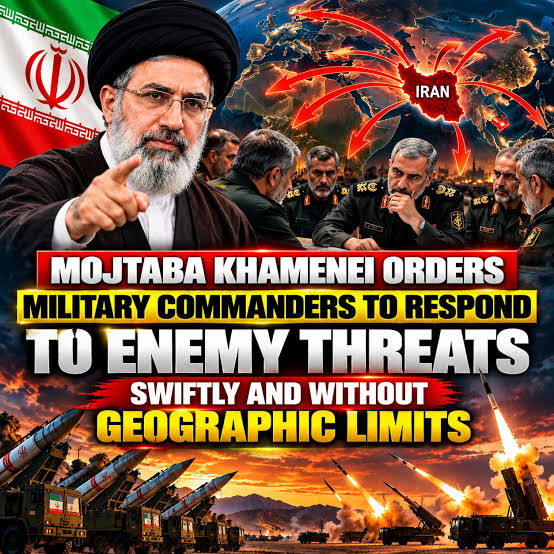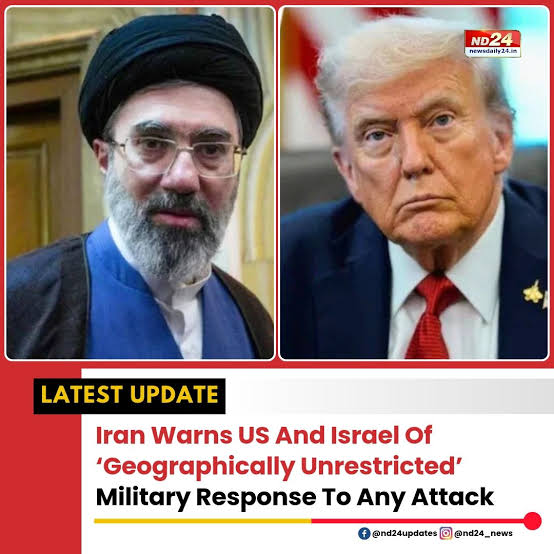
An immediate and powerful response to any renewed military attack.
The latest statement has attracted international attention because it goes beyond conventional warnings of retaliation. Iranian leadership has emphasized that its response would have no geographical limitations and that the country’s armed forces should be prepared to respond to different levels of threats.
The announcement also includes an important instruction concerning Iran’s military target database. According to a statement published on the Supreme Leader’s website, the list should cover different types of American and Israeli assets.
This development raises serious questions about the future of the US-Iran confrontation. It also creates new concerns for countries that host American military personnel and facilities.
According to reporting published on October 31, 2026, the announcement followed a meeting between Khamenei and several senior military commanders. The meeting included the country’s armed forces chief of staff, army chief and Islamic Revolutionary Guard Corps commander.
Dawn+1
The timing is particularly important. Diplomatic efforts are continuing, but both Washington and Tehran remain divided over the conditions required to prevent another round of fighting.
What does Iran’s updated US target list mean?
Iran’s reported decision to update its target list represents a significant development in its military messaging.
The instruction reportedly calls for the inclusion of different tangible and intangible assets belonging to the American and Israeli adversaries. However, the statement does not provide a complete, independently verified list of specific targets.
This distinction matters because military threats and confirmed operational decisions are not the same thing.
The announcement suggests that Iranian leaders want their military planners to consider a wider range of potential targets if another confrontation begins. It also indicates that Tehran wants Washington to understand that renewed military action could carry consequences beyond Iran’s borders.
The phrase unrestricted geographical response has become particularly important in discussions about the announcement.
It suggests that Iran does not want its potential response to be understood as limited to a particular battlefield or geographical area. Nevertheless, the statement does not establish that Iran has decided to attack any particular American facility or location.
For Washington, the warning creates another challenge. American military planners must consider the security of personnel, installations, diplomatic missions and other American interests throughout the region.
The announcement therefore deserves attention, even though its practical military implications remain uncertain.
Dawn+2
Mojtaba Khamenei sends a direct message to Washington
The latest warning also highlights the position of Mojtaba Khamenei in Iran’s political and military leadership.
Khamenei reportedly delivered his message during a meeting with senior commanders responsible for the country’s armed forces. The gathering was significant because it brought together several of Iran’s most influential military officials.
According to the published statement, Khamenei instructed commanders to ensure that threats receive an immediate and effective response.
His message also placed responsibility for determining the timing and conditions of ending hostilities on Iran’s armed forces and the Iranian nation.
This language sends a clear political message to Washington. Tehran wants to demonstrate that it will not necessarily accept American decisions about the timing or limits of a future confrontation.
The statement also comes during a period of uncertainty surrounding the country’s military leadership and its relationship with regional allies.
Iran is attempting to maintain its deterrence strategy while facing military, economic and diplomatic pressure.
However, strong public statements do not automatically translate into military action. The actual response would depend on political decisions, military capabilities and developments on the ground.
For now, Khamenei’s remarks demonstrate that Iran wants to maintain a firm position while diplomatic discussions continue.
Dawn+2
Why American military assets are part of Iran’s warning
One of the biggest concerns surrounding the announcement involves American military presence in the Middle East.
The United States maintains important military relationships and installations across the region. These facilities support different operations, including regional security, surveillance, logistics and cooperation with partner countries.
Iran has repeatedly argued that American military involvement creates security risks for the Islamic Republic.
Several countries in the Persian Gulf host American military personnel and facilities. This creates a complicated situation because any Iranian retaliation against US-linked assets could affect countries that are not directly involved in a decision to attack Iran.
The issue is particularly sensitive for Gulf governments.
These countries have economic, diplomatic and security relationships with Washington. At the same time, they have strong reasons to avoid becoming battlefields in a renewed US-Iran conflict.
Iran’s latest warning therefore has implications beyond the two countries.
It raises questions about the security of military facilities, diplomatic locations and regional infrastructure. It also increases pressure on governments that want to maintain relationships with Washington without provoking Tehran.
The Soufan Center reported on October 29 that Iranian officials and military figures had issued increasingly broad warnings about potential retaliation, including threats involving regional infrastructure.
The Soufan Center+1
Previous attacks have demonstrated the regional risks
The current warning comes after months of serious military confrontation.
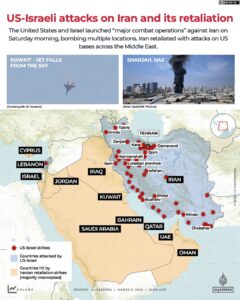
The conflict that began on February 28, 2026, involved US and Israeli strikes against Iranian military and nuclear-related infrastructure. Iran responded with missile and drone attacks against targets in the region.
Although a ceasefire reduced the scale of fighting, tensions did not disappear.
The Council on Foreign Relations reported that disputes continued over the nuclear programme, the Strait of Hormuz and sanctions relief. It also documented further security incidents during October.
Global Conflict Tracker+1
An Associated Press analysis published on October 31 provided another indication of the damage caused during the conflict.
According to its examination of satellite imagery and interviews with regional officials, more than 115 Iranian or Iran-backed drone and missile strikes had damaged or destroyed structures at 26 American bases and sites across the Middle East through August.
The reported damage included aircraft facilities, warehouses, communications equipment, fuel infrastructure and troop accommodation.
These findings demonstrate why the latest Iranian announcement is attracting attention from military analysts.
The security of American facilities is not simply a theoretical concern. The region has already experienced attacks that affected military infrastructure and personnel.
However, the latest announcement should not be interpreted as proof that another attack is imminent. It represents a warning about what Tehran says it could do if the conflict resumes.
AP News+1
Iran’s military strategy could extend beyond traditional battlefields
Iran’s reference to tangible and intangible assets has raised questions about the potential scope of its military planning.
Traditional military confrontations generally focus on military bases, aircraft, ships, missile installations and other defence-related infrastructure.
However, modern conflicts increasingly involve economic pressure, communication systems, maritime security and other strategic interests.
The Soufan Center reported that Iranian hardliners had discussed possible retaliation against energy infrastructure, transportation networks, underwater communication cables and other regional assets.
These reported threats demonstrate the broader nature of the confrontation.
Nevertheless, it is important to distinguish between public threats, reported military discussions and confirmed attack plans. There is no publicly verified evidence that every asset mentioned in such reporting has been formally approved as an operational target.
The wider concern is that a future confrontation could affect more than military installations.
Energy markets, commercial shipping, communications networks and regional economies could also experience disruption.
Such consequences would extend well beyond Washington and Tehran.
The Soufan Center+1
The Strait of Hormuz remains a major concern
The Strait of Hormuz is one of the most strategically important waterways in the world.
It connects the Persian Gulf with the Gulf of Oman and the wider international maritime network. Large volumes of energy supplies pass through this narrow route.
Any prolonged disruption could create serious consequences for international trade and energy markets.
The waterway has already become a major point of disagreement between Washington and Tehran.
Iran has challenged shipping arrangements supported by the United States, while American officials have sought to maintain maritime access and protect commercial shipping.
Recent reports have described incidents involving tankers, projectiles and alleged sea-mine explosions.
These developments have increased concerns about the possibility of another maritime crisis.
For Iran, the Strait of Hormuz represents an important source of strategic leverage. For the United States and its partners, keeping the waterway accessible is a major economic and security priority.
A new military confrontation could therefore create pressure on international oil prices, shipping insurance and supply chains.
The consequences would not remain limited to the Middle East. Countries that depend on imported energy could also experience economic pressure.
Global Conflict Tracker+2
Washington faces growing security and intelligence concerns
Iran’s updated target-list announcement comes alongside growing American concerns about threats to US personnel.
A Reuters report published on October 24 described an intelligence warning from Director of National Intelligence Jay Clayton.
According to the report, the intelligence official warned that Iranian efforts to target American personnel had increased. The warning also described alleged lethal plotting efforts against US citizens in the Middle East and other countries.
The report said American diplomatic missions had adjusted staffing arrangements because of the changing security environment.
These developments illustrate why US officials are closely monitoring Iran’s military statements.
American security planning must account for several possible threats, including missile attacks, drone operations, attacks by regional armed groups and threats to diplomatic personnel.
However, intelligence warnings do not mean that every reported threat will become an actual attack.
They indicate that officials believe additional precautions are necessary.
For the United States, the challenge is to protect its personnel without taking steps that could unintentionally accelerate the confrontation.
MarketScreener UK+1
Iran continues to balance military pressure with diplomacy
Despite its increasingly forceful military language, Iran has not completely closed the door to diplomatic negotiations.
This is one of the most important aspects of the latest developments.
On October 30, a Qatari delegation arrived in Tehran as part of renewed efforts to reduce tensions between Washington and Tehran. The diplomatic initiative followed reported communication involving US Vice President JD Vance.
Iranian officials have also indicated that they are reviewing diplomatic proposals.
However, the two governments continue to disagree over important issues.
Tehran wants changes to the American blockade of Iranian ports, sanctions restrictions and access to frozen financial assets. Washington, meanwhile, wants negotiations to address broader security concerns, including Iran’s nuclear programme.
These disagreements make a comprehensive agreement difficult.
Iran’s military warnings and diplomatic activity are happening simultaneously. This suggests that Tehran is trying to maintain pressure while keeping negotiations available as an alternative to renewed warfare.
For Washington, this creates a difficult strategic decision.
The Trump administration must determine whether diplomatic engagement can produce meaningful progress or whether additional military pressure would be necessary.
The arrival of Qatari mediators is an encouraging development, but it does not guarantee an agreement.
Dawn+3
Why Gulf countries fear becoming targets
Iran’s latest warning has created particular concern among countries hosting American military facilities.
Gulf governments have strong economic and security reasons to avoid another regional war.
Countries such as Qatar, Bahrain, Kuwait, Saudi Arabia and the United Arab Emirates maintain important relationships with the United States. Their territories and infrastructure are also connected to regional military and commercial activities.
However, these governments do not necessarily want to become direct participants in a US-Iran confrontation.
If Iran carries out attacks against American-linked facilities located in neighbouring countries, those governments could face serious security and political consequences.
The risks include:
Damage to important infrastructure.
Disruption of commercial aviation.
Threats to energy production and transportation.
Increased insurance and shipping costs.
Displacement of residents and foreign workers.
Pressure on regional diplomatic relationships.
The Washington Post reported on October 31 that Persian Gulf governments were increasing diplomatic efforts to prevent another confrontation. Their concerns were influenced by the damage and disruption experienced during previous attacks.
The report also highlighted fears that American military installations could expose host countries to Iranian retaliation.
The Washington Post+1
This explains why regional governments are supporting diplomatic efforts even as they strengthen their security arrangements.
For these countries, preventing another war is not simply a diplomatic preference. It is an important economic and national security priority.
Could Iran’s warning lead to another military confrontation?
The possibility of renewed fighting remains one of the biggest questions surrounding the announcement.
Iran’s leadership has made its position clear: any new American or Israeli attack could trigger an immediate response.
However, the announcement alone does not establish that a military confrontation will happen.
Several factors could influence the next stage of the crisis.
First, American military decisions will matter.
The Trump administration must decide how to approach Iran’s nuclear programme, regional military activities and security threats. Any decision to launch additional strikes could create a new escalation.
Second, Iran’s response will influence regional stability.
If Tehran responds to a future attack by targeting American or allied interests, the United States could face pressure to respond again.
Third, diplomatic negotiations could change the situation.
Qatar and other regional actors may help Washington and Tehran identify a temporary arrangement that prevents another round of military action.
Fourth, the economic consequences could influence both governments.
Iran faces serious economic pressure from sanctions and restrictions on its oil trade. The United States and its regional partners also have reasons to avoid prolonged disruption to energy markets and commercial shipping.
These competing interests create an uncertain situation.
Neither side has publicly demonstrated that a lasting political settlement is within reach. At the same time, the risks of another war give both governments reasons to continue exploring diplomatic options.
Investing.com+2
What the updated target list means for Israel
Although the latest announcement directly references American and Israeli assets, Israel remains an important part of the wider confrontation.
The United States and Israel conducted joint military operations against Iran in February 2026.
Iran subsequently treated both countries as central adversaries in its response.
The latest statement therefore indicates that Tehran wants its military preparations to account for threats involving both Washington and Jerusalem.
For Israel, the warning creates additional uncertainty about the potential consequences of another military operation against Iranian territory.
Israeli security officials must consider several possible risks, including missile attacks, drone operations and the involvement of Iran-aligned armed groups.
The situation also presents challenges for American policymakers.
Washington has a close security relationship with Israel, but it must also consider the consequences of a wider conflict involving Gulf partners and international shipping routes.
Any new confrontation could therefore become a regional crisis rather than a limited bilateral exchange.
The central question is whether the parties can establish enough diplomatic confidence to prevent another cycle of attacks and retaliation.
Dawn+2
International markets are watching the developments
The latest warning is also important for the global economy.
The Middle East plays a major role in international energy production and transportation. A prolonged conflict could affect oil supplies, shipping routes and investor confidence.
The Strait of Hormuz is particularly important because of the volume of international energy trade passing through it.
If tensions escalate, shipping companies could face higher insurance costs or choose alternative routes where possible.
Energy markets could also respond to concerns about supply disruptions.
For countries that import large quantities of oil, rising energy prices can increase transportation costs, inflation and pressure on household budgets.
India is among the countries that closely monitor developments in the Persian Gulf because of its energy requirements and economic relationships across the region.
Another confrontation could also affect Indian workers and businesses operating in Gulf countries.
However, the economic impact would depend on the scale and duration of any disruption. A strong political statement does not automatically mean that international oil supplies will be interrupted.
For now, investors and governments are watching whether diplomatic discussions can prevent the crisis from becoming more serious.
Can diplomacy prevent unrestricted retaliation?
Diplomacy remains the most important available option for preventing a wider conflict.
Qatar has emerged as an important intermediary in the latest discussions. Other regional governments also have strong incentives to encourage communication between Washington and Tehran.
A successful diplomatic arrangement would need to address several difficult issues.
These include:
Preventing new American and Israeli attacks on Iranian territory.
Establishing clear commitments concerning regional security.
Addressing disputes over Iran’s nuclear programme.
Discussing sanctions and restrictions on Iranian trade.
Protecting commercial shipping through the Strait of Hormuz.
Reducing the risk of attacks against civilian infrastructure.
Achieving progress on these issues will require compromises from both sides.
Iran wants relief from economic pressure and assurances against further military action. The United States wants security guarantees and progress on issues that it considers important to regional stability.
These positions remain far apart.
Nevertheless, continued communication could reduce the risk of miscalculation.
A temporary understanding may also create an opportunity for broader negotiations.
The latest announcement demonstrates the seriousness of Iran’s military messaging. However, the arrival of diplomatic representatives in Tehran suggests that political negotiations remain possible.
Dawn+2
Conclusion: Iran’s updated US target list raises the stakes
Iran’s reported decision to update its target list marks another significant development in the ongoing confrontation with the United States and Israel.
Supreme Leader Mojtaba Khamenei has called for an immediate and geographically unrestricted response to renewed attacks. His statement also directs senior commanders to consider a wider range of American and Israeli assets.
The announcement raises concerns about American military personnel, regional infrastructure, Gulf security and international shipping.
However, it is important to separate Iran’s public warnings from confirmed military operations. No complete, independently verified target list has been published in the available reporting.
The situation remains uncertain because military pressure and diplomatic negotiations are continuing at the same time.
The coming days could prove important for determining whether Qatar’s mediation efforts can produce meaningful progress.
For Washington and Tehran, the challenge is to avoid another cycle of attacks that could spread across the Middle East.
Iran’s unrestricted response warning has raised the stakes, but whether it leads to another confrontation or strengthens diplomatic negotiations remains to be seen.
Frequently Asked Questions (FAQs)
1. Why is Iran updating its US target list?
Iran’s Supreme Leader Mojtaba Khamenei reportedly instructed military commanders to update the country’s target database to include different tangible and intangible American and Israeli assets. The instruction is intended to prepare for possible retaliation if the United States or Israel launches another attack.
Dawn+1
2. What does Iran mean by an unrestricted geographical response?
The phrase suggests that Iran does not want its potential retaliation to be limited to a particular geographical area. It indicates a willingness to consider a wider response if another military confrontation begins.
Financial Times+1
3. Has Iran published its complete list of American targets?
No complete, independently verified operational target list has been published in the reporting examined. Iran’s statement refers broadly to American and Israeli assets without providing a comprehensive list of specific locations.
4. Could American military bases in the Middle East be affected?
American military facilities in the region could face security risks if another confrontation begins. Previous Iranian and Iran-backed attacks have already damaged American military infrastructure in several Middle Eastern countries.
AP News+1
5. Is the United States preparing another attack on Iran?
There have been reports about American military options and discussions surrounding possible renewed strikes. However, these reports do not establish that a new attack has been officially ordered.
ABC News+1
6. Is Iran still interested in diplomatic negotiations?
Yes. Iran has continued diplomatic engagement, while Qatari representatives have travelled to Tehran to support efforts to reduce tensions. However, major disagreements over sanctions, security and the nuclear programme remain unresolved.
Dawn+1
7. Why is the Strait of Hormuz important in this conflict?
The Strait of Hormuz is a strategically important international shipping route for energy supplies. Any major disruption could affect oil prices, international trade and countries that depend on imported energy.
8. Could the Iran-US conflict affect India?
Yes. A wider conflict could affect India’s energy imports, shipping costs, trade and Indian nationals working in Gulf countries. The extent of the impact would depend on the duration and severity of any escalation.
9. What role is Qatar playing in the Iran-US crisis?
Qatar is acting as an intermediary in diplomatic efforts between Iran and the United States. Its involvement is intended to encourage negotiations and reduce the possibility of renewed military confrontation.
Dawn+1
10. Does Iran’s announcement mean war is inevitable?
No. The announcement represents a serious military warning, but it does not prove that another war is inevitable. Diplomatic discussions remain active, and negotiations could still prevent further escalation.
About the Author