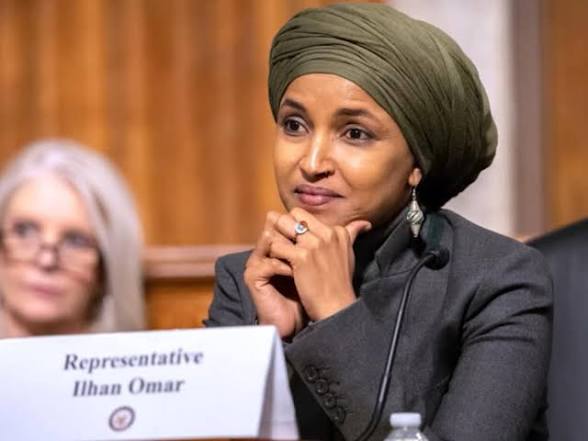
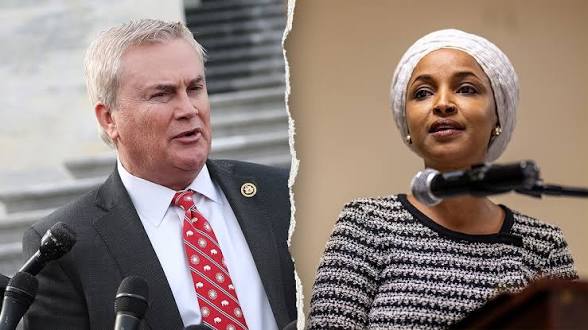
ILHAN OMAR IDENTITY BOMBSHELL: Jeanine Pirro Addresses Claims Representative Used Alias In Federal Filings
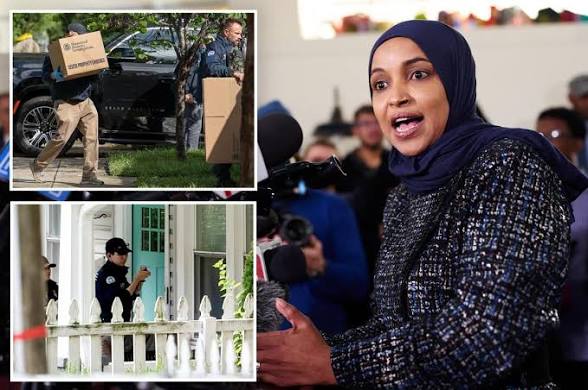
The Ilhan Omar identity controversy has intensified following a federal court filing that listed the Minnesota congresswoman under an additional name. The development has attracted national attention, sparked political debate, and raised questions about the difference between an alternative name appearing in a legal document and proof of wrongdoing.
The controversy also brings U.S. Attorney Jeanine Pirro into the spotlight. Pirro has acknowledged that her office is examining separate questions involving Omar’s financial disclosures. Meanwhile, the federal investigation connected to Omar’s immigration history has prompted renewed scrutiny of older allegations about her identity and family background.
Conservative commentators have presented the latest filing as a significant development. Omar, however, has rejected accusations that she used a false identity, while her spokesperson has described the claims as false.
The central question is what the available documents actually establish. Although the use of an additional name in a court filing is a verifiable development, it does not independently prove that a public official committed fraud, misrepresented her identity, or violated immigration law.
Understanding this distinction is essential as the investigation develops and political claims continue to circulate.
What Did the Federal Filing Say About Ilhan Omar’s Name?

The controversy grew after a Justice Department motion filed in federal court on October 21, 2026. The document referred to the congresswoman as “Ilhan Nur Said Elmi, a/k/a Ilhan Abdullahi Omar.”
In legal documents, the abbreviation “a/k/a” means “also known as.” It can identify a person by another name associated with that individual. However, the wording alone does not explain why prosecutors included both names or establish that either name was used fraudulently.
According to reporting by Al Jazeera and Fox News, the filing became a major focus of public discussion after reports questioned whether Omar had used another name in official records.
The document is significant because it forms part of an active federal investigation. Nevertheless, a court filing is not the same as a judicial finding. Prosecutors can investigate allegations and use identifying information in legal documents without a court having determined that a crime occurred.
The distinction matters in this case because the public has not been presented with a final judicial ruling establishing identity fraud.
The filing also does not, by itself, demonstrate that Omar knowingly provided false information on immigration applications, tax records, election documents, or other official forms.
Those questions would require evidence beyond the mere appearance of an additional name.
Jeanine Pirro’s Role in the Federal Investigation
Jeanine Pirro, the U.S. attorney for the District of Columbia, has become a central figure in the wider controversy.
On October 22, reports highlighted a motion submitted by Pirro’s office seeking additional time before responding to requests from media organizations to unseal records connected to the search warrant for Omar’s Washington residence.
The government argued that more time was necessary because the search warrant had not yet been fully executed. The motion did not publicly resolve the questions surrounding Omar’s identity.
The request also illustrates why some details of an active investigation remain unavailable to the public. Search warrants may be accompanied by supporting affidavits and other materials that courts keep sealed while investigative work continues.
Journalists and public-interest organizations have sought access to records related to the search. Their requests reflect broader questions about transparency, public accountability, and the limits of secrecy in investigations involving elected officials.
Pirro’s office is also examining a separate matter involving Omar’s financial disclosures. That inquiry concerns previously reported changes to the congresswoman’s reported household assets.
These investigations should not automatically be treated as one case. The immigration inquiry concerns historical paperwork and questions about citizenship, while the financial investigation concerns disclosure forms and the reporting of assets.
Although the inquiries involve the same public official, each requires its own evidence and legal analysis.
Why Is the Alias Allegation Receiving So Much Attention?
The allegation has attracted attention because it connects three politically sensitive issues: immigration, citizenship, and the accountability of elected representatives.
Omar was born in Somalia and arrived in the United States as a refugee with her family in the 1990s. She later became a naturalized U.S. citizen in 2000 and was elected to Congress in 2018.
Her background has made her a frequent target of political attacks, particularly during debates about immigration policy and the role of Somali Americans in public life.
The new filing has given critics a fresh reason to question her immigration history. Some commentators argue that the appearance of another name warrants closer examination of historical records.
Others caution that the filing has been used to promote conclusions that the document itself does not establish.
That disagreement has helped the story spread across television, social media, and political commentary.
However, the importance of the allegation should not be confused with proof of its accuracy. A claim can generate substantial political attention before investigators or courts have established the underlying facts.
For readers following the story, the most useful approach is to separate three things: what the document actually says, what sources claim it means, and what a court has formally determined.
How Ilhan Omar Responded to the Identity Claims
Omar has rejected the suggestion that she used a false identity.
In comments reported by Fox News Digital on October 23, she identified herself as Ilhan Abdullahi Omar. Her spokesperson also disputed reports claiming that her real name was Ilhan Nur Said Elmi.
The congresswoman has described the wider investigation as politically motivated and has denied wrongdoing related to her immigration history.
Her response has been consistent with her broader criticism of the federal investigation. Following the search of her Washington home on October 12, Omar argued that authorities were targeting a political opponent.
Her lawyers have also challenged the legality and handling of the search. The Associated Press reported that her legal team demanded the return of seized property and raised concerns about whether investigators followed the court’s instructions. The Justice Department rejected the allegations that its agents failed to comply with legal obligations.
These disputes remain important to the developing story. Investigators have their own responsibilities, while the subject of an investigation retains the right to challenge government actions and defend against allegations.
A fair assessment must include both the government’s investigative steps and Omar’s response.
It would be inaccurate to describe the identity allegation as proven simply because prosecutors included another name in a court document. Equally, the existence of an investigation does not mean the questions will necessarily disappear without further examination.
The evidence and any eventual court findings will determine the legal outcome.
What Does “Also Known As” Mean in Legal Documents?
The phrase “also known as,” commonly abbreviated as “a/k/a,” is used in legal and administrative records to connect an individual with another name.
Such references can arise for several reasons. A person may have a birth name, a married name, a professional name, a transliteration of a name written in another language, or another name used in earlier records.
The meaning depends on the circumstances and supporting evidence.
In some investigations, prosecutors use alternative names to identify a person whose records appear under different forms of a name. In other circumstances, the use of a different name may become relevant to allegations of deception.
Neither possibility should be assumed without examining the facts.
This distinction is particularly important when names come from cultures with different naming conventions. Somali names, for example, may include personal names and the names of a person’s father and grandfather. Naming practices do not always correspond neatly to Western first-name, middle-name, and surname conventions.
The Minnesota Star Tribune has discussed Somali naming conventions in its coverage of the controversy.
That context does not settle the specific questions raised by the federal filing. Instead, it demonstrates why investigators and courts must examine the relevant documents and naming history rather than rely on assumptions.
The key issue is not simply whether two names appear in a record. It is whether the names were used in a way that violated a specific law, and whether the evidence establishes the required elements of that violation.
Could Using Another Name Lead to Legal Consequences?
Potentially, but the legal consequences would depend on the facts.
Using more than one name is not automatically a crime in the United States. A name discrepancy may be entirely lawful, particularly when it reflects a legitimate change or variation.
The legal analysis becomes more serious if investigators establish that someone knowingly supplied materially false information on an official document to obtain an immigration benefit, evade a legal requirement, or commit another offense.
Even then, authorities would need to identify the relevant law and prove the necessary elements.
For Omar, the broader investigation reportedly concerns historical immigration paperwork and questions about information supplied when she or her family entered the United States and later obtained citizenship. Reuters reported that investigators were examining allegations involving false statements, conspiracy, and immigration fraud. Those remain investigative allegations, not established findings of guilt.
Several questions would matter in any potential legal case:
What names appear on the original immigration and citizenship records?
Why were those names used?
Did any differences result from naming conventions, transliteration, clerical errors, or another explanation?
Did the applicant knowingly provide materially false information?
Did any alleged misrepresentation affect eligibility for an immigration benefit?
What evidence can investigators authenticate and present in court?
The answers would determine whether a discrepancy has legal significance.
It is also important to distinguish criminal prosecution from proceedings that could affect citizenship. Different legal standards and procedures may apply, and neither outcome follows automatically from an allegation about a name.
At present, the public reporting cited here does not establish that a court has found Omar guilty of identity or immigration fraud.
How the Identity Dispute Connects to the Immigration Probe
The identity controversy emerged amid a wider federal investigation into Omar’s immigration history.
Federal agents searched her Washington, D.C., home on October 12, 2026, under a court-authorized warrant. Reporting by The Washington Post and Reuters indicates that investigators are examining allegations concerning historical immigration paperwork and whether information supplied by Omar or her family was accurate.
The investigation reportedly includes questions about dates of birth, citizenship records, and information submitted when Omar’s family came to the United States.
These are significant questions because U.S. citizenship obtained through naturalization can be challenged under certain circumstances if authorities establish that it was unlawfully obtained. However, revoking citizenship requires a proper legal process and sufficient evidence.
Omar has denied wrongdoing and described the investigation as political intimidation. Her legal team has also challenged the government’s actions surrounding the search.
The identity issue is therefore one part of a larger investigation. It should not be treated as conclusive proof of immigration fraud or as evidence that citizenship has already been revoked.
The next important developments will likely involve the evidence investigators collect, the court’s handling of sealed records, and any formal legal action that follows.
The Separate Financial Disclosure Investigation
Pirro’s involvement also relates to questions about Omar’s financial disclosures.
According to Axios, a previous financial disclosure listed assets held by Omar and her husband within a range of approximately $6 million to $30 million. Omar subsequently amended the disclosure to report a substantially lower range, with her team attributing the earlier figures to accounting errors.
The discrepancy attracted scrutiny from congressional oversight bodies. Reporting in September indicated that the Office of Congressional Conduct recommended against findings of misconduct and recommended dismissing the allegations concerning her disclosures.
Pirro subsequently confirmed that her office was examining the matter independently.
This distinction is important. An oversight body’s recommendation does not necessarily prevent a separate law-enforcement investigation, but an investigation does not establish that a crime occurred either.
The financial questions and identity claims also involve different evidence. Financial records may be relevant to disclosures and reporting obligations, while immigration documents concern identity, entry into the United States, and citizenship.
Readers should avoid treating developments in one investigation as automatic confirmation of allegations in the other.
Political Reactions and the Broader Debate
The dispute has quickly become part of the wider political conflict between President Donald Trump and Omar, a prominent Democratic critic of his administration.
Trump has publicly questioned Omar’s identity and called for her resignation. Republican commentators have also argued that the federal investigation deserves close scrutiny.
Democrats and Omar’s supporters, meanwhile, have questioned the timing of the investigation and warned against presenting allegations as established facts before the legal process has concluded.
The timing has attracted additional attention because Omar is seeking reelection in November 2026. The Washington Post has noted concerns about investigative actions involving political candidates shortly before an election, when public announcements can affect voters’ perceptions.
The competing arguments raise a broader question: how can authorities investigate serious allegations involving a public official while protecting due process and avoiding the appearance of political interference?
There is no simple answer. Investigators must be able to pursue credible evidence regardless of a person’s political position. At the same time, public officials should not be declared guilty through headlines, partisan commentary, or social media speculation.
The public has a legitimate interest in transparency, particularly when an investigation involves a member of Congress. Yet transparency must be balanced with the rights of the person under investigation and the integrity of legal proceedings.
Ultimately, the strength of the evidence matters more than the political prominence of the people involved.
What Happens Next in the Ilhan Omar Identity Controversy?
Several developments could help clarify the dispute in the coming weeks.
First, the government may provide additional information about the search warrant and the reasons for identifying Omar by two names. Some investigative records may remain sealed, but future court decisions could make further details available.
Second, investigators may continue examining immigration records, family documents, and other materials. Any conclusions would depend on the authenticity, relevance, and interpretation of that evidence.
Third, Omar’s legal team may continue challenging the investigation and seeking access to information about the search. Disputes over seized materials and investigative procedures could also reach the courts.
Finally, prosecutors will have to determine whether the available evidence justifies further legal action. An investigation can end without charges, lead to charges, or produce other legal proceedings, depending on its findings.
As of October 25, 2026, the reporting reviewed for this article does not establish a judicial finding that Omar committed identity fraud. The appearance of another name in a filing is a documented development, but the meaning of that reference remains contested.
For now, the most responsible conclusion is that the identity controversy has become a significant part of a developing federal investigation, while the central allegations remain unresolved.
Conclusion
The Ilhan Omar identity controversy has intensified following a federal court filing that listed the congresswoman as “Ilhan Nur Said Elmi, a/k/a Ilhan Abdullahi Omar.” The document has raised questions about her naming history and prompted renewed scrutiny of her immigration records.
Jeanine Pirro’s role has attracted additional attention because her office is handling a separate investigation into Omar’s financial disclosures and has sought to keep certain search-warrant materials sealed while investigative work continues.
Omar has rejected claims that she used a false identity and denied wrongdoing. Her legal team has also challenged the government’s actions.
The distinction between an allegation and a proven offense remains central to the story. A court filing can reveal investigative interest, but it does not automatically establish criminal conduct.
As the case develops, verified records, official statements, and judicial decisions will be more informative than speculation. Readers should follow those developments carefully and avoid treating unproven claims as established facts.
Frequently Asked Questions (FAQs)
1. Why is Ilhan Omar’s identity making headlines?
Omar’s identity has become a major news topic after a federal court filing identified her as “Ilhan Nur Said Elmi, a/k/a Ilhan Abdullahi Omar.” The filing prompted questions about her naming history, although it does not independently prove identity fraud.
2. What did Jeanine Pirro say about Ilhan Omar?
Pirro has publicly acknowledged that her office is investigating questions involving Omar’s financial disclosures. Her office also filed a motion seeking additional time before responding to requests to unseal records connected to the search of Omar’s home. The financial inquiry is separate from the immigration investigation.
3. Is Ilhan Omar accused of using an alias?
A federal filing used an additional name alongside Ilhan Abdullahi Omar. Some reports have described this as an alias, but the filing does not establish that Omar fraudulently used a false identity. Her spokesperson has disputed the allegations.
4. Has Ilhan Omar been found guilty of identity fraud?
The reporting reviewed for this article does not establish that a court has found Omar guilty of identity fraud. An investigation or court filing is not the same as a conviction.
5. Why did federal agents search Ilhan Omar’s home?
Federal agents searched Omar’s Washington, D.C., residence on October 12, 2026, under a court-authorized warrant. Reports indicate that the investigation concerns allegations about historical immigration paperwork and citizenship. Omar has denied wrongdoing.
6. Could Ilhan Omar lose her U.S. citizenship?
Citizenship can be challenged through legal proceedings in certain circumstances, including when naturalization was unlawfully obtained. However, an investigation or disputed name reference does not automatically revoke citizenship. Any action would require an appropriate legal process.
7. What does “a/k/a” mean in the federal filing?
“A/k/a” means “also known as.” It is used to identify someone by another name. Its appearance in a legal document does not, by itself, establish that the person committed fraud.
8. Is the identity investigation connected to Omar’s financial disclosures?
The identity and immigration investigation is distinct from the financial disclosure inquiry acknowledged by Pirro’s office. Both involve Omar, but they concern different questions and must be assessed separately.
9. What has Ilhan Omar said about the allegations?
Omar has maintained that her name is Ilhan Abdullahi Omar and rejected claims that she used a false identity. She has also described the wider investigation as politically motivated.
10. When will the Ilhan Omar identity controversy be resolved?
There is no confirmed resolution date. Further court filings, investigative findings, or legal proceedings may clarify the disputed questions. Until then, the allegations should not be presented as proven facts.
How useful was this post?
Click on a star to rate it!
Average rating 0 / 5. Vote count: 0
No votes so far! Be the first to rate this post.
About the Author

usa5911.com
Administrator
Hi, I’m Gurdeep Singh, a professional content writer from India with over 3 years of experience in the field. I specialize in covering U.S. politics, delivering timely and engaging content tailored specifically for an American audience. Along with my dedicated team, we track and report on all the latest political trends, news, and in-depth analysis shaping the United States today. Our goal is to provide clear, factual, and compelling content that keeps readers informed and engaged with the ever-changing political landscape.