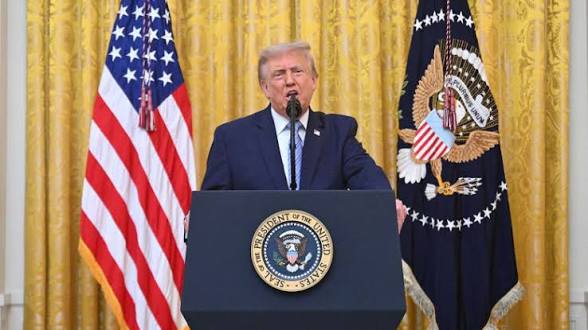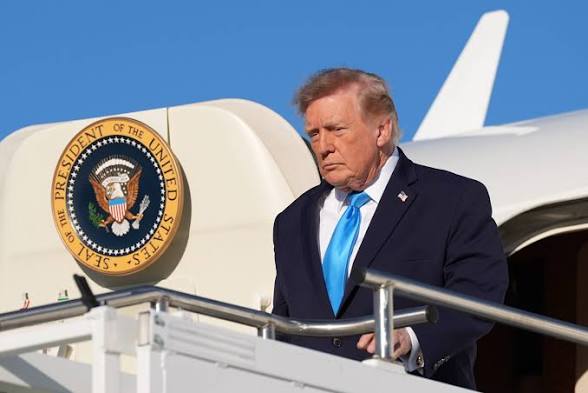
President Donald Trump has approved the execution by firing squad of former U.S. Army Major Nidal Malik Hasan, who was sentenced to death for the 2009 Fort Hood shooting that killed 13 people and wounded 32 others.
The decision marks a major development in one of the longest-running military death penalty cases in the United States. Defense Secretary Pete Hegseth recommended the firing squad method, and Pentagon spokesman Sean Parnell confirmed that Trump approved the recommendation.
However, Hasan has not yet been executed. The Secretary of the Army will determine the time and place of the execution. Further legal action could also affect when the sentence is ultimately carried out.
If the execution proceeds, it would be the first U.S. military execution since 1961. It would also represent an extraordinarily rare use of a firing squad by the U.S. military.
Trump Approves Nidal Hasan Execution
The Trump administration’s decision moves Hasan’s death sentence closer to implementation more than 17 years after the Fort Hood attack.
Pentagon spokesman Sean Parnell announced that Hegseth had recommended death by an Army firing squad and that Trump had approved the recommendation. Parnell also said the Army Secretary would determine when and where the execution would occur.
The presidential approval is particularly important because military death sentences require presidential authorization before they can be carried out.
Hasan was sentenced to death by a military jury in 2013 after being convicted of 13 counts of premeditated murder and 32 counts of attempted premeditated murder.
His case then moved through years of mandatory military appeals and later federal judicial review.
In 2025, the U.S. Supreme Court declined to hear his challenge, removing another major obstacle to the death sentence.
What Happened at Fort Hood?
The Fort Hood shooting occurred on November 5, 2009, at the U.S. Army installation in Texas.
Hasan was serving as an Army psychiatrist when he opened fire at a Soldier Readiness Processing Center. Soldiers were receiving medical care and preparing for deployment when the attack occurred.
Thirteen people were killed, while 32 others were wounded.
The attack became one of the deadliest shootings ever carried out on a U.S. military installation. It also generated intense debate about military security, radicalization, mental health, and how the government should classify violence involving members of the armed forces.
Hasan was eventually shot by police officers during the attack. He survived but was left paralyzed from the waist down.
He was arrested and later prosecuted through the military justice system.
Nidal Hasan Was Sentenced to Death in 2013
Hasan’s court-martial began several years after the shooting.
During the proceedings, Hasan represented himself. He acknowledged that he was responsible for the attack and argued that his actions were connected to his opposition to U.S. military operations in Muslim-majority countries.
Military prosecutors presented extensive evidence during the trial. Hasan was ultimately convicted of 13 counts of premeditated murder and 32 counts of attempted premeditated murder.
The military jury unanimously recommended a death sentence.
On August 28, 2013, Hasan was formally sentenced to death. The punishment also included dismissal from the Army and forfeiture of his pay and allowances.
Because military death sentences automatically receive extensive appellate review, however, the sentence could not simply be carried out immediately.
Why Did the Case Take So Long?
The lengthy delay reflects the unusual nature of military capital punishment.
Death sentences imposed by military courts are subject to mandatory appellate review. Hasan’s case therefore went through multiple levels of military courts before reaching the Supreme Court.
The U.S. Army Court of Criminal Appeals upheld the conviction and death sentence. The U.S. Court of Appeals for the Armed Forces later did the same.
Hasan subsequently sought review by the Supreme Court. The high court declined to take up his challenge in 2025.
That decision left presidential approval as a critical remaining step before the military could move toward an execution.
Trump’s latest decision therefore represents a significant procedural milestone.
Why a Firing Squad?
The decision to use a firing squad is one of the most notable aspects of the case.
Lethal injection has traditionally been the primary method associated with executions in the United States. However, concerns over drug availability and difficulties with lethal injection procedures have prompted authorities to consider alternative methods.
The Trump administration has supported expanding available execution methods.
Earlier in 2026, the Justice Department moved toward allowing methods including firing squads, electrocution and lethal gas in federal executions.
Firing squads remain uncommon in the United States. A small number of states allow the method, including Utah, South Carolina, Idaho, Oklahoma and Mississippi.
South Carolina carried out several firing squad executions in 2025, highlighting the method’s return to the American capital punishment debate.
For the military, however, the method is even more unusual.
First U.S. Military Execution Since 1961
If carried out, Hasan’s execution would be the first U.S. military execution in more than six decades.
The last military execution occurred on April 13, 1961, when Army Pvt. John A. Bennett was hanged at Fort Leavenworth, Kansas, after being convicted of rape and attempted murder.
The military’s history with firing squads goes back even further.
The last known U.S. military firing squad execution occurred in 1945, when Army Pvt. Eddie Slovik was executed by firing squad in France during World War II after being convicted of desertion.
That history makes the Hasan case particularly significant.
If the Army carries out the order, it would represent the return of military executions after a 65-year gap.
When Will Nidal Hasan Be Executed?
No execution date has been announced.
According to the Pentagon, the Secretary of the Army will determine the time and place of the execution.
Therefore, headlines describing Hasan as already executed would be inaccurate.
Trump has approved the execution method and the death sentence can now move toward implementation. However, legal proceedings can still create delays.
Hasan may seek additional review in federal court. Legal experts have noted that such proceedings could potentially delay an execution for years.
The precise timetable will depend on the remaining legal process and military authorities.
What Happens After Trump’s Approval?
Trump’s approval does not mean an execution takes place immediately.
Several steps remain.
First, Army officials must establish the execution arrangements. The Secretary of the Army has authority to determine the time and location.
Second, Hasan can potentially pursue additional legal remedies through the civilian federal court system.
Third, military officials must complete the procedures required for a capital punishment case.
The process is therefore likely to receive intense legal and public scrutiny.
The fact that Hasan has already spent years challenging his conviction and sentence also means the case could remain in the courts even after Trump’s approval.
Fort Hood Victims and Their Families
The 2009 shooting left a lasting impact on the families of the 13 people who died and the many people who were wounded.
During Hasan’s 2013 sentencing hearing, family members described the devastating consequences of the attack.
The official Army account of the sentencing records testimony from relatives of several victims. Some family members said the death sentence represented justice after years of waiting.
For survivors and relatives, Trump’s decision may therefore represent the latest chapter in a case that has lasted for well over a decade.
At the same time, the use of a firing squad is likely to renew debate about capital punishment itself.
Death Penalty Debate Returns to the Spotlight
Hasan’s case arrives during renewed national debate about execution methods.
Supporters of capital punishment argue that the most serious crimes deserve the strongest possible punishment. In Hasan’s case, supporters of the sentence point to the large number of victims and the military jury’s unanimous decision.
Opponents of the death penalty argue that governments should not use capital punishment, regardless of the crime.
The firing squad decision adds another layer to that debate.
Critics have questioned whether firing squads are an appropriate modern execution method. Death penalty opponents have also criticized the Trump administration’s broader efforts to expand available execution methods.
The controversy has gained additional attention following problems with lethal injection procedures in Tennessee.
A recent failed lethal injection attempt involving death-row inmate Christa Pike intensified questions about the reliability of execution protocols and the availability of suitable drugs.
What Makes the Hasan Case Different?
The Hasan case differs from most modern death penalty cases because it involves military law.
Military capital cases operate under a different legal framework from ordinary state prosecutions.
Hasan was not sentenced by a civilian jury in a state court. Instead, he was prosecuted through a court-martial because he was an Army officer at the time of the attack.
The military justice system also requires presidential involvement in carrying out a death sentence.
That is why Trump’s approval is such a significant part of the process.
The case also stands out because the U.S. military has not executed anyone since 1961.
Consequently, the legal and logistical arrangements surrounding Hasan’s possible execution are likely to receive considerable attention.
Hasan Remains on Military Death Row
Hasan has been held at the U.S. Disciplinary Barracks at Fort Leavenworth, Kansas.
He is among the small number of people on military death row.
Other military prisoners facing death sentences include individuals whose cases date back many years. The lengthy delays demonstrate how rarely the military carries out capital punishment.
Hasan’s sentence has survived multiple levels of judicial review.
The Supreme Court’s refusal to hear his case in 2025 was a major development. Trump’s approval in 2026 now brings the case closer to its final stage.
Still, legal challenges remain possible.
A Historic Moment for the U.S. Military
Trump’s approval has created a historic situation.
If the sentence is carried out, the execution would be:
- The first U.S. military execution since 1961.
- The first military firing squad execution in decades.
- One of the rare modern uses of a firing squad in the United States.
- The culmination of more than 17 years of legal proceedings following the Fort Hood shooting.
The case also demonstrates how a military death sentence can remain unresolved for many years because of mandatory appeals and presidential review.
For now, however, the most important distinction is that the execution has been approved, not completed.
The Army still has to set the execution date and location, while Hasan may have additional opportunities to seek judicial intervention.
What Comes Next for Nidal Hasan?
The next major announcement is expected to come from the Army concerning the execution schedule.
Until then, Hasan remains on military death row at Fort Leavenworth.
Any federal court filing could potentially affect the timeline. Likewise, questions about the execution procedure could generate additional litigation.
The Trump administration’s decision has nevertheless brought the case to a pivotal point.
More than 17 years after the Fort Hood shooting, the government has formally moved toward carrying out the death sentence imposed in 2013.
Whether the execution occurs quickly or becomes tied up in additional litigation remains uncertain.
For victims’ families, military officials and death penalty opponents alike, the case now represents a defining moment in the modern history of military capital punishment.
Frequently Asked Questions
Who is Nidal Hasan?
Nidal Malik Hasan is a former U.S. Army major and psychiatrist who was convicted for the November 5, 2009, shooting at Fort Hood, Texas. The attack killed 13 people and wounded 32 others. He was sentenced to death by a military jury in 2013.
Did Trump approve Nidal Hasan’s execution?
Yes. President Donald Trump approved an execution by U.S. Army firing squad after Defense Secretary Pete Hegseth recommended the method.
Has Nidal Hasan already been executed?
No. As of October 6, 2026, Hasan has not been executed. The Secretary of the Army must still determine the time and place of the execution.
When will Nidal Hasan be executed?
An execution date has not yet been announced. The Army Secretary will determine the time and location. Additional legal proceedings could also delay the execution.
How many people died in the Fort Hood shooting?
Thirteen people were killed in the 2009 Fort Hood shooting. Another 32 people were wounded.
When was Nidal Hasan sentenced to death?
Hasan was sentenced to death in August 2013 after a military jury convicted him of 13 counts of premeditated murder and 32 counts of attempted premeditated murder.
Why is a firing squad being used?
Defense Secretary Pete Hegseth recommended a firing squad, and Trump approved the method. Firing squads are among the alternative execution methods receiving renewed attention in the United States as authorities face challenges involving lethal injection.
When was the last U.S. military execution?
The last U.S. military execution occurred in 1961, when Army Pvt. John A. Bennett was hanged at Fort Leavenworth.
Is a firing squad legal in the United States?
Yes. Several U.S. states permit firing squads under specified circumstances. The method is rare, however. South Carolina carried out firing squad executions in 2025.
Can Nidal Hasan still challenge his execution?
Potentially. Although his death sentence has survived military appeals and the Supreme Court declined review in 2025, further federal court proceedings could potentially delay the execution.
Why is the Hasan case historically significant?
If carried out, Hasan’s execution would be the first U.S. military execution since 1961. It would also represent an exceptionally rare modern military firing squad execution, making the case significant in the history of U.S. military justice and capital punishment.
About the Author