IRAN AIRBASE TERROR PLOT: UK PM exposes proxy attack, RAF Fairford targeted, regime denials exposed as massive lies
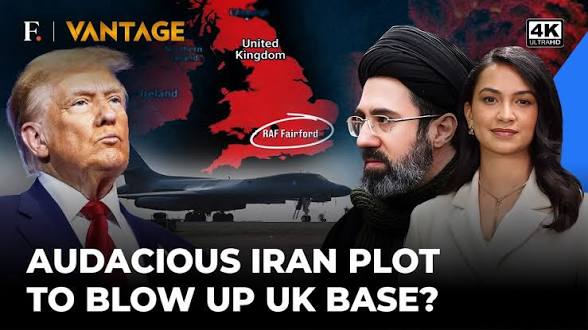
The investigation into a suspected terror incident near RAF Fairford has taken a major turn after UK Prime Minister Andy Burnham said there were “strong indications” that Iran played a part.
British counter-terrorism police have now made another arrest in the investigation. The latest development has increased scrutiny of whether the suspects were acting independently or were potentially connected to a foreign state.
However, investigators have not publicly established the full chain of responsibility. Iran has denied involvement, and no court has found the suspects guilty of terrorism.
The case remains active.
RAF Fairford terror plot investigation expands
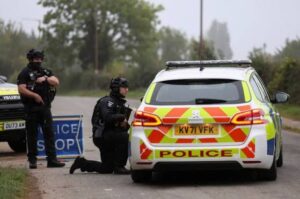
The incident began during the early hours of September 27, when police received reports of suspicious vehicles close to RAF Fairford in Gloucestershire.
Five men in their twenties were arrested after authorities responded to reports involving three vans. The incident triggered a major security operation, including a cordon and precautionary evacuation of residents in the nearby area.
Counter Terrorism Policing subsequently took control of the investigation.
The suspects were initially detained on suspicion of explosives-related offences. They were later investigated under terrorism legislation.
Police subsequently confirmed that petrol had been found in the vehicles, but no explosive device was discovered.
That distinction is important.
Early reports and political comments created fears of an imminent bombing attempt. Yet investigators have not announced that a functioning bomb was present.
The precise objective of the group therefore remains one of the central questions in the case.
UK PM says Iran played a part
The biggest political development came on September 30.
Prime Minister Andy Burnham said there were “strong indications that Iran played a part” in what happened near RAF Fairford.
At the same time, he stressed that the investigation remained complex and serious.
That wording matters because it indicates that British authorities have evidence or intelligence pointing toward possible Iranian involvement, but it does not publicly establish exactly how Tehran was allegedly connected to the five men.
Counter Terrorism Policing has also said investigators are examining possible foreign-state involvement.
Authorities are therefore considering whether the suspects may have been acting as proxies, whether they knowingly understood who was behind any alleged operation, or whether another explanation eventually emerges.
Sixth suspect arrested in London
The investigation moved into a new phase on October 1.
Counter Terrorism Policing announced the arrest of a dual UK-Iranian national in Westminster.
Police said the man was arrested on suspicion of preparing terrorist acts under Section 5 of the Terrorism Act 2006.
Authorities also searched two properties in the London area.
The arrest followed the detention of five other men near RAF Fairford.
Police said the investigation was “hugely complex” and that specialists were examining multiple lines of inquiry, including potential foreign-state involvement.
The latest arrest does not, by itself, establish Iranian state responsibility.
It does, however, demonstrate that investigators believe the case extends beyond the original arrests near the airbase.
Why RAF Fairford matters
RAF Fairford is not an ordinary military location.
The Gloucestershire base hosts the U.S. Air Force’s 501st Combat Support Wing and has played an important role in American military operations.
During the current conflict with Iran, U.S. aircraft have operated from the facility.
That strategic role has made the base particularly sensitive.
Reports have also highlighted previous Iranian warnings concerning Western military facilities involved in attacks against Iranian territory.
As a result, security officials have been particularly alert to the possibility of retaliation or disruption around facilities supporting American military operations.
The suspected incident therefore occurred against a highly sensitive geopolitical background.
What happened near the base?
According to reports, three suspicious vans were observed near the airbase during the early hours of September 27.
A local resident alerted emergency services after encountering unusual activity involving vehicles and masked or hooded individuals.
Police responded rapidly.
A large security operation followed, with armed officers and bomb-disposal specialists deployed to the area.
Approximately 85 households in nearby Whelford were reportedly advised to evacuate as a precaution.
The response reflected the seriousness of the initial threat assessment.
But searches did not uncover an explosive device.
Instead, investigators found a quantity of petrol.
That discovery has left investigators with several possibilities.
The vehicles could have been connected to an intended attack. They could have been part of a disruptive operation. They could have been used for another form of criminal activity.
Or the incident could have been designed to test security around the base.
Police have not publicly settled the question.
Was it really a proxy attack?
This is one of the most important unanswered questions.
A proxy operation generally involves one actor using another person or group to carry out an action while attempting to hide or distance itself from direct responsibility.
British counter-terrorism authorities have explicitly said they are examining whether foreign-state involvement is relevant to the Fairford investigation.
That does not mean investigators have publicly proved that the five original suspects were Iranian proxies.
It means that possibility is being investigated.
Reuters reported that British officials were examining whether the men could have been involved in activity connected to a foreign state.
The arrest of a dual UK-Iranian national has added another significant element to the investigation.
Nevertheless, investigators still need to establish the nature of any connection, including communications, financial transfers, instructions and intended targets.
Iran rejects the accusation
Iran has strongly denied involvement.
Iranian Foreign Minister Abbas Araghchi rejected Burnham’s allegation and criticized the British government’s position.
Iran has maintained that the accusations are unfounded.
That denial is an important part of the story because there has been no public presentation of the complete intelligence case supporting the British government’s assessment.
Consequently, describing Tehran’s statements as definitively “lies” would go beyond the publicly established evidence at this stage.
The facts currently show a sharp disagreement:
- UK: There are strong indications Iran played a role.
- Iran: Tehran denies involvement.
- Police: Foreign-state involvement is one of several investigative possibilities.
- Investigators: The case remains active and complex.
- Evidence publicly confirmed: Petrol was found, but no explosive device was discovered.
That distinction is crucial for understanding the developing story.
Why the petrol discovery matters
The discovery of petrol initially raised concerns because fuel can potentially be used in arson or other attacks.
But petrol itself does not establish a terrorism offence.
Investigators must determine why it was present, who supplied it, what the suspects intended to do with it and whether there was any wider plan.
Police have not publicly said that the petrol was prepared as an incendiary weapon.
This is one reason the investigation remains open.
The absence of an explosive device also explains why some elements of the original alarm have become more complicated.
One suspect reportedly called police
Another unusual detail has emerged.
One of the men reportedly contacted emergency services shortly before the group was arrested.
Authorities have not publicly established why that call was made.
Possible explanations have been discussed in media reports, including whether the incident was a failed operation, a security test, a deliberate stunt or an indication that someone changed their mind.
But these remain investigative possibilities rather than established facts.
The call could eventually become an important piece of evidence if investigators determine who made it and why.
Could the incident have been a security test?
Investigators are reportedly considering whether the operation could have been intended to test security around RAF Fairford.
Such an operation would not necessarily require a successful physical attack.
A hostile actor could theoretically seek information about:
- Police response times
- Security patrol patterns
- Access routes
- Surveillance coverage
- Emergency procedures
- Military reaction times
However, there is currently no public confirmation that this was the objective.
Counter-terrorism investigators are examining multiple possibilities rather than announcing one definitive explanation.
Previous UK concerns over Iranian-linked activity
The Fairford case has emerged amid wider British concerns about foreign-state activity.
MI5 has previously warned about alleged Iranian-linked operations in Britain.
British authorities have investigated cases involving alleged surveillance, intimidation and violence connected to foreign governments.
In 2025, MI5 Director General Ken McCallum said the agency had identified more than 20 potentially lethal Iran-backed plots in the preceding year, according to reporting on his remarks.
British officials have also previously alleged that foreign governments use criminal intermediaries or proxies to reduce direct exposure.
Iran has repeatedly denied involvement in illegal activity in Britain.
Therefore, the Fairford investigation is being assessed within a broader security context.
Why the sixth arrest changes the story
The first five arrests could have represented a local incident near a strategically important base.
The later arrest in Westminster introduces another layer.
According to Counter Terrorism Policing, the sixth suspect was arrested under terrorism legislation and searches were carried out at two properties.
Investigators are now examining the relationship between the London suspect and the people arrested near Fairford.
Several questions remain:
- Did the suspects know one another?
- Were they communicating with someone overseas?
- Was money transferred to them?
- Did anyone provide instructions?
- Was RAF Fairford definitely the intended target?
- Was the objective physical damage or disruption?
- Was the incident connected to a foreign government?
These questions cannot yet be answered conclusively from the publicly released evidence.
US involvement adds another dimension
RAF Fairford’s connection with American military operations has attracted attention from Washington.
U.S. officials have expressed concern about the incident and the release of the five initial suspects on bail.
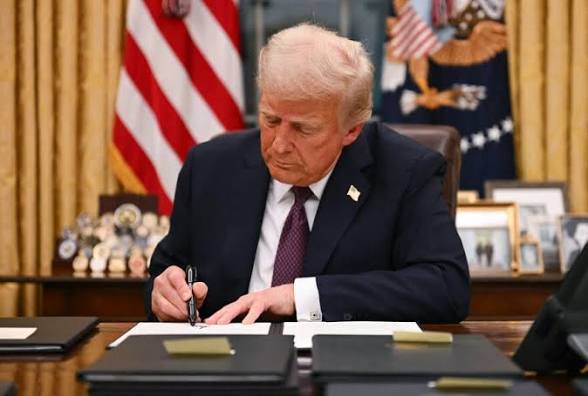
President Donald Trump said the suspects had been looking to cause “big damage,” while Secretary of State Marco Rubio suggested foreign involvement.
Those comments are political assessments rather than judicial findings.
British police, meanwhile, defended the decision to release the five suspects on bail under strict conditions.
Authorities stressed that the investigation had not ended.
The suspects remained under investigation while police continued examining evidence.
What investigators still need to establish
The biggest challenge is connecting the physical evidence to the alleged wider conspiracy.
Police may examine:
- Mobile phones
- Computer equipment
- Financial transactions
- Travel records
- Communications
- CCTV
- Vehicle movements
- Fuel purchases
- Online contacts
- Potential overseas connections
The sixth arrest could provide investigators with additional evidence.
However, an arrest is not proof of guilt.
A person arrested under terrorism legislation can later be released without charge.
Charges, if brought, would then have to be tested through the criminal justice process.
Iran airbase terror plot: What we know so far
The confirmed picture is becoming clearer.
Five men were arrested near RAF Fairford after suspicious activity involving three vans.
Police found petrol but no explosive device.
The five men were subsequently released on bail under stringent conditions.
British authorities continued investigating possible foreign-state involvement.
Prime Minister Andy Burnham later said there were strong indications that Iran had played a part.
Iran rejected the allegation.
On October 1, police arrested a dual UK-Iranian national in London in connection with the investigation.
Counter Terrorism Policing continues to describe the case as complex.
These facts are significant, but they do not yet establish every element of the alleged plot.
What happens next?
The investigation is likely to focus heavily on digital and financial evidence.
If investigators discover communications connecting the suspects to an overseas handler, that could significantly clarify the alleged proxy theory.
If no such evidence is found, alternative explanations may receive greater attention.
The decision on whether to charge the suspects will also be closely watched.
For now, British authorities are maintaining that all investigative possibilities remain open.
The case could therefore develop substantially in the coming days.
Final thoughts on the RAF Fairford investigation
The suspected RAF Fairford Iran terror plot has become an important UK national-security investigation because of the location involved, the arrests made and the possibility of foreign-state involvement.
The UK government’s position is that there are strong indications of an Iranian role.
Iran rejects that allegation.
Police have confirmed a continuing investigation into possible foreign-state involvement, while the discovery of petrol but no explosive device leaves important questions unanswered.
The October 1 arrest of a dual UK-Iranian national represents the latest major development.
For now, the most accurate conclusion is that the alleged proxy connection remains under investigation rather than being a proven court finding.
As investigators examine electronic, financial and forensic evidence, the evidence could clarify whether RAF Fairford was the intended target, what the suspects intended to do and whether any foreign government directed or supported the activity.
FAQs
What happened at RAF Fairford?
Five men were arrested near RAF Fairford in Gloucestershire on September 27, 2026, after police received reports of suspicious activity involving three vans. Petrol was found, but police later confirmed that no explosive device had been discovered.
Did the UK Prime Minister accuse Iran of involvement?
Prime Minister Andy Burnham said there were “strong indications” that Iran played a part in the incident. He also emphasized that the investigation remained complex and serious.
Has Iran admitted involvement?
No. Iranian officials have strongly denied involvement in the RAF Fairford incident.
Was a bomb found at RAF Fairford?
No. Counter Terrorism Policing confirmed that petrol was found in the vans, but no explosive device was discovered.
Have the original five suspects been charged?
The five men arrested near RAF Fairford were released on police bail and remained under investigation.
Was another suspect arrested?
Yes. On October 1, Counter Terrorism Policing announced the arrest of a dual UK-Iranian national in Westminster on suspicion of preparing terrorist acts.
Was RAF Fairford the intended target?
Authorities are investigating activity near RAF Fairford, but the precise intended objective has not been publicly established.
What is a proxy attack?
A proxy attack is an operation in which one actor allegedly uses another individual or group to carry out an action, potentially creating distance between the organizer and the operation. Whether the Fairford incident qualifies remains under investigation.
Why is RAF Fairford strategically important?
RAF Fairford hosts U.S. Air Force operations and has been used by American aircraft during military operations involving Iran, making it a strategically sensitive location.
Is the RAF Fairford investigation finished?
No. Counter Terrorism Policing says the investigation remains complex and that officers are examining multiple lines of inquiry, including possible foreign-state involvement.
Is Iran’s involvement proven?
Not publicly. The British government says there are strong indications of Iranian involvement, while Iran denies it. Investigators have not publicly released enough evidence to establish the complete chain of responsibility.
Why were the five suspects released on bail?
British counter-terrorism authorities said the suspects remained under investigation and were released under stringent conditions following extensive inquiries.
How useful was this post?
Click on a star to rate it!
Average rating 0 / 5. Vote count: 0
No votes so far! Be the first to rate this post.
About the Author

usa5911.com
Administrator
Hi, I’m Gurdeep Singh, a professional content writer from India with over 3 years of experience in the field. I specialize in covering U.S. politics, delivering timely and engaging content tailored specifically for an American audience. Along with my dedicated team, we track and report on all the latest political trends, news, and in-depth analysis shaping the United States today. Our goal is to provide clear, factual, and compelling content that keeps readers informed and engaged with the ever-changing political landscape.