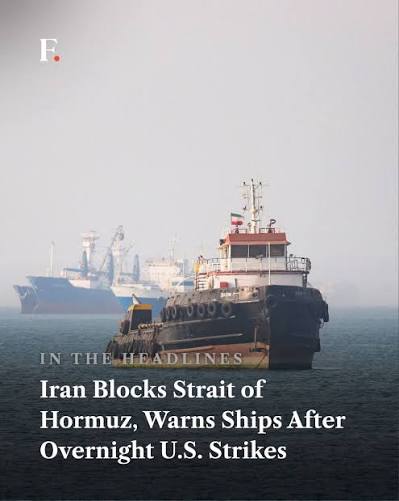
The latest Iran threatens Strait closure crisis has raised fresh concerns about global energy supplies, shipping security and the future of US-Iran diplomacy. Iran has set out a series of demands that it says must be addressed before the Strait of Hormuz can fully reopen to maritime traffic.
The demands come as negotiations involving Iran and Oman continue. Iranian officials have indicated that discussions over a possible arrangement for maritime transit are nearing completion, but they have also stressed that an agreement over a route does not automatically mean the Strait of Hormuz will fully reopen.
The development is significant because the Strait of Hormuz is one of the world’s most important energy chokepoints. Any prolonged disruption can affect tanker movements, oil prices, shipping costs and the wider global economy.
Iran threatens Strait closure over US demands

Iran’s latest position was outlined by Mohammad Bagher Zolghadr, secretary of Iran’s Supreme National Security Council. According to reports, Tehran wants Washington to make major changes before the waterway can return to normal operations.
Among the reported demands are an end to US military operations in the region, the lifting of sanctions, the withdrawal of US forces from areas surrounding Iran, the release of frozen Iranian assets and compensation for damage that Tehran attributes to the conflict.
Iran has also demanded that the United States stop threatening or insulting the country and end military actions involving Iran and its regional allies.
These conditions go well beyond a simple maritime dispute. They connect the future of the Strait directly to the broader political and military confrontation between Washington and Tehran.
That is why the latest development has generated concern among governments, energy companies and shipping operators.
Why the Strait of Hormuz matters
The Strait of Hormuz connects the Persian Gulf with the Gulf of Oman and the wider Arabian Sea. It is a narrow maritime passage through which a huge amount of global energy trade normally moves.
Its strategic importance means that even threats of disruption can influence markets.
When ships face delays, higher insurance costs or uncertainty over whether they can safely cross a major shipping route, companies can respond by changing routes, delaying voyages or increasing freight costs.
The International Maritime Organization has already highlighted the serious maritime consequences of the regional conflict. Its emergency framework has focused on helping merchant ships and seafarers trapped in the Gulf while maintaining principles of safe navigation and freedom of navigation.
The Council on Foreign Relations has also described the Strait as a major maritime flash point in the US-Iran confrontation, noting that the conflict has placed the waterway at the center of concerns over regional energy supplies.
New demands make negotiations harder
The biggest concern is not simply whether Iran can restrict shipping.
The bigger issue is whether the demands create another obstacle to a broader US-Iran agreement.
Diplomatic efforts have continued with Oman playing an important mediating role. Recent reports indicate that Iranian and Omani discussions over a new transit arrangement have been progressing. Iran’s foreign minister Abbas Araghchi reportedly said the talks were in their final stages, particularly over the determination of a transit route.
However, Tehran has made clear that agreeing on a route is different from agreeing to completely reopen the Strait.
That distinction is crucial.
It means a technical maritime arrangement could potentially move forward while the larger political dispute remains unresolved.
For businesses and shipping companies, that uncertainty is difficult to manage.
Strait closure could increase shipping risks
If the Strait remains restricted, shipping companies may face a complicated operating environment.
Tanker operators must consider several factors, including:
- Security risks around commercial vessels
- Insurance premiums
- Delays at ports
- Fuel costs
- Alternative shipping routes
- Availability of vessels
- Regional military activity
Even when ships continue moving, the cost of moving cargo can rise because companies price additional risks into their operations.
Previous developments in the crisis have already demonstrated how quickly maritime tensions can affect energy markets. Reuters reported earlier in the conflict that oil prices rose sharply as fighting intensified and concerns about regional shipping routes increased.
A prolonged Strait crisis could therefore have consequences far beyond Iran and the United States.
Oil markets watching Iran closely
Oil traders are particularly sensitive to developments around the Strait of Hormuz.
Any indication that the waterway could remain closed for an extended period can create uncertainty about future supplies.
However, it is important to distinguish between a political threat, a partial restriction and a complete physical shutdown.
These scenarios do not have identical consequences.
A temporary restriction could cause volatility without creating a sustained global supply shortage. A prolonged disruption involving large numbers of tankers would be much more serious.
The market response would also depend on alternative supplies, inventories, demand and the ability of exporters to use other routes.
This means headlines about a “closure” should not automatically be interpreted as proof that global oil supplies will immediately collapse.
Iran’s strategy puts pressure on Washington
From Tehran’s perspective, the Strait provides significant strategic leverage.
Iran sits along the northern side of the waterway and has repeatedly emphasized its ability to influence maritime traffic.
Iranian officials have previously threatened restrictions over US sanctions and military pressure. In May, Iranian military officials warned that countries following Washington’s sanctions policy could encounter difficulties crossing the Strait.
The current demands take that strategy further by linking maritime access to political concessions.
Iran is effectively saying that maritime normalization cannot be separated from the broader conflict.
That gives the Strait a role not only as a shipping route but also as a bargaining tool.
The US faces a difficult choice
Washington now faces a complicated diplomatic calculation.
The United States wants commercial shipping restored and wants to prevent further escalation. At the same time, accepting Tehran’s demands could carry significant political and strategic consequences.
The two sides therefore face a difficult gap.
Iran is demanding sanctions relief, compensation, asset releases and an end to military pressure.
The United States, meanwhile, has previously made reopening the Strait and ending attacks on ships important parts of its position.
Earlier in July, President Donald Trump threatened severe retaliation against Iran if Iranian forces attacked ships in the Strait. Axios reported that Trump warned that Iranian bridges or power plants could be targeted following attacks on vessels.
That illustrates how quickly a maritime dispute could escalate into a broader military confrontation.
Oman becomes increasingly important
Oman has emerged as a crucial diplomatic channel in the crisis.
Its geographic position and long-standing relationships with different regional actors make it an important intermediary between Iran and the United States.
Recent reporting indicates that Oman and Iran have been working on a possible arrangement concerning a new maritime route through the Strait. Iranian officials have described the talks as close to completion, while simultaneously warning that a route agreement does not necessarily mean full reopening.
This creates a narrow diplomatic opportunity.
If Oman can help establish a workable transit arrangement, commercial shipping could gain greater certainty even before the larger political conflict is completely resolved.
But if negotiations fail, the Strait could remain a major pressure point.
Could the Strait remain closed for months?
That possibility cannot be ruled out, but the duration remains uncertain.
The future of the waterway depends heavily on diplomatic negotiations, military developments and whether Washington and Tehran can reach an agreement that satisfies both sides.
Experts have warned that the US-Iran deadlock could continue if the two governments fail to resolve their major disagreements. Al Jazeera’s recent analysis described the situation as one involving intersecting diplomatic efforts, military pressure and threats of further escalation.
A prolonged crisis would create additional pressure on:
- Global oil markets
- LNG and energy shipments
- Maritime insurance
- Gulf economies
- Asian energy importers
- European energy markets
- International shipping companies
The longer uncertainty continues, the more difficult it becomes for businesses to plan.
What happens if shipping partially resumes?
Partial reopening could be the most likely intermediate scenario if diplomacy makes progress.
Rather than an immediate return to normal traffic, authorities could establish controlled transit arrangements.
Such a system could involve designated routes, security procedures or other restrictions.
Reports about negotiations between Iran and Oman indicate that determining a transit route is a central issue.
A controlled reopening could reduce some economic pressure while allowing negotiations over the wider political dispute to continue.
However, shipping companies would still need to assess whether the route was sufficiently safe and reliable.
Commercial operators generally prefer predictable conditions. A waterway that can suddenly close because of a political disagreement remains a significant operational risk.
Why this is not automatically World War III
The phrase “WW3” often appears in social media discussions whenever tensions rise between major powers.
The Strait of Hormuz crisis is undoubtedly serious, but a closure threat does not automatically mean a global war is inevitable.
There are several diplomatic mechanisms still operating.
Oman is mediating between the parties, negotiations are continuing, and both sides have incentives to avoid an uncontrolled escalation that could damage their own interests.
At the same time, the risk should not be dismissed.
A confrontation involving commercial vessels, US forces and Iranian military units could escalate quickly if there are casualties or major attacks.
That is why maritime incidents are being watched closely by governments and international organizations.
Global markets remain vulnerable
The economic impact of the crisis extends beyond oil.
Higher energy prices can affect transportation, manufacturing, electricity generation and consumer prices.
If tanker insurance becomes significantly more expensive, those costs can eventually reach importers and consumers.
Asian economies could be particularly sensitive because the Gulf is an important source of energy for major economies across the region.
European markets could also be affected through global energy pricing, even when individual European countries are not directly dependent on the Strait for every shipment.
The result is a familiar pattern in geopolitical energy crises: uncertainty itself becomes an economic cost.
What to watch next
The next phase of the crisis will depend on several developments.
1. US-Iran negotiations
The most important question is whether Washington and Tehran can bridge their differences.
A broader agreement could create conditions for the Strait to reopen.
2. Oman-mediated talks
Oman’s diplomatic efforts could determine whether a practical maritime arrangement is possible.
3. Iranian military statements
Any new warning involving commercial vessels could increase pressure on shipping markets.
4. Tanker movements
Changes in commercial traffic will provide an important indication of whether conditions are improving.
5. Oil prices
Energy markets will react rapidly to evidence of either escalation or de-escalation.
6. Sanctions policy
Iran’s demand for sanctions relief is one of the biggest obstacles to a wider settlement.
The bigger picture
The latest Iran threatens Strait closure story is about much more than one waterway.
The Strait of Hormuz has become a symbol of the wider US-Iran confrontation. Iran wants sanctions lifted, military pressure reduced and compensation for damage it attributes to the conflict. Washington, meanwhile, wants maritime security and an end to attacks while maintaining its broader strategic objectives.
That makes compromise difficult.
Yet diplomacy remains possible.
Recent talks involving Oman demonstrate that communication channels are still functioning. Iranian officials have also expressed optimism about reaching an arrangement concerning maritime transit, even while maintaining that full reopening depends on wider conditions.
For the global economy, the best outcome would be a stable agreement that allows commercial shipping to resume safely and predictably.
Until then, the Strait will remain one of the world’s most closely watched geopolitical flash points.
Conclusion
Iran’s latest demands have added a new layer of uncertainty to the already tense Strait of Hormuz crisis. Tehran says the waterway cannot fully reopen until Washington addresses major political, military and economic conditions, including sanctions, military activity and compensation.
At the same time, diplomatic discussions involving Oman suggest that a path toward a managed maritime arrangement may still exist.
The situation remains fluid.
A negotiated reopening could calm oil markets, reduce shipping risks and create space for wider US-Iran diplomacy. A breakdown in talks, however, could prolong restrictions and increase the danger of further military escalation.
For now, the Strait of Hormuz remains at the center of the crisis—and the next diplomatic move from Washington, Tehran and Muscat could determine whether tensions ease or another dangerous phase begins.
FAQs
What is the Strait of Hormuz?
The Strait of Hormuz is a strategically important waterway connecting the Persian Gulf with the Gulf of Oman and the Arabian Sea. It is a major route for international energy shipments.
Why does Iran threaten Strait closure?
Iran has linked the reopening of the Strait to broader political and security demands involving the United States. Recent Iranian statements have called for changes to US military policy, sanctions and compensation for conflict-related damage.
Is the Strait of Hormuz completely closed?
The situation is fluid, and reports distinguish between restrictions, controlled transit arrangements and full reopening. Iranian officials have indicated that reaching an agreement on a transit route does not necessarily mean the waterway will immediately return to normal operations.
Could a Strait of Hormuz closure increase oil prices?
Yes. A prolonged disruption could increase concerns about energy supplies, shipping costs and insurance, potentially putting upward pressure on oil prices. The actual impact would depend on the duration and scale of the disruption.
What does Iran want from the United States?
Recent reports say Iran is demanding an end to US military operations against Iran and its regional allies, sanctions relief, the release of frozen Iranian assets, withdrawal of US forces from around Iran and compensation for war-related damage.
What role is Oman playing?
Oman is serving as an important intermediary in discussions between Iran and other parties. Recent talks have focused on establishing a possible maritime transit arrangement through the Strait.
Could the crisis lead to a wider war?
A wider escalation is a risk, particularly if commercial vessels or military forces are attacked. However, diplomatic negotiations remain active, so a major regional or global war is not inevitable.
Why is the Strait important to the global economy?
The Strait is a major energy shipping chokepoint. Disruption can affect tanker movements, energy prices, shipping insurance and transportation costs around the world.
What happens if Iran and the US reach a deal?
A successful agreement could support a safer and more predictable reopening of the Strait, reduce shipping risks and potentially ease pressure on energy markets. The exact terms would determine how quickly normal traffic could resume.
What should markets watch next?
Markets will closely monitor US-Iran negotiations, Oman-mediated talks, tanker traffic, Iranian military statements, sanctions policy and changes in oil prices.
About the Author