BREAKING: MILLIONS Flood Tehran As Anti-US Chants Echo During Khamenei Funeral
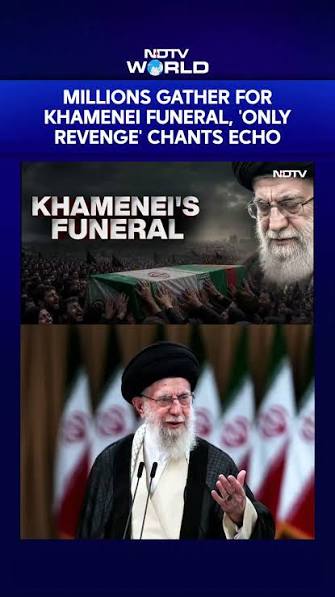
Tehran witnessed one of the largest public gatherings in its modern history as millions of mourners filled the streets to attend the funeral procession of Iran’s late Supreme Leader, Ayatollah Ali Khamenei. The massive turnout transformed the Iranian capital into a sea of black-clad mourners, waving national flags, holding portraits of Khamenei, and chanting anti-US and anti-Israel slogans throughout the ceremony.
The funeral was more than a religious event. It became a powerful political statement, reflecting the deep tensions that continue to define relations between Iran, the United States, and Israel. As chants of “Death to America” and demands for revenge echoed across Tehran, global leaders closely monitored the event for signs of Iran’s future direction following Khamenei’s death.
Millions Gather in Tehran for a Historic Funeral
Iranian authorities organized an elaborate state funeral spanning several days after the death of Ayatollah Ali Khamenei. The procession moved through central Tehran, with mourners stretching across major roads from Revolution Square toward Azadi Square.
Drone footage and international media reports showed enormous crowds filling the streets. While estimates vary, officials and multiple news organizations described attendance in the millions, making it one of the country’s largest state funerals.
The procession featured Khamenei’s flag-draped coffin alongside those of several family members who also died during the conflict. Religious prayers, patriotic songs, and speeches accompanied the ceremony as supporters paid their final respects.
Anti-US and Anti-Israel Chants Dominate the Ceremony
One of the most striking aspects of the funeral was the widespread display of anti-American and anti-Israeli sentiment.
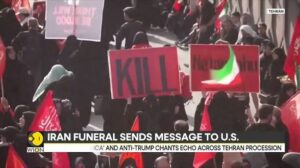
Throughout the procession, crowds chanted slogans including:
- Death to America
- Death to Israel
- Revenge
- Kill Trump
Some protesters burned American and British flags, while others carried banners accusing the United States and Israel of responsibility for Khamenei’s death. Several placards called for retaliation against Western leaders.
The emotional atmosphere highlighted the anger felt by many supporters of Iran’s leadership following months of military conflict.
Why the Funeral Matters Globally
The funeral comes at a critical moment for the Middle East.
Iran remains engaged in an uneasy post-war environment after months of conflict involving Israel and the United States. Khamenei’s death marked one of the biggest political developments in Iran’s modern history and has created uncertainty regarding the country’s future leadership.
Political analysts believe the funeral served several important purposes:
- Demonstrating public support for the Islamic Republic.
- Projecting national unity despite recent conflict.
- Sending a message of resilience to international rivals.
- Reinforcing Iran’s revolutionary ideology.
The event also attracted extensive international media coverage, with journalists from numerous countries reporting from Tehran.
Security Was Extremely Tight
Authorities deployed significant security across Tehran during the funeral.
Road closures, checkpoints, surveillance, and emergency medical teams were stationed throughout the city to manage the enormous crowds. Officials sought to prevent security threats while ensuring the procession remained orderly.
Reports indicated concerns about possible attacks or crowd-related emergencies because of the unprecedented attendance.
Despite the size of the gathering, the procession concluded without reports of major disruptions.
What Happened to Iran’s Leadership?
Following Khamenei’s death, attention has shifted toward Iran’s political future.
Questions continue to surround his successor and the future structure of the country’s leadership. Reports suggest that Mojtaba Khamenei did not appear publicly during the funeral because of security concerns and injuries reportedly sustained during the conflict.
The leadership transition is expected to shape Iran’s domestic politics, regional influence, and future relations with Western countries.
Regional Tensions Remain High
The funeral also reflected the broader geopolitical struggle involving Iran, Israel, and the United States.
Israeli officials have continued issuing warnings against Iranian leadership, while Iranian supporters have renewed calls for resistance against perceived foreign aggression. The rhetoric displayed during the funeral demonstrates that tensions remain extremely high despite recent ceasefire efforts.
Analysts believe diplomatic negotiations may become even more complicated in the coming months as new leadership consolidates power inside Iran.
International Reaction
Governments around the world are watching developments carefully.
Western officials have largely avoided commenting directly on the funeral itself but continue monitoring Iran’s political transition.
Meanwhile, several regional allies sent delegations to Tehran, highlighting Iran’s continued influence across parts of the Middle East.
Foreign policy experts believe the leadership transition could influence:
- Nuclear negotiations
- Regional security
- Energy markets
- US-Iran diplomacy
- Israel-Iran relations
Each of these issues remains central to Middle Eastern stability.
Public Mourning or Political Demonstration?
Observers have debated whether the funeral represented spontaneous public grief, state mobilization, or both.
Iranian officials described the turnout as a genuine expression of national mourning and unity. Some international analysts also noted the significance of the crowd size while pointing out that state funerals in Iran traditionally involve extensive government organization.
Regardless of interpretation, the images from Tehran conveyed the scale of public participation and the symbolic importance of the event.
Impact on the Middle East
The death of Ayatollah Ali Khamenei marks a major turning point for Iran.
His leadership shaped the country’s domestic and foreign policy for nearly four decades. As Iran enters a new political chapter, governments across the Middle East will closely monitor every decision made by the country’s emerging leadership.
Possible consequences include:
- Changes in Iran’s regional alliances.
- New approaches to diplomacy.
- Continued military preparedness.
- Increased political uncertainty.
- Renewed focus on succession politics.
How these developments unfold could significantly affect regional stability.
Media Coverage Around the World
International broadcasters devoted extensive coverage to the funeral.
Television networks aired live images of the procession, while newspapers highlighted the massive turnout and the anti-US slogans heard throughout Tehran.
Coverage largely focused on three themes:
- The size of the gathering.
- The political symbolism.
- The uncertainty surrounding Iran’s future leadership.
The event quickly became one of the most discussed international news stories of the day.
What Comes Next?
Iran now enters a sensitive period.
The new leadership will face multiple challenges, including rebuilding after conflict, managing international relations, maintaining domestic stability, and responding to continued pressure from Western governments.
Many experts believe the coming months will determine whether Iran pursues greater diplomatic engagement or adopts an even more confrontational foreign policy.
For now, the funeral has demonstrated that emotions remain intense among many supporters of the Islamic Republic, with anti-US and anti-Israel sentiment continuing to play a central role in public demonstrations.
Conclusion
The funeral procession for Ayatollah Ali Khamenei drew millions into the streets of Tehran, becoming one of the largest public gatherings in Iran’s recent history. The event combined mourning, political messaging, and demonstrations of national solidarity while highlighting continuing hostility toward the United States and Israel.
As chants echoed across the capital and world leaders observed closely, the ceremony underscored the significance of Iran’s political transition. The coming months will reveal how the country’s new leadership shapes its domestic policies and international relationships during a period of heightened regional uncertainty.
Frequently Asked Questions (FAQs)
Why did millions gather in Tehran?
Millions attended the funeral procession of Iran’s late Supreme Leader Ayatollah Ali Khamenei to pay their respects during a state-organized national mourning ceremony.
Why were anti-US chants heard during the funeral?
Many mourners blamed the United States and Israel for the conflict surrounding Khamenei’s death, leading to widespread anti-American and anti-Israeli slogans during the procession.
Who will lead Iran after Khamenei?
Iran is undergoing a leadership transition. Questions remain about the country’s future leadership structure, with reports indicating ongoing political uncertainty.
Was the funeral one of Iran’s largest gatherings?
Yes. Multiple reports described it as one of the largest public gatherings in Iran’s modern history, with attendance estimated in the millions.
Why is this funeral important internationally?
The event has major geopolitical implications because Iran plays a central role in Middle Eastern politics, regional security, nuclear diplomacy, and relations with the United States and Israel.
Iran’s Leadership Transition Enters a Critical Phase
The funeral procession has drawn global attention not only because of its size but also because of what comes next for Iran. With the country’s highest political and religious office entering a new chapter, analysts believe the transition could reshape Iran’s domestic politics, military strategy, and foreign policy for years to come.
The succession process is being closely watched by governments across the Middle East and beyond. Iran’s leadership has emphasized continuity, while supporters at the funeral repeatedly pledged loyalty to the Islamic Republic and its institutions.
Massive Security Operation Across Tehran
Iranian authorities deployed thousands of security personnel throughout Tehran to manage the enormous crowds attending the funeral.
Major roads were closed, public transport services were expanded, and emergency medical teams remained on standby throughout the procession. Drone surveillance and heavy police deployment were visible along the funeral route, helping officials maintain order during one of the country’s largest public gatherings in recent decades.
Officials also imposed strict security measures around key government buildings and religious sites, reflecting concerns about possible security threats during such a high-profile national event.
International Leaders Closely Monitor Developments
The funeral has attracted worldwide attention, with governments monitoring both the ceremony and Iran’s political transition.
While several regional allies sent official delegations to pay their respects, many Western governments have focused on the broader geopolitical implications of the leadership change. International observers believe the coming weeks could influence diplomatic efforts, regional security, and negotiations involving Iran.
Foreign policy experts suggest several key issues will dominate discussions:
- Iran’s future relationship with the United States.
- Ongoing tensions with Israel.
- Regional security cooperation.
- The future of nuclear negotiations.
- Economic recovery after recent conflict.
Public Sentiment Remains Complex
Although millions participated in the funeral ceremonies, analysts caution against viewing the turnout as a simple measure of political support.
Many attendees described their participation as an expression of religious faith, cultural tradition, or respect for a long-serving national leader. Others viewed the event as a demonstration of national unity during a period of external pressure. At the same time, observers note that economic challenges and political divisions continue to shape public opinion within Iran.
This combination of mourning, patriotism, and political messaging has made the funeral one of the most closely watched events in the region this year.
Global Media Focuses on the Symbolism
International media outlets highlighted several defining moments from the funeral:
- The scale of the crowds filling central Tehran.
- Anti-US and anti-Israel slogans chanted by many mourners.
- Extensive security arrangements.
- Questions surrounding Iran’s future leadership.
- The event’s impact on regional stability.
Television networks broadcast live images of the procession, while newspapers described the ceremony as both a farewell to a longtime leader and a demonstration of Iran’s resilience during a turbulent period.
What Happens Next?
Iran now faces one of the most significant political transitions in its modern history.
The new leadership will be tasked with maintaining internal stability, addressing economic pressures, rebuilding international relationships, and navigating continued regional tensions. Decisions made in the coming months are expected to influence not only Iran’s future but also the broader geopolitical landscape of the Middle East.
Conclusion
The funeral procession in Tehran marked a historic moment for Iran, drawing millions of mourners and capturing worldwide attention. The ceremony reflected both deep public emotion and strong political symbolism, with anti-US and anti-Israel chants underscoring the country’s continuing geopolitical tensions.
As Iran enters a new era of leadership, the world will be watching closely to see how the transition shapes its domestic policies, regional influence, and international relations. While the funeral has concluded, its political significance is likely to resonate for months—and possibly years—to come.
Frequently Asked Questions
Why did millions attend the funeral in Tehran?
Millions gathered to pay their respects during the state funeral, making it one of the largest public events in Iran in recent years.
Why were anti-US chants heard during the procession?
Many mourners expressed anger over the conflict and blamed the United States and Israel, leading to widespread anti-US and anti-Israel slogans during the ceremony.
What does the leadership transition mean for Iran?
The transition is expected to influence Iran’s domestic governance, regional strategy, and international diplomacy during a period of heightened geopolitical uncertainty.
How did authorities manage such large crowds?
Iran deployed extensive security forces, emergency services, and traffic management measures to oversee the funeral procession safely.
Why is this event important internationally?
The funeral and leadership transition have significant implications for Middle East security, diplomatic relations, energy markets, and future negotiations involving Iran.
How useful was this post?
Click on a star to rate it!
Average rating 0 / 5. Vote count: 0
No votes so far! Be the first to rate this post.
About the Author

usa5911.com
Administrator
Hi, I’m Gurdeep Singh, a professional content writer from India with over 3 years of experience in the field. I specialize in covering U.S. politics, delivering timely and engaging content tailored specifically for an American audience. Along with my dedicated team, we track and report on all the latest political trends, news, and in-depth analysis shaping the United States today. Our goal is to provide clear, factual, and compelling content that keeps readers informed and engaged with the ever-changing political landscape.