Iran Shocker: Mystery Deepens After New Supreme Leader Is Absent From Khamenei Funeral
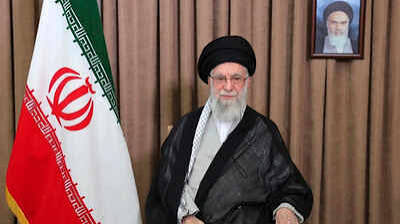
The funeral of Iran’s longtime Supreme Leader, Ayatollah Ali Khamenei, was expected to mark a defining moment in the country’s political history. Instead, it has become the center of an entirely different story. Reports that Iran’s newly appointed Supreme Leader was absent from the highly publicized funeral ceremony have sparked intense speculation both inside the country and across the international community.
The unexpected absence has raised important questions. Was it a carefully planned security decision? Could it signal divisions within Iran’s political establishment? Or is there another explanation that has yet to be revealed?
Although Iranian officials have not provided a detailed explanation, analysts believe the absence is significant because such ceremonies traditionally symbolize continuity, stability, and the peaceful transfer of power. In a country where public appearances by senior leaders carry immense political weight, every decision is carefully scrutinized.
This article examines why the absence matters, the possible reasons behind it, how experts are interpreting the development, and what it could mean for Iran’s future.
Why the Funeral Was a Historic Event
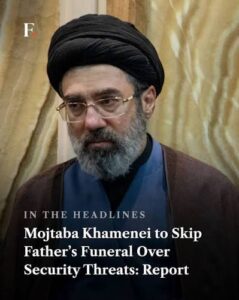
The funeral of Ayatollah Ali Khamenei represented more than a national day of mourning. It marked the end of an era that shaped Iran’s political, religious, and military direction for decades.
As Supreme Leader, Khamenei held ultimate authority over Iran’s government, armed forces, judiciary, and foreign policy. His influence extended far beyond domestic politics, affecting regional conflicts, nuclear negotiations, and Iran’s relationships with global powers.
Because of this, millions of Iranians and observers around the world closely watched every detail surrounding the funeral.
Normally, such ceremonies serve several purposes:
- Honoring the late leader
- Demonstrating national unity
- Introducing political continuity
- Reassuring allies and state institutions
- Sending a message of stability to the international community
Instead, attention quickly shifted toward one unexpected development—the absence of the new Supreme Leader.
Why the Absence Is Raising Questions
Public appearances during major state ceremonies are rarely optional for Iran’s highest-ranking officials.
The Supreme Leader occupies the country’s highest constitutional and religious office. Therefore, attending the funeral of a predecessor is generally viewed as both symbolic and politically important.
Political analysts point out several reasons why the absence has become international news.
Symbolism Matters in Iranian Politics
Iran places enormous emphasis on symbolism.
Every speech, appearance, photograph, and religious ceremony is carefully planned to communicate stability and authority.
An absent Supreme Leader naturally creates room for speculation.
Observers have questioned whether:
- Security concerns prevented attendance.
- Internal political disagreements exist.
- The leadership transition is more complicated than publicly acknowledged.
- Officials deliberately chose to limit public exposure during a sensitive period.
Without an official explanation, these questions continue to dominate headlines.
Security Concerns Could Be the Main Reason
One widely discussed explanation involves security.
Iran has faced increasing regional tensions over recent years. Senior political and military officials are considered high-value targets, making public gatherings especially sensitive.
Funeral ceremonies attract enormous crowds, media attention, and international visibility.
Security experts note that protecting a newly installed Supreme Leader during such an event would require extraordinary precautions.
Possible security risks include:
- Terrorist threats
- Drone attacks
- Assassination attempts
- Civil unrest
- Foreign intelligence operations
If intelligence agencies identified credible threats, avoiding public attendance could have been viewed as the safest option.
Although officials have not confirmed this explanation, several analysts consider it plausible.
Political Analysts Remain Divided
Not everyone accepts the security explanation.
Some Middle East analysts believe the absence could reflect internal political calculations rather than immediate security concerns.
Iran’s leadership transition involves multiple powerful institutions, including:
- The Assembly of Experts
- The Islamic Revolutionary Guard Corps (IRGC)
- Senior clerical authorities
- Government ministries
- Religious foundations
Each institution plays a role in maintaining stability during periods of political change.
Some experts suggest limiting the new leader’s early public appearances may have been part of a broader communication strategy designed to control the transition carefully.
Others argue that reading too much into one absence may be premature without additional evidence.
Global Media Reacts to the Development
News organizations across the world have closely followed the story.
International coverage has largely focused on one question:
Why did the new Supreme Leader not attend one of the most important state ceremonies in modern Iranian history?
Different media outlets have highlighted varying possibilities.
Some reports emphasize heightened security.
Others focus on possible political implications.
Several analysts caution against drawing conclusions before Iranian authorities release more information.
Despite differing interpretations, one point remains consistent: the absence has become the dominant story surrounding the funeral itself.
Could the Absence Affect Iran’s International Image?
Leadership transitions are closely monitored by foreign governments.
Countries involved in diplomacy with Iran—including those engaged in discussions about regional security, sanctions, and nuclear policy—often interpret symbolic events as indicators of political stability.
The absence has therefore prompted fresh analysis among diplomats and intelligence experts.
Questions being discussed internationally include:
- Is the transition proceeding smoothly?
- Will Iran’s foreign policy change?
- Could internal political dynamics influence future negotiations?
- Does the absence indicate heightened security concerns?
At present, none of these questions has a definitive answer.
Nevertheless, the speculation demonstrates how symbolic actions can influence international perceptions.
Public Reaction Inside Iran
Public reactions have been mixed.
Some citizens have accepted reports suggesting security concerns justified the absence.
Others have questioned why such an important event would proceed without the country’s highest-ranking official appearing publicly.
Meanwhile, discussions on social media have generated numerous theories, many of which remain unverified.
Political analysts continue urging caution, emphasizing that speculation should not be confused with confirmed facts.
Until Iranian authorities provide additional clarification, many questions are likely to remain unanswered.
The absence of the new Supreme Leader from Ayatollah Ali Khamenei’s funeral has fueled debate about Iran’s political future. While one public appearance does not determine the direction of a nation, it has encouraged analysts to examine how the leadership transition may unfold in the coming months.
Leadership changes in Iran are significant because the Supreme Leader holds ultimate authority over national security, the military, the judiciary, and major foreign policy decisions. As a result, every action—or in this case, every absence—is carefully analyzed.
Several political experts believe the transition period will focus on three priorities:
- Maintaining political stability.
- Reassuring state institutions.
- Demonstrating continuity in governance.
If these goals are achieved, the leadership transition is likely to appear smooth despite the speculation surrounding the funeral.
Possible Reasons Behind the Absence
Although no detailed official explanation has been released, experts have outlined several possible reasons why the new Supreme Leader did not attend the funeral.
1. Heightened Security Measures
Security remains the most widely discussed explanation.
Iran has experienced increasing regional tensions in recent years. Senior officials often travel under strict security protocols, especially during high-profile public gatherings.
A funeral attended by thousands of mourners and international media presents unique security challenges. Intelligence agencies may have concluded that minimizing public exposure was the safest course of action.
If this explanation is accurate, the absence may reflect precaution rather than political instability.
2. A Carefully Managed Leadership Transition
Some observers argue that Iranian authorities may be managing the transition in stages.
Instead of placing immediate attention on the new Supreme Leader, officials could be allowing the mourning period to remain focused on Ayatollah Ali Khamenei’s legacy.
Such communication strategies are not uncommon during major political transitions, particularly in systems where symbolism carries great importance.
3. Internal Political Considerations
Another theory suggests the leadership transition may involve complex discussions among influential political and religious institutions.
Iran’s political system includes several powerful organizations whose support is essential during periods of change.
These include:
- The Assembly of Experts
- The Islamic Revolutionary Guard Corps (IRGC)
- Senior religious scholars
- The Guardian Council
- Government ministries
However, there is currently no confirmed evidence that internal disagreements caused the absence. Most experts caution against drawing firm conclusions without official confirmation.
Why Symbolism Is So Important in Iran
Political symbolism has long played a central role in Iranian governance.
State ceremonies are carefully organized to project messages of strength, unity, and continuity. Public appearances by senior officials often carry political significance beyond the event itself.
For this reason, the absence of the country’s highest-ranking leader naturally attracts attention.
Analysts note that symbolism can influence both domestic public opinion and international perceptions.
Even when practical reasons such as security are involved, the lack of a public appearance may still generate widespread speculation.
International Reactions Continue to Grow
Governments around the world are monitoring developments closely.
Iran remains a major regional power, and changes in its leadership can influence issues such as:
- Nuclear negotiations
- Middle East security
- Energy markets
- Regional alliances
- Relations with Western nations
Consequently, diplomats and foreign policy experts are assessing whether the funeral developments signal any broader changes.
At this stage, most governments appear to be taking a cautious approach while awaiting further official statements.
Impact on Regional Politics
The Middle East has experienced significant geopolitical shifts over the past decade.
Iran plays an influential role in regional diplomacy, military strategy, and economic cooperation.
Because of this, neighboring countries are closely watching the leadership transition.
Some regional analysts believe the immediate priorities for Iran will likely include:
Maintaining Domestic Stability
Political continuity remains essential during any leadership transition.
A stable government helps reassure citizens, investors, and state institutions.
Preserving Existing Foreign Policy
Many experts expect Iran to maintain its current strategic priorities in the short term.
Major policy changes are generally introduced gradually rather than immediately following a leadership transition.
Strengthening National Security
Given ongoing regional tensions, security is expected to remain a top priority.
If security concerns contributed to the funeral absence, authorities may continue limiting public appearances until officials believe risks have diminished.
Timeline of Recent Events
Understanding the sequence of events helps explain why the story has received such widespread attention.
Key Developments
Announcement of Ayatollah Ali Khamenei’s death
News of the Supreme Leader’s passing prompted nationwide mourning and extensive international coverage.
Preparation for the state funeral
Authorities organized one of the largest public ceremonies in recent Iranian history.
Millions observed the funeral
State media highlighted large crowds gathering to pay their respects.
Attention shifted unexpectedly
Instead of focusing solely on the ceremony, domestic and international media noticed that the newly appointed Supreme Leader did not appear publicly.
Speculation intensified
Analysts, journalists, and political observers began discussing possible explanations, with security concerns emerging as the most commonly cited theory.
Expert Opinions on the Situation
Political experts remain divided regarding the significance of the absence.
Some analysts urge caution
Several Middle East specialists argue that one missed public appearance should not be interpreted as evidence of political instability.
Leadership transitions often involve exceptional security arrangements and carefully coordinated public messaging.
Others believe symbolism cannot be ignored
Another group of analysts believes the absence carries considerable symbolic importance.
In Iran’s political culture, public appearances during historic events often reinforce legitimacy and continuity.
Therefore, even if the absence resulted from security considerations, it has inevitably created additional questions.
Intelligence experts emphasize security
Security specialists continue pointing to the heightened risks associated with large public gatherings involving senior leaders.
Modern threats—including drones, cyber surveillance, and asymmetric attacks—have significantly changed how governments manage public events.
Consequently, avoiding unnecessary exposure may reflect evolving security doctrine rather than political uncertainty.
What Happens Next?
Attention will now shift toward the new Supreme Leader’s future public appearances.
Observers will closely watch for:
- Official speeches.
- Meetings with senior government officials.
- Military ceremonies.
- Religious events.
- Diplomatic engagements.
- National policy announcements.
These appearances could help answer many of the questions currently surrounding the leadership transition.
For now, however, uncertainty remains, and analysts continue to emphasize the importance of relying on verified information rather than speculation.
How useful was this post?
Click on a star to rate it!
Average rating 0 / 5. Vote count: 0
No votes so far! Be the first to rate this post.
About the Author

usa5911.com
Administrator
Hi, I’m Gurdeep Singh, a professional content writer from India with over 3 years of experience in the field. I specialize in covering U.S. politics, delivering timely and engaging content tailored specifically for an American audience. Along with my dedicated team, we track and report on all the latest political trends, news, and in-depth analysis shaping the United States today. Our goal is to provide clear, factual, and compelling content that keeps readers informed and engaged with the ever-changing political landscape.