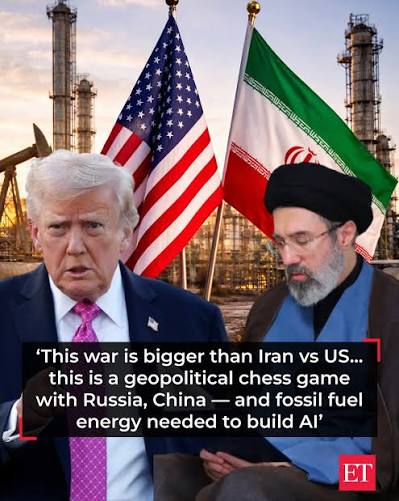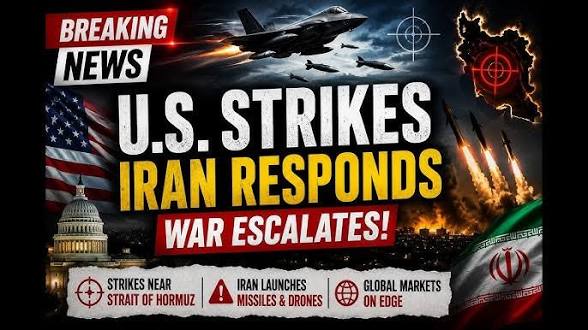
Middle East Crisis Escalates: Iranian Drones Target Bahrain After US Strikes Middle East crisis has entered another dangerous phase after reports emerged that Iranian drones targeted Bahrain following recent United States military strikes against Iranian-linked positions. The latest developments have raised concerns about⁸ the possibility of a broader regional conflict involving Gulf nations, Iran, the United States, and allied forces.
Security experts believe the incident represents a significant escalation in an already tense geopolitical environment. While investigations continue into the reported drone attacks, governments across the region have increased military readiness amid fears that retaliation could spread beyond traditional conflict zones.
The Strait of Hormuz, one of the world’s busiest shipping routes, remains under close observation as international markets respond to the growing uncertainty. Oil prices, maritime security, and diplomatic efforts have all become central topics as world leaders urge restraint.
This article examines the reported Iranian drone attacks on Bahrain, the background leading to the crisis, regional responses, military implications, and what the latest developments could mean for global security.
Why Has the Middle East Crisis Intensified?
The current escalation follows a series of military exchanges between the United States and Iran-backed groups operating throughout the Middle East.
Recent US strikes reportedly targeted facilities connected to Iranian military operations. According to US officials, the strikes were intended to reduce threats against American personnel and regional allies.
Iran has strongly criticized those operations, describing them as violations of international law. Iranian officials have repeatedly warned that military action would receive a proportional response.
Shortly after the US operations, multiple reports suggested that drones believed to be linked to Iran were launched toward Bahrain.
Although authorities continue investigating the exact origin and effectiveness of the attacks, the reports have significantly heightened regional tensions.
Why Bahrain Matters
Bahrain occupies a strategically important position in the Persian Gulf.
The country hosts the headquarters of the United States Fifth Fleet, making it one of Washington’s most important military partners in the region.
Because of its strategic importance, any attack involving Bahrain immediately attracts international attention.
Military analysts note that targeting Bahrain—even symbolically—could signal an effort to challenge the US security presence across the Gulf.
Such actions also risk drawing additional regional allies into the conflict.
Reports of Iranian Drones Targeting Bahrain
According to early reports, multiple drones were detected approaching Bahraini airspace after the US strikes.
Bahraini defense authorities reportedly activated air-defense systems while closely coordinating with allied military forces stationed in the Gulf.
Officials have not publicly confirmed the full extent of damage or casualties, if any.
Independent verification of several battlefield claims remains difficult because information continues to emerge from official statements, military briefings, and regional media.
Security analysts caution against drawing immediate conclusions until governments release comprehensive investigations.
Nevertheless, the reports alone have increased concerns about further retaliatory actions.
US Military Response
The United States has maintained a significant military presence across the Middle East for decades.
Following the reported drone activity, US forces reportedly enhanced surveillance operations throughout the Gulf.
Additional naval patrols and air-defense measures have also been discussed as precautionary steps designed to protect military installations and allied nations.
American officials continue emphasizing that their objective is deterrence rather than expanding military operations.
However, they have also warned that attacks on US personnel or partner nations would receive an appropriate response.
Iran’s Position
Iran has consistently denied seeking a broader regional war while simultaneously defending what it describes as its right to respond to foreign military actions.
Iranian leaders argue that continued US military operations increase instability throughout the region.
Official Iranian statements often emphasize support for regional resistance movements while rejecting direct responsibility for every attack attributed to Iranian-backed groups.
This position has complicated diplomatic efforts because several governments continue accusing Tehran of supporting armed organizations operating across multiple countries.
Growing Regional Concerns
Neighboring Gulf states have closely monitored developments.
Several governments have strengthened border security while increasing surveillance against possible drone and missile threats.
Regional defense cooperation has become increasingly important as countries seek to improve intelligence sharing and early-warning systems.
Military experts believe drone warfare has fundamentally changed regional security calculations because relatively inexpensive unmanned aircraft can threaten high-value military and civilian infrastructure.
As a result, countries across the Gulf continue investing heavily in advanced air-defense technology.
Impact on the Strait of Hormuz
The Strait of Hormuz remains one of the world’s most strategically important waterways.
Approximately one-fifth of globally traded oil passes through this narrow maritime corridor.
Whenever military tensions rise between Iran and the United States, international shipping companies closely monitor security conditions in the area.
Even without direct attacks on commercial vessels, uncertainty alone can increase insurance costs, shipping expenses, and global energy prices.
Energy markets reacted cautiously following reports of increased regional tensions, with investors watching for any disruption to oil exports.
International Reactions
Governments around the world have called for restraint.
Many European nations urged both Washington and Tehran to avoid actions that could trigger a wider conflict.
The United Nations has also encouraged diplomatic engagement aimed at reducing tensions.
Several international security experts argue that continued escalation increases risks for civilians, regional economies, and global trade networks.
Diplomatic channels remain active despite the heightened military posture across the region.
Drone Warfare Changes Modern Conflict
One of the defining characteristics of today’s Middle East conflicts is the growing use of unmanned aerial vehicles.
Compared with traditional aircraft, drones are less expensive and can be deployed rapidly over long distances.
They are increasingly used for surveillance, reconnaissance, and precision strikes.
Military planners worldwide are adapting their defense strategies to counter these evolving threats through radar improvements, electronic warfare systems, and integrated missile defenses.
The reported targeting of Bahrain once again highlights how drone technology has become central to modern regional security challenges.
Potential Impact on Global Oil Markets
One of the most immediate consequences of rising tensions in the Middle East is the effect on global energy markets. The Gulf region is responsible for a significant share of the world’s oil production and exports. Any threat to shipping routes or energy infrastructure can quickly influence international oil prices.
Market analysts note that even unconfirmed reports of military activity near critical waterways can trigger volatility. Investors closely monitor developments involving Iran, Bahrain, Saudi Arabia, and the United States because disruptions in the region often have worldwide economic consequences.
Higher oil prices can increase transportation costs, affect manufacturing, and contribute to inflation in many countries. Governments and businesses are therefore watching the situation carefully while preparing contingency plans if the crisis worsens.
Diplomatic Efforts to Prevent Further Escalation
Despite rising military tensions, diplomatic channels remain active. Regional governments and international organizations continue encouraging dialogue to prevent a wider conflict.
Several countries have urged all parties to exercise restraint and avoid retaliatory actions that could destabilize the Gulf. Diplomatic negotiations often continue behind closed doors even during periods of heightened military activity.
Analysts believe communication between regional powers is essential to reduce misunderstandings and avoid accidental escalation. Confidence-building measures and international mediation may play an important role if both sides seek to reduce tensions.
Military Readiness Across the Gulf
The reported drone incident has prompted several Gulf nations to review their defense posture.
Air-defense systems have reportedly been placed on heightened alert while military commanders continue monitoring regional airspace and maritime routes. Naval forces operating in the Persian Gulf are also maintaining increased vigilance.
Experts say modern conflicts increasingly involve cyber operations, drones, cruise missiles, and electronic warfare alongside conventional military capabilities. As a result, regional governments continue investing in advanced surveillance technologies and integrated defense networks.
What Happens Next?
Predicting the next stage of the Middle East crisis remains difficult. Several scenarios are possible depending on political decisions made by the countries involved.
If diplomatic efforts succeed, tensions could gradually decrease through negotiations and confidence-building measures. However, additional military strikes or retaliatory attacks could increase the risk of a broader regional confrontation.
Security analysts believe the coming days and weeks will be critical. Governments are likely to continue balancing military preparedness with diplomatic engagement in an effort to avoid a larger conflict.
Global attention will remain focused on developments involving Iran, Bahrain, the United States, and other Gulf partners as officials evaluate intelligence and respond to changing conditions.
Why This Crisis Matters
The reported targeting of Bahrain illustrates how quickly regional tensions can spread beyond traditional battlefields. Because Bahrain hosts key military facilities and sits close to major shipping lanes, any security incident has implications far beyond the Gulf.
International businesses, financial markets, energy producers, and shipping companies all have an interest in maintaining stability in the region. Continued uncertainty may influence investment decisions, energy prices, and diplomatic relations worldwide.
While military developments dominate headlines, experts continue emphasizing that long-term regional stability will ultimately depend on sustained diplomatic engagement and efforts to reduce the risk of future confrontations.
Conclusion
The reported Iranian drone activity targeting Bahrain following recent US military strikes marks another significant moment in the evolving Middle East crisis. Although investigations continue and many operational details remain subject to official confirmation, the incident highlights the fragile security environment across the Gulf.
Bahrain’s strategic importance, combined with the presence of US military forces and the proximity of critical energy infrastructure, makes every security development closely watched by governments around the world.
As regional
About the Author