Huge Crackdown: Hundreds Charged In Massive Billion-Dollar Fraud Operation
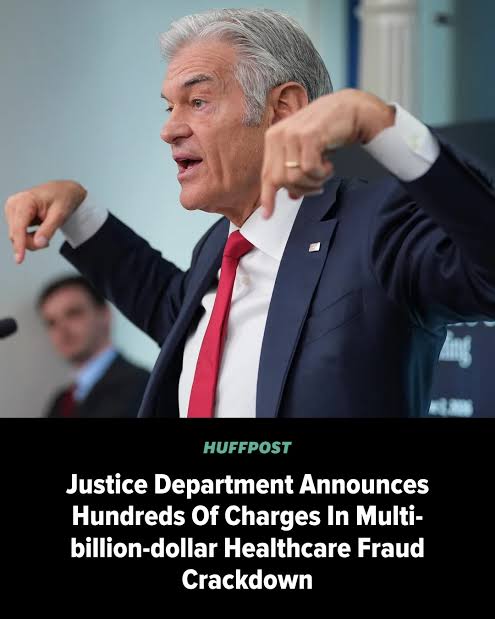
The United States has launched one of the largest anti-fraud enforcement actions in its history. In a nationwide operation, federal authorities announced criminal charges against 455 individuals accused of participating in healthcare fraud schemes worth more than $6.5 billion in false claims. The sweeping investigation targeted doctors, nurses, pharmacists, healthcare executives, and business owners allegedly involved in fraudulent billing, kickback schemes, identity theft, and illegal opioid distribution.
The announcement represents a major escalation in the government’s fight against healthcare fraud, highlighting sophisticated criminal networks that allegedly exploited Medicare, Medicaid, private insurers, and vulnerable patients across the United States.
This article explains what happened, who has been charged, how the alleged fraud worked, and why this record-breaking enforcement action could have lasting consequences for the healthcare industry.
Federal Authorities Announce Historic Fraud Crackdown

The U.S. Department of Justice (DOJ) confirmed that 455 defendants were charged during the 2026 National Health Care Fraud Takedown, making it one of the largest healthcare fraud enforcement operations ever conducted.
According to federal officials, the defendants collectively submitted more than $6.5 billion in allegedly fraudulent claims to government healthcare programs and insurance companies. The investigation involved cooperation between federal agencies, state Medicaid Fraud Control Units, international law enforcement, and multiple prosecutors’ offices across the country.
Officials described the operation as unprecedented in scale, involving investigations in 56 federal districts and participation from 50 state Medicaid Fraud Control Units, the highest level of coordination in the program’s history.
What Is the Massive Billion-Dollar Fraud Operation?
Healthcare fraud generally occurs when individuals knowingly submit false information to receive payments from insurance companies or government healthcare programs.
Investigators allege the defendants participated in schemes involving:
- False Medicare billing
- Medicaid fraud
- Kickback arrangements
- Identity theft
- Unnecessary medical procedures
- Fraudulent prescriptions
- Telemedicine scams
- Opioid diversion
- Money laundering
Authorities say many of the schemes targeted taxpayer-funded healthcare programs while putting patients at unnecessary medical risk.
Record Financial Losses Revealed
The investigation uncovered alleged fraudulent claims exceeding $6.5 billion, making it one of the most expensive healthcare fraud investigations in U.S. history.
Federal officials emphasized that the fraud involved not only financial crimes but also patient harm, including allegations that medically unnecessary treatments endangered lives.
Investigators also seized millions of dollars in cash, luxury vehicles, jewelry, bank accounts, cryptocurrency, and other assets believed to have been purchased with fraud proceeds.
Hundreds of Medical Professionals Charged
Unlike many fraud investigations focused solely on business operators, this operation included licensed healthcare professionals.
Among those charged were:
- Physicians
- Nurse practitioners
- Pharmacists
- Medical clinic owners
- Healthcare executives
- Laboratory operators
- Home health providers
The DOJ stated that approximately 90 doctors and other licensed medical professionals face criminal charges connected to the alleged schemes.
Alleged Schemes Uncovered
Federal investigators described several major fraud operations uncovered during the investigation.
Fraudulent Medical Testing
One physician allegedly ordered unnecessary cardiovascular testing for thousands of patients while falsely certifying medical necessity.
Authorities say these unnecessary procedures generated millions of dollars in fraudulent reimbursements and may have contributed to serious patient harm.
Wound Care Fraud
Investigators also described a large wound-care billing scheme involving hundreds of millions of dollars in allegedly fraudulent Medicare claims.
According to prosecutors, unnecessary treatments were billed while patients received little or no legitimate medical care.
Mental Health Billing Fraud
Another case involved allegations that providers billed Medicaid for counseling services that were never delivered.
Some claims allegedly involved patients who never received treatment or were otherwise ineligible.
Telemedicine Fraud
Officials also targeted telemedicine operations accused of using fake consultations to generate fraudulent prescriptions and unnecessary medical equipment orders.
International Cooperation Played a Major Role
The investigation extended beyond U.S. borders.
According to the DOJ, international cooperation resulted in the arrest and return of multiple suspects connected to multibillion-dollar healthcare fraud schemes.
Authorities coordinated with foreign governments to extradite alleged fraudsters accused of operating international criminal networks linked to healthcare fraud and money laundering.
Money Laundering Networks Exposed
Officials also announced separate criminal charges involving money laundering operations connected to healthcare fraud proceeds.
One investigation in New Hampshire targeted an alleged transnational criminal organization accused of laundering proceeds from a nearly $3 billion healthcare fraud scheme involving stolen identities.
Investigators believe sophisticated financial networks helped conceal criminal profits through shell companies, fake businesses, and international transactions.
Luxury Spending Allegedly Funded by Fraud
Court filings describe lavish lifestyles allegedly financed through fraudulent healthcare payments.
According to investigators, some suspects purchased:
- Luxury sports cars
- High-end watches
- Designer jewelry
- Expensive real estate
- Private yachts
- Luxury vacations
Federal authorities seized significant assets during the investigation as part of ongoing forfeiture proceedings.
Government Response
Justice Department officials described healthcare fraud as more than a financial crime.
Authorities argue that fraudulent billing steals taxpayer money, weakens public healthcare programs, increases insurance costs, and can expose patients to unnecessary or dangerous medical procedures.
Officials pledged continued enforcement efforts using advanced data analytics, interagency cooperation, and international partnerships to detect emerging fraud schemes.
Why Healthcare Fraud Matters
Healthcare fraud affects millions of Americans indirectly through:
- Higher insurance premiums
- Increased taxpayer costs
- Reduced trust in healthcare providers
- Delays in legitimate patient care
- Misuse of limited healthcare resources
Experts note that combating fraud helps preserve public healthcare programs while protecting vulnerable patients from unnecessary medical interventions.
How Investigators Detect Healthcare Fraud
Modern healthcare fraud investigations rely on advanced technology.
Investigators analyze:
- Billing patterns
- Prescription records
- Electronic health records
- Financial transactions
- Insurance claims
- Artificial intelligence models
- Whistleblower reports
Unusual billing activity often serves as the first indicator of potential fraud.
Potential Legal Consequences
Individuals convicted of federal healthcare fraud may face:
- Lengthy prison sentences
- Large criminal fines
- Asset forfeiture
- Professional license revocation
- Restitution payments
- Permanent exclusion from Medicare and Medicaid participation
Each defendant remains presumed innocent unless proven guilty in court.
What Happens Next?
Most defendants will now move through the federal criminal justice process.
Upcoming stages include:
- Initial court appearances
- Arraignments
- Evidence discovery
- Plea negotiations
- Jury trials
- Sentencing for those convicted
Investigators have indicated additional arrests and charges could follow as ongoing investigations continue.
Conclusion
The DOJ’s latest healthcare fraud crackdown represents one of the most significant enforcement actions ever undertaken against alleged healthcare fraud in the United States. With 455 defendants charged and more than $6.5 billion in alleged fraudulent claims uncovered, the operation demonstrates the scale and complexity of modern healthcare fraud investigations.
While the criminal cases are still pending, the investigation sends a clear message that federal authorities are intensifying efforts to identify and prosecute fraud targeting taxpayer-funded healthcare programs. Continued cooperation among federal, state, and international agencies is expected to play a central role in future enforcement actions.
Frequently Asked Questions (FAQs)
What is the massive billion-dollar fraud operation?
It refers to the DOJ’s 2026 National Health Care Fraud Takedown, which charged 455 individuals in schemes involving more than $6.5 billion in alleged fraudulent healthcare claims.
How many people were charged?
Federal prosecutors announced charges against 455 defendants, including doctors, nurses, pharmacists, executives, and business owners.
How much money was involved?
Authorities allege that the schemes involved over $6.5 billion in false healthcare claims submitted to Medicare, Medicaid, and private insurers.
What types of fraud were uncovered?
Investigators identified alleged Medicare fraud, Medicaid fraud, kickbacks, identity theft, telemedicine scams, unnecessary medical procedures, opioid diversion, and money laundering.
Are the defendants guilty?
No. Criminal charges are allegations, and every defendant is presumed innocent unless proven guilty in court.
Federal investigators increasingly rely on advanced technology to uncover healthcare fraud. Sophisticated data analytics tools can identify unusual billing patterns, suspicious prescription activity, and abnormal reimbursement requests that may indicate fraudulent conduct.
For example, investigators compare billing records across providers to determine whether a clinic is charging for an unusually high number of procedures compared to similar facilities. Artificial intelligence and predictive analytics can also flag providers who consistently bill for services that appear medically unnecessary or inconsistent with patient diagnoses.
In addition to technology, law enforcement agencies often work closely with insurance companies, healthcare providers, and whistleblowers who report suspicious activities. This collaborative approach has become one of the most effective methods for detecting large-scale fraud before financial losses continue to grow.
Why Healthcare Fraud Is a Serious Crime
Healthcare fraud is not simply about financial loss. It can also have serious consequences for patients and the healthcare system as a whole.
Some of the broader impacts include:
- Increased healthcare costs for taxpayers.
- Higher insurance premiums for families and businesses.
- Reduced resources for legitimate patient care.
- Delays in medical treatment due to fraudulent claims.
- Erosion of trust in healthcare providers and institutions.
When fraudulent claims consume billions of dollars, fewer resources remain available for patients who genuinely need medical services. This is why federal authorities continue to prioritize healthcare fraud investigations.
What Patients Can Do to Protect Themselves
Patients also play an important role in preventing healthcare fraud. Experts recommend taking several precautions to ensure that personal medical information is not misused.
Helpful steps include:
- Review Medicare and insurance statements regularly.
- Report unfamiliar medical services or charges.
- Never share Medicare or insurance identification numbers with unknown callers.
- Ask questions about recommended procedures or tests.
- Report suspected fraud to the appropriate government agencies or insurance providers.
Being proactive can help identify fraudulent activity early and reduce financial losses.
How Healthcare Providers Can Prevent Fraud
Healthcare organizations can reduce fraud risks by implementing strong compliance programs. Common best practices include:
- Regular employee training on fraud prevention.
- Internal billing audits.
- Verification of medical necessity before submitting claims.
- Strong cybersecurity measures to protect patient information.
- Anonymous reporting systems for employees.
- Routine monitoring of billing practices.
Compliance programs not only reduce legal risks but also strengthen public confidence in healthcare institutions.
Economic Impact of Healthcare Fraud
Healthcare fraud affects the broader economy in several ways. Billions of dollars lost through fraudulent claims ultimately increase government spending and insurance costs.
These financial losses may lead to:
- Increased taxpayer burden.
- Higher healthcare premiums.
- Reduced funding for legitimate healthcare services.
- Greater regulatory oversight.
- Increased administrative costs for providers.
Experts estimate that healthcare fraud costs billions annually, making it one of the most expensive forms of financial crime.
Government Agencies Involved in the Investigation
The nationwide enforcement effort involved coordination among multiple agencies, including:
- U.S. Department of Justice (DOJ)
- Federal Bureau of Investigation (FBI)
- Department of Health and Human Services Office of Inspector General (HHS-OIG)
- Drug Enforcement Administration (DEA)
- Centers for Medicare & Medicaid Services (CMS)
- State Medicaid Fraud Control Units
- Internal Revenue Service Criminal Investigation (IRS-CI)
The cooperation between these agencies demonstrates the complexity of investigating modern healthcare fraud schemes.
Legal Process Following the Charges
After criminal charges are announced, defendants typically move through several stages of the federal judicial process:
Initial Appearance
Defendants appear before a federal judge to hear the charges and address conditions of release.
Arraignment
The accused formally enter a plea of guilty or not guilty.
Discovery
Prosecutors and defense attorneys exchange evidence relevant to the case.
Plea Negotiations
Some defendants may choose to negotiate plea agreements before trial.
Trial
If no plea agreement is reached, the case proceeds to trial, where prosecutors must prove guilt beyond a reasonable doubt.
Sentencing
If convicted, defendants may face prison time, fines, restitution, and asset forfeiture.
Lessons From the Massive Billion-Dollar Fraud Operation
This historic enforcement action highlights several important lessons:
- Healthcare fraud remains a significant challenge for government programs.
- Advanced technology has become essential for detecting complex fraud schemes.
- International cooperation is increasingly necessary to combat transnational financial crimes.
- Strong compliance programs can help healthcare organizations avoid legal problems.
- Public awareness plays an important role in preventing fraud.
The investigation also demonstrates that authorities continue to devote substantial resources to identifying and prosecuting individuals who allegedly exploit healthcare systems for financial gain.
Future Outlook
Federal officials have indicated that healthcare fraud investigations will continue to expand as criminal schemes become more sophisticated. Increased use of artificial intelligence, enhanced international cooperation, and stronger data-sharing partnerships are expected to improve the government’s ability to detect fraud more quickly.
Healthcare providers are also expected to face greater scrutiny regarding billing practices, documentation standards, and compliance with federal regulations. At the same time, patients are encouraged to remain vigilant by reviewing medical bills and reporting suspicious activity.
As healthcare spending continues to rise, preventing fraud will remain a top priority for law enforcement agencies, insurers, and healthcare organizations alike.
Conclusion
The Huge Crackdown: Hundreds Charged In Massive Billion-Dollar Fraud Operation marks one of the largest healthcare fraud enforcement actions ever undertaken in the United States. With 455 defendants charged and more than $6.5 billion in alleged fraudulent claims identified, the investigation underscores the scale of financial crimes targeting public healthcare programs.
Authorities allege that the schemes involved false billing, kickbacks, identity theft, telemedicine fraud, unnecessary medical procedures, and money laundering. While each defendant is presumed innocent unless proven guilty in court, the operation reflects the government’s continued commitment to protecting taxpayer-funded healthcare programs and ensuring accountability within the healthcare industry.
The case also serves as a reminder that fraud prevention requires cooperation among government agencies, healthcare providers, insurers, and patients. As investigations continue, additional developments may emerge, further shaping efforts to combat healthcare fraud nationwide.
Frequently Asked Questions (FAQs)
What is the massive billion-dollar fraud operation?
It refers to the DOJ’s nationwide healthcare fraud takedown in which 455 defendants were charged in connection with more than $6.5 billion in alleged fraudulent healthcare claims.
Who was charged in the investigation?
Those charged include doctors, nurse practitioners, pharmacists, healthcare executives, laboratory owners, clinic operators, and other individuals accused of participating in healthcare fraud schemes.
What types of fraud were allegedly involved?
The investigation includes allegations of Medicare fraud, Medicaid fraud, telemedicine scams, illegal kickbacks, unnecessary medical procedures, opioid diversion, identity theft, and money laundering.
Why is healthcare fraud harmful?
Healthcare fraud increases costs for taxpayers and insurance providers, diverts resources away from legitimate patient care, and can expose patients to unnecessary or unsafe medical treatments.
What penalties could convicted defendants face?
Potential penalties include prison sentences, substantial fines, restitution, forfeiture of assets, and exclusion from participating in federal healthcare programs. Actual penalties depend on the outcome of individual court cases.
How can patients help prevent healthcare fraud?
Patients can review insurance statements, question unfamiliar medical charges, protect their insurance information, and report suspected fraud to their insurer or the appropriate authorities.
Will more charges be filed?
Federal officials have indicated that investigations are ongoing, so additional charges or enforcement actions may occur if new evidence emerges.
How useful was this post?
Click on a star to rate it!
Average rating 0 / 5. Vote count: 0
No votes so far! Be the first to rate this post.
About the Author

usa5911.com
Administrator
Hi, I’m Gurdeep Singh, a professional content writer from India with over 3 years of experience in the field. I specialize in covering U.S. politics, delivering timely and engaging content tailored specifically for an American audience. Along with my dedicated team, we track and report on all the latest political trends, news, and in-depth analysis shaping the United States today. Our goal is to provide clear, factual, and compelling content that keeps readers informed and engaged with the ever-changing political landscape.