Shocking Audio Released: Iranian Military Heard Threatening Ships In Strait Of Hormuz
The release of a dramatic radio recording allegedly capturing Iranian military personnel warning commercial vessels in the Strait of Hormuz has intensified concerns over security in one of the world’s most strategically important waterways.
According to multiple reports, the audio features members of Iran’s Islamic Revolutionary Guard Corps (IRGC) Navy issuing stern warnings to ships operating near the strait. The message reportedly declared that the waterway had been closed and warned that any vessel attempting to transit would face “decisive” action.
The recording surfaced during an already volatile period marked by military exchanges between the United States and Iran, attacks on commercial vessels, and growing fears that maritime trade through the Gulf could be severely disrupted.
Why the Audio Has Drawn Global Attention
The audio recording quickly attracted worldwide attention because the Strait of Hormuz serves as one of the most critical maritime chokepoints on Earth.
Every day, a substantial share of the world’s oil exports passes through this narrow waterway connecting the Persian Gulf to the Gulf of Oman and the Arabian Sea. Any disruption can affect:
- Global oil supplies
- Shipping insurance costs
- International trade
- Energy prices
- Regional security
Because of its importance, even verbal threats against commercial shipping can trigger immediate concern among governments, naval forces, shipping companies, and financial markets.
What Is Heard in the Recording?
Reports indicate the radio transmission was broadcast over a public maritime communication channel monitored by ships operating in the region.
The reported message warned all vessels that:
- The Strait of Hormuz was considered closed.
- Ships should avoid entering the area.
- Movement through the strait would be dealt with “decisively.”
- Captains should remain clear until further notice.
While the authenticity and operational significance of such broadcasts continue to be assessed, maritime authorities and security analysts have treated the incident as another sign of heightened tensions in Gulf waters.
Escalating Military Tensions
The audio emerged amid one of the most dangerous periods in recent Gulf security.
Recent developments have included:
- U.S. military strikes on Iranian targets.
- Iranian retaliation against U.S.-linked assets.
- Drone attacks.
- Damage to commercial vessels.
- Increased naval deployments throughout the region.
Security agencies have warned that these incidents raise the possibility of miscalculation between military forces operating in close proximity.
Commercial shipping companies have also been forced to reassess routes, insurance premiums, and operational risks.
Why the Strait of Hormuz Matters
The Strait of Hormuz is only about 33 kilometers (21 miles) wide at its narrowest point, making it one of the world’s most sensitive maritime passages.
Despite its relatively small size, it carries an enormous volume of international trade.
Major energy exporters that rely on the route include:
- Saudi Arabia
- Iraq
- Kuwait
- Qatar
- United Arab Emirates
Any interruption in shipping through the strait has the potential to affect economies far beyond the Middle East.
Energy analysts often describe the Strait of Hormuz as the world’s most important oil transit chokepoint.
Commercial Shipping Faces Renewed Risk
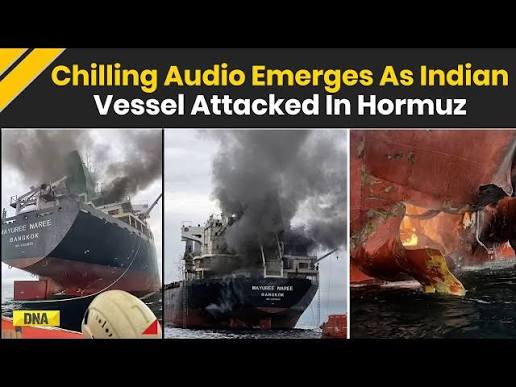
The newly released audio comes after several incidents involving merchant vessels in and around the Strait of Hormuz.
Recent reports indicate that commercial ships have been attacked or threatened during the latest escalation, prompting maritime security organizations to raise risk levels for vessels operating in the area.
Some shipping operators have delayed voyages, while others have adjusted routes where possible to reduce exposure.
Higher security risks also translate into increased insurance costs, longer delivery times, and additional operational expenses for shipping companies.
The reported radio transmission has prompted swift attention from governments, maritime organizations, and security analysts. While officials continue to assess the circumstances surrounding the audio, many countries have emphasized the importance of maintaining freedom of navigation through the Strait of Hormuz.
Several governments have urged restraint, warning that any escalation in the region could threaten global energy supplies and increase the risk of military confrontation. Maritime security agencies have also advised commercial vessels to remain vigilant and follow updated navigation guidance as tensions persist.
Shipping Companies Increase Security Measures
Commercial shipping operators have reacted cautiously to the latest developments.
Many companies have:
- Reviewed voyage plans.
- Increased onboard security procedures.
- Coordinated closely with naval authorities.
- Monitored military radio frequencies more carefully.
- Evaluated alternative routes where practical.
Although avoiding the Strait of Hormuz is difficult for many vessels, shipping firms are taking additional precautions to reduce operational risks.
Industry experts note that uncertainty alone can increase transportation costs, even if shipping lanes remain open.
The Economic Impact Could Be Significant
The Strait of Hormuz is one of the world’s busiest maritime corridors for crude oil and liquefied natural gas exports.
If security conditions deteriorate further, markets could experience:
Higher Oil Prices
Even temporary disruptions often cause traders to anticipate supply shortages, pushing oil prices upward.
Rising Shipping Costs
War-risk insurance premiums typically increase during periods of military tension. Shipowners may also face higher operating expenses due to additional security measures and longer transit times.
Supply Chain Delays
Any slowdown in vessel traffic can delay deliveries of fuel, industrial materials, and consumer goods worldwide.
U.S. and Allied Naval Presence
The United States and allied partners maintain a significant naval presence in and around the Persian Gulf to help safeguard international shipping.
Following recent incidents involving commercial vessels, military patrols have increased in several areas surrounding the Strait of Hormuz. Officials have repeatedly stated that they intend to protect lawful maritime commerce while seeking to avoid unnecessary escalation.
Security analysts believe naval coordination has become increasingly important as merchant ships navigate an environment marked by heightened military activity.
Iran’s Position
Iran has long argued that its military actions in the Persian Gulf are intended to protect its national security and territorial interests.
Iranian officials have frequently criticized the military presence of outside powers in the region, saying foreign forces contribute to instability. During previous periods of tension, Tehran has maintained that it has the right to respond to perceived threats while also emphasizing the strategic importance of the Strait of Hormuz.
As with many rapidly developing security incidents, official statements from different parties often present differing interpretations of events. Readers should follow updates from credible news organizations and official government sources as more information becomes available.
Maritime Experts Urge Caution
Security specialists say that radio warnings alone do not necessarily mean commercial traffic will stop. However, such communications are taken seriously because they can influence ship captains’ decisions and affect insurance assessments.
Experts recommend that shipping companies:
- Maintain constant communication with maritime authorities.
- Follow official navigation advisories.
- Monitor regional security updates.
- Avoid unnecessary risks while transiting high-threat areas.
These precautions have become increasingly common during periods of heightened geopolitical tension.
Why the World Is Watching Closely
The reported audio has become another symbol of the fragile security environment in the Gulf.
While investigations into the recording and related maritime incidents continue, the episode underscores how quickly regional tensions can affect global trade, energy markets, and international diplomacy.
With commercial shipping, military forces, and diplomatic negotiations all intersecting in the Strait of Hormuz, even isolated incidents can have far-reaching consequences.
How useful was this post?
Click on a star to rate it!
Average rating 0 / 5. Vote count: 0
No votes so far! Be the first to rate this post.
About the Author

usa5911.com
Administrator
Hi, I’m Gurdeep Singh, a professional content writer from India with over 3 years of experience in the field. I specialize in covering U.S. politics, delivering timely and engaging content tailored specifically for an American audience. Along with my dedicated team, we track and report on all the latest political trends, news, and in-depth analysis shaping the United States today. Our goal is to provide clear, factual, and compelling content that keeps readers informed and engaged with the ever-changing political landscape.