US MILITARY LATIN AMERICA DEPLOYMENT: Cartel Drug Crackdown, Special Operations Strike Force Authorization
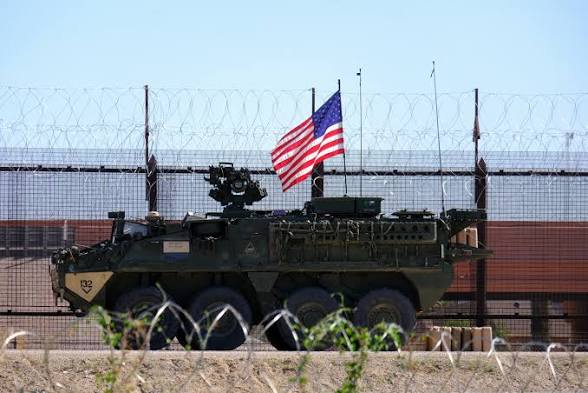
The US military Latin America deployment has become a major focus of regional security discussions as Washington expands its campaign against international drug trafficking networks. Military surveillance, maritime interdictions, intelligence sharing, and cooperation with regional security forces now form important parts of the US counter-narcotics strategy.
In 2026, the campaign has attracted additional attention because of reported operations involving US personnel and partner forces in Latin America. Officials describe these efforts as an attempt to disrupt cartel logistics, restrict drug shipments, and weaken criminal organizations operating across national borders. However, the growing use of military capabilities has also raised questions about legal authority, civilian safety, and the long-term effectiveness of the strategy.
According to the official US Southern Command, its mission includes detecting, disrupting, and dismantling transnational criminal networks through military support and international partnerships. Its public information also identifies Operation Southern Spear as part of the wider campaign.
Yet, the expansion of military activity does not automatically mean that every reported operation is a special forces assault or that a new authorization for unrestricted combat has been issued. Understanding the deployment requires examining its operational goals, regional partnerships, legal framework, and potential consequences.
What Is Behind the US Military Latin America Deployment?
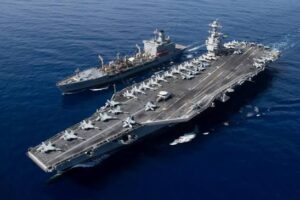
The US military’s increased involvement in counter-narcotics operations reflects a broader effort to disrupt drug trafficking routes throughout the Western Hemisphere.
Drug trafficking organizations often operate across several countries. They may coordinate production, transportation, money laundering, weapons procurement, and distribution through separate criminal networks. As a result, authorities argue that targeting individual shipments alone cannot dismantle the entire operation.
The US strategy therefore combines intelligence collection, maritime patrols, surveillance technology, and cooperation with local law enforcement.
The official Southern Command counter-narcotics framework includes naval vessels, aircraft, Coast Guard capabilities, and intelligence support. It also relies on partner countries to identify suspicious activity and conduct interdictions.
This approach aims to make trafficking more difficult at multiple stages of the supply chain.
For example, authorities may monitor a suspected vessel, share information with a regional partner, intercept a shipment, and investigate the financial network connected to the operation. In principle, this coordinated approach can expose connections that a single arrest or seizure might otherwise leave untouched.
However, the scale and intensity of individual operations vary. Some involve surveillance and intelligence support, while others may involve arrests, seizures, or military force.
The key distinction is that an expanded counter-narcotics deployment does not, by itself, establish that every cartel target is subject to military attack. Each operation requires its own factual and legal assessment.
Operation Southern Spear and the Expanding Counter-Narcotics Campaign
Operation Southern Spear has become an important part of the US military’s publicly described efforts to disrupt suspected drug trafficking in the Caribbean and eastern Pacific.
The operation builds on an established US military role in maritime counter-narcotics activities. Southern Command’s official materials describe efforts to identify trafficking vessels, interrupt logistical support, and coordinate operations with partner nations.
The campaign has also evolved beyond traditional maritime monitoring.
Recent reporting describes a broader military role that includes advanced surveillance equipment, unmanned systems, intelligence support, and assistance to regional forces conducting operations against suspected trafficking networks. A September 2026 report by The Wall Street Journal described the Pentagon’s expanding involvement across Latin America and the Caribbean.
These developments point to a more integrated operational model.
Rather than relying exclusively on patrols at sea, US agencies can combine information from several sources to identify suspected trafficking routes and logistical hubs. Regional authorities can then use that information to investigate or disrupt the networks involved.
Nevertheless, official claims about operational success should be evaluated carefully. A reported seizure, interdiction, or strike does not necessarily demonstrate that the overall flow of illegal drugs has declined.
The longer-term results depend on whether authorities can disrupt the organizations’ finances, supply chains, leadership structures, and ability to replace lost personnel or equipment.
Special Operations Strike Force: What Does the Term Mean?
The phrase “special operations strike force” suggests a specialized military unit capable of conducting demanding missions. However, the headline alone does not establish that a new unit has been created or that a specific authorization has been issued.
US special operations forces have capabilities that may support counter-narcotics missions, including intelligence collection, reconnaissance, partner-force training, and specialized operations when legally authorized.
Their involvement must be distinguished from other military activities.
For instance, a surveillance aircraft tracking a suspected vessel is performing a different function from a military team assisting local police with a raid. Similarly, intelligence support for an arrest is not the same as authorization to use lethal force.
These distinctions matter because descriptions of military deployments can sometimes blur different missions together.
As of October 16, 2026, publicly available information supports the existence of an expanded US counter-narcotics campaign and reported direct assistance to partner operations. However, the available sources cited here do not establish a single new, unrestricted authorization for a region-wide special operations strike force.
Readers should therefore distinguish between three separate developments:
Military deployment: Personnel and equipment are assigned to a region or mission.
Operational authorization: Officials approve a specific activity within applicable legal limits.
Use-of-force authorization: A decision permits particular forms of force under defined circumstances.
These terms are related, but they are not interchangeable.
Why Washington Is Targeting Drug Cartel Networks
The US government has long treated international drug trafficking as a national security and public safety concern.
Illicit drug networks can generate substantial revenue, facilitate violence, and undermine institutions through corruption. Some organizations also participate in human trafficking, weapons smuggling, extortion, and money laundering.
Consequently, US officials argue that disrupting these networks can protect American communities while supporting regional stability.
There are several major objectives behind the strategy.
1. Disrupting trafficking routes
Drug shipments move through maritime routes, coastal facilities, ports, and inland transportation networks. Surveillance and interdiction operations seek to identify and interrupt these movements.
2. Weakening cartel logistics
Criminal organizations require fuel, vessels, communications, safe locations, financial services, and trusted intermediaries. Investigating these support systems can make trafficking more difficult.
3. Improving intelligence sharing
Criminal networks frequently cross national borders. Information collected in one country may help authorities in another identify suspects, routes, or financial connections.
4. Supporting local security forces
Training, equipment, intelligence, and operational coordination can help regional partners improve their ability to investigate and disrupt organized crime.
5. Increasing the cost of criminal activity
More frequent detection and effective enforcement can raise the financial and operational risks for trafficking organizations.
However, these objectives are not guaranteed outcomes. Criminal groups may change routes, recruit new personnel, or shift operations to locations where enforcement is weaker.
Therefore, the campaign’s success must be measured by more than the number of operations announced.
Latin American Countries and Regional Security Cooperation
The US military Latin America deployment is not a single operation conducted uniformly across the entire region. Instead, the level of cooperation differs by country, threat assessment, diplomatic relationship, and domestic law.
Countries may cooperate through intelligence exchanges, joint training, maritime patrols, investigations, or support for specific security operations.
Ecuador and direct operational support
Ecuador has emerged as an important example of deeper US involvement in regional counter-narcotics efforts.
A September 2026 report described US personnel participating alongside Ecuadorian police in raids against an alleged cocaine-trafficking network. The reporting characterized the involvement as a significant step beyond the more traditional model of intelligence and equipment assistance.
Such cooperation may help local authorities access specialized surveillance equipment and information about transnational criminal networks.
At the same time, direct involvement creates additional questions about operational responsibility. Officials must clarify which country commands a mission, who authorizes the use of force, and which legal procedures govern arrests and evidence collection.
Peru and regional security partnerships
US Southern Command has also emphasized cooperation with Peru.
In a report published on October 16, 2026, following a visit by Southern Command chief General Francis Donovan, officials described discussions focused on strengthening security cooperation and countering transnational criminal networks. The visit included meetings with Peruvian military officials in the Loreto region.
These discussions illustrate how diplomatic engagement and military cooperation can support a wider regional strategy.
However, a security visit or cooperation agreement should not automatically be interpreted as approval for American combat operations inside another country.
The Caribbean and eastern Pacific
Maritime activity remains central to the US counter-narcotics mission.
Southern Command reports operations targeting suspected trafficking vessels and logistical support networks in these waters. The command’s stated framework includes maritime interdiction, information sharing, and coordination with partner nations.
Because trafficking networks can move between jurisdictions, regional cooperation is particularly important. At the same time, authorities must distinguish legitimate commercial and fishing activity from conduct supported by reliable evidence of criminal involvement.
How Military Technology Supports the Crackdown
Modern counter-narcotics operations increasingly rely on information gathered through multiple technologies.
Military equipment can help authorities monitor large areas, identify suspicious movements, and coordinate with law enforcement. Yet, technology does not eliminate the need for human judgment or reliable evidence.
The following capabilities can support the broader campaign.
Aircraft can monitor large areas of ocean and help identify vessels for further investigation. Their information may support coast guards or partner authorities conducting an interception.
Drones can provide persistent observation in selected areas. They may help investigators understand vessel movements or identify locations requiring closer scrutiny.
Patrol vessels and helicopters can support maritime interdictions, search operations, and the recovery of suspected contraband.
Analysts can combine information from different agencies to identify possible relationships between shipments, criminal intermediaries, and trafficking networks.
Southern Command has identified unmanned platforms, intelligence integration, and interagency coordination as parts of its broader approach.
However, surveillance alone does not prove that a person has committed a crime. Vessel movements, incomplete intelligence, and mistaken identification can produce false conclusions.
For that reason, reliable verification remains essential before authorities take coercive action.
Legal Authority: Can the US Military Strike Cartels?
One of the most significant questions surrounding the deployment concerns the legal authority to use military force against suspected traffickers.
The United States has extensive experience using military resources to support counter-narcotics operations. However, the legal rules governing surveillance, arrests, interdictions, and lethal strikes are not identical.
The administration has argued that certain operations against designated criminal organizations are lawful under its interpretation of national security and armed-conflict authorities. Critics, including legal experts and some lawmakers, have challenged aspects of that reasoning.
A Congressional Research Service report published in 2026 discusses the legal and policy issues surrounding US operations against designated drug cartels, including lethal maritime strikes.
Several questions are particularly important.
Presidential authority and congressional oversight
The US Constitution divides military powers between the president and Congress. The president serves as commander in chief, while Congress has important powers relating to declarations of war, military funding, and statutory authorization.
The exact legal basis for an operation depends on the circumstances, the authority invoked, and the nature of the action.
Therefore, a public statement about a crackdown does not by itself prove that Congress has approved a new war or that military personnel possess unrestricted authority to attack cartel members.
International law and national sovereignty
Military operations conducted within another country’s territory raise additional issues.
The host country’s consent, the applicable agreements, international law, and the specific circumstances of a mission can all affect whether an operation is lawful.
Cooperation with local authorities may provide a legal basis for certain activities. However, that does not automatically settle every question about the use of force.
Evidence and accountability
Authorities must also address how they identify targets, assess intelligence, protect civilians, and investigate allegations of misconduct.
These questions become especially important when operations involve deadly force or when people are detained based on suspected trafficking activity.
The central legal issue is not simply whether drug cartels pose a serious threat. It is whether each specific action is supported by the required legal authority and adequate evidence.
Civilian Safety and Human Rights Concerns
An intensified military campaign can create risks for people who live or work near suspected trafficking routes.
Fishing communities, coastal businesses, transport workers, and residents near security operations may experience disruption even when they have no connection to criminal organizations.
Recent reporting has highlighted concerns surrounding US-Ecuadorian maritime operations. A Washington Post report published on October 16, 2026, described the seizure and destruction of vessels suspected of supporting drug trafficking, as well as disputes over evidence and the treatment of detained crew members.
Such reporting illustrates why transparency and independent scrutiny matter.
Authorities may face difficult decisions when intelligence suggests that a vessel is supporting a trafficking network. Nevertheless, suspicious activity should be evaluated against available evidence rather than treated as conclusive proof of criminal conduct.
Effective safeguards can include clear rules for detention, reliable identification procedures, documented evidence, independent investigations, and access to appropriate legal processes.
Protecting civilians is also important for the campaign’s broader strategic objectives. If innocent people suffer economic losses or believe that enforcement is arbitrary, public confidence in local institutions may decline.
In contrast, transparent procedures can strengthen cooperation between communities and law enforcement.
Will the Deployment Reduce Drug Trafficking?
The ultimate test of the US military Latin America deployment will be whether it produces lasting reductions in trafficking and related harm.
Military operations can interrupt shipments and disrupt logistics. However, the international drug trade is a complex system involving producers, intermediaries, transport networks, financial services, and consumer markets.
When authorities close one route, traffickers may attempt to use another. When a criminal leader is arrested, another individual may take over the organization. These responses can limit the long-term impact of isolated operations.
For this reason, several measures are needed to assess the campaign.
Changes in drug availability and overdose deaths in the United States.
Sustained reductions in trafficking volumes, supported by reliable data.
Successful prosecutions based on admissible evidence.
Disruption of criminal finances and money-laundering networks.
Improvements in security and institutional capacity in partner countries.
Evidence that violence and corruption are declining rather than moving elsewhere.
Drug seizures and arrests can provide useful information, but they cannot tell the whole story.
For example, a rise in seized drugs might indicate improved enforcement. It might also reflect an increase in the volume of drugs being transported. Additional evidence is needed to determine which explanation is more likely.
Likewise, the number of military strikes does not directly measure the reduction in drug consumption or organized crime.
A comprehensive strategy must therefore combine enforcement with financial investigations, effective courts, public health measures, and efforts to reduce corruption.
Political and Diplomatic Consequences for Latin America
The expansion of US military activity could reshape relationships between Washington and governments across Latin America.
Some governments may welcome American intelligence, equipment, and operational support because they face serious challenges from organized crime. Others may worry about sovereignty, domestic political opposition, or the possibility that military action could increase regional tensions.
These differences can complicate cooperation.
A government might support joint intelligence operations while opposing unilateral military strikes. Similarly, an agreement to train local security forces does not necessarily imply approval for every future US operation.
There are also broader geopolitical considerations. Military cooperation can strengthen diplomatic relationships, but disagreements over sovereignty and the use of force can damage trust.
For Washington, maintaining regional partnerships may be just as important as deploying additional equipment. Sustainable cooperation requires clear objectives, transparent legal arrangements, and respect for the responsibilities of participating governments.
The campaign’s long-term success will depend partly on whether regional partners view it as a cooperative security effort rather than an externally imposed military strategy.
What Happens Next in the US Cartel Crackdown?
The next phase of the US counter-narcotics campaign is likely to remain focused on intelligence integration, regional partnerships, maritime monitoring, and efforts to disrupt criminal logistics.
Public reporting in September and October 2026 indicates that the administration has expanded its approach beyond traditional maritime interdiction to include closer operational support for selected regional partners.
However, several developments will determine how far the campaign progresses.
First, governments will need to clarify the legal framework governing joint operations and any use of lethal force.
Second, military and law enforcement agencies will need to demonstrate that their intelligence is reliable enough to support arrests and other coercive actions.
Third, regional authorities will need to maintain public trust while addressing the corruption, economic incentives, and institutional weaknesses that allow criminal networks to operate.
Finally, independent assessments will be needed to determine whether the campaign is reducing trafficking and violence over time.
The deployment may create additional pressure on criminal organizations. Nevertheless, lasting results will depend on whether military activity forms part of a wider strategy that includes policing, financial investigations, judicial cooperation, and public health policies.
Conclusion
The US military Latin America deployment represents a significant development in Washington’s approach to international drug trafficking and regional security. Operation Southern Spear, maritime interdictions, intelligence sharing, and cooperation with local security forces illustrate the expanding role of military capabilities in counter-narcotics efforts.
At the same time, the description of a special operations strike force requires careful interpretation. Evidence of an expanded deployment does not automatically confirm a new, unrestricted authorization for military strikes throughout Latin America.
Legal authority, host-country consent, reliable intelligence, civilian protection, and congressional oversight remain essential considerations.
Ultimately, the campaign should be judged by measurable reductions in drug trafficking, criminal violence, and harm to communities—not simply by the number of deployments, arrests, or strikes announced.
The coming months will help determine whether this increasingly forceful strategy can produce lasting improvements in regional security while respecting legal obligations and the sovereignty of partner nations.
Frequently Asked Questions (FAQs)
1. Why is the US military deploying forces to Latin America?
The deployment supports US efforts to disrupt international drug trafficking networks. Activities include maritime surveillance, intelligence sharing, interdictions, and assistance to regional security forces.
2. What is Operation Southern Spear?
Operation Southern Spear is part of the US military’s counter-narcotics campaign in the Western Hemisphere. Official materials describe efforts to disrupt suspected trafficking operations and coordinate activities with partner nations.
3. Has a new special operations strike force been authorized?
The existence of expanded military operations does not, by itself, confirm a newly authorized, unrestricted special operations strike force. The precise scope of any authorization must be established through reliable official documentation and reporting.
4. Which countries are involved in US counter-narcotics cooperation?
US cooperation spans several countries across Latin America and the Caribbean. The nature of each partnership varies, including intelligence sharing, training, maritime interdiction, and support for specific operations. Ecuador and Peru have featured in recent reporting and official security engagements.
5. Can US forces conduct strikes against drug cartels?
The legality of any strike depends on the applicable US legal authority, international law, the facts surrounding the target, and the circumstances of the operation. The legal basis for certain US anti-cartel strikes has been disputed by legal experts and lawmakers.
6. What role does technology play in the crackdown?
Surveillance aircraft, unmanned systems, naval vessels, and intelligence-sharing networks can help authorities identify suspicious activity and coordinate interdictions. However, surveillance information still requires careful evaluation before it can establish criminal conduct.
7. Will the military deployment eliminate drug cartels?
There is no guarantee that military operations will eliminate cartels. Criminal organizations can adapt, replace leaders, and change trafficking routes. Long-term progress also requires financial investigations, effective law enforcement, judicial cooperation, and public health measures.
8. What are the main concerns about the deployment?
Major concerns include legal authority, national sovereignty, civilian safety, the reliability of intelligence, accountability, and the possibility that military operations may displace trafficking rather than eliminate it.
9. What is the difference between counter-narcotics operations and military strikes?
Counter-narcotics operations include surveillance, intelligence gathering, training, arrests, and drug seizures. Military strikes involve the use of force against a target. Each activity has distinct operational requirements and legal considerations.
10. How can the success of the US cartel crackdown be measured?
Success should be assessed through sustained reductions in trafficking, drug-related harm, organized crime, corruption, and violence. Seizures and arrests are useful indicators, but they do not independently prove that the overall drug trade is shrinking.
Sources and further reading
The following sources provide additional information for readers who want to examine the military campaign, official statements, and legal debate.
US Southern Command — Official website and operational updates.
southcom.milSouthern Command: Countering Narcoterrorism and Cartels.
southcom.milCongressional Research Service: US Foreign Policy in the Western Hemisphere.
Every CRS ReportThe Wall Street Journal — Reporting on the Pentagon’s expanding role in Latin American counter-narcotics operations.
The Wall Street JournalThe Washington Post — Reporting on US-Ecuadorian maritime operations and evidence concerns, October 16, 2026.
The Washington Post
How useful was this post?
Click on a star to rate it!
Average rating 0 / 5. Vote count: 0
No votes so far! Be the first to rate this post.
About the Author

usa5911.com
Administrator
Hi, I’m Gurdeep Singh, a professional content writer from India with over 3 years of experience in the field. I specialize in covering U.S. politics, delivering timely and engaging content tailored specifically for an American audience. Along with my dedicated team, we track and report on all the latest political trends, news, and in-depth analysis shaping the United States today. Our goal is to provide clear, factual, and compelling content that keeps readers informed and engaged with the ever-changing political landscape.