White House Foreign Policy: Trump Vows Direct Showdown with Xi Over Axis of Evil
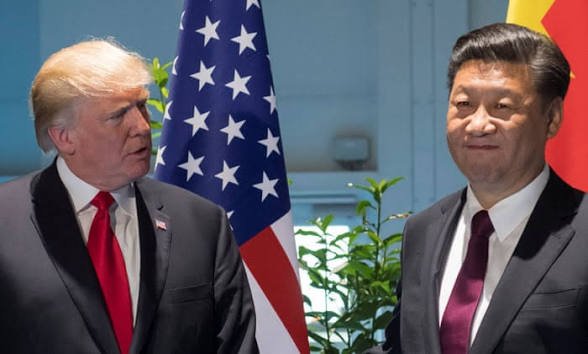
President Donald Trump’s foreign policy toward China is entering another important phase as Washington prepares for a high-level meeting with Chinese President Xi Jinping. The upcoming encounter comes as the United States faces simultaneous tensions involving Iran, Russia, North Korea, Taiwan, trade and advanced technology.
The phrase “Axis of Evil” in the headline reflects a broader political argument about cooperation among China, Russia, Iran and North Korea. It is important to distinguish that characterization from established diplomatic terminology. Analysts disagree about how closely these countries coordinate and whether they should be treated as a single strategic bloc.
The immediate diplomatic reality is more specific: Trump and Xi are preparing for another summit, while Washington and Beijing continue to negotiate over trade, technology, security and other areas.
Recent reporting indicates that Xi is expected in Washington for a September 24 meeting with Trump. The summit is attracting attention because it could affect several major disputes simultaneously.
Trump and Xi Face a Complicated Relationship
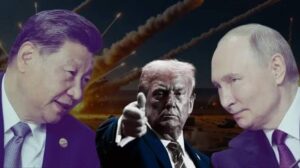
The Trump-Xi relationship has moved through periods of confrontation and cooperation.
During Trump’s first administration, the two governments fought over tariffs, technology, trade deficits and intellectual property. During his second term, the relationship has remained competitive, but direct presidential diplomacy has also become an important tool.
The latest phase is particularly complicated because economic and security issues are now closely connected.
China remains a major trading power and a critical part of global manufacturing supply chains. At the same time, Washington considers Beijing a major strategic competitor in areas such as semiconductors, artificial intelligence, military technology and regional security.
The upcoming summit therefore has several overlapping agendas.
Trump could raise trade issues, technology restrictions, Taiwan, Chinese relations with other U.S. adversaries and Beijing’s economic relationship with Iran.
Xi, meanwhile, has his own priorities. Beijing has repeatedly argued that the United States should respect China’s core interests and avoid policies that interfere with China’s development.
Chinese Foreign Minister Wang Yi recently called for Washington and Beijing to overcome obstacles ahead of the leadership meeting.
Why Iran Has Become Part of the China Debate
The war involving Iran has added another layer to U.S.-China relations.
China maintains important economic relationships with Iran, including energy ties. Some U.S. commentators argue that Chinese purchases of Iranian oil provide Tehran with an economic lifeline.
That argument has become particularly prominent in American political commentary as Washington attempts to pressure Iran.
However, claims about China’s role should be separated from broader political rhetoric. China’s economic relationship with Iran does not automatically mean Beijing is operating as part of a unified military alliance with Tehran.
China has significant reasons to maintain relations with Iran while also avoiding direct confrontation with the United States.
Energy security is one factor. Regional stability is another. Beijing also has an interest in maintaining access to global markets.
The upcoming Trump-Xi meeting could therefore become a forum for discussions about sanctions, energy flows and the wider Middle East crisis.
The “Axis of Evil” Description Requires Context
The phrase “Axis of Evil” has a specific history in U.S. political language. President George W. Bush famously used the expression in his 2002 State of the Union address when referring to Iran, Iraq and North Korea.
Today’s use of similar language is different because China and Russia are sometimes included in broader descriptions of strategic cooperation among U.S. competitors.
Some analysts describe China, Russia, Iran and North Korea as an emerging network of states that cooperate when their interests overlap. Others argue that describing them as a formal “axis” exaggerates the level of coordination.
Foreign Policy previously examined this issue and argued that cooperation among these governments should not automatically be interpreted as a tightly integrated alliance.
That distinction matters for understanding Trump’s China strategy.
Beijing and Moscow have deepened their relationship, while China maintains ties with Iran and North Korea. However, each government has different economic interests, security priorities and relationships with other countries.
Taiwan Remains a Major Flashpoint
Taiwan is among the most sensitive issues in U.S.-China relations.
Beijing considers Taiwan part of China and has not ruled out using force to achieve reunification. Washington maintains unofficial relations with Taiwan and has provided military support to the island.
The Trump administration’s approach is being closely watched by U.S. allies.
Reuters recently reported that allies in Asia are concerned about Trump’s approach to Taiwan ahead of his meeting with Xi. The report said Trump’s characterization of U.S. arms sales to Taiwan as a possible negotiating tool has increased uncertainty among regional partners.
Taiwan is also economically important because of its role in global semiconductor production.
Any significant change in the U.S. position toward Taiwan could therefore affect security policy, technology markets and supply chains.
For Beijing, Taiwan is a core sovereignty issue.
For Washington and its regional partners, the issue is connected to deterrence and the broader balance of power in East Asia.
That makes Taiwan one of the most difficult subjects for Trump and Xi to address.
Trade Is Still Central to Trump’s China Strategy
Trade remains another major component of the relationship.
Trump has historically used tariffs as a central instrument of economic policy toward China. The strategy is designed to pressure Beijing while encouraging greater domestic production in the United States.
China, however, has substantial leverage of its own.
Beijing controls or dominates important parts of several global supply chains, including rare-earth materials and manufacturing components.
Recent reporting has highlighted the importance of rare earths in U.S.-China economic negotiations.
The relationship is therefore not simply a question of one country applying pressure on another.
Both governments have economic tools that can impose costs on the other side.
This creates an incentive for Trump and Xi to negotiate even while their governments continue competing strategically.
Rare Earths and Supply Chains
Rare earth elements have become a particularly important issue in U.S.-China relations.
These materials are used in electronics, electric vehicles, defense systems and other advanced technologies.
China’s strong position in rare-earth processing has given Beijing significant economic leverage.
For Washington, reducing dependence on Chinese supply chains has become a national-security concern.
For Beijing, access to the U.S. market and advanced technology remains important.
This creates a complicated bargaining relationship.
A major agreement could therefore involve multiple sectors rather than focusing only on tariffs.
Artificial Intelligence Adds a New Dimension
Artificial intelligence is rapidly becoming another area of strategic competition.
The United States and China are investing heavily in AI research, computing infrastructure and advanced semiconductor technologies.
Washington has introduced restrictions affecting China’s access to some advanced technologies, while Beijing has emphasized domestic technological development.
China is also resisting some U.S. proposals regarding the pace and governance of AI development. Recent reporting shows that Beijing views AI as a core component of its economic strategy and is developing its own regulatory framework.
The AI competition matters because advanced computing can have both civilian and military applications.
That means technology policy increasingly overlaps with national security.
Trump and Xi could therefore discuss AI indirectly through semiconductor controls, investment restrictions and technology exports.
Russia and the Broader Security Picture
Russia also complicates the U.S.-China relationship.
China and Russia have developed closer diplomatic and economic ties, particularly during the war in Ukraine.
Washington has repeatedly examined China’s relationship with Moscow because of concerns about Russia’s access to technology, trade and other forms of economic support.
At the same time, Beijing has presented itself as a potential diplomatic player in the Ukraine conflict.
The United States and China therefore approach the Russia question from very different strategic positions.
Trump’s broader foreign policy could attempt to separate China’s relationship with Russia from other disputes.
Whether that produces concrete agreements remains uncertain.
North Korea Adds Another Challenge
North Korea represents another area where China has significant influence but does not have complete control.
Beijing has historically been North Korea’s most important economic and diplomatic partner.
Washington wants North Korea to reduce its nuclear and missile capabilities. China, meanwhile, has an interest in preventing instability on its border.
The United States therefore needs Chinese cooperation on the Korean Peninsula even while Washington and Beijing compete elsewhere.
This illustrates why describing international politics as two simple opposing blocs can be misleading.
Countries can cooperate on one issue while competing on another.
What the White House May Seek From Beijing
The precise outcome of the upcoming Trump-Xi meeting remains unknown.
However, several subjects are likely to receive attention because of their importance to the bilateral relationship.
These include:
- Trade and tariffs
- Rare-earth supplies
- Semiconductor restrictions
- Artificial intelligence
- Taiwan
- Iran and energy
- Russia and Ukraine
- North Korea
- Global supply chains
- Agricultural purchases
The challenge for Trump is that progress in one area may depend on concessions in another.
For example, Washington could seek Chinese cooperation on Iran while Beijing seeks relief from technology restrictions.
That creates a negotiation involving multiple interconnected issues.
Why the Summit Matters for Global Markets
The Trump-Xi relationship affects more than Washington and Beijing.
Financial markets monitor U.S.-China negotiations because tariffs and export controls can influence manufacturing costs and investment decisions.
Businesses also watch the talks because changes in trade rules can affect supply chains.
A reduction in tensions could provide greater certainty for companies.
Conversely, a new escalation could increase costs for manufacturers and consumers.
The impact would depend on the specific measures announced and how quickly governments implement them.
Trump’s Personal Diplomacy With Xi
Trump has frequently emphasized personal relationships with foreign leaders.
His approach to Xi has combined strong criticism with direct engagement.
That strategy can create opportunities for negotiations, but it also creates uncertainty because personal diplomacy does not eliminate underlying differences between governments.
The structural issues between the United States and China remain significant.
These include competing economic models, military competition, technology restrictions, Taiwan and different views of the international order.
Recent reporting has described a notable change in Trump’s tone toward Xi, including plans for high-level hospitality and direct engagement.
That does not necessarily mean the strategic competition has disappeared.
Instead, it suggests that confrontation and negotiation are occurring simultaneously.
A Possible New Phase in U.S.-China Relations
The upcoming meeting could mark another phase in the Trump-Xi relationship.
The two leaders have incentives to avoid an uncontrolled escalation.
The United States wants to protect its economic and security interests.
China wants continued economic growth and strategic autonomy.
Both countries also have reasons to maintain communication.
This creates room for agreements even when major disagreements remain.
The key question is whether the summit produces concrete commitments or mainly demonstrates diplomatic engagement.
What to Watch After the Meeting
Several indicators will help determine the practical significance of the summit.
First, observers will watch for changes to tariffs.
Second, rare-earth agreements could reveal whether economic negotiations have produced tangible results.
Third, semiconductor and AI restrictions could indicate whether technology competition is becoming more or less intense.
Fourth, Taiwan-related statements will receive close attention across Asia.
Finally, comments concerning Iran, Russia and North Korea could show whether Washington and Beijing are prepared to cooperate on wider security issues.
Conclusion
The Trump-Xi relationship sits at the center of a complicated international environment.
The phrase “Axis of Evil” captures one strand of the political debate surrounding China’s relationships with Russia, Iran and North Korea, but it should not be treated as proof of a formal four-country alliance.
The more concrete story is that Washington and Beijing are competing across trade, technology and security while maintaining direct diplomatic engagement.
Trump’s upcoming meeting with Xi is therefore significant because it brings many of these issues together.
Taiwan, Iran, Russia, North Korea, AI, rare earths and trade could all influence the discussions.
Recent reporting indicates that Xi’s Washington visit is expected to take place on September 24, adding urgency to preparations on both sides.
The outcome will depend on whether the two governments can translate presidential diplomacy into specific agreements.
For now, the relationship remains defined by both competition and negotiation.
Frequently Asked Questions
What is the Trump-Xi summit about?
The summit is expected to address major U.S.-China issues, including trade, technology, Taiwan and broader international security concerns. Xi is expected to meet Trump in Washington on September 24, 2026.
What does “Axis of Evil” mean in this context?
The phrase is being used in political commentary to describe perceived cooperation among China, Russia, Iran and North Korea. It is not the formal name of an alliance.
Why is China important to U.S. foreign policy?
China is a major economic and military power. Its influence over manufacturing, technology, trade and regional security makes the U.S.-China relationship important to global politics and markets.
Why is Taiwan important in the Trump-Xi relationship?
Taiwan is one of the most sensitive issues between Washington and Beijing. China claims Taiwan as part of its territory, while the United States maintains unofficial relations and provides defense support to Taiwan.
How does Iran affect U.S.-China relations?
China has important economic and energy relationships with Iran. Washington’s efforts to pressure Tehran therefore create another potential point of disagreement with Beijing.
Are China, Russia, Iran and North Korea a formal alliance?
There is no widely recognized formal military alliance joining all four countries. Analysts differ over how closely their interests and cooperation should be characterized.
Why are rare earths important?
Rare earth materials are used in numerous advanced technologies, including electronics, electric vehicles and defense-related systems. China’s position in the supply chain makes the issue important to U.S.-China negotiations.
Why is AI part of U.S.-China competition?
Both countries view advanced AI as strategically important. Competition includes computing power, semiconductors, research, investment and AI regulation.
Could the Trump-Xi meeting reduce tensions?
A meeting can create opportunities for agreements, but major structural disagreements between the United States and China remain. The practical effect will depend on any specific commitments reached.
What should observers watch after the summit?
Key indicators include tariff decisions, rare-earth arrangements, semiconductor restrictions, Taiwan-related statements and any agreements concerning Iran, Russia or other international issues.
How useful was this post?
Click on a star to rate it!
Average rating 0 / 5. Vote count: 0
No votes so far! Be the first to rate this post.
About the Author

usa5911.com
Administrator
Hi, I’m Gurdeep Singh, a professional content writer from India with over 3 years of experience in the field. I specialize in covering U.S. politics, delivering timely and engaging content tailored specifically for an American audience. Along with my dedicated team, we track and report on all the latest political trends, news, and in-depth analysis shaping the United States today. Our goal is to provide clear, factual, and compelling content that keeps readers informed and engaged with the ever-changing political landscape.