Global Pressure Mounts: Trump Warns NATO Allies To STEP UP Or Face The Consequences
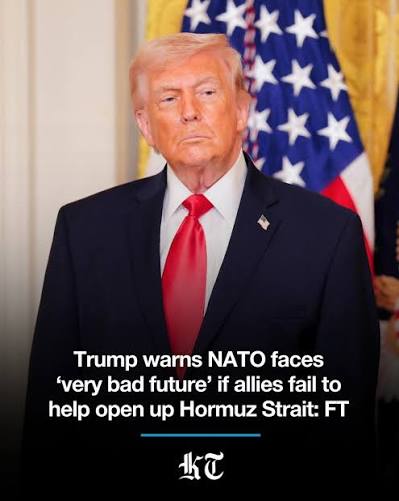
The future of the North Atlantic Treaty Organization (NATO) has once again become a focal point of international politics as U.S. President Donald Trump intensifies pressure on America’s European allies. Ahead of a crucial NATO summit, Trump has delivered one of his strongest warningsTrump has delivered one of his strongest warnings yet, insisting that member nations dramatically increase their defense commitments or risk facing significant consequences from Washington.
The renewed pressure comes amid heightened global tensions, including the ongoing war in Ukraine, instability in the Middle East, growing concerns over China’s military expansion, and fears that Russia could rebuild its military capabilities in the coming years. Against this backdrop, the Trump administration argues that European nations must shoulder a much larger share of the alliance’s defense burden rather than relying heavily on American military power.
As debates over military spending, troop deployments, and NATO’s long-term strategy intensify, world leaders are closely watching how the alliance responds. Trump’s message has sparked both support and concern across Europe, with some leaders agreeing that greater defense investment is necessary while others worry about the future of transatlantic unity.
Trump’s Message to NATO: “Step Up”
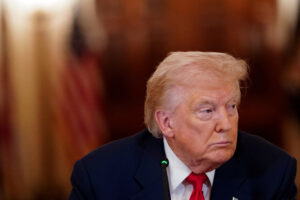
President Trump has repeatedly argued that the United States has carried a disproportionate share of NATO’s military responsibilities for decades. His latest remarks continue this longstanding position, emphasizing that European allies must increase defense spending, modernize their armed forces, and contribute more resources to collective security.
According to recent reports, Trump expressed frustration over what he considers insufficient support from several European allies during recent international security crises. The administration has also linked future U.S. military commitments in Europe to whether allies demonstrate greater responsibility for defending the continent.
The message is clear:
- European nations must invest more in defense.
- NATO members should reduce dependence on U.S. military support.
- Countries failing to meet expectations could face reduced American military commitments.
This approach reflects Trump’s “America First” foreign policy, which prioritizes ensuring that U.S. allies contribute fairly to shared security obligations.
Why NATO Matters More Than Ever
Founded in 1949, NATO remains the world’s most powerful military alliance. Its central principle, known as Article 5, states that an attack against one member is considered an attack against all.
Today, NATO includes 32 member countries across North America and Europe. The alliance has played a crucial role in maintaining stability throughout Europe while responding to various international crises.
However, today’s security environment is significantly more complex than during the Cold War.
Major challenges include:
- Russia’s military activities
- The ongoing conflict in Ukraine
- Terrorism
- Cybersecurity threats
- Hybrid warfare
- China’s growing global influence
- Instability in the Middle East
These evolving threats require greater military readiness, stronger coordination, and increased investment by every NATO member.
Defense Spending Takes Center Stage
One of Trump’s biggest criticisms involves defense spending.
For years, NATO members agreed to spend at least 2% of GDP on defense. While many countries have increased military budgets since Russia’s invasion of Ukraine, the Trump administration argues that this is no longer sufficient.
Recent discussions have focused on substantially higher long-term spending goals, with the United States encouraging allies to make larger investments in military capabilities, infrastructure, advanced weapons, air defense systems, and cybersecurity. NATO leaders have highlighted that European and Canadian defense spending has risen significantly, but Washington continues to push for faster progress.
Supporters believe higher spending will:
- Strengthen NATO deterrence.
- Improve military readiness.
- Reduce reliance on American taxpayers.
- Modernize aging equipment.
- Enhance Europe’s independent defense capabilities.
Critics, however, argue that dramatically increasing defense budgets could place pressure on national finances already strained by inflation and slower economic growth.
Pentagon Reviews U.S. Military Presence in Europe
Adding to the pressure, the Pentagon has launched a comprehensive review of American troop deployments across Europe.
U.S. Defense Secretary Pete Hegseth announced that the review will examine whether current troop levels remain appropriate and whether European allies are assuming greater responsibility for their own defense. Officials have indicated that the review could influence future U.S. force posture on the continent.
Although no final decisions have been announced, several possibilities are being discussed:
- Relocating American troops.
- Reducing permanent military deployments.
- Shifting more responsibilities to European forces.
- Adjusting U.S. military resources available to NATO during crises.
These discussions have generated considerable concern among European governments that rely heavily on U.S. military capabilities for deterrence.
NATO Secretary-General Works to Ease Tensions
As political tensions rise, NATO Secretary-General Mark Rutte has sought to reassure both Washington and European capitals that the alliance remains united.
During recent meetings with President Trump, Rutte emphasized that European allies have made significant progress in increasing defense spending since 2017 and have expanded logistical and operational support for NATO missions. He also credited Trump’s pressure with accelerating investment in European defense, while acknowledging that more work remains.
His diplomatic efforts aim to prevent divisions within NATO at a time when unity is considered essential.
European Leaders Respond
European reactions have been mixed.
Some governments acknowledge that stronger defense capabilities are necessary given Russia’s continued military activities and broader geopolitical instability.
Others remain concerned that reducing America’s military presence could weaken NATO’s deterrence and embolden potential adversaries.
Meanwhile, several European defense officials argue that the continent is already making substantial progress by:
- Increasing military budgets.
- Expanding defense production.
- Purchasing advanced equipment.
- Strengthening rapid response forces.
- Enhancing cooperation among NATO members.
Military leaders have also called for a transformation in how Europe prepares for future conflicts, emphasizing drones, air defenses, precision weapons, and faster procurement processes to counter emerging threats.
Russia Remains the Central Security Challenge
Despite political disagreements within NATO, nearly all alliance members agree that Russia continues to represent the most significant long-term security challenge for Europe.
Military analysts warn that Russia could eventually rebuild substantial military capabilities despite ongoing losses in Ukraine.
As a result, NATO is prioritizing:
- Enhanced border security.
- Larger military exercises.
- Improved intelligence sharing.
- Expanded missile defense.
- Greater readiness across allied forces.
These priorities reinforce Trump’s argument that Europe must prepare to defend itself more effectively while continuing to work alongside the United States.
President Donald Trump’s push for greater burden-sharing within NATO is already reshaping international security discussions. While the United States remains the alliance’s largest military contributor, Washington’s insistence that Europe take primary responsibility for defending the continent marks a significant strategic shift.
Security experts believe the policy could strengthen Europe’s military capabilities over the long term. However, the transition could also create short-term uncertainty as NATO members adjust their defense strategies, budgets, and force structures. Recent U.S. requests for European allies to expand their air and naval contributions reflect this evolving approach to collective defense.
For many European governments, the challenge is balancing increased military spending with domestic priorities such as healthcare, education, and economic recovery. The debate has become one of the most important political issues facing the alliance.
What Could Happen If Allies Fail to “Step Up”?
Although President Trump has not announced a final policy, several possible consequences have been discussed by U.S. officials.
1. Reduced U.S. Military Presence
The Pentagon’s ongoing review of American troop deployments could eventually lead to changes in force levels across Europe if allies are judged capable of taking on greater responsibility.
2. Increased European Defense Responsibilities
European nations may need to provide more troops, aircraft, naval assets, and logistics for NATO operations, reducing dependence on U.S. forces.
3. Higher Defense Spending
Many governments are already increasing military budgets, and additional commitments may become necessary to meet future NATO capability targets.
4. Greater Strategic Autonomy
Some European leaders argue that stronger independent military capabilities would make Europe more resilient regardless of future U.S. policy changes.
Russia, Ukraine, and the Security Challenge
The war in Ukraine continues to shape NATO’s strategic planning.
Military officials warn that Russia could rebuild its armed forces over time, making long-term preparedness essential. As a result, NATO members are investing in:
- Advanced missile defense systems
- Drone technology
- Artificial intelligence for military operations
- Cybersecurity capabilities
- Precision-guided weapons
- Faster military procurement
Senior commanders have emphasized that modern warfare requires rapid innovation and closer coordination among allies to deter future aggression.
Divisions Within NATO
Despite broad agreement on the importance of collective defense, disagreements remain over how quickly members should increase military spending and what role the United States should continue to play.
Some Eastern European countries strongly support Trump’s calls for higher defense investment, arguing that Russia poses an immediate threat.
Other governments prefer a more gradual approach, stressing that maintaining alliance unity is just as important as increasing defense budgets.
Ahead of the upcoming NATO summit, leaders are expected to discuss:
- Long-term defense investment goals
- Burden-sharing commitments
- Military modernization
- Continued support for Ukraine
- NATO’s future strategic direction
Several leaders, including Turkey’s president, have publicly called for the alliance to emphasize unity and resilience despite ongoing disagreements.
Expert Analysis
Defense analysts say Trump’s pressure campaign has already produced measurable results.
Since his first administration, many NATO countries have significantly increased defense spending and accelerated military modernization. Even critics acknowledge that the alliance has become more focused on readiness and capability development.
However, experts also caution that public disputes between allies can create uncertainty and may be exploited by geopolitical rivals. Maintaining trust among NATO members remains critical to the alliance’s effectiveness.
Ultimately, the debate is less about whether Europe should spend more on defense and more about how rapidly those changes can be implemented without weakening political cohesion.
What to Watch Next
Several developments will determine the future of NATO in the coming months:
- Decisions from the Pentagon’s troop review.
- Outcomes of the upcoming NATO summit.
- New defense spending pledges from member states.
- Continued military support for Ukraine.
- Europe’s efforts to expand defense production.
- The evolution of U.S.-European security cooperation.
These decisions will influence not only NATO’s future but also the broader global security environment.
Conclusion
President Donald Trump’s latest warning to NATO allies has intensified one of the alliance’s most significant debates in decades. His demand that European nations “step up” reflects a broader U.S. strategy of encouraging allies to assume greater responsibility for their own defense while allowing Washington to balance commitments across multiple global regions.
Supporters argue that stronger European militaries will ultimately create a more balanced and resilient alliance. Critics worry that sharp disagreements over burden-sharing could strain transatlantic relations during a period of heightened geopolitical uncertainty.
As NATO prepares for another crucial summit, member nations face difficult choices regarding defense spending, military readiness, and the future of collective security. Whether Trump’s approach strengthens or challenges the alliance will depend on how successfully both the United States and its allies navigate these complex negotiations in the months ahead.
Frequently Asked Questions (FAQs)
1. Why is President Trump pressuring NATO allies?
Trump argues that European members should contribute more to collective defense and reduce reliance on U.S. military resources.
2. What is NATO’s defense spending target?
NATO has long encouraged members to spend at least 2% of GDP on defense, though discussions now include higher long-term goals.
3. Could the U.S. reduce troops in Europe?
The Pentagon is conducting a review of U.S. force deployments in Europe, but no final decisions have been announced.
4. Why is Russia central to NATO planning?
Russia’s military activities and the ongoing conflict in Ukraine continue to shape NATO’s defense strategy and readiness.
5. Has Europe increased defense spending?
Yes. Many European countries have substantially increased military budgets in recent years, though the U.S. continues to call for faster progress.
6. What role does NATO play?
NATO is a collective defense alliance in which an attack on one member is considered an attack on all members under Article 5.
7. What issues will dominate the next NATO summit?
Defense spending, burden-sharing, military modernization, support for Ukraine, and alliance unity are expected to be major topics.
8. Could Trump’s policy change NATO?
Trump’s approach could reshape how responsibilities are shared within the alliance, encouraging Europe to take a larger role in its own defense while preserving NATO’s collective security mission.
How useful was this post?
Click on a star to rate it!
Average rating 0 / 5. Vote count: 0
No votes so far! Be the first to rate this post.
About the Author

usa5911.com
Administrator
Hi, I’m Gurdeep Singh, a professional content writer from India with over 3 years of experience in the field. I specialize in covering U.S. politics, delivering timely and engaging content tailored specifically for an American audience. Along with my dedicated team, we track and report on all the latest political trends, news, and in-depth analysis shaping the United States today. Our goal is to provide clear, factual, and compelling content that keeps readers informed and engaged with the ever-changing political landscape.