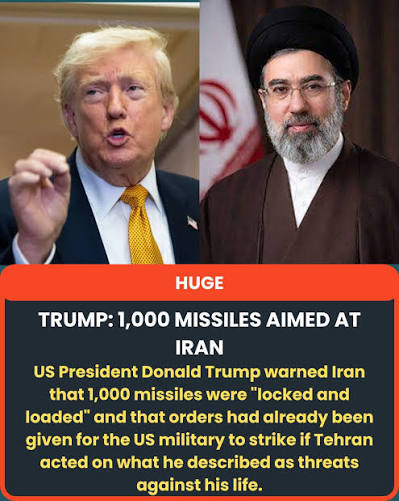
President Donald Trump’s hard-line approach toward Iran is facing one of its biggest tests as Washington continues to combine economic sanctions, diplomatic pressure and military leverage against Tehran.
The Trump administration has repeatedly described its Iran policy as a maximum-pressure campaign. The strategy is designed to restrict Iran’s access to money, weaken its ability to support military networks and increase the cost of continuing policies Washington opposes.
Recent developments have given supporters of the strategy new arguments. Iran’s economy has come under severe pressure, its currency has weakened sharply and restrictions on its oil exports have reduced an important source of government revenue. At the same time, Washington has continued targeting individuals, companies and networks accused of helping Iran obtain military equipment.
However, describing the situation as a definitive foreign-policy victory would go beyond what current evidence establishes. Iran remains capable of resisting pressure, and diplomatic negotiations remain uncertain.
Trump’s maximum-pressure strategy explained
Trump formally restored his administration’s maximum-pressure policy toward Iran in February 2025.
The White House said the policy was intended to deny Iran a path toward developing a nuclear weapon while countering Tehran’s regional influence. The administration also directed officials to increase economic pressure, including efforts aimed at reducing Iranian oil exports.
The strategy reflects an approach Trump used during his first presidency.
Instead of relying primarily on diplomatic engagement, maximum pressure attempts to make continued Iranian defiance increasingly expensive. The underlying argument is that economic and political pressure can improve Washington’s bargaining position and potentially force Tehran to make concessions.
Critics of the approach have questioned whether sanctions alone can produce a durable political agreement. Analysts have also warned that sanctions can create humanitarian and economic costs without necessarily changing the strategic calculations of a government under pressure.
That debate remains central to the current confrontation.
Iran faces growing economic pressure
One of the clearest developments is the worsening economic situation inside Iran.
Reuters reported in September that Iran was experiencing severe economic difficulties as a result of intensified U.S.-led pressure, including sanctions and restrictions affecting oil revenues and access to international markets. Iranian officials and analysts have acknowledged growing economic hardship.
The pressure matters because oil remains a crucial component of Iran’s ability to generate foreign currency.
Washington has targeted oil-related networks and financial channels that help Tehran sell crude and receive payment. The administration has also expanded sanctions against intermediaries accused of supporting Iran’s military supply chain.
On September 29, the U.S. Treasury imposed additional sanctions against 10 individuals and entities connected to Iran, Hong Kong and Pakistan. The administration said those targets were involved in facilitating Iran’s military procurement network.
For Washington, the goal is broader than simply punishing individual companies.
The strategy seeks to make it harder for Iran to acquire the components, financing and technology needed to maintain military capabilities.
Iran’s currency highlights the pressure
Currency weakness provides another measure of the economic strain.
Recent reporting has described the Iranian rial reaching historically low levels against the U.S. dollar. The decline has increased the cost of imports and added pressure to an economy already dealing with inflation and shortages.
A weaker currency can create a difficult cycle.
Imported goods become more expensive. Businesses face higher costs. Household purchasing power falls. At the same time, the government has fewer resources available to stabilize the economy.
Supporters of Trump’s policy argue that this is precisely the kind of pressure required to change Tehran’s calculations.
But economic pain does not automatically translate into political concessions.
Iran has previously operated under extensive sanctions and developed mechanisms for surviving restrictions. That history is one reason analysts continue to debate whether the current pressure will force a strategic change.
Oil remains at the center of the confrontation
Iran’s oil exports have become one of the most important battlegrounds.
Washington has sought to restrict Tehran’s ability to sell crude and access international financial networks. Recent reporting indicates that Iranian oil exports have fallen substantially under the intensified campaign.
The consequences extend beyond Iran.
The Middle East remains a critical energy-producing region, while the Strait of Hormuz is one of the world’s most important energy shipping routes.
Any prolonged disruption can affect global oil prices, transportation costs and inflation.
Recent developments have also suggested that Iran’s leverage over Hormuz may have weakened as Gulf producers find alternative routes and U.S. naval forces provide additional support for shipping. The Wall Street Journal reported that regional oil exports had recovered substantially as Iran’s ability to restrict the waterway diminished.
That does not mean the risk has disappeared.
Iran retains the ability to threaten regional infrastructure and shipping, creating a continuing security concern for the United States and its partners.
Why supporters call the strategy effective
Supporters of maximum pressure point to several developments.
First, Iran is experiencing significant economic stress.
Second, Washington has continued expanding sanctions rather than easing them.
Third, the United States has demonstrated that it can target not only Iranian institutions but also foreign intermediaries that help Tehran circumvent restrictions.
Fourth, Iran’s negotiating position may be affected by declining economic resources.
These developments support the argument that Washington has increased the cost of Tehran’s policies.
A recent opinion article in the New York Post argued that Trump’s strategy was weakening Iran economically and reducing the resources available to the Islamic Revolutionary Guard Corps and Iranian regional networks. That assessment is an opinion-based interpretation rather than an independently established measurement of policy success.
That distinction is important.
Economic pressure can be measured. Whether that pressure constitutes a strategic victory depends on what ultimately happens to Iran’s nuclear program, military capabilities, regional activity and willingness to reach an agreement.
Iran is not simply giving in
Despite the economic pressure, Tehran has not simply accepted Washington’s demands.
Iranian officials continue to reject what they describe as coercion and have called for negotiations based on their own conditions.
Reuters reported on September 29 that Iranian President Masoud Pezeshkian said Tehran was open to negotiations but would not accept coercion. At the same time, Trump rejected reports that he had offered Iran sanctions relief in exchange for progress on its nuclear program.
The conflicting positions demonstrate the difficulty of the current diplomatic environment.
Washington wants pressure to produce concessions.
Tehran wants negotiations without appearing to surrender under pressure.
That creates a narrow path toward diplomacy.
The nuclear issue remains central
The ultimate question surrounding Trump’s Iran policy is not simply whether sanctions hurt the Iranian economy.
It is whether pressure can produce an agreement addressing Iran’s nuclear ambitions and broader security concerns.
The White House has repeatedly said that Iran must not obtain a nuclear weapon. The maximum-pressure framework was explicitly presented as part of that objective.
Iran, meanwhile, has continued to insist that its nuclear activities are not intended to produce nuclear weapons.
That disagreement has made verification and negotiations particularly difficult.
A successful diplomatic outcome would require more than economic pain. It would likely require a mechanism through which both sides could verify commitments and determine what sanctions, restrictions and security guarantees would accompany an agreement.
Military pressure adds another dimension
The current confrontation also involves military pressure.
The United States and its partners have sought to protect shipping routes and counter Iranian military activity. Iran, meanwhile, retains missile and drone capabilities and has regional partners capable of creating additional security challenges.
This creates a fundamental tension in the maximum-pressure strategy.
The more pressure Washington applies, the greater the potential incentive for Tehran to negotiate.
But increased pressure can also increase the possibility of escalation.
That is why diplomatic channels remain important even while sanctions and military measures continue.
Foreign policy win or unfinished strategy?
The phrase “foreign policy win” depends on the benchmark being used.
If the benchmark is whether Washington has increased pressure on Iran, there is substantial evidence that it has.
The United States has expanded sanctions, targeted financial networks and pursued measures designed to restrict Iranian oil revenues and military procurement.
If the benchmark is whether Iran has been forced to accept Washington’s full demands, the picture is less settled.
Iran remains resistant, and negotiations are still contested.
If the benchmark is a durable nuclear agreement, there is not yet enough evidence to declare success.
This distinction is especially important in foreign policy reporting. Economic pressure can produce measurable effects without immediately producing the political outcome a government seeks.
What happens next?
The next stage of the Trump-Iran confrontation is likely to revolve around three major questions.
Will sanctions become even broader?
Washington has shown that it is prepared to continue targeting companies and individuals involved in Iran’s military and economic networks.
Additional enforcement could further restrict Tehran’s ability to generate revenue and acquire sensitive technology.
Will Iran return to negotiations?
Iran has indicated an openness to diplomacy while rejecting negotiations conducted under what it considers coercive conditions.
That leaves room for talks, but major disagreements remain.
Can escalation be avoided?
This may be the most consequential question.
Economic pressure, military operations and threats involving strategic waterways can create leverage, but they can also increase the risk of miscalculation.
The United States and Iran therefore face a complicated choice between continued confrontation and a negotiated path toward de-escalation.
Why the strategy matters beyond Iran
The outcome of the confrontation could affect U.S. foreign policy well beyond the Middle East.
A strategy that successfully combines sanctions, diplomacy and deterrence could become a model for dealing with other governments that Washington considers security threats.
However, a prolonged confrontation could also raise questions about the economic costs of sanctions, military commitments and energy-market disruption.
Allies will be watching closely.
European governments have interests in both preventing nuclear proliferation and maintaining regional stability. Gulf states have an even more direct interest because they are geographically close to Iran and vulnerable to attacks against energy infrastructure.
China and Russia also remain important factors because Iran maintains relationships with both countries.
Bottom line
Trump’s maximum-pressure strategy has clearly intensified economic and political pressure on Iran.
Recent sanctions, restrictions on oil revenues and measures targeting military procurement networks demonstrate that Washington is continuing to pursue a hard-line policy. Iran’s economic difficulties provide evidence that the campaign is imposing substantial costs.
At the same time, Iran has not simply capitulated.
Tehran continues to resist Washington’s demands while expressing conditional openness to negotiations.
For that reason, the current moment is better understood as a major test of the maximum-pressure strategy rather than a settled foreign-policy outcome.
The central question is whether economic and military pressure ultimately produces a verifiable diplomatic agreement—or instead leads to a longer period of confrontation.
For Trump, Iran policy has become a defining foreign-policy challenge. For Tehran, the stakes are equally high as economic pressure collides with its determination to preserve strategic leverage.
The coming negotiations, sanctions decisions and developments around regional energy routes will determine whether the current pressure campaign produces the concessions Washington seeks.
Frequently Asked Questions
What is Trump’s maximum-pressure policy toward Iran?
Trump’s maximum-pressure policy uses sanctions, financial restrictions and other economic and diplomatic measures to increase pressure on Iran. The administration says the strategy is intended to prevent Iran from obtaining a nuclear weapon and counter its regional influence.
Why is the United States increasing pressure on Iran?
The Trump administration says increased pressure is intended to limit Iran’s nuclear ambitions, military capabilities and regional activities while strengthening Washington’s negotiating position.
Is Iran’s economy being affected by U.S. sanctions?
Yes. Recent reporting indicates severe economic pressure, including currency weakness, reduced oil revenues and difficulties accessing international markets.
Has Trump’s Iran strategy produced a foreign-policy victory?
It is too early to establish a definitive outcome. The United States has increased pressure and Iran faces substantial economic difficulties, but Tehran continues to resist U.S. demands and the diplomatic process remains unresolved.
Is Iran willing to negotiate with the United States?
Iranian President Masoud Pezeshkian said on September 29 that Iran was open to negotiations but would not accept coercion.
Why is the Strait of Hormuz important?
The Strait of Hormuz is a strategically important shipping route for global energy supplies. Any significant disruption can affect oil markets, transportation costs and economies worldwide.
Could more sanctions be imposed on Iran?
The United States has continued adding sanctions and targeting networks accused of supporting Iran’s military procurement and financial activities. Further measures remain possible as the administration continues its pressure campaign.
What is the biggest challenge for Trump’s Iran strategy?
The central challenge is converting economic and military pressure into a durable diplomatic outcome while preventing further regional escalation. Whether pressure produces negotiations or prolonged confrontation remains uncertain.
About the Author