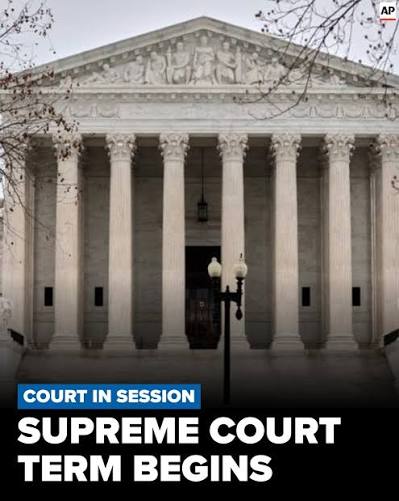
Court Delivers Major Blow: Trump Faces Setback In Birthright Citizenship Case
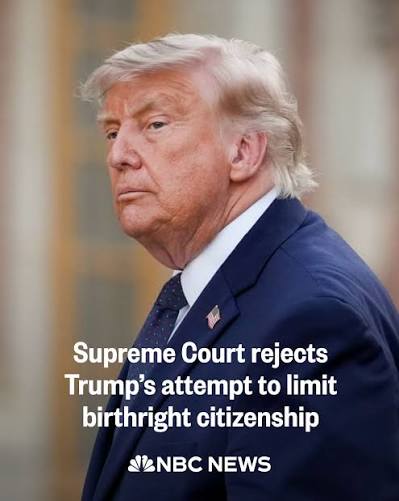
The U.S. Supreme Court has delivered one of the most significant rulings of the year, handing President Donald Trump a major legal defeat in the ongoing battle over birthright citizenship. In a landmark 6-3 decision issued on June 30, 2026, the Court rejected the administration’s effort to restrict automatic citizenship for children born on American soil to certain non-citizen parents. The ruling reaffirmed the long-standing interpretation of the Fourteenth Amendment and marked a major setback for one of Trump’s signature immigration initiatives.
The decision immediately sparked nationwide political debate, with supporters of the ruling celebrating it as a victory for constitutional protections while critics argued that Congress should reconsider America’s birthright citizenship laws.
This article explains what happened, why the Court ruled against Trump, the constitutional arguments involved, political reactions, and what the decision means for the future of U.S. immigration policy.
Supreme Court Rejects Trump’s Birthright Citizenship Order
The Supreme Court ruled that President Trump’s executive order seeking to limit birthright citizenship conflicts with the Citizenship Clause of the Fourteenth Amendment.
The executive order attempted to deny automatic citizenship to many children born in the United States whose parents were neither U.S. citizens nor lawful permanent residents.
However, the Court concluded that the Constitution guarantees citizenship to nearly everyone born on American soil, reaffirming more than a century of legal precedent. Chief Justice John Roberts wrote the majority opinion, emphasizing that the Constitution—not executive action—determines citizenship rights.
Why Birthright Citizenship Matters
Birthright citizenship is one of the defining principles of American constitutional law.
The Fourteenth Amendment states:
“All persons born or naturalized in the United States, and subject to the jurisdiction thereof, are citizens of the United States…”
For more than 125 years, courts have interpreted this language to mean that nearly every child born within U.S. borders automatically becomes an American citizen regardless of parental immigration status, with only narrow exceptions such as children of foreign diplomats.
The Supreme Court’s latest ruling leaves this constitutional interpretation unchanged.
Trump’s Argument Before the Court
The Trump administration argued that the phrase “subject to the jurisdiction” of the United States should not automatically include children whose parents entered or remained in the country illegally or held only temporary immigration status.
Administration lawyers also argued that birthright citizenship encourages illegal immigration and so-called “birth tourism.”
Officials maintained that the executive branch possessed authority to reinterpret how citizenship laws should be enforced.
The Supreme Court rejected these arguments.
The Court’s Constitutional Reasoning
The majority relied heavily on the text of the Fourteenth Amendment and longstanding constitutional precedent.
The justices reaffirmed that executive orders cannot override constitutional guarantees established through Supreme Court precedent.
The Court also referenced the historic 1898 decision in United States v. Wong Kim Ark, which established that children born in the United States are generally entitled to citizenship regardless of their parents’ nationality.
A Major Setback for Trump’s Immigration Agenda
Immigration has remained one of Donald Trump’s central policy priorities throughout both of his presidential campaigns and his second administration.
Among his most significant proposals were:
- Ending birthright citizenship
- Increasing border security
- Expanding deportation efforts
- Restricting asylum claims
- Limiting illegal immigration
The Supreme Court ruling represents one of the administration’s largest constitutional defeats because it blocks a cornerstone of Trump’s immigration agenda.
Reactions From Supporters
Civil rights organizations welcomed the ruling almost immediately.
Many immigrant advocacy groups described the decision as a historic victory for constitutional rights.
Legal scholars also noted that the Court reinforced separation of powers by making clear that constitutional amendments—not executive orders—are required to change citizenship rules.
Conservative Response
Several Republican lawmakers criticized the decision.
Some argued that birthright citizenship has been abused and called for Congress or the states to pursue a constitutional amendment instead of relying on executive authority.
Others stated that the immigration system still requires significant reform despite the Court’s ruling.
Impact on Families
The decision has immediate practical consequences.
Thousands of families expecting children no longer face uncertainty over whether their newborns would automatically receive U.S. citizenship under the executive order.
The ruling preserves existing citizenship procedures nationwide and avoids potentially extensive legal disputes involving the status of future births.
Legal Experts Weigh In
Constitutional scholars say the ruling reinforces several important legal principles:
- The Constitution limits executive authority.
- Longstanding Supreme Court precedent remains highly influential.
- Changes to constitutional rights generally require constitutional amendments or new Supreme Court interpretations.
Many experts described the ruling as reaffirming legal stability rather than creating new constitutional doctrine.
Political Implications
The decision is likely to become a major issue in upcoming political debates.
Democrats have largely praised the ruling as a defense of constitutional protections.
Republicans remain divided between accepting the decision and pursuing legislative or constitutional changes.
Immigration is expected to remain a central issue in future elections.
What Happens Next?
Although the executive order cannot take effect following the Court’s ruling, debate over birthright citizenship is unlikely to disappear.
Possible future developments include:
- Congressional hearings on immigration reform.
- Proposals for constitutional amendments.
- New legislation addressing immigration enforcement.
- Continued political debate during future election campaigns.
However, changing birthright citizenship would now require significantly more than an executive order.
Historical Context
Birthright citizenship has existed since the Fourteenth Amendment was ratified in 1868 following the Civil War.
Its purpose was to ensure equal citizenship rights, particularly after the infamous Dred Scott decision denied citizenship to African Americans.
The 1898 United States v. Wong Kim Ark ruling further strengthened this constitutional principle, becoming the cornerstone of modern citizenship law.
The Supreme Court’s latest decision builds upon that historical foundation rather than altering it.
Why This Decision Is Historic
Legal analysts believe this case will be remembered for several reasons:
- It reaffirmed the Fourteenth Amendment.
- It limited executive authority over constitutional rights.
- It preserved over a century of legal precedent.
- It affected hundreds of thousands of future births.
- It represents one of the biggest legal setbacks for Trump’s immigration agenda.
Conclusion
The Supreme Court’s ruling against President Donald Trump’s effort to restrict birthright citizenship marks a defining constitutional decision. By reaffirming the Fourteenth Amendment and long-established legal precedent, the Court preserved automatic citizenship for nearly everyone born in the United States while placing clear limits on executive authority.
Although political debate over immigration will continue, the decision underscores that any fundamental change to citizenship rights would require action beyond a presidential executive order. For now, birthright citizenship remains firmly protected under the U.S. Constitution.
Frequently Asked Questions (FAQs)
What did the Supreme Court decide?
The Court ruled 6-3 against President Trump’s executive order seeking to restrict birthright citizenship, reaffirming constitutional protections under the Fourteenth Amendment.
What is birthright citizenship?
Birthright citizenship is the legal principle that nearly every child born in the United States automatically becomes a U.S. citizen.
Why did Trump want to change it?
The administration argued that automatic citizenship encouraged illegal immigration and birth tourism and claimed the Constitution allowed a narrower interpretation.
Can a president end birthright citizenship through an executive order?
According to the Supreme Court’s ruling, no. The Constitution controls citizenship rights, and executive orders cannot override those protections.
What happens now?
Birthright citizenship remains in effect nationwide, and any future changes would likely require either a constitutional amendment or a different Supreme Court interpretation.
The Supreme Court’s decision has already become a central topic in the national conversation on immigration and constitutional law. Democratic leaders praised the ruling as a reaffirmation of constitutional protections, while many Republican lawmakers expressed disappointment and argued that the current interpretation of birthright citizenship should be revisited through legislative or constitutional means.
Political analysts believe the ruling could influence future election campaigns, as immigration remains one of the most debated issues in American politics. Candidates from both major parties are expected to use the decision to reinforce their broader positions on border security, citizenship, and immigration reform.
How the Decision Affects Families
One of the most immediate effects of the ruling is the legal certainty it provides to families across the United States.
Children born on U.S. soil will continue to receive automatic citizenship under existing constitutional interpretations, regardless of the immigration status of their parents, except for limited exceptions recognized under longstanding law.
Immigration advocates say this prevents thousands of families from facing uncertainty over their children’s legal status and avoids significant administrative challenges for hospitals, state governments, and federal agencies.
Legal Experts Explain the Importance
Constitutional scholars describe the ruling as significant because it reinforces several key legal principles:
- The Constitution cannot be changed through executive action alone.
- Longstanding Supreme Court precedents remain highly influential.
- Major constitutional questions require judicial or constitutional processes rather than unilateral executive decisions.
- The separation of powers remains a cornerstone of the American legal system.
Many experts also noted that the decision does not create new law but instead reaffirms existing constitutional doctrine that has guided citizenship policy for more than a century.
Could Congress Change Birthright Citizenship?
Although the executive order has been blocked, some lawmakers have suggested that Congress should consider legislation addressing birthright citizenship.
However, legal experts caution that because the Supreme Court has interpreted the Fourteenth Amendment to guarantee birthright citizenship, ordinary legislation alone would likely face constitutional challenges.
A lasting change would probably require either:
- A constitutional amendment approved by Congress and the states.
- A future Supreme Court decision overturning existing precedent.
Both options are considered legally and politically difficult.
The Historical Background
Birthright citizenship became part of the U.S. Constitution with the ratification of the Fourteenth Amendment in 1868.
The amendment was adopted after the Civil War to ensure citizenship rights for formerly enslaved people and to prevent states from denying citizenship based on race or ancestry.
In 1898, the Supreme Court’s landmark decision in United States v. Wong Kim Ark confirmed that children born in the United States are generally citizens, even if their parents are foreign nationals who are not eligible for citizenship at the time.
The latest ruling builds upon that historic precedent rather than changing it.
Why This Ruling Is Considered Historic
Legal observers say the decision will be remembered for several reasons:
- It reaffirmed the Citizenship Clause of the Fourteenth Amendment.
- It preserved more than 125 years of constitutional precedent.
- It clarified the limits of presidential executive authority.
- It has major implications for immigration policy and future legal challenges.
- It is one of the most consequential Supreme Court decisions involving citizenship in recent decades.
What Happens Next?
While the Court’s ruling settles the immediate legal dispute over the executive order, it does not end the broader political debate surrounding immigration.
Possible next steps include:
- Congressional hearings on immigration reform.
- New legislative proposals related to border security.
- Continued legal challenges involving immigration policies.
- Political campaigns focusing on constitutional and immigration issues.
For now, however, the Supreme Court’s decision means that birthright citizenship remains the law of the land.
Conclusion
The Supreme Court’s ruling against President Donald Trump’s effort to limit birthright citizenship represents a significant constitutional decision with far-reaching implications. By reaffirming the Fourteenth Amendment and long-established judicial precedent, the Court preserved automatic citizenship for most individuals born in the United States and underscored the limits of executive authority.
Although the political debate over immigration is likely to continue, the decision provides legal clarity and reinforces the principle that fundamental constitutional rights cannot be altered through executive action alone. As policymakers, legal experts, and the public continue to discuss immigration reform, the ruling will remain a defining moment in the ongoing national conversation about citizenship, constitutional interpretation, and the balance of governmental powers.
Frequently Asked Questions (FAQs)
What was the Supreme Court’s decision?
The Supreme Court rejected President Trump’s effort to restrict birthright citizenship through executive action, reaffirming that the Fourteenth Amendment protects automatic citizenship for most people born in the United States.
What is birthright citizenship?
Birthright citizenship is the constitutional principle that nearly every child born on U.S. soil automatically becomes a U.S. citizen, regardless of the parents’ immigration status, with limited exceptions.
Why did the Trump administration challenge birthright citizenship?
The administration argued that the Citizenship Clause should not apply to children born to parents who are in the country unlawfully or temporarily and sought to narrow its interpretation through an executive order.
Can a president change birthright citizenship by executive order?
According to the Supreme Court’s ruling, no. The Court held that constitutional protections established under the Fourteenth Amendment cannot be overridden by executive action.
Could birthright citizenship change in the future?
Any significant change would likely require a constitutional amendment or a future Supreme Court decision that overturns existing precedent, both of which would be legally and politically challenging.
How useful was this post?
Click on a star to rate it!
Average rating 0 / 5. Vote count: 0
No votes so far! Be the first to rate this post.
About the Author

usa5911.com
Administrator
Hi, I’m Gurdeep Singh, a professional content writer from India with over 3 years of experience in the field. I specialize in covering U.S. politics, delivering timely and engaging content tailored specifically for an American audience. Along with my dedicated team, we track and report on all the latest political trends, news, and in-depth analysis shaping the United States today. Our goal is to provide clear, factual, and compelling content that keeps readers informed and engaged with the ever-changing political landscape.