Senate Debate: Sen. Rand Paul Slams Sweeping Legislation, Warns Against Overreaction and Government Overreach
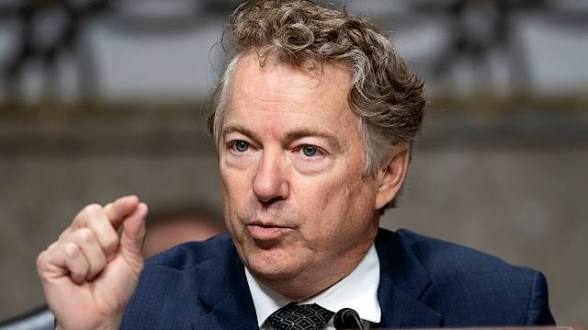
The debate over the proper limits of federal power is again taking center stage in Washington, with Sen. Rand Paul emphasizing his long-standing concerns about sweeping legislation, executive authority and government overreach.
Paul, a Republican from Kentucky, has repeatedly argued that Congress should carefully examine major legislation before expanding federal powers. His position has covered regulations, surveillance, tariffs, spending and civil liberties.
The latest congressional debate comes as lawmakers consider several major pieces of legislation. The Senate is currently handling measures involving areas ranging from college sports and digital assets to sanctions and government authority. The Senate’s official legislative record shows that lawmakers have been working through a busy September schedule, including major procedural votes.
For Paul, the broader question is not simply whether Congress should act. Instead, he has consistently focused on how much authority legislation gives the federal government, how clearly that authority is defined and what safeguards exist against abuse.
Rand Paul Government Overreach Concerns Remain a Central Theme
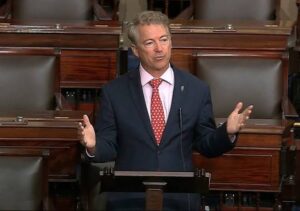
Rand Paul’s criticism of government overreach is not new. His Senate platform specifically calls for limiting federal regulatory power and strengthening congressional oversight.
On his official Senate website, Paul argues that federal agencies have accumulated substantial regulatory authority and says Congress should play a larger role in approving major regulations.
His signature proposal on this issue is the Regulations from the Executive in Need of Scrutiny Act, commonly known as the REINS Act.
The legislation would require Congress to approve major federal rules before they take effect. Paul’s office says the proposal is designed to return greater lawmaking authority to Congress and increase accountability for significant regulations.
This position helps explain why Paul frequently objects to legislation that he believes grants broad authority without sufficiently precise limits.
Why Sweeping Legislation Creates Debate
Large bills can cover multiple policy areas and sometimes give agencies or executive officials significant discretion.
Supporters of broad legislation can argue that flexibility is necessary because government agencies must respond quickly to complicated problems.
Critics, including Paul in various policy debates, argue that broad delegations can weaken congressional oversight.
That disagreement reflects a longstanding constitutional question:
How much power should Congress delegate, and how much authority should remain directly controlled by elected lawmakers?
Paul generally emphasizes the latter.
Paul Has Criticized Broad Executive Authority
One of the clearest recent examples involves tariffs.
In August 2026, Paul offered an amendment to the Russia sanctions legislation that would remove presidential authority to impose tariffs of up to 100% on countries buying Russian energy.
According to Paul’s Senate office, his amendment would preserve sanctions against Russia while removing the broader tariff authority. His office characterized the proposed tariff power as a major tax increase because tariffs are ultimately paid by importers and can affect consumers and businesses.
Congress ultimately passed the Russia sanctions legislation. Reuters reported that the measure gives President Donald Trump expanded authority to impose sanctions and tariffs, including tariffs of up to 100% on countries purchasing Russian energy.
The episode illustrates an important aspect of Paul’s approach to legislation: he can support a broader legislative objective while opposing particular provisions that he believes grant excessive executive authority.
That distinction is important when analyzing his Senate record.
Paul and the Debate Over Emergency Powers
Paul has also challenged the use of presidential emergency powers.
In 2025, he joined Democratic and Republican senators in supporting legislation aimed at reasserting congressional authority over tariffs imposed through executive action.
The bipartisan proposal sought to require greater congressional involvement in tariff decisions. Paul’s office argued that presidents should not be able to impose import taxes without congressional approval.
Paul separately reintroduced the No Taxation Without Representation Act, which would require congressional approval before new import taxes could be imposed through executive action.
These efforts show that his concerns about government overreach are not limited to one political party or one administration.
His broader argument is that Congress should retain its constitutional role over taxation and major federal decisions.
Civil Liberties Are Another Major Part of Paul’s Position
Government power becomes especially controversial when legislation affects privacy, surveillance and individual rights.
Paul’s Senate materials describe civil liberties and privacy protection as major areas of concern.
His position is that national security objectives should not automatically justify unlimited government authority. He has argued that federal power should remain subject to constitutional restrictions and meaningful oversight.
That position has also appeared in debates surrounding surveillance legislation.
A Senate committee statement involving Paul criticized proposals that would expand surveillance powers through drone-related legislation. The statement argued that Congress should demand clear justification, safeguards and transparency before granting additional surveillance authority.
The underlying debate is familiar: lawmakers must balance security requirements with constitutional protections.
Paul’s approach places particular emphasis on preventing temporary or emergency authorities from becoming permanent expansions of federal power.
The Danger of Legislating After a Crisis
A recurring concern in Paul’s arguments is the possibility that Congress can respond too quickly after a crisis.
During emergencies, lawmakers often face pressure to demonstrate immediate action.
However, legislation passed under intense political or public pressure can contain broad powers that remain in place after the original emergency has ended.
Paul has argued that Congress should therefore examine the long-term consequences of legislation rather than simply responding to immediate events.
This approach is especially relevant to bills involving surveillance, national security and executive authority.
The debate over government power is therefore not necessarily about whether government should respond to a crisis. Instead, it concerns what safeguards should accompany that response.
Senate Debate Shows Continuing Disagreement Over Federal Power
The current Senate legislative environment demonstrates how complicated these questions can become.
For example, on September 15, 2026, the Senate voted 74-24 to invoke cloture on legislation concerning name, image and likeness rights and protections for college athletes. The Senate’s roll-call record identifies the measure as S. 4668.
Paul was among the senators voting against the procedural motion.
At the same time, the Senate failed to advance a major cryptocurrency bill. Reuters reported that the digital-assets legislation received 50 votes in favor and 49 against, falling short of the 60 votes needed to advance.
These votes demonstrate that Senate disagreements do not always fall neatly along party lines.
Lawmakers can agree on the broad problem a bill is designed to address while disagreeing over the scope of federal involvement.
Government Regulation and the REINS Act
Paul’s opposition to excessive government regulation is particularly visible through his support for the REINS Act.
The proposal would require congressional approval for major rules with significant economic effects.
Paul argues that unelected federal agencies should not effectively create major economic requirements without direct congressional approval.
Supporters of such reforms say congressional approval could improve democratic accountability.
Critics of the approach can argue that requiring Congress to approve large numbers of regulations could slow the regulatory process and make it harder for agencies to respond to technical issues.
That difference reflects two competing priorities:
- Faster administrative action
- Greater congressional accountability
The Senate debate over government power frequently revolves around this balance.
Paul Also Supports Limiting Federal Intervention in Certain Areas
Paul’s legislative record is not simply about opposing bills.
He has also introduced legislation intended to reduce federal intervention in specific areas.
In April 2026, he introduced the Hemp Safety Enforcement Act, a bipartisan bill with Senators Amy Klobuchar and Joni Ernst. The proposal would give states and Tribal governments a larger role in regulating hemp and hemp-derived products.
Paul’s Senate office said the legislation was designed to prevent a federal restriction from eliminating much of the existing hemp industry.
This example highlights another feature of his approach: shifting certain regulatory decisions away from Washington and toward states.
Healthcare Reform and Individual Choice
Paul has also pursued legislation aimed at reducing government restrictions in healthcare.
In April 2026, he introduced the Legalizing Premium Health Care Act.
According to his office, the legislation would create an additional option for Medicare beneficiaries whose preferred providers do not accept Medicare. The proposal would allow Medicare reimbursement under specified circumstances rather than requiring patients to pay the entire bill themselves.
Paul framed the legislation around patient choice and reducing government interference in healthcare decisions.
Again, the policy debate involves the proper role of government.
Supporters of greater federal involvement emphasize consistency and protections.
Those favoring a more market-oriented approach emphasize individual choice and competition.
Why the Government Overreach Debate Matters
The debate surrounding Rand Paul government overreach arguments extends beyond one senator.
At its core, the discussion involves several constitutional and policy questions.
Who should make major policy decisions?
Paul argues that Congress should play a stronger role rather than allowing federal agencies or executive officials to exercise broad authority.
How much discretion should agencies receive?
Modern government depends heavily on administrative agencies with technical expertise.
However, broad delegation can raise questions about accountability.
What safeguards should accompany emergency powers?
Emergency authority may be necessary in some circumstances.
The disagreement centers on how narrowly that authority should be written and how long it should remain available.
How should individual rights be protected?
Surveillance, taxation and regulation can all affect individual freedom.
Paul’s position emphasizes constitutional protections and limits on government power.
A Broader Congressional Question
The controversy over sweeping legislation reflects a larger issue facing Congress.
Modern bills frequently address complicated subjects involving technology, national security, healthcare, trade and economic policy.
That complexity can make legislation lengthy and difficult for lawmakers and the public to evaluate.
Paul’s criticism focuses on the need for scrutiny before Congress grants significant authority.
Other lawmakers may view broad legislation differently, particularly when they believe comprehensive action is needed to address a national problem.
Therefore, the central disagreement is often about scope, accountability and implementation, rather than whether the underlying problem exists.
What Comes Next in the Senate?
The Senate continues to work through a substantial legislative agenda.
Its official schedule shows that senators are meeting throughout September, with floor proceedings, votes and consideration of legislation continuing.
Meanwhile, several major policy debates remain active.
The Senate recently advanced college-sports legislation through a 74-24 procedural vote. It also considered cryptocurrency legislation that failed to reach the threshold needed to advance.
The Senate Commerce Committee also approved legislation intended to prevent federal officials from pressuring private companies to suppress protected speech. Reuters reported that the measure passed the committee 18-10 and still requires approval from the full Senate and House to become law.
These developments show that questions about government authority remain central to congressional policymaking.
Rand Paul’s Approach to Sweeping Legislation
Rand Paul’s record shows a consistent emphasis on several themes:
- Congressional oversight
- Limited federal authority
- Constitutional checks and balances
- Individual privacy
- State authority
- Lower regulatory burdens
- Greater scrutiny of executive power
- Caution toward emergency authorities
His supporters generally view these positions as efforts to strengthen constitutional limits.
Critics may argue that strict limits on federal authority can make it harder for government to respond quickly to national challenges.
Those competing perspectives are part of the broader debate over the proper role of the federal government.
Final Takeaway
The Senate debate over sweeping legislation highlights a continuing conflict between broad government action and limits on federal authority.
Rand Paul has repeatedly argued that Congress should scrutinize legislation carefully before granting extensive powers to executive officials or federal agencies. His positions on regulations, tariffs, surveillance, healthcare and state authority demonstrate a broader philosophy centered on congressional accountability and constitutional limits.
At the same time, major legislation continues to move through Congress on issues ranging from college sports to sanctions, digital assets and free speech.
The debate is therefore likely to continue: when government faces a major challenge, how much authority should lawmakers grant—and what safeguards should accompany that power?
For Paul, the answer has consistently involved greater scrutiny, narrower authority and stronger congressional oversight.
FAQs
1. What is Rand Paul arguing about government overreach?
Rand Paul has consistently argued that federal authority should remain subject to constitutional limits and congressional oversight. His Senate positions emphasize reducing excessive regulation and limiting broad executive authority.
2. What is the REINS Act?
The REINS Act, or Regulations from the Executive in Need of Scrutiny Act, would require Congress to approve major federal regulations before they take effect. Paul is a leading supporter of the legislation.
3. Why does Rand Paul oppose some sweeping legislation?
Paul’s objections often focus on the amount of authority legislation gives federal agencies or executive officials. He has argued that major powers should have clear limits and meaningful congressional oversight.
4. Has Rand Paul opposed executive tariff authority?
Yes. Paul has supported legislation and amendments intended to increase congressional control over tariff decisions. In August 2026, he offered an amendment seeking to remove broad tariff authority from the Russia sanctions legislation.
5. What is Rand Paul’s position on civil liberties?
Paul emphasizes privacy and constitutional protections and has criticized expanded surveillance powers that he believes lack sufficient safeguards.
6. Does Rand Paul always oppose federal legislation?
No. Paul also sponsors and supports legislation in areas including healthcare, agriculture, regulation and other policy fields. His record includes both opposition to specific federal powers and proposals for new federal legislation.
7. What major Senate votes occurred recently?
On September 15, 2026, the Senate voted 74-24 to invoke cloture on a college-sports bill. The Senate also voted 49-50 against advancing a major digital-asset regulation bill.
8. Why is government overreach a major Senate issue?
The issue involves the balance between effective government action and constitutional limits. Senators frequently disagree over how much authority should be delegated to federal agencies or the executive branch.
9. What happens after a Senate bill passes?
Depending on the legislation, it generally must also pass the House of Representatives and receive the president’s signature, unless another constitutional process applies.
10. Where can readers track current Senate legislation?
The official U.S. Senate website provides current floor schedules, legislation, votes and congressional records.
How useful was this post?
Click on a star to rate it!
Average rating 0 / 5. Vote count: 0
No votes so far! Be the first to rate this post.
About the Author

usa5911.com
Administrator
Hi, I’m Gurdeep Singh, a professional content writer from India with over 3 years of experience in the field. I specialize in covering U.S. politics, delivering timely and engaging content tailored specifically for an American audience. Along with my dedicated team, we track and report on all the latest political trends, news, and in-depth analysis shaping the United States today. Our goal is to provide clear, factual, and compelling content that keeps readers informed and engaged with the ever-changing political landscape.