NATO Drone Incursions: Eastern Flank Security Alert, Military Tensions Rise, Europe Reacts
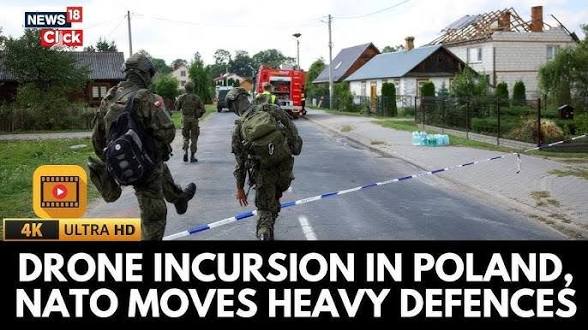
Europe is witnessing a new phase of security tensions as repeated drone incursions near NATO’s eastern flank trigger military responses, political warnings, and growing fears of escalation. Baltic nations including Lithuania, Estonia, Latvia, and Poland have reported multiple incidents involving unidentified or redirected drones entering or approaching their airspace.
The incidents come amid continued instability linked to the Russia-Ukraine conflict and growing concerns about hybrid warfare tactics, electronic jamming, and regional destabilization. NATO leaders now face mounting pressure to strengthen eastern defenses while avoiding a direct confrontation with Russia.
Recent drone alerts have disrupted airports, forced political evacuations, triggered NATO fighter deployments, and intensified calls for stronger deterrence measures across Europe.
Rising Security Pressure on NATO’s Eastern Border

NATO’s eastern flank has become one of the most sensitive military zones in the world. Countries bordering Russia and Belarus increasingly report airspace violations, GPS disruptions, and suspicious drone movements.
Security analysts believe these incidents are part of a broader “gray-zone warfare” strategy where hostile actions stay below the threshold of direct war but still create instability and fear.
The Baltic region has become especially vulnerable because of its geographic proximity to the ongoing Russia-Ukraine war. Drone warfare now plays a central role in modern military operations, and unintended spillovers are becoming more frequent.
According to European officials, the latest wave of drone incidents demonstrates how modern conflicts can easily spread beyond traditional battlefields.
Lithuania Drone Alert Shocks Europe
One of the most dramatic recent incidents occurred in Lithuania, where authorities issued a nationwide air raid alert after a drone reportedly violated national airspace.
The alert forced the evacuation of key government leaders into emergency shelters. Airports suspended operations, transportation systems halted temporarily, and schools moved students into protected areas.
The event shocked many Europeans because it highlighted how quickly drone threats can disrupt civilian life inside NATO territory.
European Commission President Ursula von der Leyen strongly condemned the incidents and warned that Europe would respond with “unity and strength.”
Lithuanian officials accused Russia and Belarus of contributing to the destabilization effort, while NATO emphasized that the alliance remains prepared to defend every member state.
NATO Fighter Jets Intercept Drones
Another major escalation occurred when a NATO-operated Romanian F-16 fighter jet shot down a Ukrainian drone over Estonia after it allegedly entered restricted airspace.
The incident marked a significant turning point because it represented one of the clearest direct military responses to drone incursions within NATO territory.
Estonian authorities stated that the drone posed a possible threat to infrastructure and public safety. Ukrainian officials later apologized and claimed that Russian electronic warfare tactics likely redirected the drone into Baltic airspace.
Military experts warn that such situations are extremely dangerous because they increase the risk of accidental escalation between NATO and Russia.
Russia Accused of Electronic Warfare Tactics
A growing number of European officials believe Russia is using advanced electronic warfare methods such as GPS spoofing and signal jamming to redirect drones toward NATO territory.
These tactics make attribution difficult and create confusion during high-pressure military situations.
Baltic governments argue that Moscow is deliberately exploiting drone incidents to test NATO’s response capabilities and weaken public confidence in regional security systems.
Experts describe this as a form of hybrid warfare designed to create political stress without crossing the legal threshold for direct military retaliation.
The Kremlin has denied intentionally targeting NATO states, but repeated incidents continue to raise suspicion among European leaders.
NATO Launches “Eastern Sentry”
In response to growing tensions, NATO launched a military initiative known as “Eastern Sentry” aimed at reinforcing defenses along Europe’s eastern border.
The operation includes:
- Enhanced air defense systems
- Additional fighter jet patrols
- Drone detection technology
- Counter-UAS systems
- Expanded intelligence sharing
- Rapid response coordination
NATO Secretary General Mark Rutte said the alliance must demonstrate both “resolve and readiness” against increasing provocations.
The operation also reflects broader concerns that drone warfare is reshaping Europe’s entire security landscape.
Eastern Europe Faces Growing Anxiety
Public concern across Eastern Europe continues to rise as drone incidents become more common.
Residents in countries like Estonia, Latvia, Lithuania, and Poland increasingly worry about:
- Airspace safety
- Infrastructure vulnerability
- Civilian evacuation preparedness
- Transportation disruptions
- Energy security
- Military escalation
The psychological impact is also becoming significant. Frequent alerts and emergency warnings are creating anxiety among citizens living near NATO’s eastern borders.
Community discussions online reveal growing fears that Europe could eventually become more directly involved in the Russia-Ukraine conflict.
Military Experts Warn About “Autonomous War Zones”
NATO planners are now developing advanced defense strategies involving autonomous systems, drones, sensors, and AI-supported battlefield coordination.
Defense officials describe a future battlefield where unmanned systems dominate frontline operations.
The Eastern Flank Deterrence Initiative reportedly includes plans for:
- Autonomous surveillance zones
- Drone interception systems
- AI-supported reconnaissance
- Cross-border sensor networks
- Integrated counter-drone operations
Military exercises in Latvia and other NATO countries are already testing these systems under real-world conditions.
Analysts believe the Ukraine war has accelerated NATO’s transition toward drone-centric defense strategies.
Poland and Baltic States Demand Stronger Action
Political leaders across Eastern Europe are calling for a tougher NATO response.
Polish Prime Minister Donald Tusk described the incidents as coordinated provocations and warned against underestimating the threat.
Meanwhile, Czech President Petr Pavel urged NATO to “show its teeth” and consider stronger deterrence measures against Russia.
Several Baltic politicians have also demanded stronger air defense infrastructure and expanded NATO troop deployments in the region.
U.S. Troop Reduction Raises Concerns
At the same time, concerns are growing over reports that the United States may reduce troop deployments in Europe.
The Pentagon recently announced plans to scale back some military presence under broader strategic restructuring efforts.
Critics argue that reducing U.S. forces could weaken NATO’s eastern deterrence posture at a time when regional tensions are rising.
Supporters of the move say European nations should take greater responsibility for their own defense capabilities.
The debate highlights broader questions about NATO’s long-term military strategy and burden-sharing arrangements.
Drone Warfare Is Changing Modern Conflict
The current crisis demonstrates how inexpensive drone technology can dramatically alter global security dynamics.
Unlike traditional military equipment, drones are:
- Cheap to produce
- Difficult to detect
- Hard to intercept consistently
- Easily redirected
- Capable of psychological disruption
Modern drone warfare now blends military pressure with cyber operations, electronic warfare, and information campaigns.
Security experts increasingly believe that future conflicts will involve constant low-level airspace violations, cyberattacks, and electronic interference rather than conventional battlefield invasions alone.
Europe Responds With Defense Investments
European governments are rapidly increasing defense spending in response to the evolving threat environment.
Several NATO countries are accelerating investments in:
- Counter-drone systems
- Air defense missiles
- Radar modernization
- Military AI technologies
- Electronic warfare protection
- Border surveillance infrastructure
The European Union is also discussing broader regional “drone wall” initiatives designed to protect eastern borders from future incursions.
Officials argue that stronger coordination between NATO and EU defense systems will become essential in the years ahead.
Risk of Escalation Remains High
Although NATO leaders continue emphasizing restraint, analysts warn that repeated drone incidents significantly increase the chance of accidental escalation.
Potential risks include:
- Misidentification of aircraft
- Civilian casualties
- Infrastructure damage
- Air defense miscalculations
- Border incidents
- Political overreaction
Because drones can be difficult to trace immediately, governments may struggle to determine whether incidents are accidental, intentional, or manipulated through electronic warfare.
This ambiguity creates dangerous uncertainty during already tense geopolitical conditions.
Europe Watches NATO’s Next Move
The coming months could prove critical for European security policy.
NATO faces pressure to strengthen eastern defenses without provoking a broader regional conflict. Meanwhile, Russia continues accusing Western nations of escalating tensions near its borders.
As drone technology evolves rapidly, military doctrines across Europe are changing just as quickly.
Many analysts believe NATO’s response to these incidents could shape future global security strategies far beyond Eastern Europe.
For now, Europe remains on high alert as governments prepare for the possibility that drone incursions may become a permanent feature of modern geopolitical conflict.
Conclusion
The recent wave of NATO drone incursions has exposed the growing fragility of Europe’s security environment. From Lithuania’s emergency shelter alerts to fighter jet interceptions over Estonia, the eastern flank is becoming an increasingly active frontline in modern hybrid warfare.
NATO’s launch of Eastern Sentry shows that the alliance recognizes the seriousness of the threat. However, balancing deterrence, diplomacy, and military readiness will remain a major challenge.
As Europe adapts to a new era of drone warfare, electronic interference, and gray-zone conflict, the stakes for regional stability continue to rise.
FAQs
What are NATO drone incursions?
NATO drone incursions refer to incidents where drones enter or approach the airspace of NATO member countries, especially near Eastern Europe and the Baltic region.
Why is NATO concerned about drones?
Drones can threaten civilian infrastructure, military installations, and airspace security. They are also difficult to track and may be used in hybrid warfare strategies.
Which countries are most affected?
Lithuania, Estonia, Latvia, Poland, and Finland have reported recent drone-related security incidents.
What is NATO’s Eastern Sentry operation?
Eastern Sentry is a NATO military initiative designed to strengthen eastern flank defenses using fighter patrols, drone detection systems, and enhanced air defense coordination.
Is Russia responsible for the drone incursions?
Some European officials accuse Russia of using electronic warfare tactics to redirect drones into NATO airspace. Russia denies intentional involvement.
Could drone incidents lead to war?
Experts warn that repeated drone incursions increase the risk of accidental escalation, although NATO leaders continue emphasizing defensive and preventive measures.
How useful was this post?
Click on a star to rate it!
Average rating 0 / 5. Vote count: 0
No votes so far! Be the first to rate this post.
About the Author

usa5911.com
Administrator
Hi, I’m Gurdeep Singh, a professional content writer from India with over 3 years of experience in the field. I specialize in covering U.S. politics, delivering timely and engaging content tailored specifically for an American audience. Along with my dedicated team, we track and report on all the latest political trends, news, and in-depth analysis shaping the United States today. Our goal is to provide clear, factual, and compelling content that keeps readers informed and engaged with the ever-changing political landscape.