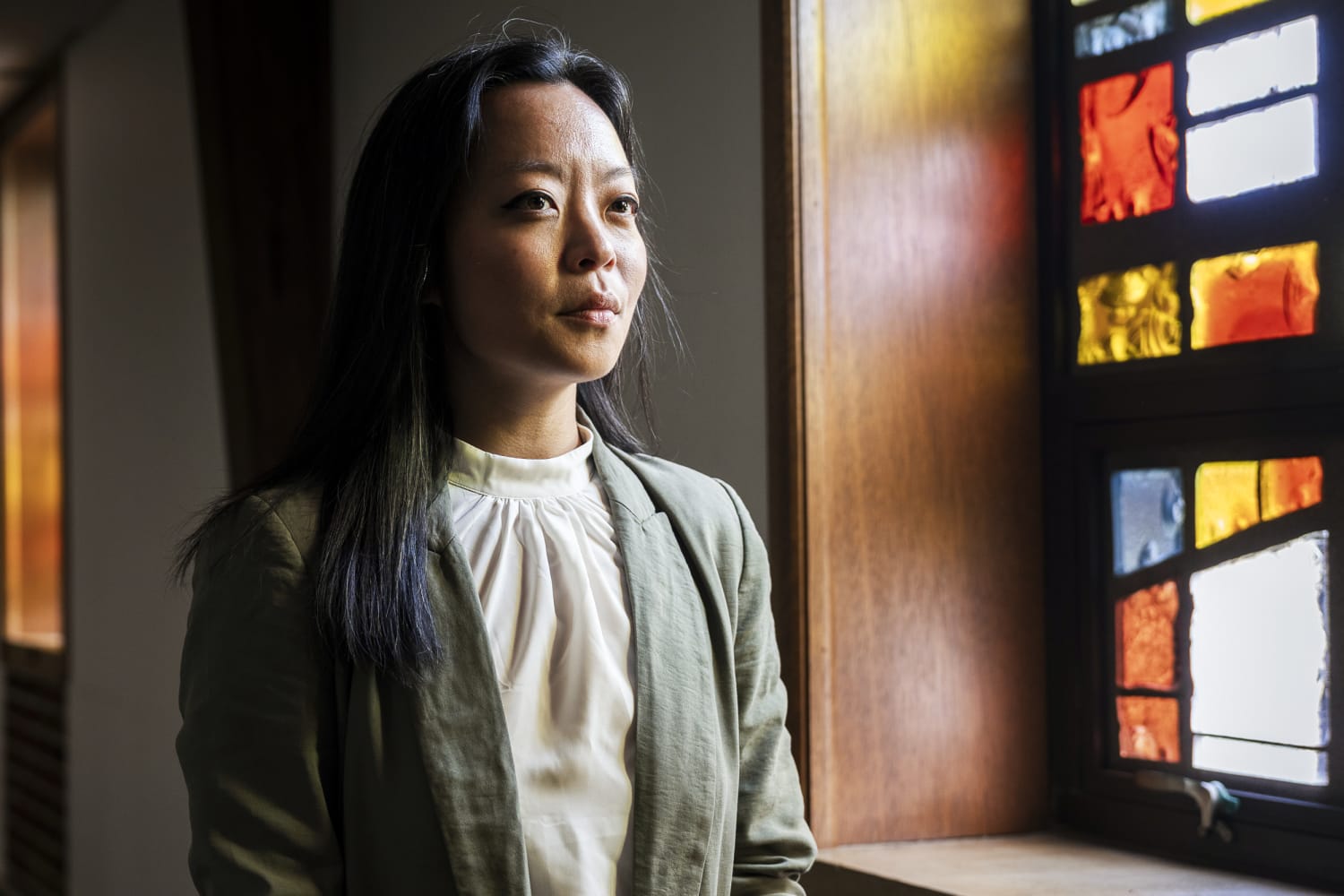
The Wisconsin governor race is entering a critical stage, and Francesca Hong socialist politics has become one of the biggest talking points in the Democratic primary.
Hong, a Wisconsin state representative and self-described democratic socialist, has built a campaign around progressive economic policies, working-class politics and a promise to challenge the political establishment. But her rise has also triggered sharp criticism from Republicans, some Democrats and political commentators who argue that her past statements and policy positions could make her vulnerable in a general election.
The controversy comes just days before Wisconsin Democrats vote in the Aug. 11 gubernatorial primary. Recent reporting has described Hong as a leading candidate in a crowded Democratic field, while opponents and critics continue to question whether a democratic socialist can win statewide in a closely divided battleground state.
The debate surrounding Hong is therefore bigger than one candidate. It reflects a national argument about how far the Democratic Party should move toward the left and whether progressive candidates can convert enthusiasm among Democratic voters into support from independents and moderate voters.
Why Francesca Hong Is Facing Growing Scrutiny

Hong’s campaign has attracted attention because she is attempting something politically unusual: taking an openly democratic socialist message into a state where statewide elections can be extremely competitive.
Wisconsin has become one of the country’s most closely watched battlegrounds. That makes Hong’s candidacy particularly significant for Democrats trying to determine whether a more progressive political strategy can work outside heavily Democratic cities.
The Associated Press has described the race as a test of how far left Wisconsin Democratic voters are prepared to go. Hong’s campaign has also benefited from the broader momentum of democratic socialist candidates who have recently performed strongly in Democratic contests elsewhere.
However, critics argue that what excites the Democratic base may create problems in a general election.
That concern has become one of the central themes of the Wisconsin contest.
The “Crazy Ideas” Debate
The phrase “crazy ideas” is political rhetoric rather than an objective description of Hong’s platform. Critics have used similarly harsh language to portray her as too far left for Wisconsin.
At the heart of the criticism are several positions Hong has supported over the years, including major changes to policing, criminal justice and economic policy.
Some critics have focused on her previous support for police abolition and defunding proposals. More recent reporting says Hong has moderated some of these positions and has indicated that she would not pursue certain abolitionist policies as governor, although she has faced questions about whether she still views some of those ideas as long-term goals.
This distinction is important.
Political candidates often change or refine their positions as they move from activism or local politics into statewide campaigns. Hong’s supporters argue that her current agenda should be judged on the policies she is actually proposing for Wisconsin rather than on every statement she made several years ago.
Her critics take the opposite position. They argue that voters deserve clarity about how much her political philosophy has changed.
That disagreement is now becoming a major feature of the campaign.
Thanksgiving Controversy Returns to the Spotlight
One of the most unusual controversies surrounding Hong involves Thanksgiving.
A 2020 social media post in which Hong called for canceling Thanksgiving has resurfaced during the governor’s race. The comment was connected to her criticism of the holiday’s historical relationship with Indigenous people and colonialism.
The issue has become politically useful to opponents because Thanksgiving is one of the most widely recognized American holidays.
Recent coverage says Hong has since offered a more complicated view of the holiday. She has acknowledged that Thanksgiving can be painful for some people while also speaking more positively about the holiday in later interviews.
Critics have portrayed that evolution as evidence of political repositioning.
Supporters see it differently. They argue that candidates can reconsider old statements and that a social-media post from 2020 should not determine how someone would govern in 2027.
The controversy nevertheless illustrates a larger problem for Hong: her old statements are receiving new attention because she is now running for one of Wisconsin’s highest offices.
Democratic Socialism at the Center of the Campaign
Hong’s political identity is impossible to separate from her democratic socialist label.
She has openly embraced the term and has presented herself as a candidate willing to challenge conventional economic policies.
Among the ideas associated with her campaign are higher taxes on wealthy individuals, expanded public services, universal child care, paid family and medical leave, stronger public education funding and policies intended to support working families.
She has also promoted ideas such as a public grocery store and a public bank designed to provide subsidized loans to small businesses. Wisconsin Examiner reported that Hong defended such proposals by arguing that policies considered radical today can become practical solutions when existing systems fail to deliver.
These ideas have helped Hong distinguish herself from establishment candidates.
They also provide her opponents with material for attacks.
The fundamental political question is whether Wisconsin voters will see these policies as bold solutions to economic problems or as an ideological experiment.
Why Republicans Are Paying Attention
Republicans have a major strategic interest in the Democratic primary.
If Hong wins the nomination, Republicans can build a general-election campaign around her progressive record and democratic socialist identity.
The Washington Post reported that Republicans had spent millions attempting to influence the Democratic primary, viewing Hong as a potentially weaker opponent in November.
That strategy reflects a familiar political calculation.
A party sometimes prefers to face the opponent whose positions are easiest to attack.
For Republicans, Hong provides a clear ideological target. Her opponents can argue that Wisconsin is a moderate or swing state and that a democratic socialist candidate would struggle to win independent voters.
Hong’s campaign, however, argues that the traditional political establishment has failed working families and that voters are increasingly willing to consider policies that were previously dismissed as too progressive.
That disagreement will be tested at the ballot box.
Bernie Sanders’ Decision Adds Another Layer
Another development that has attracted attention is Senator Bernie Sanders’ decision not to endorse Hong.
Sanders is one of the best-known democratic socialist politicians in the United States, making his absence particularly noticeable.
Recent reports say Sanders stated that he was not familiar enough with the Wisconsin governor’s race to endorse Hong. Critics interpreted the decision as a possible sign that even prominent progressives were hesitant to associate themselves with the campaign.
However, that interpretation should be treated cautiously.
A decision not to endorse does not automatically mean opposition.
Sanders has also historically been selective about gubernatorial endorsements, and the reasons behind an endorsement decision can involve campaign strategy, relationships and timing.
Nevertheless, the controversy has provided Hong’s opponents with another argument: if a major progressive figure is unwilling to endorse her, they ask, why should Wisconsin’s moderate voters support her?
Hong’s campaign has continued to emphasize grassroots organizing rather than relying solely on establishment endorsements.
The Electability Question
Perhaps the biggest challenge facing Hong is electability.
Winning a Democratic primary is one task. Winning a statewide general election in Wisconsin is another.
Wisconsin has a history of extremely competitive elections. Candidates must often appeal beyond their party’s strongest supporters.
That means Hong must answer a difficult question:
Can a candidate who identifies as a democratic socialist win over enough independents and moderate Democrats to win statewide?
Her supporters believe the answer is yes.
They argue that economic concerns such as housing costs, child care, wages, health care and education matter more to voters than political labels.
Hong has repeatedly emphasized this argument during campaign appearances, presenting her platform as a response to everyday economic problems rather than simply an ideological project. Wisconsin Examiner reported that she has argued Wisconsin voters care more about solutions than labels.
Opponents are betting that the socialist label will matter enormously.
That could make the general election a referendum not only on Hong but also on the meaning of democratic socialism in a swing state.
A National Progressive Wave
Hong’s campaign is taking place during a broader period of progressive political momentum.
Democratic socialist and progressive candidates have recently achieved notable victories in several major Democratic contests. Reuters reported that progressive candidates have been gaining ground while pushing issues such as higher corporate taxes, expanded abortion access and universal health care.
That national environment has given Hong’s campaign additional energy.
Her supporters believe Wisconsin could become another example of progressive voters challenging traditional Democratic leadership.
But national momentum can also create risks.
A strategy that succeeds in a heavily Democratic city may not work in a closely divided statewide electorate.
That is precisely why the Wisconsin race has attracted so much national attention.
Hong’s Background Helps Explain Her Appeal
Hong’s personal and professional background is another important part of her political appeal.
She has worked in the restaurant industry, including as a dishwasher, line cook and chef, before entering politics.
Supporters point to that background as evidence that she understands the economic pressures facing working people.
Her campaign message frequently focuses on workers, families and people who feel ignored by traditional politics.
That biography helps Hong present herself as an outsider challenging established political structures.
It also gives her a different profile from traditional career politicians.
Yet her opponents argue that governing Wisconsin requires more than political authenticity. They say voters must consider whether her policies can realistically pass the legislature and work across the state’s diverse political landscape.
The DSA Connection
Hong’s relationship with the Democratic Socialists of America has also attracted scrutiny.
The organization has become increasingly influential within progressive politics, but it remains controversial among conservatives and centrist Democrats.
Hong’s supporters view the DSA as part of a grassroots movement seeking stronger worker protections, expanded public services and economic reform.
Critics point to broader positions associated with parts of the organization and argue that the movement is much further left than most Wisconsin voters.
This creates another messaging challenge for Hong.
She must simultaneously maintain support from progressive activists while convincing voters outside the movement that her administration would focus on practical state government.
That balancing act could define the campaign.
Why the Race Matters Beyond Wisconsin
The outcome of the Wisconsin governor race could have implications far beyond Madison.
If Hong wins the Democratic nomination and eventually becomes governor, she could become the first democratic socialist governor in U.S. history, according to recent coverage of the race.
That would represent a major milestone for the American left.
It would also provide Republicans with a powerful national argument about the direction of the Democratic Party.
If Hong loses the primary, moderates may argue that Wisconsin voters rejected the party’s further-left direction.
Either way, the contest offers an important test.
It asks whether progressive politics can move from urban strongholds into a competitive Midwestern swing state.
What Hong Must Do Next
For Hong, the final days before the primary are about more than energizing her existing supporters.
She needs to convince undecided Democrats that her policies can succeed.
She also needs to answer attacks about her past statements without allowing the campaign to become entirely focused on old controversies.
Her strongest argument is economic.
If voters concentrate on child care, wages, housing, schools and family finances, Hong believes her progressive platform can attract support.
Her opponents want voters to focus on socialism, policing, Thanksgiving and her older statements.
That contrast may determine the result.
Could the Controversy Help Her?
Political controversy does not always damage a candidate.
For a candidate like Hong, criticism can reinforce an outsider image.
Every attack from establishment politicians or conservative commentators can potentially be presented to supporters as proof that the political establishment is threatened.
This is one reason the campaign has remained highly competitive.
Hong’s supporters are not necessarily embarrassed by the controversy. Some see it as evidence that traditional politicians are uncomfortable with a candidate who is challenging established assumptions.
But there is a limit.
If controversies dominate news coverage, Hong may struggle to communicate her economic agenda to voters who are still deciding whether to support her.
What Happens After the Primary?
The next stage will depend heavily on the Democratic nominee.
If Hong wins, the general election is likely to become a national ideological battle.
Republicans would have a clear opportunity to frame the contest as a choice between conventional Democratic politics and democratic socialism.
Hong would likely respond by focusing on Wisconsin-specific issues such as affordability, education, health care, infrastructure and jobs.
If another Democrat wins, the party may avoid some of the ideological attacks surrounding Hong but could lose the grassroots energy that has made the race nationally significant.
Either outcome will provide lessons for Democrats across the country.
Final Takeaway
The Francesca Hong socialist controversy is ultimately about more than one candidate or one disputed social-media post.
It is about the future direction of the Democratic Party.
Hong represents a growing progressive movement that believes voters are ready for major changes to economic and social policy. Her critics believe those proposals are too far left for Wisconsin and could give Republicans an advantage in a general election.
The debate over her past statements, Thanksgiving comments, policing positions and democratic socialist identity is unlikely to disappear.
But voters will ultimately decide which issues matter most.
The Aug. 11 Democratic primary will provide the first major answer.
If Hong wins, Wisconsin could become the country’s most important test of democratic socialism at the statewide level. If she loses, Democratic moderates may argue that progressive momentum has limits in competitive Midwestern states.
Either way, the Wisconsin governor race has already become a major political story—and the controversy surrounding Francesca Hong is unlikely to fade anytime soon.
Frequently Asked Questions
Who is Francesca Hong?
Francesca Hong is a Wisconsin state representative and democratic socialist running for governor in the 2026 Democratic primary. She previously worked in the restaurant industry and entered politics during the COVID-era economic crisis.
Is Francesca Hong a socialist?
Yes. Hong identifies as a democratic socialist and has campaigned on progressive economic and social policies. Her political identity is one of the major issues in the Wisconsin governor race.
Why is Francesca Hong controversial?
Criticism has focused on several past statements and policy positions, including her previous comments about Thanksgiving and her earlier support for police abolition or defunding. Her opponents argue that these positions make her too far left for Wisconsin.
What is the Thanksgiving controversy?
A 2020 post by Hong criticizing Thanksgiving and calling for the holiday to be canceled resurfaced during her gubernatorial campaign. She has since offered more nuanced comments about the holiday, including acknowledging its significance to many Americans.
When is the Wisconsin Democratic governor primary?
The Wisconsin Democratic gubernatorial primary is scheduled for August 11, 2026. The winner will advance to the general election.
Why are Republicans paying attention to Hong?
Republicans view Hong’s progressive record and democratic socialist identity as potentially useful issues in a general-election campaign. Reporting has indicated that Republican-aligned spending has sought to influence the Democratic primary.
Did Bernie Sanders endorse Francesca Hong?
No. Recent reporting says Bernie Sanders declined to endorse Hong, explaining that he was not familiar enough with the Wisconsin race.
Could Francesca Hong become America’s first socialist governor?
If she wins the Democratic nomination and then the general election, Hong could become the first democratic socialist governor in U.S. history. Her campaign is therefore being watched as a significant test of progressive politics in a swing state.
What policies does Hong support?
Her campaign has promoted policies including expanded public services, universal child care, paid family and medical leave, stronger public education funding, higher taxes on wealthy individuals, a public grocery store and a public bank for small-business lending.
Why is Wisconsin important in the 2026 election?
Wisconsin is a closely contested battleground state. A successful democratic socialist campaign there could have implications for Democratic strategy nationally, while a defeat could strengthen arguments for a more moderate approach.
About the Author