The recent nationwide aviation disruption in the United States has raised serious questions about the security and reliability of the country’s critical infrastructure. A major Federal Aviation Administration (FAA) network failure grounded flights across the country, disrupted airport operations, and exposed weaknesses in the technology supporting America’s air traffic control system.
Although officials have found no evidence that a cyberattack caused the November 13 outage, the incident has renewed concerns about the vulnerability of essential government networks. It also comes shortly after a Government Accountability Office (GAO) report identified significant cybersecurity weaknesses in aviation communications.
The FAA cyber warning has therefore become an important topic in discussions about national security, infrastructure modernization, and public safety.
The outage demonstrated how a technical problem involving telecommunications equipment can spread across interconnected systems. It also highlighted the potential consequences of relying on aging technology to manage one of the world’s busiest aviation networks.
For millions of travelers, airlines, airport employees, and aviation businesses, the incident was a reminder that modern transportation depends on reliable digital infrastructure.
However, the bigger concern extends beyond flight delays. Experts and government investigators must determine whether America’s essential systems have sufficient protection against both accidental technical failures and deliberate cyber threats.
FAA Outage Raises Serious Infrastructure Security Concerns
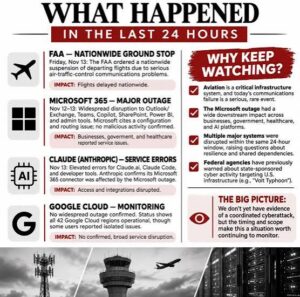
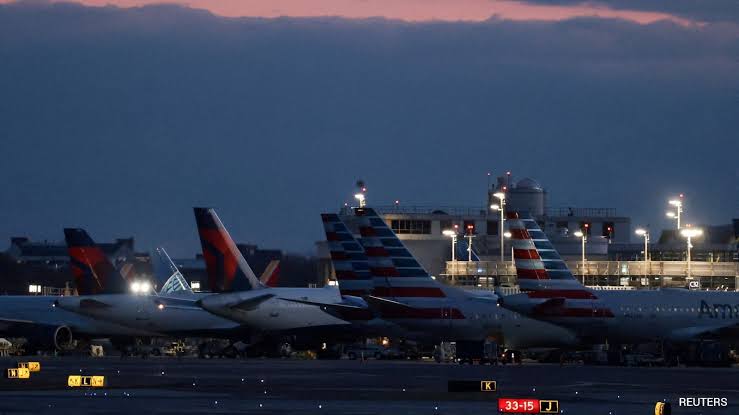
The November 13 disruption began when a technical problem affected the FAA’s telecommunications network. The agency subsequently issued a nationwide ground stop to protect aircraft and passengers.
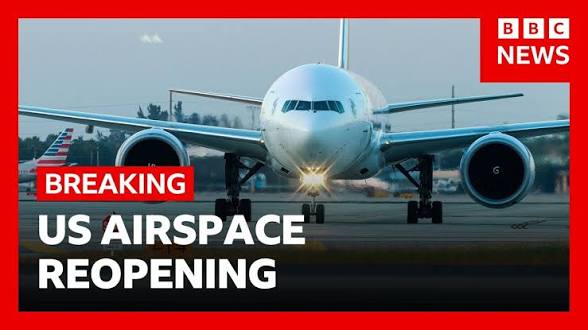
According to the FAA, the problem began at approximately 3:30 p.m. Eastern Time. Flight operations resumed at approximately 8:15 p.m. after officials stabilized the affected systems.
The ground stop lasted more than four hours. Its effects continued after the initial problem was addressed because airlines needed time to reorganize aircraft, crews, and airport schedules.
The FAA later reported that approximately 12,462 flights were canceled on November 13. Not every cancellation resulted directly from the ground stop, but the disruption contributed significantly to the aviation industry’s operational difficulties.
The agency also confirmed that instability affected 17 of its 22 Air Route Traffic Control Centers.
This figure illustrates the scale of the problem. A failure involving a telecommunications network can affect multiple facilities that depend on shared infrastructure.
The FAA stressed that its decision to stop departures was a precautionary safety measure. Officials did not want aircraft operating under uncertain communications and radar conditions.
Importantly, the agency reported that aircraft already in the air continued to receive necessary support. Approximately 3,500 aircraft landed safely during the disruption.
These details show that the outage did not result in a complete loss of aviation operations. Nevertheless, the incident exposed how quickly a technical failure can affect the national transportation system.
Federal Aviation Administration+2
Was the FAA Outage Caused by a Cyberattack?
One of the biggest questions following the aviation shutdown concerned the possibility of a cyberattack.
Because the disruption affected critical communications infrastructure, concerns quickly emerged about possible hacking, sabotage, or foreign interference.
However, officials have said that available evidence does not indicate that a cyberattack caused the incident.
Homeland Security Secretary Markwayne Mullin said there was no indication of malicious activity behind the disruption. He also indicated that investigators were continuing to examine the circumstances.
The FAA similarly stated that it had found no evidence of an outside malicious actor.
This distinction is important.
A network outage and a cyberattack can produce similar operational consequences. Both can interrupt communications, prevent systems from exchanging information, and force organizations to activate emergency procedures.
However, a technical failure does not automatically mean that hackers were responsible.
In this case, investigators have focused on telecommunications equipment, network instability, and maintenance work.
The FBI and other federal agencies have also been involved in examining the incident, according to reporting by SecurityWeek.
For now, the available evidence supports describing the event as a major technical failure rather than a confirmed cyberattack.
Nevertheless, the incident has strengthened calls for better cybersecurity, stronger network monitoring, and more reliable backup systems.
SecurityWeek+2
Aging FAA Technology Exposes a Major Weakness
One of the most important lessons from the outage concerns the age and condition of America’s air traffic control infrastructure.
The aviation network depends on telecommunications equipment, radar feeds, communication systems, and data connections. These technologies must work together to support safe aircraft operations.
However, parts of the system rely on older equipment that may struggle when connected to newer technology or exposed to unexpected network conditions.
According to the FAA’s initial explanation, excessive data traffic destabilized its legacy telecommunications equipment.
The agency identified two possible locations associated with the problem: a radar site in Amarillo, Texas, and a radio communications site in El Dorado, Arkansas.
The FAA’s network provider, L3Harris, had been performing work at the El Dorado facility, including installing a new router.
Officials said the affected network experienced more than 1,000 connection attempts every four to five seconds. This unusual volume of connections contributed to instability in the older system.
The agency and its contractor isolated the affected locations and disabled certain router functions.
As an additional precaution, the FAA disabled the same functionality on approximately 60 similar routers.
The investigation remains important because officials still need to establish the precise technical cause.
The incident also raises a broader question: Can aging infrastructure reliably support the growing demands of modern aviation?
The answer depends on more than replacing individual devices. The entire network requires careful modernization, testing, monitoring, and security planning.
Federal Aviation Administration+2
GAO Report Identifies Serious Aviation Cybersecurity Gaps
The FAA outage is particularly concerning because it follows a September 2026 report from the Government Accountability Office.
The report, titled Aviation Cybersecurity: Enhanced Air Safety Requires FAA to Better Mitigate Threats to Aircraft Communications, identified several weaknesses in the agency’s approach to aviation cybersecurity.
The GAO examined how the FAA identifies and manages threats affecting aircraft communications and the National Airspace System.
Its findings raised concerns about the government’s ability to detect and respond to certain digital and electromagnetic threats.
The report identified several important security challenges.
1. Limited Real-Time Threat Detection
The GAO found that the FAA did not have a defined real-time monitoring and detection capability for all spectrum-related threats.
This creates a significant challenge.
When a threat affects aviation communications, early detection can help authorities investigate the problem and limit its impact.
Without sufficient monitoring tools, officials may have to depend on reports of suspicious activity before investigating.
That approach can delay responses to emerging threats.
2. Risks From Signal Spoofing and Jamming
The report also highlighted electromagnetic threats, including spoofing and jamming.
These threats can interfere with radio-frequency communications used by aircraft and aviation infrastructure.
Spoofing involves transmitting misleading signals that may appear legitimate. Jamming attempts to disrupt communications by interfering with the signals that systems rely on.
Both can create serious operational challenges.
For example, inaccurate information or disrupted communications could affect situational awareness and create difficulties for pilots and air traffic controllers.
3. Weaknesses in Communication Applications
Another concern involves applications used to exchange text-based information between pilots, aviation stakeholders, and the FAA.
The GAO identified security limitations involving authentication, encryption, and protocol design.
These weaknesses could increase the risk of interception or spoofing.
In certain circumstances, malicious actors could potentially transmit fraudulent information, including false clearance cancellations.
Such incidents could cause flight delays and create additional safety concerns.
4. Coordination Between Federal Agencies
The GAO also examined cooperation between the FAA and other government agencies.
It found that the FAA had fully addressed only two of eight leading collaboration practices. Six were only partially addressed.
The report highlighted gaps in information-sharing policies and coordination with non-federal partners.
This matters because aviation cybersecurity involves more than one organization.
Airlines, airports, telecommunications providers, contractors, and government agencies all play important roles.
The GAO made nine recommendations to strengthen the FAA’s cybersecurity management, improve coordination, and protect aviation communications.
The Department of Transportation, responding on behalf of the FAA, agreed with all nine recommendations.
These findings provide important context for the recent outage. They do not prove that the November disruption involved hackers. Instead, they demonstrate that aviation cybersecurity weaknesses existed independently of the technical failure.
U.S. GAO+1
Why Critical US Infrastructure Is Vulnerable
The FAA incident highlights a broader problem affecting critical infrastructure across the United States.
Modern society depends on interconnected digital networks. Transportation, electricity, telecommunications, healthcare, banking, and emergency services all rely on technology.
These systems provide enormous benefits. However, their interconnected nature can also create vulnerabilities.
A problem in one part of a network may affect other facilities that depend on the same infrastructure.
The aviation disruption provides a clear example.
A telecommunications problem at specific facilities contributed to instability across a much wider network.
This raises concerns about other essential services.
Transportation Infrastructure
Airports and aviation authorities depend on digital systems to coordinate aircraft movements, communications, passenger information, and security operations.
A serious failure could disrupt travel across multiple states.
Rail networks, ports, and road transportation systems also depend on connected technology.
Energy Infrastructure
Electricity providers use digital networks to monitor equipment and manage power distribution.
A technical failure or malicious intrusion could affect operations, especially when backup systems are insufficient.
Telecommunications Networks
Telecommunications providers support government operations, emergency services, businesses, and millions of consumers.
A disruption affecting major communication networks could create problems across several industries.
Healthcare Systems
Hospitals rely on digital infrastructure for patient records, medical equipment, scheduling, and communication.
A network outage can interfere with essential services and increase operational pressure.
These examples demonstrate why infrastructure protection must be treated as a national security priority.
The FAA incident does not establish that these other sectors face the same technical problem. However, it illustrates the importance of preparing for failures across interconnected systems.
Could Hackers Target America’s Aviation Network?
The possibility of cyberattacks against aviation infrastructure remains a serious security concern.
Air traffic control systems are attractive targets because they support essential transportation operations.
A successful attack against vulnerable communications or information systems could create widespread disruption.
However, cybersecurity experts distinguish between different types of threats.
Network intrusion: Attackers attempt to gain unauthorized access to computer systems.
Signal jamming: Malicious actors interfere with radio-frequency communications.
Signal spoofing: Attackers transmit misleading signals that appear legitimate.
Ransomware: Criminal groups attempt to lock organizations out of their systems and demand payment.
Supply-chain attacks: Attackers exploit weaknesses in software, equipment, or services supplied by third-party providers.
The aviation industry must prepare for these threats without assuming that every technical failure is the result of hostile activity.
The November outage illustrates why reliable monitoring and clear incident-response procedures are essential.
If officials cannot quickly identify whether a problem involves faulty equipment, software, network congestion, or malicious interference, restoring normal operations becomes more difficult.
That uncertainty can also create confusion among passengers and the wider public.
A stronger security strategy must therefore combine preventive measures with effective emergency response.
L3Harris Network Failure Raises Questions About Contractor Oversight
The role of telecommunications contractors has also attracted attention following the FAA disruption.
L3Harris, the FAA’s network service provider, had been performing work at the El Dorado facility before the incident.
The work included deploying a new router as part of efforts to replace aging copper connections.
Officials have said that the new equipment may have contributed to excessive network traffic.
However, investigators have not established a final root cause.
This distinction matters because the investigation must determine whether the incident resulted from defective equipment, installation problems, configuration issues, or another technical factor.
The incident also highlights the importance of contractor oversight.
Government agencies increasingly depend on private companies to maintain complex technology networks.
That arrangement can provide specialized expertise, but it also creates responsibilities.
Federal agencies must ensure that contractors follow strict testing and security procedures.
New equipment should be tested for compatibility with existing systems before deployment.
Maintenance work should also include contingency plans in case an upgrade produces unexpected results.
The FAA has already taken precautionary action by disabling certain functions on similar routers.
Further investigation should establish whether additional safeguards are necessary.
Federal Aviation Administration+2
FAA Modernization Becomes a National Security Priority
The outage has renewed pressure on Washington to modernize America’s air traffic control infrastructure.
Transportation Secretary Sean Duffy has argued that the country needs substantial investment to replace outdated technology.
The Trump administration has discussed a proposed $50 billion modernization effort.
However, the proposal has also generated debate over federal spending, oversight, and the pace of infrastructure improvements.
Modernization involves much more than purchasing new computers or installing faster network equipment.
The FAA must ensure that new systems can communicate reliably with existing technology during the transition.
Aviation infrastructure also requires strong cybersecurity protection.
Several priorities deserve attention.
Replace outdated equipment: Older routers, switches, and communication systems should be upgraded through carefully planned projects.
Improve network monitoring: Real-time monitoring can help identify unusual activity and system instability.
Strengthen authentication: Communication applications should better verify the identity and legitimacy of users and messages.
Improve encryption: Sensitive information should receive appropriate protection against interception.
Test upgrades: New equipment should undergo compatibility and performance testing before widespread deployment.
Create reliable backups: Emergency systems should support essential operations when primary networks experience problems.
Improve coordination: Government agencies and private contractors should share relevant security information quickly.
These measures could improve resilience against both accidental failures and deliberate attacks.
The GAO’s September report makes the cybersecurity side of modernization especially important.
Replacing outdated infrastructure without addressing security weaknesses would leave important risks unresolved.
What the Outage Means for American Travelers
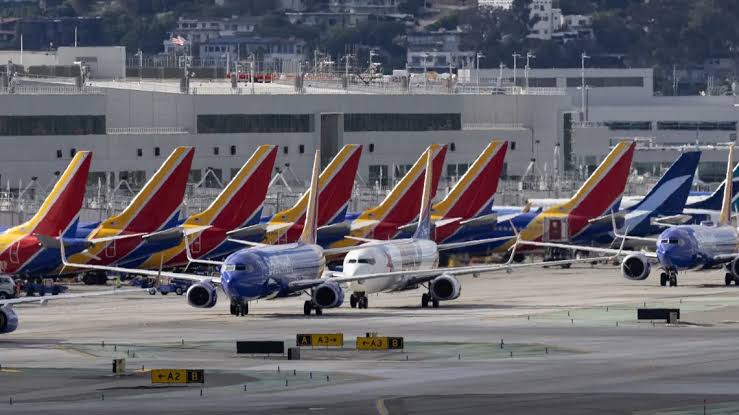
For ordinary Americans, the most immediate consequences of the FAA outage involved flight cancellations, delays, missed connections, and airport congestion.
Thousands of passengers experienced uncertainty as airlines attempted to reorganize their operations.
Even after the FAA lifted the ground stop, the aviation network needed time to recover.
Aircraft and crews were no longer in their planned positions. Some passengers had to wait for alternative flights, while others faced additional accommodation and travel expenses.
The disruption also affected airline employees, airport businesses, cargo operators, and companies that depend on timely deliveries.
According to Reuters, flight disruptions continued through November 15, with more than 11,500 US flights canceled or delayed that Sunday.
Transportation officials expected operations to return to normal by Monday, although investigators had not yet established the final root cause.
This recovery period demonstrates an important reality: restoring a computer network does not immediately restore an entire transportation system.
Reuters+1
Could Another FAA Outage Happen?
The possibility of another disruption cannot be completely dismissed.
The FAA has taken immediate steps to stabilize the affected network. It also disabled certain functions on approximately 60 similar routers as a precaution.
However, preventing future incidents requires a complete understanding of what happened.
Investigators must determine why the network generated excessive connection attempts and why older equipment became unstable.
They must also examine whether existing testing procedures were sufficient.
There are several important steps the FAA should consider.
First, improve equipment compatibility. New routers and communication devices must operate reliably alongside older infrastructure.
Second, strengthen emergency procedures. Air traffic controllers need reliable alternatives when primary communication networks become unstable.
Third, improve cybersecurity assessments. The agency should regularly evaluate vulnerabilities involving communication applications, network equipment, and radio-frequency systems.
Fourth, increase transparency. Public updates about major infrastructure failures should explain what happened, what officials know, and what remains under investigation.
Finally, modernization projects should include independent testing and accountability.
These steps cannot eliminate every possible risk. However, they can reduce the likelihood that a localized technical problem will produce a nationwide disruption.
Why the FAA Cyber Warning Matters Beyond Aviation
The FAA cyber warning represents a larger conversation about America’s ability to protect essential infrastructure.
The United States operates highly advanced digital networks. However, advanced technology does not automatically guarantee reliable operations.
Infrastructure security depends on regular maintenance, effective monitoring, skilled personnel, and strong coordination.
The recent aviation disruption also shows why cybersecurity and operational resilience must work together.
Cybersecurity focuses on preventing unauthorized access and malicious activity. Operational resilience focuses on keeping essential services functioning when something goes wrong.
Both are necessary.
Even when hackers are not involved, outdated equipment, poorly tested upgrades, and network failures can produce consequences similar to those associated with cyber incidents.
The GAO’s findings make this issue particularly important.
Its recommendations provide a roadmap for improving aviation communications security, while the November outage demonstrates the consequences of infrastructure instability.
Congress, federal agencies, and private contractors will face increasing pressure to address these weaknesses.
The challenge will be balancing modernization costs with the need to maintain uninterrupted public services.
Conclusion: FAA Outage Highlights an Urgent Infrastructure Challenge
The November 13 FAA outage exposed serious questions about the reliability of America’s aviation infrastructure.
Although officials have found no evidence that a cyberattack caused the disruption, the incident demonstrated how vulnerable interconnected systems can become when aging technology experiences unexpected failures.
The nationwide ground stop affected thousands of flights and disrupted airport operations across the country.
At the same time, the September GAO report identified cybersecurity weaknesses involving aircraft communications, signal threats, real-time monitoring, and coordination between government agencies.
Together, these developments highlight the need for stronger infrastructure protection.
The FAA must address both technical reliability and cybersecurity risks. Replacing outdated equipment, improving network monitoring, strengthening communication security, and testing new technology should remain priorities.
The investigation into the November outage will be important in determining what went wrong and how similar incidents can be prevented.
Ultimately, protecting America’s aviation system is not simply about preventing cyberattacks. It is about ensuring that essential infrastructure remains safe, reliable, and prepared for unexpected disruptions.
Frequently Asked Questions (FAQs)
1. What caused the November 2026 FAA outage?
The FAA reported that excessive data traffic destabilized its legacy telecommunications equipment. Investigators identified possible problems involving facilities in Amarillo, Texas, and El Dorado, Arkansas. The final root cause remains under investigation.
2. Was the FAA outage caused by a cyberattack?
No evidence has established that hackers caused the November 13 outage. The FAA and federal officials have said that available evidence does not indicate a cyberattack or outside malicious activity.
3. How long did the FAA ground stop last?
The nationwide ground stop began at approximately 3:30 p.m. Eastern Time on November 13 and ended at approximately 8:15 p.m. It lasted more than four hours.
4. How many flights were affected by the FAA outage?
The FAA reported approximately 12,462 flight cancellations on November 13. Additional delays and cancellations continued over the following days.
5. What did the GAO report reveal about FAA cybersecurity?
The September 2026 GAO report identified weaknesses involving real-time threat monitoring, signal spoofing and jamming, communication application security, and coordination with external partners.
6. What is signal spoofing in aviation?
Signal spoofing involves transmitting misleading signals that appear legitimate. In aviation, this could potentially affect communications or information used by pilots and air traffic authorities.
7. What role did L3Harris play in the FAA outage?
L3Harris operates the FAA’s network service. The company had been performing telecommunications work at an affected facility, including installing a new router. Investigators are examining whether the equipment or associated work contributed to the network instability.
8. Is it safe to fly after the FAA outage?
The FAA has stated that its system is stable and that flying is safe. Passengers should continue checking airline notifications and official flight updates for individual travel information.
9. What is the FAA doing to prevent another outage?
The FAA isolated affected locations, disabled certain router functions, and applied precautionary measures to approximately 60 similar routers. It is also investigating the root cause and reviewing measures to prevent a recurrence.
10. Why is the FAA outage a national security concern?
The incident highlights the importance of reliable communications, secure networks, and resilient infrastructure. A serious failure involving essential aviation systems can disrupt transportation and create wider economic consequences.
About the Author