El Salvador Spotlight: Security Crackdown, Political Pressure, World Reacts
For years, El Salvador was associated with gang violence, political instability, and one of the highest homicide rates in the world. Today, the country stands at the center of a completely different global conversation. Under President Nayib Bukele, El Salvador has launched one of the toughest anti-gang crackdowns in modern Latin American history. Supporters call it a revolutionary security transformation. Critics warn it may be pushing the nation toward authoritarian rule.
The debate surrounding El Salvador has intensified in 2026 as mass arrests, emergency powers, mega-prisons, and international criticism continue to dominate headlines. Governments, human rights organizations, economists, political analysts, and citizens across the world are all watching closely.
At the center of the discussion is a difficult question: can a government dramatically reduce crime without damaging democratic institutions and civil liberties?
The answer depends on whom you ask.
The Rise of Bukele’s Security Model
When Nayib Bukele first entered office in 2019, many Salvadorans were exhausted by gang violence connected to groups like MS-13 and Barrio 18. Entire communities lived under fear. Extortion was common, businesses struggled, and homicide rates dominated international crime statistics.
In 2022, after a deadly surge in killings, Bukele’s administration declared a nationwide “state of exception.” The emergency measure suspended several constitutional protections and gave security forces expanded powers to arrest suspected gang members.
Since then, authorities have arrested tens of thousands of people accused of gang ties. The government argues the strategy restored public order and dramatically reduced violence. Official figures claim homicide rates fell sharply over the last several years.
Supporters say ordinary Salvadorans can finally walk streets safely, reopen businesses, and live without constant fear of gang intimidation.
For many citizens, security improvements are not abstract political talking points. They are daily realities.
Inside the Massive Security Crackdown
The scale of El Salvador’s anti-gang operation is unprecedented in the region.
More than 91,000 people have reportedly been detained since the emergency measures began.
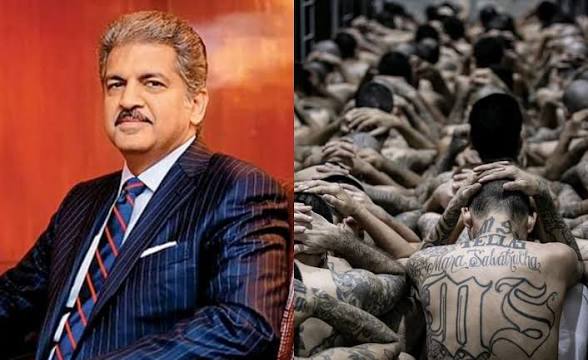
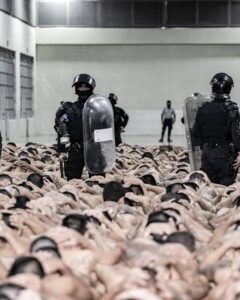
One of the most recognizable symbols of the crackdown is the Terrorism Confinement Center, commonly known as CECOT. The mega-prison became internationally famous after images of heavily tattooed inmates lined up in crowded cells spread across global media.
The government insists the prison represents strength and order. Officials say dangerous gang leaders who once terrorized communities are now isolated from society.
International audiences have reacted strongly to these images. Some conservatives in the United States and Latin America praised Bukele’s aggressive approach to crime. Others described the prison conditions as alarming and incompatible with democratic norms.
In recent months, El Salvador also drew attention for conducting large-scale gang trials involving hundreds of defendants simultaneously. Reuters reported that suspected gang members watched court proceedings from prison via giant screens during one of the country’s largest mass trials.
The administration argues that extraordinary criminal networks require extraordinary judicial responses.
Critics strongly disagree.
Human Rights Concerns Continue Growing
While Bukele’s popularity remains high domestically, international human rights organizations continue raising serious concerns.
Groups including Amnesty International and Human Rights Watch have accused Salvadoran authorities of arbitrary detentions, weak evidence standards, deaths in custody, and violations of due process.
Recent reports also suggest thousands of detainees may not have appeared on prior gang-member lists before their arrests. According to reporting published in 2026, more than 33,000 detained individuals were allegedly not identified as gang members in earlier intelligence records.
Families of detainees have protested outside prisons and courts, claiming innocent people were swept into mass operations.
The Salvadoran government rejects accusations of systematic abuse and argues critics ignore the reality citizens faced before the crackdown. Bukele himself has repeatedly defended the strategy and dismissed international criticism as politically motivated.
Still, pressure from global organizations continues increasing.
The Office of the United Nations High Commissioner for Human Rights previously described parts of the security response as “unnecessary and excessive.”
Press Freedom and Political Pressure
Another major source of controversy involves independent journalism and political dissent inside El Salvador.
Investigative outlet El Faro has accused the government of retaliation after authorities reportedly froze assets connected to the organization. Journalists connected to the publication argue the measures are part of a broader campaign against critical media.
The conflict between Bukele’s administration and independent media has intensified over reports alleging past negotiations between government representatives and gangs.
International press freedom groups have expressed concern about harassment, surveillance allegations, and the exile of some journalists.
Supporters of the government argue many foreign media organizations exaggerate criticism and fail to acknowledge improvements in security and economic confidence.
The result is a deeply polarized national and international conversation.
Why Many Salvadorans Still Support Bukele
Despite criticism abroad, Bukele remains extremely popular within El Salvador.
Opinion surveys over recent years have consistently shown high approval ratings linked to public satisfaction with improved security conditions.
For many citizens, daily life changed dramatically after years of gang dominance. Public transportation routes became safer. Businesses reopened in areas once considered dangerous. Extortion reportedly decreased in several communities.
Many Salvadorans argue international observers do not fully understand how severe gang violence once was.
Supporters believe Bukele succeeded where previous governments failed. They view his leadership style as decisive rather than authoritarian.
This public support explains why Bukele’s political movement continues dominating national politics despite mounting international criticism.
The International Reaction
Global reaction to El Salvador’s transformation remains sharply divided.
Some international politicians praise Bukele’s policies as proof that aggressive anti-crime strategies can work. Conservative political figures in several countries have pointed to El Salvador as a possible model for fighting organized crime.
Others warn the “Bukele model” risks encouraging democratic backsliding across Latin America.
Political analysts increasingly discuss what some call the “Bukele Effect” — the growing influence of his governance style beyond El Salvador’s borders.
Human rights advocates fear governments elsewhere may copy emergency powers, mass detention systems, and weakened judicial protections.
Meanwhile, international investors and tourism industries are also paying attention. Improved security has helped reshape El Salvador’s image globally, attracting more tourism interest and foreign business discussions.
The country now exists at the intersection of two competing narratives:
- A security success story.
- A democratic warning sign.
Mass Trials and the Future of Justice
One of the biggest debates now centers on El Salvador’s judicial system.
Recent mass trials involving hundreds of defendants have raised concerns among legal experts about transparency and individual due process rights.
Bukele compared some proceedings to historic war-crime prosecutions, arguing gang leadership structures should face collective accountability.
Critics argue the comparison is dangerous and could normalize weaker legal standards.
International legal observers say democratic systems must still protect defendants’ rights even during security emergencies.
The Salvadoran government maintains that gang organizations operated as large criminal enterprises and therefore require broader prosecutorial approaches.
The outcome of these legal battles could shape how future governments worldwide approach organized crime.
El Salvador’s Global Image Has Changed
Just a decade ago, many travelers avoided El Salvador because of safety fears.
Today, the country increasingly appears in international travel discussions, political debates, economic forums, and social media conversations.
Images of modern infrastructure projects, surfing tourism campaigns, Bitcoin experiments, and improved security coexist alongside headlines about prison overcrowding, emergency powers, and press freedom concerns.
The transformation has made El Salvador one of the most closely watched nations in Latin America.
Whether viewed positively or negatively, the country now commands global attention in ways few expected years ago.
Could the Bukele Model Spread?
Analysts across Latin America believe other leaders may attempt to imitate aspects of El Salvador’s strategy.
Countries struggling with cartel violence, gang activity, or public insecurity often face enormous pressure to deliver quick results. Bukele’s popularity demonstrates that tough security messaging can resonate strongly with voters.
However, critics argue the long-term consequences remain unclear.
Questions continue surrounding:
- Judicial independence
- Democratic checks and balances
- Prison conditions
- Human rights protections
- Political opposition rights
- Media freedom
The world is now watching to see whether El Salvador eventually transitions out of emergency rule or continues deepening extraordinary security measures.
That decision may define the country’s future reputation.
Economic and Social Impact
Security improvements can create economic opportunities.
Businesses often invest more confidently when violence decreases. Tourism industries can expand. International visitors become more willing to travel.
Supporters of Bukele argue safer streets are already helping El Salvador economically.
However, critics warn political instability and international concern over democratic institutions could eventually affect foreign relations and investment confidence.
The country’s future may depend on whether it can balance public security with institutional stability.
That balance remains difficult.
Final Thoughts
El Salvador has become one of the most debated nations in the modern political world.
Under Nayib Bukele, the country dramatically reduced visible gang activity and reshaped public security. Millions view the transformation as historic.
At the same time, concerns over civil liberties, mass arrests, press freedom, and democratic accountability continue generating international criticism.
The debate surrounding El Salvador is larger than one country.
It reflects a global question many societies face today: how far should governments go in the name of public safety?
As international attention grows, El Salvador remains at the center of one of the defining political and security debates of the decade.
FAQs
Why is El Salvador in global headlines?
El Salvador is receiving worldwide attention because of President Nayib Bukele’s aggressive anti-gang crackdown, mass arrests, emergency powers, and ongoing international debate over human rights and democracy.
What is the state of exception in El Salvador?
The state of exception is an emergency measure introduced in 2022 that suspended certain constitutional protections to allow expanded police and military operations against gangs.
How many people have been arrested in the crackdown?
Reports indicate that more than 91,000 people have been detained during the anti-gang campaign.
What is CECOT prison?
CECOT is El Salvador’s massive high-security prison built to house suspected gang members. It became internationally famous because of images showing large numbers of inmates under strict confinement.
Why do critics oppose Bukele’s policies?
Critics argue the government has violated human rights through arbitrary arrests, weak due process protections, mass trials, and pressure on journalists and opposition voices.
Why do many Salvadorans support Bukele?
Many citizens credit Bukele’s policies with significantly reducing gang violence and improving daily safety in communities previously controlled by criminal groups.
How useful was this post?
Click on a star to rate it!
Average rating 0 / 5. Vote count: 0
No votes so far! Be the first to rate this post.
About the Author

usa5911.com
Administrator
Hi, I’m Gurdeep Singh, a professional content writer from India with over 3 years of experience in the field. I specialize in covering U.S. politics, delivering timely and engaging content tailored specifically for an American audience. Along with my dedicated team, we track and report on all the latest political trends, news, and in-depth analysis shaping the United States today. Our goal is to provide clear, factual, and compelling content that keeps readers informed and engaged with the ever-changing political landscape.