DEM SOVEREIGNTY ATTACK: Brandon Gill exposes left, illegal aliens prioritized, America sold out
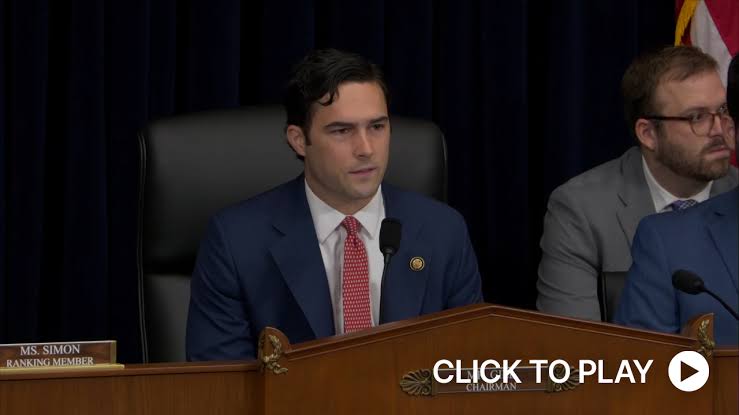
U.S. Rep. Brandon Gill, a Republican from Texas, has sharply criticized Democrats over immigration enforcement, arguing that Democratic policies place the interests of illegal immigrants ahead of American citizens and undermine U.S. sovereignty.
Gill made the comments during a September 21, 2026, appearance on Fox News’ The Will Cain Show. His remarks came amid renewed political conflict over immigration enforcement following an incident in Austin involving an Immigration and Customs Enforcement (ICE) officer and a Venezuelan national facing deportation.
Gill argued that Democrats “impulsively” side with illegal immigrants when immigration enforcement becomes controversial. He connected the dispute to broader disagreements over deportation, federal benefits, sanctuary policies and the role of immigration in American politics.
However, Gill’s statements are political arguments rather than established findings that Democrats as a whole prioritize noncitizens over Americans. Democrats and immigration-rights advocates generally frame their disagreements around due process, humanitarian considerations and the limits of federal immigration enforcement.
The dispute highlights one of the most contentious issues in U.S. politics: how the country should balance border enforcement, national sovereignty, legal immigration, public safety and constitutional protections.
What Brandon Gill said about Democrats and immigration

Gill’s latest comments followed criticism of federal immigration enforcement in Austin.
According to reports, Gill argued that Democrats have adopted a consistent pattern of siding with illegal immigrants when immigration enforcement is involved. He also criticized Democratic efforts involving healthcare and welfare benefits for people who are not legally entitled to receive them under existing federal rules.
Gill has made similar arguments before.
In a House Oversight hearing earlier in 2026, Gill criticized Democratic immigration policies and argued that Democrats were seeking to keep large numbers of illegal immigrants in the United States. He specifically discussed Temporary Protected Status, or TPS, and argued that the program was being used beyond its original temporary purpose.
His broader position is that immigration enforcement should remain a central responsibility of the federal government.
Gill has also argued that illegal immigration can affect political representation because congressional apportionment is based on population rather than simply the number of eligible voters. In recent remarks, he connected immigration policy to what he described as a Democratic political incentive.
Those claims are part of Gill’s political argument and should be distinguished from the underlying constitutional and demographic rules.
The sovereignty argument
The word “sovereignty” has become increasingly prominent in America’s immigration debate.
In general terms, national sovereignty refers to a country’s authority to govern its territory, enforce its laws and determine who may enter or remain within its borders.
Gill presents immigration enforcement through that framework.
He has argued that unauthorized entry is not simply an immigration violation but an issue involving the authority of the United States to control its borders. His rhetoric has included describing people who enter illegally as “invaders.”
That terminology is politically contested.
Supporters of stronger enforcement argue that a sovereign country must control entry and enforce immigration laws consistently. They say weak enforcement can encourage additional unauthorized migration and place pressure on government resources.
Critics argue that immigration enforcement must also respect constitutional rights, federal court orders, asylum procedures and due-process protections.
Therefore, the sovereignty argument does not by itself settle the policy debate. It describes one important principle that lawmakers weigh against other legal and humanitarian considerations.
Gill’s birthright citizenship proposal
Immigration has also been central to Gill’s legislative agenda.
In 2026, Gill introduced legislation intended to change the application of birthright citizenship to children born in the United States to certain undocumented immigrants and birth tourists.
His office says the proposal would clarify federal law and address what Gill considers a problem involving birthright citizenship.
The proposal follows a major constitutional debate.
The 14th Amendment has traditionally been understood to establish birthright citizenship for people born in the United States and subject to its jurisdiction. In 2026, the Supreme Court rejected the Trump administration’s attempt to implement an executive order restricting birthright citizenship, according to reporting on the ruling.
Gill has argued that Congress should take action after the Supreme Court decision.
This means the dispute is not merely about immigration enforcement at the border. It also concerns the meaning of citizenship, the 14th Amendment and the respective authority of Congress, the executive branch and the courts.
Democrats and the question of immigration benefits
One of Gill’s strongest criticisms concerns government benefits.
Gill has accused Democrats of attempting to provide healthcare and welfare benefits to illegal immigrants. His comments followed broader partisan disputes over government funding and immigration policy.
The phrase “illegal immigrants get government benefits” can nevertheless be misleading if it is treated as a universal rule.
Eligibility for federal programs depends on the specific program, immigration status, state law and other eligibility requirements. Some programs have restrictions on undocumented immigrants, while emergency services and certain state or local programs can operate under different rules.
That distinction matters because political arguments can compress complicated eligibility rules into broad slogans.
Gill’s position is that taxpayers should not be required to fund benefits for people who entered or remain in the country unlawfully.
Opponents of his approach argue that healthcare, emergency services and humanitarian protections involve considerations beyond immigration status alone.
Austin becomes another flashpoint
The Austin incident added another layer to the national immigration argument.
Reports said an ICE officer allegedly shot and wounded Venezuelan national Wilber Rafael Garces Perez during an immigration enforcement encounter. Gill discussed the controversy while defending law enforcement and criticizing protesters and Democratic reactions.
The incident became politically significant because it placed several competing issues in the same debate.
Those issues include:
- Federal immigration enforcement
- The authority of ICE officers
- Protest rights
- The treatment of people facing deportation
- The use of force by law enforcement
- Due process
- Public safety
Gill’s interpretation is that Democratic reactions demonstrate a broader ideological preference for illegal immigrants over law enforcement.
That interpretation is disputed by Democrats and immigration advocates, who argue that criticizing an immigration operation does not necessarily mean opposing law enforcement or supporting illegal activity.
The broader immigration enforcement debate
The United States is experiencing an unusually intense debate over immigration enforcement.
The Trump administration has significantly expanded immigration enforcement, while Democratic lawmakers and immigrant-rights organizations have challenged parts of the administration’s approach.
Recent reporting has highlighted the scale of ICE enforcement. Axios reported that August 2026 saw more than 50,000 ICE arrests, while also reporting concerns from the construction industry about labor shortages associated with intensified enforcement.
That illustrates why immigration policy affects more than border security.
Immigration enforcement can influence:
- Construction
- Agriculture
- Housing
- Labor markets
- Government spending
- Local policing
- Healthcare
- Education
- International relations
Supporters of aggressive enforcement argue that stronger enforcement protects American workers and discourages unlawful entry.
Critics argue that rapid enforcement can disrupt industries that depend heavily on immigrant labor and can affect people who have legal status or family members who are U.S. citizens.
Both effects can exist simultaneously.
Law enforcement versus immigration rights
The central political disagreement is not simply whether immigration laws should exist.
Federal immigration laws already exist.
The disagreement concerns how aggressively those laws should be enforced, who should be prioritized for removal and what legal protections should apply during enforcement.
Gill has previously stated that criminal illegal aliens should be a major enforcement priority. In a Center for Immigration Studies interview, he said that lawmakers can focus primarily on criminal illegal immigrants while still addressing broader immigration issues.
That distinction is important.
An undocumented person with a serious criminal conviction presents a different policy question from an undocumented person who has lived in the United States for years without a criminal conviction.
Immigration enforcement policy must therefore establish priorities.
Those priorities can include criminal history, recent border crossings, final removal orders, national-security concerns and other factors.
Why Gill’s message resonates with immigration hawks
Gill’s political message reflects a broader argument within the Republican Party.
Immigration hawks generally emphasize border security, deportation, restrictions on unauthorized employment and tighter eligibility rules for government benefits.
They argue that immigration policy should primarily protect American citizens and legal residents.
Gill has also linked immigration to electoral representation.
His argument is that population growth resulting from immigration can influence congressional apportionment even though undocumented immigrants cannot legally vote in federal elections. The constitutional apportionment system counts persons rather than only citizens eligible to vote.
Critics of this argument respond that congressional representation has historically been based on population, not voter eligibility.
Therefore, the disagreement is partly about whether the existing population-based system creates unintended political incentives.
What Democrats argue
Democratic lawmakers have generally challenged the Republican approach to immigration on several grounds.
They emphasize due process, family unity, humanitarian protections and legal pathways for immigration.
Democrats have also criticized some federal immigration enforcement operations, particularly when they believe officers have exceeded legal authority or when enforcement affects people with longstanding community ties.
Criticism of ICE does not necessarily mean opposition to all immigration enforcement.
Likewise, support for ICE does not necessarily mean support for every enforcement action.
The policy disagreement concerns how enforcement should be conducted and which legal standards should apply.
The political meaning of “America first”
Gill’s arguments fit into the broader “America First” approach to immigration policy.
The central idea is that federal policy should prioritize American citizens, national security and domestic economic interests.
Supporters see this as a straightforward principle of national government.
Critics argue that America can protect its borders while also maintaining humanitarian commitments and legal protections for immigrants.
The debate therefore involves competing priorities rather than one simple question.
The key policy choices include how much enforcement should be funded, how quickly deportation cases should move through immigration courts, how asylum claims should be processed and what benefits should be available to different categories of noncitizens.
The role of Congress
Congress has significant authority over immigration law.
Lawmakers can establish immigration categories, appropriate funding for enforcement agencies and modify statutory rules.
However, congressional legislation must operate within constitutional limits.
The executive branch implements immigration laws through agencies including the Department of Homeland Security, ICE and Customs and Border Protection.
Federal courts can review whether executive actions comply with statutes and the Constitution.
That separation of powers is central to the immigration debate.
Gill’s legislative proposals therefore represent one part of a much larger institutional dispute over how immigration policy should be made.
Why the sovereignty debate matters
The latest Brandon Gill controversy demonstrates why immigration remains one of the most politically divisive issues in America.
Gill describes the issue as one involving national sovereignty and law enforcement.
His opponents emphasize due process, humanitarian concerns and limits on executive enforcement.
Neither side’s political characterization should automatically be treated as an established fact.
What is clear is that immigration policy involves fundamental questions about borders, citizenship, law enforcement, federal spending and constitutional authority.
As Congress and the courts continue addressing those questions, debates surrounding illegal immigration are likely to remain central to American politics.
Conclusion
Brandon Gill’s latest comments have intensified an already heated debate over illegal immigration, federal enforcement and American sovereignty.
Gill argues that Democrats have increasingly prioritized illegal immigrants over Americans and law enforcement. He has also connected immigration to political representation, government benefits and citizenship policy.
Those are political claims and should be understood in that context.
The broader facts are more complicated. Immigration policy involves federal statutes, constitutional protections, court decisions, enforcement priorities and economic consequences.
Gill’s birthright citizenship proposal and his criticism of Democratic immigration policies demonstrate how aggressively the Republican lawmaker is pushing the issue.
At the same time, Democratic lawmakers and immigration advocates continue to argue that enforcement must operate within constitutional and humanitarian limits.
The continuing debate is ultimately about how the United States should balance border security, sovereignty, legal enforcement, economic needs and individual rights.
FAQs
What did Brandon Gill say about Democrats and illegal immigrants?
Brandon Gill said Democrats tend to side with illegal immigrants during disputes involving immigration enforcement. He argued that this reflects a broader Democratic approach to immigration policy.
Who is Brandon Gill?
Brandon Gill is a Republican U.S. representative from Texas’s 26th Congressional District. He has made immigration enforcement and border security major parts of his political agenda.
What is Brandon Gill’s position on immigration?
Gill supports stronger immigration enforcement and has advocated policies addressing unauthorized immigration, deportation and birthright citizenship. He has also argued for prioritizing criminal illegal immigrants while addressing broader immigration issues.
What is Gill’s birthright citizenship proposal?
Gill has introduced legislation seeking to change how federal law applies birthright citizenship to children of certain undocumented immigrants and birth tourists. His office describes the legislation as a response to the ongoing constitutional and legal dispute over birthright citizenship.
Can undocumented immigrants vote in federal elections?
Undocumented immigrants are not legally eligible to vote in federal elections. However, population counts used for congressional apportionment are not limited to eligible voters.
Why does Brandon Gill describe immigration as a sovereignty issue?
Gill argues that a sovereign nation must control its borders and enforce its immigration laws. Critics argue that immigration enforcement must also comply with constitutional protections and due-process requirements.
What happened in the Austin immigration controversy?
An ICE officer allegedly shot and wounded Venezuelan national Wilber Rafael Garces Perez during an immigration enforcement encounter. The incident triggered protests and political debate over immigration enforcement and law enforcement.
Is Brandon Gill’s claim about Democrats an established fact?
No. Gill’s statements are political arguments about Democratic immigration policy. Whether Democrats “prioritize” illegal immigrants over Americans is an evaluative political characterization rather than a simple independently verifiable fact.
Why is immigration such a major political issue?
Immigration affects border security, labor markets, government spending, public services, citizenship, criminal enforcement and humanitarian policy. These competing interests have made immigration one of the most consequential issues in U.S. politics.
What should readers examine when evaluating the immigration debate?
Readers should distinguish documented immigration laws and government data from statements made by politicians and advocacy groups. Looking at the underlying legislation, court decisions, enforcement statistics and eligibility rules provides more context than political slogans alone.
How useful was this post?
Click on a star to rate it!
Average rating 0 / 5. Vote count: 0
No votes so far! Be the first to rate this post.
About the Author

usa5911.com
Administrator
Hi, I’m Gurdeep Singh, a professional content writer from India with over 3 years of experience in the field. I specialize in covering U.S. politics, delivering timely and engaging content tailored specifically for an American audience. Along with my dedicated team, we track and report on all the latest political trends, news, and in-depth analysis shaping the United States today. Our goal is to provide clear, factual, and compelling content that keeps readers informed and engaged with the ever-changing political landscape.