Boeing KC-135 Stratotanker: Mid-Air Refueling Power, US Air Force Spotlight
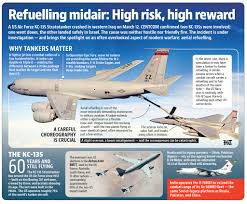
The Boeing KC-135 Stratotanker remains one of the most important aircraft ever built for the United States military. For more than six decades, this legendary tanker aircraft has served as the backbone of aerial refueling operations for the United States Air Force, helping fighter jets, bombers, reconnaissance aircraft, and allied forces stay in the sky longer and travel farther.
In modern warfare, air power depends heavily on endurance and flexibility. Aircraft often need to fly thousands of miles without landing. That is where the KC-135 Stratotanker becomes essential. Its ability to transfer fuel mid-air allows combat aircraft to continue missions without returning to base.
The aircraft recently returned to public attention following reports involving KC-135 operations in the Middle East, highlighting the aircraft’s ongoing role in global military strategy.
What Is the Boeing KC-135 Stratotanker?
The KC-135 Stratotanker is a military aerial refueling aircraft developed by Boeing for the US Air Force. It was designed during the Cold War to support long-range strategic bombers carrying nuclear weapons.
The aircraft first flew in 1956 and officially entered service in 1957. Even today, it remains active, making it one of the longest-serving military aircraft in aviation history.
Unlike ordinary transport aircraft, the KC-135’s main purpose is to refuel other planes while flying. This capability dramatically increases mission range and operational flexibility.
The Stratotanker was developed from Boeing’s famous “Dash-80” prototype, which also inspired the commercial Boeing 707. However, aviation experts note that the KC-135 is structurally different from the 707 despite their similar appearance.
Why Mid-Air Refueling Matters
Modern military operations depend on aerial refueling. Fighter aircraft often carry limited fuel because they prioritize speed, weapons, and maneuverability. Bombers and surveillance aircraft may also require extra fuel during long missions.
The KC-135 solves this problem by acting as a flying gas station.
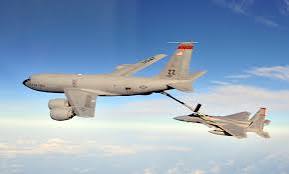
During refueling operations, the tanker extends a special flying boom toward the receiving aircraft. A trained boom operator controls the process from the rear section of the aircraft. The operation requires precise coordination and expert piloting from both crews.
This capability allows:
- Fighter jets to stay in combat zones longer
- Bombers to complete intercontinental missions
- Surveillance aircraft to conduct extended intelligence operations
- Cargo planes to fly greater distances
- Allied aircraft to receive support during coalition missions
Without aerial refueling, many long-range military operations would become impossible.
The KC-135’s Role in US Air Force Power
The KC-135 is often described as a force multiplier because it expands the reach of every aircraft it supports.
The US Air Force relies on the Stratotanker to maintain global reach, meaning the ability to deploy military power anywhere in the world quickly. According to official Air Force information, the KC-135 supports aircraft from the Air Force, Navy, Marine Corps, and allied nations.
Over the decades, the aircraft has supported numerous military operations, including:
- The Vietnam War
- Operation Desert Storm
- NATO operations
- Middle East deployments
- Indo-Pacific strategic missions
Even newer aircraft such as the Lockheed Martin F-35 Lightning II regularly receive fuel from KC-135 tankers during training and operational missions.
Key Features of the KC-135 Stratotanker
The KC-135 combines endurance, fuel capacity, and reliability.
Major Specifications
| Feature | Details |
|---|---|
| Manufacturer | Boeing |
| First Flight | 1956 |
| Entered Service | 1957 |
| Primary Role | Aerial Refueling |
| Crew | Pilot, Co-pilot, Boom Operator |
| Engines | Four turbofan engines |
| Top Speed | Around 530 mph |
| Maximum Takeoff Weight | 322,500 pounds |
| Maximum Fuel Transfer | About 200,000 pounds |
| Cargo Capacity | Up to 83,000 pounds |
The aircraft’s large fuel load enables it to refuel multiple aircraft during a single mission.
How the Flying Boom Works
One of the most fascinating parts of the KC-135 is its flying boom system.
The boom is a telescoping tube mounted underneath the aircraft’s tail. During refueling, the boom operator guides the nozzle into a receptacle on the receiving aircraft.
The process requires incredible precision because both aircraft travel at high speeds while maintaining stable formation flight.
Some KC-135 aircraft can also use a drogue system for aircraft equipped with refueling probes instead of boom receptacles. Certain tanker versions can even refuel two aircraft simultaneously using wing-mounted pods.
KC-135 Upgrades and Modernization
Despite its age, the KC-135 has undergone extensive modernization.
The original KC-135A models used older engines, but many were later upgraded into KC-135R and KC-135T variants with modern CFM-56 turbofan engines.
These upgrades improved:
- Fuel efficiency
- Noise reduction
- Fuel transfer capability
- Operational reliability
According to Air Force information, upgraded KC-135 variants can transfer significantly more fuel while operating more efficiently than earlier models.
Additional modernization programs upgraded navigation systems, communication technology, autopilot functions, and surveillance equipment.
These improvements helped the aircraft remain relevant even in modern air combat environments.
The Human Side: Crew and Training
Operating the KC-135 requires highly trained crews.
A standard mission usually includes:
- Pilot
- Co-pilot
- Boom operator
The boom operator plays a particularly important role because they directly control fuel transfer operations.
Military aerial refueling is considered one of aviation’s most demanding tasks. Pilots must maintain extremely close formation flight while turbulence, weather conditions, and nighttime operations create additional challenges.
Online aviation communities often describe aerial refueling as “precision flying at high speed,” emphasizing the skill required during combat operations.
Strategic Importance in Modern Warfare
The KC-135 remains strategically important because the US military operates globally.
Whether supporting operations in Europe, the Middle East, or the Indo-Pacific region, tanker aircraft enable American air power to function efficiently across long distances.
Without tanker support:
- Fighters would need frequent landings
- Bombers would have shorter operational ranges
- Rapid response missions would become harder
- Overseas deployments would require more staging bases
The tanker fleet effectively extends the operational range of the entire Air Force.
This strategic importance explains why reports involving KC-135 operations often attract international attention. Recent incidents near the Persian Gulf highlighted the aircraft’s ongoing role in sensitive global regions.
KC-135 vs KC-46 Pegasus
The Boeing KC-46 Pegasus is gradually replacing parts of the KC-135 fleet.
The KC-46 offers newer technology, modern defensive systems, and improved operational capabilities. However, the KC-135 continues to serve because of its reliability and extensive operational history.
Many defense analysts believe the KC-135 will remain active for years while the transition toward newer tankers continues.
This long service life demonstrates the aircraft’s durable design and continued military value.
The Aircraft’s Legacy
Few aircraft in military history have achieved the operational longevity of the KC-135.
For generations of Air Force personnel, the Stratotanker became a symbol of reliability and mission support. The aircraft has participated in nearly every major US military operation since the late 1950s.
The tanker’s importance extends beyond combat missions. It has also supported:
- Humanitarian operations
- Aeromedical evacuations
- Allied training exercises
- Strategic deterrence missions
The aircraft’s adaptability helped it remain useful across changing military eras.
Why Aviation Enthusiasts Admire the KC-135
The KC-135 enjoys strong popularity among aviation enthusiasts and military aircraft fans.
Many admire:
- Its classic Cold War design
- Its long operational history
- The technical challenge of aerial refueling
- Its role in modern military aviation
Online aviation communities frequently discuss the aircraft’s unique engineering and historic significance.
Its continued presence in active service also makes it a rare example of a military aircraft successfully adapting across multiple generations of warfare.
KC-135 and Global Military Alliances
The Stratotanker also supports allied operations worldwide.
The aircraft regularly works alongside NATO and partner nation aircraft during joint exercises and multinational missions.
This cooperation strengthens military coordination between allied countries and improves interoperability during crises or combat operations.
Because air refueling standards differ between aircraft types, KC-135 crews train extensively with international partners to ensure compatibility during coalition missions.
Challenges Facing the Aging Fleet
Although the KC-135 remains highly capable, maintaining an aging fleet presents challenges.
Some concerns include:
- Rising maintenance costs
- Airframe aging
- Increasing modernization demands
- Operational stress from global deployments
Defense planners continue balancing upgrades to existing aircraft while introducing replacement tankers.
Still, official studies suggest many KC-135 aircraft can continue operating safely for years with proper maintenance and modernization.
The Future of the KC-135 Stratotanker
The future of the KC-135 involves gradual transition rather than immediate retirement.
While newer tankers enter service, the KC-135 still provides essential operational capacity. The aircraft’s proven reliability and enormous logistical value ensure it remains part of US military aviation planning.
As global tensions and rapid deployment needs continue, aerial refueling will remain critical to military strategy.
That means the KC-135 legacy is far from over.
Conclusion
The Boeing KC-135 Stratotanker stands as one of the most important support aircraft ever built.
For more than 60 years, it has enabled the United States Air Force to project air power across the globe. From Cold War nuclear deterrence to modern combat operations, the aircraft has consistently proven its value.
Its ability to refuel aircraft mid-air transformed military aviation by extending operational range, increasing mission endurance, and supporting rapid global response capabilities.
Even as newer aircraft emerge, the KC-135 continues serving as a symbol of endurance, innovation, and strategic air power.
FAQs
What is the Boeing KC-135 Stratotanker?
The Boeing KC-135 Stratotanker is a military aerial refueling aircraft used mainly by the US Air Force to refuel aircraft during flight.
When did the KC-135 enter service?
The KC-135 officially entered service with the US Air Force in 1957.
What is the main role of the KC-135?
Its primary mission is aerial refueling, allowing military aircraft to fly longer distances without landing.
How does aerial refueling work?
The KC-135 uses a flying boom system controlled by a boom operator who connects the tanker to the receiving aircraft during flight.
Is the KC-135 still in service?
Yes, the KC-135 remains active and continues supporting global US military operations.
What aircraft does the KC-135 refuel?
The KC-135 can refuel fighters, bombers, reconnaissance aircraft, cargo planes, and allied military aircraft.
What aircraft will replace the KC-135?
The Boeing KC-46 Pegasus is gradually replacing portions of the KC-135 fleet.
Why is the KC-135 important?
The aircraft enables long-range military operations and helps maintain the global reach of the US Air Force.
How useful was this post?
Click on a star to rate it!
Average rating 0 / 5. Vote count: 0
No votes so far! Be the first to rate this post.
About the Author

usa5911.com
Administrator
Hi, I’m Gurdeep Singh, a professional content writer from India with over 3 years of experience in the field. I specialize in covering U.S. politics, delivering timely and engaging content tailored specifically for an American audience. Along with my dedicated team, we track and report on all the latest political trends, news, and in-depth analysis shaping the United States today. Our goal is to provide clear, factual, and compelling content that keeps readers informed and engaged with the ever-changing political landscape.