Nottingham Inquiry: Attack Failures Exposed, Police Under Fire, UK Shocked
Nottingham Inquiry: Attack Failures Exposed, Police Under Fire, UK Shocked
The Nottingham Inquiry has become one of the most closely watched public investigations in the United Kingdom, shedding light on the tragic 2023 attacks that left three people dead and several others seriously injured. What initially appeared to be an isolated act of violence has now unfolded into a complex web of systemic failures involving police, mental health services, and institutional decision-making.
As hearings progress in 2026, disturbing revelations have emerged—missed warning signs, unexecuted arrest warrants, flawed risk assessments, and critical communication breakdowns. The inquiry is not just about understanding what happened on that fateful day; it is about confronting uncomfortable truths regarding public safety systems in the UK.
This article explores the Nottingham Inquiry in depth, analyzing key findings, institutional failures, and the broader implications for policing and public trust.
Background: The 2023 Nottingham Attacks

On June 13, 2023, Nottingham witnessed a horrific sequence of events. Valdo Calocane, later diagnosed with paranoid schizophrenia, carried out a series of violent attacks that resulted in:
- The deaths of two university students and a school caretaker
- Serious injuries to three additional victims
- A citywide state of fear and confusion
Calocane later pleaded guilty to manslaughter on the grounds of diminished responsibility and was placed under an indefinite hospital order.
The brutality of the attack shocked the nation—but even more alarming were the revelations that followed.
What Is the Nottingham Inquiry?
The Nottingham Inquiry is a public investigation launched to examine the events, decisions, and failures that led up to the attacks. It officially began hearings in February 2026 under the leadership of Judge Deborah Taylor.
Its primary goals include:
- Understanding the timeline of events leading to the attacks
- Investigating police and NHS interactions with the attacker
- Identifying systemic failures across agencies
- Recommending changes to prevent future tragedies
Importantly, the inquiry cannot assign criminal liability but can establish facts and propose reforms.
Police Failures: A System Under Scrutiny
Failure to Execute Arrest Warrant
One of the most damning revelations is that police failed to arrest Calocane despite an outstanding warrant months before the attacks.
- A warrant had been issued in September 2022
- It was never executed
- Authorities later admitted this was a “serious failure”
This lapse allowed a known violent individual to remain free—raising serious questions about accountability and operational procedures.
Ignored Warning Signs
The inquiry revealed multiple earlier incidents involving Calocane, including:
- Breaking into student flats
- Causing a woman to jump from a window to escape him
- Displaying violent and erratic behavior
Despite these red flags, police did not treat the incidents with the seriousness required.
Failure to Check Records
Another critical failure was the lack of proper background checks:
- Officers failed to review Calocane’s police records
- They missed the active arrest warrant
- This oversight occurred during direct encounters with him
Such lapses suggest systemic issues rather than isolated mistakes.
The “Golden Hour” Controversy
One of the most controversial aspects of the inquiry revolves around the police response immediately after the first attacks.
During the so-called “golden hour”, crucial opportunities were allegedly missed:
- Poor communication between officers
- Inadequate suspect description
- Delayed deployment of armed units
- Missed chances to apprehend the attacker
These failures may have allowed the attacker to continue his rampage, ultimately leading to additional deaths.
Misjudgment of Threat Level
Shockingly, early police assessments underestimated the danger:
- The incident was initially treated as a robbery or isolated event
- The threat to the public was rated as “low”
- Critical resources were not deployed promptly
This misjudgment delayed decisive action and exposed the public to further risk.
Mental Health System Failures
The inquiry has also exposed serious shortcomings in mental health care.
Poor Risk Assessments
- Risk forms failed to reflect the true level of danger
- Key warning signs were not properly documented
Discharge Decisions
- Calocane was discharged from mental health services in 2022
- The decision has been described as “disastrous” by legal representatives
Lack of Coordination
There was a clear disconnect between healthcare providers and law enforcement, preventing a unified response to a high-risk individual.
Missed Opportunities Across Agencies
The Nottingham Inquiry highlights a broader issue: institutional fragmentation.
Different agencies—police, NHS, and local authorities—held pieces of information but failed to connect them.
According to official statements:
- Multiple reports had identified failures in isolation
- No single investigation examined the full picture
- Critical interactions between agencies were overlooked
This lack of coordination proved catastrophic.
Families Demand Accountability
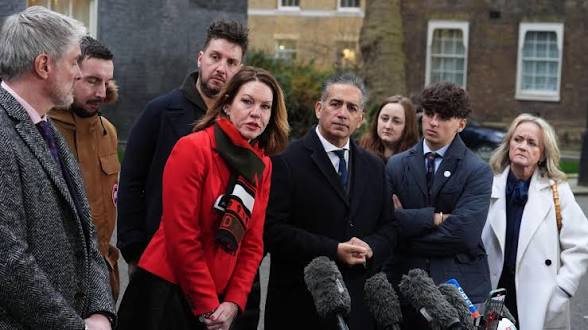
For the victims’ families, the inquiry is about more than facts—it is about justice.
Many have described the tragedy as:
- “Entirely predictable”
- The result of decades of systemic failures
- A failure of institutions meant to protect the public
Emotional testimonies during the hearings have highlighted the human cost of bureaucratic mistakes.
Public Reaction: Shock and Anger
The revelations have sparked widespread public outrage across the UK.
Key concerns include:
- Loss of trust in policing systems
- Fear of repeated failures
- Calls for urgent reform
Survivors have even warned that similar incidents could happen again if systemic issues remain unaddressed.
Key Issues Emerging from the Inquiry
1. Systemic Failures Over Individual Errors
The inquiry suggests that the tragedy was not caused by one mistake—but by a chain of failures.
2. Poor Inter-Agency Communication
Lack of coordination between police and healthcare systems proved critical.
3. Inadequate Risk Management
Authorities underestimated the threat posed by a known high-risk individual.
4. Accountability Gaps
Questions remain about who is responsible—and how accountability will be enforced.
What Happens Next?
The Nottingham Inquiry is ongoing, with hearings continuing through 2026 and a final report expected by 2027.
The report is expected to:
- Provide a detailed timeline of events
- Identify systemic failures
- Recommend policy and operational reforms
While it cannot assign legal blame, its findings could reshape public safety policies across the UK.
Lessons for the Future
The Nottingham Inquiry offers critical lessons:
- Early intervention matters in cases involving mental health risks
- Data sharing between agencies must improve
- Police procedures need reform to avoid operational oversights
- Public safety must be prioritized over bureaucratic processes
Without meaningful changes, experts warn that similar tragedies could occur again.
Conclusion
The Nottingham Inquiry has exposed a deeply troubling reality: a preventable tragedy enabled by systemic failures across multiple institutions.
From missed arrest opportunities to flawed risk assessments and poor communication, the case highlights the urgent need for reform in the UK’s public safety framework.
As the inquiry continues, one question looms large—will these lessons lead to real change, or will history repeat itself?
For the families of the victims and the wider public, the answer cannot come soon enough.
FAQs
1. What is the Nottingham Inquiry?
The Nottingham Inquiry is a public investigation into the 2023 attacks, examining failures in policing, mental health services, and institutional coordination.
2. What were the main police failures?
Key failures include not executing an arrest warrant, ignoring warning signs, poor communication, and underestimating the threat level.
3. Who was responsible for the attacks?
Valdo Calocane carried out the attacks and was later placed in a secure hospital after pleading guilty to manslaughter due to diminished responsibility.
4. What role did mental health services play?
Mental health services failed to adequately assess risk and discharged the attacker despite warning signs.
5. When will the inquiry conclude?
The final report is expected by 2027, with recommendations aimed at preventing future tragedies.
6. Can such incidents happen again?
Experts and survivors warn that without systemic reforms, similar incidents remain a real risk.
How useful was this post?
Click on a star to rate it!
Average rating 0 / 5. Vote count: 0
No votes so far! Be the first to rate this post.
About the Author

usa5911.com
Administrator
Hi, I’m Gurdeep Singh, a professional content writer from India with over 3 years of experience in the field. I specialize in covering U.S. politics, delivering timely and engaging content tailored specifically for an American audience. Along with my dedicated team, we track and report on all the latest political trends, news, and in-depth analysis shaping the United States today. Our goal is to provide clear, factual, and compelling content that keeps readers informed and engaged with the ever-changing political landscape.