Oil Prices Shock: War Impact, $100+ Surge, Global Economy Hit
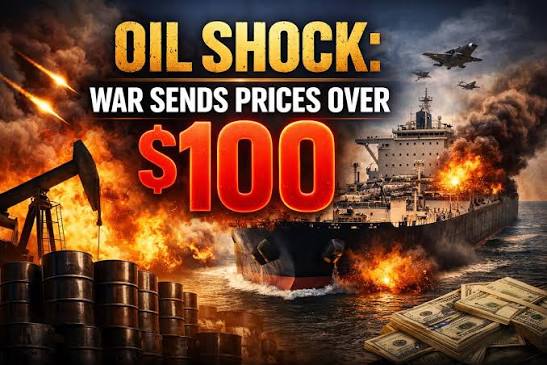
The global economy is once again facing turbulence as oil prices surge past the critical $100-per-barrel mark. Triggered by escalating geopolitical tensions—particularly the ongoing Iran conflict—this sudden spike has reignited fears of inflation, economic slowdown, and market instability.
In 2026, the oil market has experienced extreme volatility, with prices fluctuating between $98 and over $110 per barrel in just days. This instability is not just a market phenomenon—it is a signal of deeper structural risks facing the global economy.
This article explores the causes behind the oil price shock, its immediate and long-term effects, and what it means for consumers, businesses, and governments worldwide.
What Triggered the Oil Price Surge?

War and Supply Disruptions
The primary driver behind the oil price surge is the ongoing conflict involving Iran, which has severely disrupted global energy supply chains.
- The Strait of Hormuz, a critical oil transit route, handles nearly 20% of global oil supply
- The war has restricted or halted shipments, removing millions of barrels from the market
- Oil production losses are estimated in the hundreds of millions of barrels
As a result, global supply has tightened dramatically while demand remains strong.
$100+ Oil: A Psychological and Economic Threshold
Crossing the $100 mark is more than symbolic—it often signals:
- Rising inflation expectations
- Increased fuel and transport costs
- Potential central bank intervention
Recent reports show Brent crude hovering around $103–$110, with spikes even higher during peak tensions.
The Role of the Strait of Hormuz
Why This Route Matters
The Strait of Hormuz is one of the world’s most critical energy chokepoints:
- Handles roughly one-fifth of global oil trade
- Connects Middle Eastern oil producers to global markets
- Any disruption causes immediate price spikes
The ongoing conflict has led to severe restrictions, making it the biggest oil supply shock since the 1970s.
Historic Supply Shock
According to analysts, this crisis represents:
- The largest disruption in oil market history
- Up to 12 million barrels per day affected
This imbalance between supply and demand is the core reason behind the price surge.
Impact on the Global Economy
1. Inflation Surge
Higher oil prices directly impact:
- Transportation costs
- Manufacturing expenses
- Food prices
Economic estimates suggest:
- Inflation could rise by 0.7 percentage points globally
- Energy-driven inflation is spreading across industries
2. Slower Economic Growth
The oil shock is expected to reduce global GDP growth:
- Growth may fall by 0.2 percentage points in 2026
- Europe and Asia are particularly vulnerable
3. Rising Costs for Businesses
Companies across sectors are feeling the pressure:
- Airlines adding fuel surcharges
- Manufacturing costs rising sharply
- Supply chain disruptions increasing
A UK survey found businesses increasing prices at the fastest rate in over three years due to fuel costs.
Sector-Wise Impact
Aviation Industry
- Jet fuel prices have surged dramatically
- Airlines are increasing ticket prices
- Flight routes are longer due to airspace closures
Manufacturing & Industry
- Higher raw material costs (plastics, chemicals, metals)
- Profit margins shrinking
Example: A major European auto supplier expects losses due to rising oil-linked costs.
Energy Sector
While consumers suffer, oil-producing nations benefit:
- Increased revenues for exporters
- Countries like Russia seeing windfall gains
Impact on Everyday Consumers
Fuel Prices
- Petrol and diesel costs are rising globally
- Daily expenses for households increasing
Cost of Living Crisis
- Higher transport costs
- Rising food prices
- Increased utility bills
This creates a ripple effect across the entire economy, reducing purchasing power.
Financial Markets Reaction
Stock Markets
Interestingly, markets have shown resilience:
- Stocks have risen despite high oil prices
- Investors are betting on short-term disruptions
Currency and Commodities
- Gold prices rising (safe-haven demand)
- Currency fluctuations increasing
However, prolonged high oil prices could eventually trigger a downturn.
Could Oil Reach $150 or $200?
Some analysts warn that:
- Oil could hit $150–$200 per barrel in extreme scenarios
- This would likely trigger a global recession
The key factors include:
- Duration of the war
- Continued closure of shipping routes
- Lack of alternative supply
Government and Central Bank Response
Policy Measures
Governments may respond with:
- Fuel subsidies
- Strategic oil reserve releases
- Price controls
Interest Rate Decisions
Central banks face a dilemma:
- Raise rates to control inflation
- Or support growth amid economic slowdown
Long-Term Implications
Shift to Renewable Energy
This crisis may accelerate:
- Investment in renewable energy
- Reduced reliance on fossil fuels
Energy Security Focus
Countries will likely:
- Diversify energy sources
- Build strategic reserves
Structural Economic Changes
The global economy could see:
- Reduced oil dependency
- Increased regional supply chains
Is the Global Economy Heading Toward Recession?
Not necessarily—but risks are rising.
Factors Supporting Stability:
- Strong post-pandemic recovery
- Government interventions
- Reduced oil dependency compared to past decades
Risk Factors:
- Prolonged war
- Sustained high oil prices
- Supply chain breakdown
Future Outlook
Short-Term
- Continued volatility in oil markets
- Prices likely to remain above $100
Medium-Term
- Possible stabilization if peace agreements are reached
- Supply chains may gradually recover
Worst-Case Scenario
- Oil above $150
- Global recession
- Severe inflation crisis
Conclusion
The oil price shock of 2026 is more than just a spike—it is a reflection of deep geopolitical tensions and structural vulnerabilities in the global economy.
With prices crossing $100 and potentially rising further, the impact is being felt across industries, households, and financial systems worldwide. While the global economy has shown resilience so far, the risks of inflation, slower growth, and even recession remain real.
The coming months will be critical in determining whether this crisis stabilizes—or escalates into a full-blown economic shock.
FAQs
1. Why are oil prices rising in 2026?
Oil prices are rising mainly due to the Iran conflict, which has disrupted global supply and restricted shipments through the Strait of Hormuz.
2. Why is $100 oil significant?
It signals higher inflation, increased fuel costs, and potential economic slowdown.
3. How does high oil price affect daily life?
It increases fuel, food, transport, and electricity costs, leading to a higher cost of living.
4. Which countries are most affected?
Oil-importing countries like India, Japan, and European nations are most vulnerable.
5. Can oil prices go higher?
Yes, analysts warn prices could reach $150–$200 if the conflict worsens.
6. Will this cause a global recession?
Not immediately, but prolonged high prices could significantly increase recession risks.
How useful was this post?
Click on a star to rate it!
Average rating 0 / 5. Vote count: 0
No votes so far! Be the first to rate this post.
About the Author

usa5911.com
Administrator
Hi, I’m Gurdeep Singh, a professional content writer from India with over 3 years of experience in the field. I specialize in covering U.S. politics, delivering timely and engaging content tailored specifically for an American audience. Along with my dedicated team, we track and report on all the latest political trends, news, and in-depth analysis shaping the United States today. Our goal is to provide clear, factual, and compelling content that keeps readers informed and engaged with the ever-changing political landscape.