Iran California Threat : Drone Warning, FBI Alert, West Coast Security
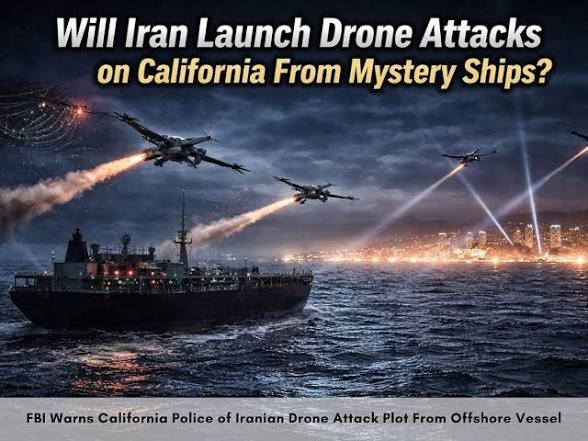
The Iran California Threat has become a major topic in global security discussions after reports emerged that U.S. authorities warned about a possible Iranian drone attack targeting the West Coast. The alert, issued by the Federal Bureau of Investigation, raised concerns among law enforcement agencies in California and across the United States.
According to intelligence reports distributed to local authorities, Iran could potentially launch unmanned aerial vehicles (UAVs) from offshore vessels targeting locations along the California coastline. However, officials stress that the warning is precautionary and that there is currently no confirmed or imminent threat.
This development has heightened discussions about homeland security, geopolitical tensions, and the evolving role of drones in modern warfare.
In this article, we explore the Iran California threat, the FBI warning, the geopolitical background, and the potential implications for West Coast security.
Understanding the Iran California Threat
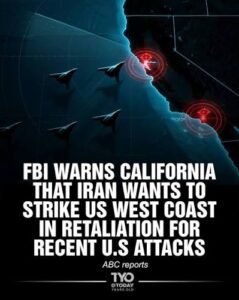
The phrase Iran California Threat refers to intelligence reports suggesting Iran might attempt retaliation against the United States using drone attacks targeting the West Coast.
According to federal alerts shared with law enforcement agencies, Iran allegedly explored the possibility of launching surprise drone attacks from a vessel positioned off the U.S. coastline.
The warning suggested that drones could be used to strike unspecified targets in California if geopolitical tensions escalated or if the United States carried out military operations against Iran.
Although the information was categorized as unverified intelligence, authorities took it seriously due to the strategic implications of such an attack.
Key points from the alert include:
Possible drone launches from offshore vessels
Potential targets in California
No confirmed timeline or location
Distributed to local law enforcement as a precaution
Officials emphasize that the intelligence did not provide specific targets or operational details, indicating it was an early-stage warning rather than an immediate threat.
FBI Warning and Law Enforcement Response
The Federal Bureau of Investigation issued the alert to local police departments across California to ensure readiness.
Law enforcement agencies in cities such as:
San Francisco
Oakland
San Jose
Los Angeles
were informed about the potential risk and advised to increase vigilance.
Authorities also coordinated with federal agencies including:
United States Department of Homeland Security
United States Coast Guard
These agencies began monitoring maritime activity and potential drone threats along the Pacific coastline.
Security measures included:
Intelligence sharing across agencies
Monitoring suspicious maritime activity
Increased drone detection capabilities
Emergency response planning
Despite the heightened vigilance, officials reiterated that no credible threat has been identified so far.
Why California Could Be a Potential Target
California is one of the most strategically important regions in the United States.
Several factors make it a potential target in geopolitical conflicts.
1. Economic Importance
California has the largest economy among U.S. states, with major industries including technology, entertainment, and defense.
Key economic hubs include:
Silicon Valley
Los Angeles
San Diego
An attack on infrastructure in these areas could have major economic consequences.
2. Military Presence
California hosts several significant military installations, including:
Travis Air Force Base
Naval Base San Diego
These bases play a critical role in U.S. military operations in the Pacific.
3. Symbolic Impact
California represents American innovation and cultural influence worldwide. Any attack on the state could have strong symbolic implications.
Drone Warfare and Iran’s Capabilities
Iran has developed a sophisticated drone program over the past decade.
One of the most widely known Iranian drones is the HESA Shahed 136, a one-way attack drone used in multiple conflicts.
These drones are known for:
Long operational range
Low production cost
Autonomous navigation capabilities
The Shahed-136 drone can travel long distances and is designed for kamikaze-style attacks, making it a significant concern for defense planners.
Iran has used drones extensively in regional conflicts, including strikes against military targets in the Middle East.
Geopolitical Context Behind the Threat
The FBI warning comes amid rising tensions between Iran and the United States.
Recent events contributing to the tensions include:
Military operations involving U.S. and allied forces
Iranian retaliation against American military positions
Escalating conflicts in the Middle East
During the 2026 Iran conflict, Iran launched drone and missile strikes targeting U.S. military facilities in the region.
These developments increased fears that the conflict could expand beyond the Middle East.
Some intelligence analysts worry that Iran might seek asymmetric retaliation, targeting U.S. interests outside traditional battlefields.
California’s Security Measures
In response to the threat alert, California officials increased their security posture.
The office of Gavin Newsom, the governor of California, confirmed that the state had activated emergency monitoring systems.
The state also opened an operations center to track potential threats.
Security measures implemented include:
Increased monitoring of drone activity
Coordination with federal intelligence agencies
Strengthened port and maritime surveillance
Emergency preparedness drills
Governor Newsom emphasized that authorities are prepared but not alarmed, noting there is no evidence of an immediate attack.
Public Reaction and Media Coverage
The Iran California Threat quickly became a trending topic across social media and news platforms.
Public reactions ranged from concern to skepticism.
Some analysts pointed out that intelligence warnings are often issued to ensure preparedness even when threats are uncertain.
Others highlighted that drone warfare has become increasingly accessible, making such scenarios plausible.
Media outlets also reported that major events in California increased security due to the warning.
For example, security planning for major gatherings and events was reportedly adjusted as a precaution.
Experts’ Views on the Threat
Security experts say that while the threat should be taken seriously, it does not necessarily indicate an imminent attack.
Several reasons explain why intelligence agencies issued the warning.
Early Threat Detection
Authorities often share preliminary intelligence to ensure preparedness.
Drone Technology Risks
Low-cost drones can be difficult to detect and intercept, especially if launched from offshore vessels.
Global Security Environment
The global security environment has become more complex, with non-traditional attack methods becoming more common.
Experts note that the warning highlights the changing nature of modern warfare, where drones, cyberattacks, and unconventional tactics play an increasingly important role.
The Future of West Coast Security
The Iran California threat has prompted discussions about how the United States should strengthen homeland defense.
Possible measures include:
Advanced Drone Detection
Deploying radar systems and AI-powered monitoring tools to detect unauthorized drones.
Maritime Surveillance
Increasing patrols and monitoring vessels operating off the U.S. coastline.
Counter-Drone Technology
Developing systems capable of disabling or intercepting hostile drones.
Interagency Coordination
Improving collaboration between federal, state, and local authorities.
These measures aim to prevent potential attacks and improve response capabilities.
Why the Threat Still Matters
Even though officials say there is no immediate danger, the Iran California threat highlights several important security challenges.
The increasing role of drones in global conflicts
The vulnerability of civilian infrastructure
The need for improved homeland defense systems
Rising geopolitical tensions between global powers
The situation also demonstrates how intelligence alerts can influence security planning even when threats remain hypothetical.
Conclusion
The Iran California Threat has sparked widespread discussion about national security and the evolving risks posed by drone warfare.
While the Federal Bureau of Investigation warned that Iran might consider launching drones toward California from offshore vessels, authorities emphasize that no confirmed or imminent threat exists.
Nevertheless, the alert has prompted increased security coordination across federal, state, and local agencies.
As global tensions continue to evolve, the situation serves as a reminder that modern security threats are increasingly complex, requiring constant vigilance and cooperation.
For now, California officials say residents should remain calm while authorities continue monitoring potential risks.
FAQs
What is the Iran California Threat?
The Iran California Threat refers to intelligence reports warning that Iran might attempt a drone attack targeting California or the U.S. West Coast.
Did the FBI confirm a drone attack plan?
No. The FBI issued a precautionary alert based on unverified intelligence. Officials say there is no confirmed or imminent threat.
How could drones reach California?
Reports suggest drones could theoretically be launched from an offshore vessel positioned near the U.S. coastline.
Is California currently in danger?
Authorities say there is no immediate threat, but security agencies remain vigilant.
Why are drones a concern for national security?
Drones are relatively inexpensive, can travel long distances, and are harder to detect compared to traditional weapons.
How useful was this post?
Click on a star to rate it!
Average rating 0 / 5. Vote count: 0
No votes so far! Be the first to rate this post.
About the Author

usa5911.com
Administrator
Hi, I’m Gurdeep Singh, a professional content writer from India with over 3 years of experience in the field. I specialize in covering U.S. politics, delivering timely and engaging content tailored specifically for an American audience. Along with my dedicated team, we track and report on all the latest political trends, news, and in-depth analysis shaping the United States today. Our goal is to provide clear, factual, and compelling content that keeps readers informed and engaged with the ever-changing political landscape.