Prince Andrew Arrested: Epstein Scandal, UK Police Action, Royal Shock
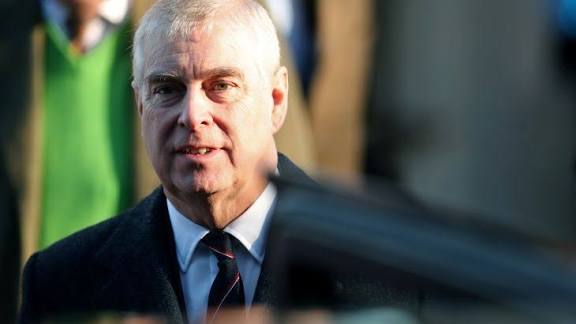
In a dramatic and unprecedented turn of events that has shaken the British establishment, Prince Andrew — now known as Andrew Mountbatten-Windsor — was arrested on February 19, 2026, on suspicion of misconduct in public office connected to his long-standing relationship with convicted sex offender Jeffrey Epstein. This development marks the most significant legal crisis for the modern British monarchy in decades and signals deep international concern over accountability and transparency in public life.
The Arrest: What Happened?
Shortly after 8 a.m. on Thursday, UK police from Thames Valley Police arrived at Wood Farm, located on the Sandringham Estate in Norfolk, England, to arrest Andrew Mountbatten-Windsor. Unmarked police vehicles and plainclothes officers carried out the operation, taking the former royal into custody on suspicion of misconduct in public office.
He was detained on his 66th birthday, adding a dramatic twist that underscores how far his public reputation has fallen since his ties to Epstein began attracting scrutiny.
The arrest is part of an ongoing police investigation into allegations that while serving as Britain’s trade envoy in the early 2010s, Andrew may have forwarded sensitive government information to Epstein — a connection now under intense legal and public scrutiny.
Background: The Epstein Scandal and Andrew’s Role
Andrew’s relationship with Jeffrey Epstein dates back more than 15 years and has long caused controversy. Epstein, a wealthy financier, was arrested in the U.S. in 2019 on federal sex trafficking charges and died while awaiting trial. His circle included high-profile political and social figures, among them Andrew — whose association raised questions about judgment and propriety.
Over the years, documents and emails released by the U.S. Department of Justice allegedly showed Andrew corresponding with Epstein years after Epstein’s 2008 conviction for soliciting an underage girl. These records suggested he had shared privileged insight about official government trips and commercial interests — material that, under UK rules, should not be shared externally.
Some of the evidence reportedly included forwarded UK government reports — on visits to Hong Kong, Vietnam, and Singapore — which seemed to be sent to Epstein shortly after Andrew received them. These revelations triggered renewed police interest and, ultimately, Thursday’s arrest.
Why the Arrest Is Historic
The arrest of a member of the British royal family on criminal suspicion is virtually unprecedented in modern history. Although royals have faced fines and minor convictions (including Princess Anne’s speeding conviction in 2001), no senior royal has been formally arrested in Britain since the reign of King Charles I in 1649.
This has massive symbolic importance:
It confirms that no one is above the law, regardless of status.
It tests the legal system’s willingness to pursue complex cases involving public figures.
It invites debate on transparency, privilege, and responsibility in the highest echelons of society.
Police Statement and Investigation Details
Thames Valley Police issued a brief statement confirming the arrest of “a man in his 60s” on suspicion of misconduct in public office. Searches were also conducted at residences associated with him in Norfolk and Berkshire.
The force emphasized that the ongoing investigation is complex, with both local and national significance, and warrants careful handling.
The Crown Prosecution Service (CPS) lists misconduct in public office as a common law offense, carrying a maximum sentence of life imprisonment — highlighting the gravity of the allegations, should they ultimately lead to charges and conviction.
Royal Response: King Charles Speaks Out
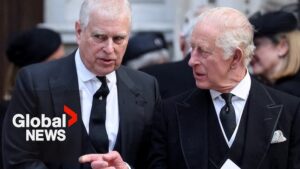
In response to the arrest, King Charles III issued a statement underscoring his commitment to the rule of law and cooperation with authorities in the investigation. He reiterated that “the law must take its course” and reaffirmed his support for the legal process without interference.
The Palace has also signaled readiness to support ongoing investigations, should prosecutors seek further cooperation.
Public and Political Reaction
Reactions to the arrest span from shock to demands for justice:
UK Prime Minister Sir Keir Starmer has emphasized that “no one is above the law,” stressing the importance of the investigation’s integrity.
Advocacy groups such as Republic have highlighted their role in reporting evidence to the police and pushing for legal accountability.
Victims’ advocates, including the family of Virginia Giuffre — an alleged Epstein victim who died in 2025 — say the arrest demonstrates that accountability can reach even powerful figures.
Social media and public discourse have also erupted, with debates about privilege, justice, and the monarchy’s future playing out across platforms.
Possible Legal Outcomes
At this stage, Andrew remains in police custody. The investigation could proceed in several directions:
Charges Filed: Police may refer evidence to the Crown Prosecution Service for formal criminal charges.
Further Detention or Interview: Andrew may be held longer for questioning under strict legal protections.
Release Pending Investigation: He could be released without charges as inquiries continue.
No Charges: If investigators find insufficient evidence, the case may collapse.
The complexity lies not just in proving potential misconduct, but in establishing the legal thresholds for a conviction under UK law — especially one involving high-profile, political contexts.
What This Means for the Monarchy
The British monarchy — already facing scrutiny over relevance and privilege — now confronts one of its most serious challenges in modern times. This arrest could have long-lasting effects on:
Public trust in the royal institution
Calls for reform or reduced royal privileges
International perceptions of UK governance
Debate over constitutional roles and legal immunity
Even if Andrew is never convicted, the reputational impact and associated scrutiny may persist for years.
FAQs (Frequently Asked Questions)
Q1. Why was Prince Andrew arrested?
Prince Andrew, referred to now as Andrew Mountbatten-Windsor, was arrested on February 19, 2026, on suspicion of misconduct in public office linked to allegations that he shared sensitive government information with Jeffrey Epstein during his time as a UK trade envoy.
Q2. Is this the first time a British royal has been arrested?
Yes, in modern history this is the first recorded arrest of a senior royal figure in the UK since the 17th century.
Q3. What is misconduct in public office?
This is a common law offense in the UK involving serious abuse or neglect of responsibilities by someone holding public office; it carries a maximum life sentence.
Q4. What role did Jeffrey Epstein play in this?
Epstein was a convicted sex offender whose extensive records and released files allegedly showed significant correspondence with Andrew, including potentially inappropriate access to sensitive information.
Q5. What has the royal family said about the arrest?
King Charles III publicly supported the legal process, emphasizing that the law must take its course and that the monarchy would cooperate with authorities.
Conclusion
Prince Andrew’s arrest represents a seismic moment in British legal and royal history, blending elements of international scandal, political accountability, and constitutional implications. As the investigation unfolds, the world continues to watch closely, scrutinizing not just the facts of the case, but what it signifies about power, privilege, and justice in the 21st century.
How useful was this post?
Click on a star to rate it!
Average rating 0 / 5. Vote count: 0
No votes so far! Be the first to rate this post.
About the Author

usa5911.com
Administrator
Hi, I’m Gurdeep Singh, a professional content writer from India with over 3 years of experience in the field. I specialize in covering U.S. politics, delivering timely and engaging content tailored specifically for an American audience. Along with my dedicated team, we track and report on all the latest political trends, news, and in-depth analysis shaping the United States today. Our goal is to provide clear, factual, and compelling content that keeps readers informed and engaged with the ever-changing political landscape.