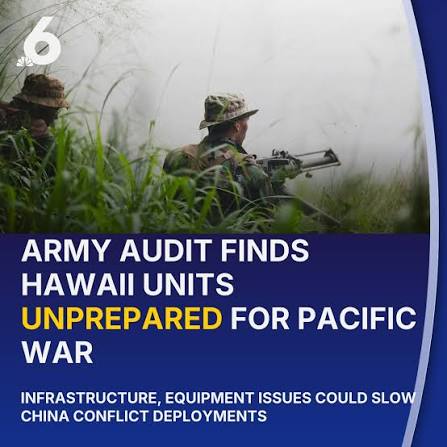
A new US Army audit has raised serious questions about America’s ability to rapidly deploy military forces from Hawaii during a potential conflict in the Indo-Pacific region. The findings highlight problems with equipment readiness, military infrastructure, deployment training and administrative responsibilities.
The report, completed in April 2026 by the Army Audit Agency, warns that unresolved problems could prevent Army units from deploying effectively during an unexpected military emergency.
The findings are particularly important because Hawaii serves as a major military hub for American operations across the Pacific. The islands support thousands of active-duty personnel, important Army headquarters and military formations that could play a significant role in a regional conflict.
According to reporting by CNN, which obtained the audit through the Freedom of Information Act, Army auditors identified weaknesses at deployment support facilities responsible for preparing troops and equipment for movement.
Among the concerns were flooded maintenance bays, inadequate logistics equipment readiness and gaps in deployment support training.
The report also identified confusion about which military organizations were responsible for fixing problems and providing the necessary funding.
These findings have raised questions about whether the Army can move forces from Hawaii quickly enough during a sudden crisis.
However, the audit does not establish that every Army unit in Hawaii is unprepared. Instead, it highlights weaknesses in the support systems that help units move personnel, vehicles and other military equipment.
Why Hawaii Is Critical to US Military Operations in the Pacific
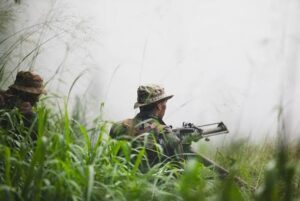
Hawaii occupies an important position in American military planning because of its location between the continental United States and the western Pacific.
The islands provide a major logistical connection between American military installations and strategically important locations across the Indo-Pacific.
US military planners view Hawaii as a relatively secure location from which personnel, supplies and equipment can move toward potential operational areas.
This role becomes particularly important during a crisis involving China and other regional security challenges.
Hawaii hosts approximately 47,000 active-duty US military personnel across different services and commands. Its military presence includes several important Army organizations.
These include:
The 25th Infantry Division.
US Army Pacific headquarters.
US Indo-Pacific Command.
Important military logistics and deployment support facilities.
The 25th Infantry Division is especially important because it is designed for operations in the Indo-Pacific region.
Its soldiers train for challenging environments, including jungle and island operations.
Military planners depend on these forces to respond to regional emergencies and support American interests.
However, deploying combat units requires much more than having trained soldiers available.
Military equipment must be inspected, repaired, prepared and transported. Supplies must be organized, transportation arrangements must be completed, and support personnel must coordinate the movement.
If these systems experience delays, even highly trained military formations could face difficulties reaching their operational destinations.
That is why the Hawaii audit has attracted attention beyond the Army’s internal management structure.
It raises questions about the entire process of projecting American military power across the Pacific.
What Did the Army Audit Discover?
The Army Audit Agency identified several weaknesses affecting deployment support operations in Hawaii.
The findings focused on the infrastructure and logistical systems that help military units prepare for rapid movement.
Although these problems might appear administrative or technical, they can have significant consequences during an emergency.
A military unit cannot deploy effectively if the equipment required for transportation is unavailable, maintenance facilities cannot operate properly or personnel lack the necessary preparation.
The major concerns included the following.
1. Flooded Maintenance Bays
One of the most concerning findings involved flooded maintenance bays at deployment support facilities.
Maintenance areas are essential to military readiness because they allow technicians to inspect, repair and prepare equipment before deployment.
Military vehicles and supporting equipment require regular maintenance.
If maintenance facilities experience flooding, repair operations may become more difficult.
Water damage can also create additional maintenance requirements and disrupt normal working conditions.
During routine operations, these problems may result in delays that can be managed through alternative arrangements.
However, during a sudden military emergency, even relatively small maintenance delays could affect deployment schedules.
The audit’s findings therefore highlight the importance of maintaining reliable infrastructure.
Military installations must remain operational during difficult conditions, particularly when they serve as major deployment centers.
2. Problems With Logistics Equipment Readiness
The audit also identified concerns about the readiness of logistics equipment.
Logistics equipment plays a central role in moving military forces.
It supports the transportation, handling and preparation of vehicles, supplies and other materials.
Without reliable logistics equipment, military personnel may struggle to organize and move the resources required for an operation.
Equipment shortages or maintenance problems can create delays throughout the deployment process.
For example, a combat unit might complete its training and receive deployment instructions, but supporting equipment could still require inspection or repair.
This creates a gap between a unit being ready to fight and being ready to move.
The Hawaii findings suggest that the Army needs to strengthen this important part of its deployment system.
3. Deployment Support Training Gaps
Auditors also identified gaps in deployment support training.
Training is necessary because military deployment involves coordination between different personnel and organizations.
Soldiers and support staff must understand their responsibilities.
They must know how to prepare equipment, organize transportation, complete documentation and respond to unexpected logistical problems.
When training is incomplete, personnel may struggle to perform these responsibilities quickly.
This becomes particularly important during a no-notice contingency.
A no-notice deployment requires military organizations to respond without the benefit of an extended preparation period.
Therefore, deployment support personnel must regularly practice their responsibilities.
The audit suggests that additional training and practical exercises could help improve the Army’s ability to move forces from Hawaii.
Administrative Confusion Creates Additional Deployment Challenges
The audit identified another significant issue: confusion over the responsibilities of a field support battalion assigned to support military deployments from Hawaii.
The Army Field Support Battalion-Hawaii plays an important role in providing logistical support to Army forces.
However, auditors found disagreements among different Army headquarters about who should develop solutions and provide funding for the identified problems.
This administrative confusion is important because military readiness depends on clear leadership and accountability.
When different organizations disagree about their responsibilities, necessary improvements can take longer to complete.
For example, one organization may identify an infrastructure problem but expect another command to provide funding.
Another organization may believe that the responsibility belongs to the installation rather than the operational headquarters.
Such disagreements can slow decision-making.
During normal operations, administrative delays may be inconvenient.
During an emergency, however, unclear responsibilities could become a serious operational weakness.
The Army needs a coordinated approach that identifies which organizations are responsible for:
Maintaining deployment facilities.
Repairing damaged infrastructure.
Providing logistics equipment.
Organizing deployment support training.
Allocating funding for improvements.
Monitoring readiness standards.
Clear responsibility is essential to ensure that identified problems receive attention before an emergency occurs.
The audit’s findings suggest that improving administrative coordination should be an important part of the Army’s response.
Army Pacific Leaders Previously Expressed Concerns
One particularly important detail in the audit concerns the decision to conduct the review.
According to CNN’s reporting, a senior official from US Army Pacific requested the audit because leaders lacked confidence in US Army Garrison Hawaii’s ability to function as a power projection platform.
A power projection platform is a military location that allows armed forces to move personnel, equipment and supplies toward operational areas.
The term is particularly relevant to Hawaii because of its strategic position in the Pacific.
The decision to request an internal review suggests that concerns about deployment support existed within the Army before the findings became public.
It also demonstrates why military readiness assessments are important.
Commanders need accurate information about the condition of their facilities, the availability of equipment and the effectiveness of their support organizations.
Without reliable assessments, military leaders could make deployment plans based on capabilities that are not fully available.
The audit provided an opportunity to identify weaknesses and develop corrective actions.
However, identifying problems is only the first step.
The Army must also ensure that improvements are implemented, properly funded and regularly evaluated.
US Army Responds to the Audit Findings
The Army has acknowledged opportunities to strengthen deployment support operations in Hawaii.
A spokesperson for US Army Pacific told CNN that the command recognized the audit’s findings concerning unit movement support at the multifunctional deployment facility.
The spokesperson also emphasized that the Army continues to evaluate its ability to project combat power.
According to the command, the military has taken steps to strengthen deployment support.
It is also addressing infrastructure and equipment requirements through existing prioritization, coordination and resourcing processes.
The Army maintains that it remains prepared to meet global contingency requirements.
This response is important because the audit describes weaknesses that require attention, rather than establishing that the military cannot deploy from Hawaii under any circumstances.
The command also indicated that military exercises would provide recurring opportunities to deploy troops and equipment while practicing sustainment operations.
These exercises can help identify problems before they affect real-world missions.
However, the effectiveness of this approach will depend on whether the Army can translate lessons from training into practical improvements.
The public findings do not establish that every recommendation has already been completed.
Therefore, continued monitoring will be important.
Why the Audit Matters for a Potential Conflict With China
The audit has attracted attention because of increasing military competition between the United States and China.
Both countries consider the Indo-Pacific strategically important.
The region contains major shipping routes, important economic centers and several sensitive security flashpoints.
A military confrontation could require the United States to move personnel, aircraft, ships, vehicles and supplies across enormous distances.
Hawaii would likely play an important supporting role in such an operation.
However, China’s expanding military capabilities have changed the way American defense planners approach a potential Pacific conflict.
China has invested heavily in modern military technology, including ballistic missiles, hypersonic weapons and naval capabilities.
These developments have raised concerns about the vulnerability of large military installations closer to the Asian mainland.
American military planners increasingly recognize the importance of distributing forces across multiple locations.
This approach could make it more difficult for an opponent to disrupt military operations by targeting a small number of major bases.
Nevertheless, distributed operations create additional logistical challenges.
Military organizations must coordinate supplies, maintenance, transportation and communications across a much larger geographic area.
Hawaii remains important because it offers a relatively secure location for organizing and supporting military movements.
However, the audit suggests that the infrastructure supporting these operations needs improvement.
If deployment facilities cannot function efficiently, the Army could face delays when moving forces toward the western Pacific.
This does not mean a conflict is inevitable.
Rather, it highlights the importance of preparing military infrastructure before a crisis develops.
The 25th Infantry Division’s Strategic Importance
The 25th Infantry Division is one of the most important Army formations stationed in Hawaii.
Known as the Tropic Lightning Division, it specializes in operations suited to the Indo-Pacific environment.
Its soldiers train for difficult conditions, including jungle terrain, tropical weather and complex island environments.
The division’s forward position makes it valuable for responding to regional military requirements.
Defense strategy expert Michael Mazza of the Institute for Indo-Pacific Security discussed the division’s importance in comments reported by CNN.
Mazza described it as the most forward Army unit designed to deploy into the region.
He also warned that delays or failures in Hawaii’s deployment processes could affect the Army’s ability to enter a western Pacific conflict.
This concern illustrates the connection between military logistics and combat readiness.
A division may have trained personnel, modern weapons and experienced commanders.
However, those capabilities cannot be fully used if the organization cannot move its forces and supporting equipment when required.
The deployment process must therefore work as effectively as the combat units themselves.
The audit’s findings make this issue particularly important for the 25th Infantry Division and other Army formations that depend on Hawaii’s support infrastructure.
Why Rapid Deployment Requires Strong Logistics
Military operations depend on logistics at every stage.
Before soldiers can reach an operational area, the Army must complete several interconnected tasks.
These include personnel preparation, equipment inspections, maintenance, transportation coordination and supply management.
Each stage contributes to the overall deployment timeline.
If one stage experiences delays, other activities may also be affected.
Consider a situation in which a military unit receives an unexpected deployment order.
Its personnel may be available, but its vehicles could require maintenance.
The logistics team may also discover that transportation equipment is unavailable or that additional preparation is necessary.
These issues could delay the movement of the entire formation.
This is why the condition of maintenance facilities and deployment support equipment matters.
The Army also needs trained personnel who can manage complicated movements under pressure.
Regular exercises can help identify weaknesses and improve coordination between different military organizations.
However, exercises must test realistic conditions.
They should examine whether equipment can be moved efficiently, whether maintenance facilities remain operational and whether different commands understand their responsibilities.
The Hawaii audit reinforces the importance of treating logistics as a central part of military readiness.
The US Military Is Moving Toward More Distributed Pacific Operations
The Hawaii audit comes at a time when the US military is reconsidering how it would operate during a potential conflict in the Pacific.
Traditional military planning often relied on a relatively small number of large installations.
These bases provided important facilities for storing equipment, maintaining aircraft and ships, and organizing troop movements.
However, the growing range of modern missile systems has increased concerns about concentrating too many military resources in a limited number of locations.
Consequently, American planners have placed greater emphasis on distributed operations.
Under this approach, military forces can operate from multiple locations rather than depending entirely on a few large installations.
The US Air Force has been developing its Agile Combat Employment approach, which emphasizes flexible operations from different airfields.
The military has also been exploring ways to position equipment at strategically located land-based facilities.
These developments are intended to improve flexibility and reduce the risks associated with concentrated military infrastructure.
Nevertheless, distributed operations require reliable logistics networks.
Troops operating from smaller or more remote locations still need fuel, spare parts, food, medical support and maintenance.
The Army must therefore develop systems capable of supporting operations across enormous distances.
Hawaii remains an important part of this network.
Its facilities must be capable of supporting military movements while coordinating with other American and allied installations across the region.
Equipment Prepositioning and the Future of Pacific Readiness
Another important part of the Army’s Pacific strategy involves prepositioned equipment.
Prepositioning allows military equipment and supplies to be stored closer to potential operational areas.
This can reduce the time required to move heavy equipment from the continental United States.
Instead of transporting every vehicle and supply item across the Pacific during an emergency, deployed personnel may be able to access equipment already positioned within the region.
The Army has been working to distribute previously shipboard prepositioned equipment to strategically located land-based facilities.
This approach could provide greater flexibility during a crisis.
However, prepositioning equipment only works when the equipment is properly maintained, available and ready for use.
If military vehicles require extensive repairs or supporting logistics systems are unreliable, the advantages of prepositioning could be reduced.
Hawaii’s deployment infrastructure is therefore connected to a broader military effort to improve readiness throughout the Indo-Pacific.
The Army needs to ensure that equipment can be inspected, prepared and moved efficiently.
It must also coordinate the responsibilities of different logistics organizations.
The audit highlights why these improvements cannot be treated as minor administrative matters.
They are essential to the success of larger military modernization efforts.
Could These Problems Affect US Military Deterrence?
Military deterrence depends partly on convincing potential opponents that the United States can respond effectively to a security crisis.
This requires more than advanced weapons and a large military budget.
It also requires the ability to move forces, maintain equipment and sustain operations over long distances.
If an opponent believes American forces could experience significant deployment delays, questions about military readiness may influence strategic calculations.
However, the Hawaii audit alone does not establish that US deterrence has failed.
It identifies specific logistical and administrative weaknesses that the Army says it is addressing.
The broader lesson is that military capability must be supported by reliable infrastructure.
A modern military can possess advanced aircraft, missiles and combat vehicles, but those capabilities depend on maintenance facilities, transportation systems and trained support personnel.
For the United States, this challenge is particularly significant in the Pacific.
The region covers enormous distances, and military operations may require cooperation between multiple services and allied countries.
Improving Hawaii’s deployment support systems could strengthen the Army’s ability to respond to unexpected regional developments.
It could also improve confidence in the military’s broader Pacific posture.
What Happens Next?
The Army’s next challenge will be turning the audit’s findings into measurable improvements.
Several areas deserve attention.
First, infrastructure repairs must receive priority. Flooded maintenance bays and other facility problems need appropriate solutions to ensure that deployment support operations can continue reliably.
Second, equipment readiness must improve. The Army needs to regularly inspect logistics equipment and ensure that necessary repair capabilities are available.
Third, deployment training should become more comprehensive. Personnel should participate in realistic exercises that test their ability to organize and support sudden military movements.
Fourth, administrative responsibilities must become clearer. Different headquarters and support organizations need an agreed understanding of who is responsible for infrastructure, funding and operational improvements.
Finally, readiness improvements must be measured. Completing an action plan does not automatically mean that a facility can support a rapid deployment. Practical exercises and inspections are necessary to verify actual performance.
The Army’s commitment to using training exercises as opportunities to practice deployment and sustainment could help address some of these concerns.
However, sustained improvements will require coordination across the military’s command and support structure.
Conclusion: Hawaii’s Deployment Readiness Is a Strategic Priority
The US Army audit has highlighted important weaknesses in the infrastructure and logistical systems supporting military deployments from Hawaii.
Flooded maintenance bays, equipment readiness concerns, training gaps and administrative disagreements could create problems during a sudden military emergency.
These findings matter because Hawaii occupies a central position in American defense planning for the Indo-Pacific.
The islands support important military headquarters and formations, including the 25th Infantry Division.
As competition between the United States and China continues, the ability to move forces quickly across the Pacific remains an important defense priority.
The Army has acknowledged opportunities to strengthen deployment support and says it has taken steps to address the identified issues.
However, the effectiveness of these efforts will depend on actual improvements to facilities, equipment, training and command coordination.
Ultimately, military readiness is not measured only by the number of soldiers or weapons available.
It also depends on whether those forces can move when needed.
The Hawaii audit serves as a reminder that strong logistics and reliable infrastructure are essential to America’s ability to respond to future challenges in the Pacific.
Frequently Asked Questions (FAQs)
1. What did the US Army audit reveal about Hawaii?
The audit identified infrastructure problems, equipment readiness concerns, deployment support training gaps and administrative confusion that could delay military deployments from Hawaii.
2. When was the Army audit completed?
The Army Audit Agency completed the report in April 2026. CNN obtained it through the Freedom of Information Act and reported its findings in November 2026.
3. Why is Hawaii important to US military deployment?
Hawaii serves as a major logistical and military hub for American operations across the Indo-Pacific. It supports military headquarters, personnel and important Army formations.
4. Which Army division is stationed in Hawaii?
The 25th Infantry Division, also known as the Tropic Lightning Division, is stationed in Hawaii. It is designed for operations in the Indo-Pacific region.
5. What problems were discovered at Hawaii’s military facilities?
Auditors highlighted flooded maintenance bays, inadequate logistics equipment readiness and gaps in deployment support training.
6. Could the audit findings affect a potential conflict with China?
The identified problems could create deployment delays during a potential western Pacific conflict. However, the audit does not establish that the Army would be unable to deploy its forces.
7. How has the US Army responded to the findings?
US Army Pacific has acknowledged opportunities to strengthen deployment support. The command says it has taken steps to address infrastructure and equipment requirements.
8. What is a no-notice military deployment?
A no-notice deployment occurs when military forces must prepare and move for a mission without an extended advance warning period.
9. Why is military logistics important for Pacific operations?
Military logistics ensures that soldiers, vehicles, weapons and supplies can reach operational locations. Reliable logistics are essential because Pacific operations involve enormous distances.
10. What happens next after the Hawaii Army audit?
The Army must continue addressing infrastructure problems, improving equipment readiness, strengthening deployment training and clarifying administrative responsibilities.
About the Author