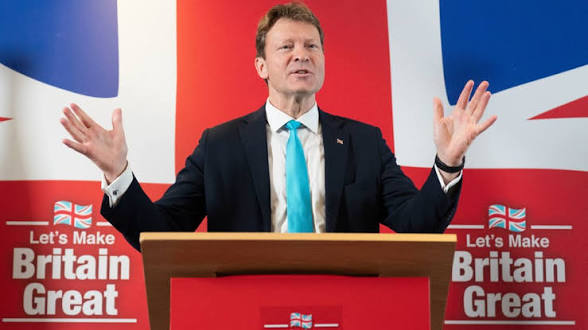
Britain’s relationship with the European Union has entered another politically explosive chapter after Reform UK deputy leader Richard Tice launched a fierce attack on Labour’s latest EU reset agreement.
Tice described the agreement as a reverse rather than a genuine reset of Brexit. His criticism has reignited the national debate over Britain’s sovereignty, immigration, trade regulations and economic future.
The controversy comes after a new package of agreements between the UK and EU was reached during a Brussels summit. The arrangements aim to reduce trade barriers, improve cooperation and strengthen economic links between both sides.
However, critics argue that closer alignment with European regulations could undermine some of the independence Britain gained after leaving the EU.
Tice has become one of the most vocal opponents of the agreement. Speaking on Sky News’ Sunday Morning programme with Michael Gove, he questioned whether the proposed arrangements would genuinely benefit ordinary British businesses.
His comments have added pressure to an already complicated political debate for Labour. The government must now explain how closer European cooperation can deliver economic benefits without compromising its Brexit commitments.
Richard Tice Calls Labour’s EU Reset a Reverse of Brexit

Richard Tice has delivered a blunt assessment of the government’s latest agreement with Brussels.
He described the deal as a “really bad deal” and argued that it represents a reversal of Brexit rather than a practical improvement in Britain’s relationship with Europe.
According to Tice, the government is underestimating the potential costs of aligning British regulations with European rules.
He believes that businesses could face additional administrative requirements even when they do not export products to EU countries.
This concern is particularly important for small and medium-sized businesses. Many domestic companies operate primarily within the UK market and may see little direct benefit from easier access to European markets.
Tice specifically highlighted businesses such as bakeries in Boston and Skegness. He questioned why companies that do not trade internationally should have to deal with additional regulatory requirements.
His argument centres on a basic political question: should British businesses follow European standards when they cannot directly influence how those standards are created?
The Reform UK deputy leader also challenged the government’s economic expectations. Ministers believe the agreement could increase Britain’s long-term GDP by approximately 0.5%.
However, Tice disputes that assessment and argues that additional regulatory costs could outweigh the expected benefits.
His comments have placed economic evidence at the centre of the Brexit argument once again.
What Is Included in Labour’s UK-EU Reset Deal?
The latest agreement is designed to improve cooperation between Britain and the European Union without formally reversing Brexit.
It covers several important areas, including food trade, immigration arrangements, carbon emissions, education, security and technology.
The government argues that these arrangements could reduce unnecessary barriers while protecting Britain’s position outside the EU.
Some of the most important elements include:
1. Easier Food and Agricultural Trade
One of the central parts of the agreement concerns sanitary and phytosanitary standards.
These rules cover food safety, animal health and plant health.
The UK and EU plan to align standards across most exports involving animals, animal products, plants and plant products.
The intention is to reduce the need for certain export certificates and border checks.
This could help British food producers and exporters who currently face additional paperwork when selling products in European markets.
However, the agreement has also raised concerns about regulatory alignment.
If British standards must remain consistent with changing European requirements, businesses could have less freedom to follow different domestic rules.
2. A New Youth Mobility Scheme
The agreement also includes a proposed youth mobility arrangement.
Under the plan, 100,000 people from each side would be able to live and work in the other territory for up to three years.
The scheme is intended to provide opportunities for younger British and European citizens.
Supporters believe it could improve cultural exchange, employment opportunities and international experience.
However, opponents question whether the arrangement could increase competition for jobs.
Tice has expressed concern about the direction of travel, particularly when young people in Britain are already facing employment challenges.
The government will need to explain how the scheme will operate and what safeguards will apply.
3. Linking Carbon Emissions Trading Schemes
Another major element involves linking the UK’s emissions trading system with the EU’s equivalent system.
The arrangement is expected to begin in 2028.
Supporters argue that linking the systems could reduce unnecessary costs for businesses operating across both markets.
It could also make carbon pricing more consistent.
However, critics have raised concerns about the potential impact of European climate regulations on British companies and consumers.
The disagreement reflects a wider political divide over the cost of net-zero policies.
4. Education and University Cooperation
The agreement also includes further discussions about student opportunities.
Both sides have agreed to explore extending British participation in the Erasmus+ student exchange programme beyond 2027.
Negotiations will also address university tuition fees for students travelling between the UK and EU.
These discussions could influence the cost of studying abroad for thousands of young people.
5. Security and Technology Cooperation
The reset agreement also covers defence, digital technology and security.
Britain and the EU plan to strengthen cooperation on civilian defence missions, artificial intelligence, critical technologies and online safety.
There are also plans to improve information sharing on law enforcement and border security.
These arrangements reflect the shared challenges facing Britain and European countries.
Despite leaving the EU, the UK remains closely connected to Europe through trade, geography and security interests.
Why Richard Tice Believes the Deal Threatens Brexit
Tice’s criticism is based on the principle that leaving the European Union should give Britain greater control over its laws and economic decisions.
He argues that regulatory alignment could weaken that independence.
One of his biggest concerns is dynamic alignment.
Dynamic alignment generally means that the UK keeps its rules consistent with relevant changes in EU regulations.
Supporters argue that this can make trade easier and reduce unnecessary paperwork.
However, critics say Britain could end up following rules created in Brussels without having a direct vote on those decisions.
This creates a difficult political question.
If Britain is outside the EU but agrees to follow certain European standards, how much practical independence does it retain?
For Tice, this is one of the biggest weaknesses of the agreement.
He believes the government is prioritising access to European markets over regulatory freedom.
He has also questioned whether the benefits will reach smaller British businesses.
Large exporters may welcome fewer border checks. However, domestic companies could face different costs without receiving the same advantages.
This distinction is central to the Reform UK argument.
The party wants the government to demonstrate that the agreement benefits the wider British economy rather than a limited group of exporters.
Labour Faces a Fresh Political Challenge Over Brexit
The latest controversy creates another difficult political challenge for Labour.
The government must balance two competing priorities.
First, it wants to improve economic relations with Britain’s largest nearby trading partner.
Second, it must address concerns that closer alignment could undermine the political promises made after Brexit.
Labour’s position has been that Britain should pursue a closer working relationship with the EU while maintaining its key red lines.
These include staying outside the single market and customs union.
However, the latest agreement has reopened wider questions about Britain’s long-term relationship with Europe.
Some Labour politicians have expressed support for even closer integration.
Others remain cautious about reopening the Brexit debate.
This difference in opinion creates political pressure for the government.
The opposition has argued that ministers are moving towards closer European integration without receiving a fresh public mandate.
Reform UK has used the controversy to strengthen its criticism of Labour.
The Conservatives have also attacked the agreement. Senior Conservative figures have questioned its economic value and warned that a future Conservative government could repeal it.
As a result, the government faces criticism from multiple political directions.
The Economic Argument: Could the Reset Deal Benefit Britain?
The economic impact of the agreement remains one of the most important questions.
The government believes reducing trade barriers could improve productivity and support economic growth.
Food exporters, agricultural businesses and companies with European supply chains could benefit from simpler trading arrangements.
Fewer checks could also reduce delays and administrative expenses.
These improvements could make British products more competitive in European markets.
However, the economic benefits may not be distributed equally.
Businesses that mainly serve domestic customers could receive fewer direct advantages.
Some companies may also need to update their systems, processes and compliance procedures to meet new requirements.
This is where Tice’s criticism becomes particularly relevant.
He argues that the government should not assume every British business will benefit from closer European alignment.
The Financial Times has described the agreement as a useful but limited first step towards closer ties, while highlighting questions surrounding regulatory alignment and the wider economic relationship.
The government’s estimate of a 0.5% increase in long-term GDP is therefore an important part of the debate.
However, projections are not guaranteed outcomes.
Their success will depend on implementation, business investment, trade conditions and the final details of the arrangements.
Britain will need clear evidence to demonstrate whether the agreement delivers the promised improvements.
Immigration and the Youth Mobility Debate
Immigration has become another major point of disagreement.
The proposed youth mobility scheme would allow 100,000 people from each side to live and work in the other territory for up to three years.
Supporters say this is not the same as restoring unrestricted freedom of movement.
Instead, they describe it as a limited arrangement designed to create opportunities for younger people.
However, critics believe it could become the starting point for further migration agreements.
Tice has questioned where such arrangements could eventually lead.
The government will need to clarify eligibility rules, employment conditions and the practical limits of the scheme.
It will also need to address concerns about competition for jobs.
For young British workers, the important issue is whether the scheme creates additional opportunities or increases pressure in an already competitive employment market.
The political debate is likely to continue as negotiations move forward.
Brexit Sovereignty Returns to the Centre of British Politics
The latest dispute demonstrates that Brexit remains an important political issue in Britain.
Although the UK formally left the European Union in 2020, disagreements over sovereignty, trade and regulation have never completely disappeared.
The original Brexit debate focused heavily on parliamentary sovereignty, immigration controls and the ability to establish independent policies.
Supporters of leaving argued that Britain should make its own decisions without being bound by EU institutions.
Opponents warned that leaving would create economic barriers and weaken Britain’s influence in Europe.
The new reset agreement has brought many of these arguments back into public discussion.
For some businesses, closer cooperation represents a practical solution to problems created by additional trade barriers.
For others, it raises concerns about losing the freedom to develop independent regulations.
The disagreement is not simply about whether Britain should cooperate with Europe.
It is about the conditions under which that cooperation should take place.
Could a Future Government Reverse the EU Reset Deal?
The possibility of reversing the agreement has become another important part of the political debate.
Reform UK has indicated that it would seek to scrap Labour’s arrangements if it gained power.
Tice has previously argued that the party would rip up the deal rather than accept an arrangement that it considers harmful to British interests.
The Conservatives have also indicated that they could repeal the agreement under a future government.
However, reversing international agreements may involve complicated legal and diplomatic consequences.
The exact terms of the final arrangements will matter.
Any future government would need to consider withdrawal provisions, financial obligations and the effect on British businesses.
It would also need to assess whether abandoning the agreement would damage relations with European partners.
This means that political promises to reverse the deal could face practical challenges.
The issue could become an important dividing line in the next general election.
What Happens Next in the UK-EU Relationship?
The next stage will depend on how the agreements are implemented and whether both sides can complete the remaining negotiations.
Several areas still require further work.
These include student exchange arrangements, university tuition fees, professional qualifications and electricity market cooperation.
The youth mobility scheme is also expected to require further practical arrangements before implementation.
Businesses will be watching closely for details about regulatory alignment and compliance requirements.
They will want to know which rules will change, when those changes will happen and how much additional work will be required.
Consumers will also be interested in whether simpler food trade leads to lower prices.
Meanwhile, political parties will continue debating the balance between economic cooperation and national independence.
Labour must show that the agreement can deliver measurable results.
Reform UK and the Conservatives will attempt to convince voters that the government has gone too far.
The outcome could influence the wider debate about Britain’s future relationship with Europe.
Conclusion: Richard Tice’s Attack Puts Labour’s Brexit Strategy Under Pressure
Richard Tice’s criticism has reignited one of Britain’s most divisive political debates.
By describing Labour’s EU reset as a reverse of Brexit, he has challenged the government’s argument that closer cooperation can deliver economic benefits without sacrificing national independence.
The agreement includes potentially significant changes to food trade, youth mobility, carbon emissions, education and security.
However, questions remain about regulatory alignment, economic costs and the long-term political consequences.
For Labour, the challenge is to prove that the reset delivers practical benefits while respecting Britain’s decision to leave the European Union.
For Tice and Reform UK, the agreement offers an opportunity to argue that the government is weakening the freedoms associated with Brexit.
Ultimately, the success or failure of the reset will depend on its real-world impact.
British businesses, workers and consumers will want more than political promises. They will want evidence that the agreement improves living standards, supports economic growth and protects national interests.
The Brexit argument is clearly not over.
Frequently Asked Questions (FAQs)
1. Why did Richard Tice criticise Labour’s EU reset deal?
Richard Tice criticised the agreement because he believes it reverses important aspects of Brexit. He is particularly concerned about regulatory alignment, additional business costs and Britain’s ability to make independent decisions.
2. What did Richard Tice mean by calling the deal a reverse of Brexit?
He argued that Britain could end up following European regulations without having direct influence over how those rules are created. In his view, this undermines the independence gained after leaving the EU.
3. What is included in the UK-EU reset agreement?
The agreement covers food and agricultural trade, youth mobility, emissions trading, education, defence, technology and security cooperation.
4. Will the UK rejoin the European Union under Labour?
The current agreement does not mean Britain is rejoining the EU. Labour’s stated position has been to improve cooperation while remaining outside the single market and customs union.
5. What is the proposed UK-EU youth mobility scheme?
It is a proposed arrangement allowing 100,000 people from each side to live and work in the other territory for up to three years.
6. How could the EU reset deal affect British businesses?
Exporters could benefit from fewer checks and simpler paperwork. However, some businesses may face additional regulatory requirements associated with alignment with EU standards.
7. What is dynamic alignment?
Dynamic alignment means keeping domestic rules consistent with relevant changes to another regulatory system, such as EU rules. It can make trade easier but may limit independent regulatory choices.
8. Could Reform UK cancel Labour’s EU reset deal?
Reform UK has indicated that it would seek to reverse the agreement. However, the practical process would depend on the final terms, legal obligations and diplomatic consequences.
9. Could the EU reset agreement reduce food prices?
It could reduce some trading costs by simplifying checks and paperwork. However, lower costs are not guaranteed to translate directly into lower supermarket prices.
10. Why is the EU reset deal politically controversial?
The agreement has reopened disagreements about Brexit, sovereignty, immigration, trade and Britain’s economic future. Supporters see closer cooperation as beneficial, while opponents fear excessive dependence on EU rules.
About the Author