President Donald Trump’s friendly interaction with Russian President Vladimir Putin has sparked a fresh political controversy in Washington, putting the administration’s foreign policy under renewed scrutiny.
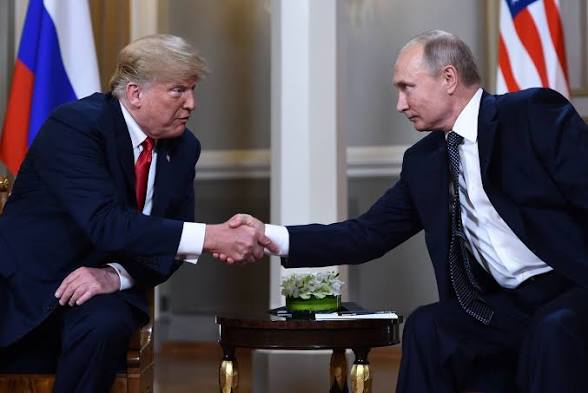
The moment unfolded during the Asia-Pacific Economic Cooperation (APEC) summit in Shenzhen, China, where Trump, Putin and Chinese President Xi Jinping gathered for high-level diplomatic discussions. Cameras captured Trump warmly greeting Putin, shaking his hand and referring to the Russian leader as his friend.
Although Trump has repeatedly defended personal diplomacy as an effective way to negotiate with foreign adversaries, the public display of friendliness has raised questions about America’s relationship with Moscow.
The reaction has been particularly significant because Russia continues its war against Ukraine. Critics argue that treating Putin warmly on the international stage risks giving the Russian president political legitimacy while his government remains at odds with Western countries.
The controversy has also created an uncomfortable situation for some Republicans. While several GOP lawmakers have defended Trump’s negotiating style, others have previously expressed concerns about his approach to Putin and the possibility of making diplomatic concessions without securing meaningful commitments from Moscow.
The central question is whether Trump’s personal relationship with Putin can produce results that advance American interests or whether the friendly optics could weaken Washington’s negotiating position.
What Happened During Trump’s Friendly Meeting With Putin?
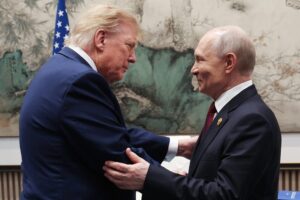
The controversy began on November 19, 2026, when Trump and Putin met on the sidelines of the APEC summit in Shenzhen.
The encounter attracted considerable attention because of the leaders’ public body language and Trump’s comments.
As Putin approached, Trump greeted him warmly. He pointed toward the Russian president and jokingly asked a Russian aide who he was before declaring, “He’s my friend.”
The two leaders laughed and shook hands.
Chinese President Xi Jinping was also present during the wider diplomatic gathering, making the encounter an important moment in a summit involving three of the world’s most powerful countries.
According to reporting by NBC News, Trump’s friendly language immediately attracted criticism from American lawmakers and European observers.
For Putin, the interaction offered an opportunity to demonstrate that Russia still had direct access to the American president despite international criticism over its invasion of Ukraine.
For Trump, however, the greeting reflected his long-standing preference for personal relationships with foreign leaders, including those considered adversaries of the United States.
Reuters described the handshake as a particularly significant diplomatic moment. Putin initiated the greeting in front of cameras, creating an image of cordial relations between Washington and Moscow.
However, a friendly greeting does not automatically represent a change in American policy.
The larger concern is what such public gestures communicate to America’s allies, particularly Ukraine and European governments that continue to view Russia as a major security threat.
NBC New York+1
GOP Senators Express Concerns About Trump’s Approach to Putin
Trump’s friendly exchange with Putin has exposed differences within the Republican Party over how Washington should handle Russia.
Some Republican lawmakers believe direct communication with Putin is necessary to prevent further military escalation and explore possible diplomatic agreements.
Others have warned that excessive friendliness could give the Russian president an advantage.
Florida Republican Senator Rick Scott has offered a particularly interesting response.
Scott described Putin as a thug while acknowledging that Trump needs to communicate with him to pursue American interests.
His position reflects a broader argument among some Republicans: diplomacy with adversaries is necessary, but it should not come at the expense of American security.
Scott previously expressed hope that Trump’s engagement with Putin and Xi could produce progress on reducing nuclear weapons stockpiles.
Nevertheless, his criticism of Putin suggests that personal diplomacy should not be confused with trust.
Other Republican lawmakers have expressed concerns about Trump’s proposed diplomatic arrangements with Moscow.
Their objections have focused on Ukraine’s participation, Russian aggression and the possibility of granting Putin concessions without obtaining meaningful commitments in return.
These concerns demonstrate that Trump’s relationship with Putin remains a complicated issue even within his own political party.
Roll Call+1
Senator Mike Lee Defends Trump’s Friendly Handshake
Not every Republican interpreted the encounter negatively.
Republican Senator Mike Lee defended Trump’s friendly approach during an appearance on Fox News with host Laura Ingraham.
Lee described Trump’s behavior as an example of confidence and effective negotiating.
Ingraham argued that Trump’s willingness to appear friendly toward Putin should not automatically be interpreted as weakness.
Lee agreed with that assessment, describing the interaction as a masterstroke.
His response illustrates an important divide in the political debate.
Supporters argue that Trump understands how to manage relationships with powerful leaders. They believe his willingness to establish personal connections can create opportunities that traditional diplomatic approaches might miss.
From this perspective, a friendly handshake is not an endorsement of Putin’s actions. Instead, it is a negotiating technique designed to keep communication open.
However, critics argue that diplomatic gestures also carry symbolic meaning.
A public display of friendship can create the impression that Washington is comfortable with Moscow’s behavior, even when American officials continue to criticize Russia’s military actions.
The disagreement between Republican lawmakers reflects a larger question about Trump’s foreign policy: should the president prioritize personal relationships or maintain a visibly tougher diplomatic posture toward authoritarian governments?
Both approaches can serve diplomatic objectives, but their effectiveness ultimately depends on the results they produce.
The Daily Beast+1
Why the Handshake Matters for Ukraine
Ukraine remains at the center of the controversy surrounding Trump’s interaction with Putin.
Russia’s full-scale invasion of Ukraine in February 2022 transformed European security and created one of the most serious international conflicts in recent history.
The United States has played a major role in supporting Ukraine through military assistance, financial support and diplomatic pressure on Moscow.
Consequently, any direct negotiations between Trump and Putin carry significant consequences for Kyiv.
Ukrainian officials have repeatedly emphasized that their country must participate in decisions concerning its territory and future security.
Several American lawmakers share that position.
One of the major concerns surrounding the Trump-Putin summit was whether the American president might discuss Ukraine’s future without sufficient Ukrainian participation.
Senator Tim Kaine, a Democrat serving on the Senate Armed Services and Foreign Relations committees, expressed concern about discussions concerning the war that excluded Ukrainians.
His argument was straightforward: a lasting peace agreement cannot be imposed on Ukraine without involving its government.
Republican Senator Bill Cassidy has also previously criticized the possibility of a diplomatic arrangement involving Putin and Xi without Ukraine.
Cassidy described such an approach as morally wrong and argued that Ukrainians must be involved in decisions about their country’s future.
These concerns are important because Russia could attempt to use negotiations to secure territorial or political concessions that would benefit Moscow.
For Ukraine, the danger is that international leaders could reach an understanding that changes its future without adequately protecting its sovereignty.
The handshake therefore became more than a brief diplomatic moment. It reopened questions about whether Trump’s relationship with Putin could influence the direction of American policy toward Ukraine.
Roll Call+1
The Shenzhen Summit: Trump, Putin and Xi Discuss Global Security
The meeting between Trump, Putin and Xi Jinping was significant beyond the controversy surrounding the handshake.
The three leaders represented the United States, Russia and China, three major nuclear powers with competing strategic interests.
Their discussions covered several important international issues, including nuclear weapons, Ukraine, Iran and global trade.
One major priority for Trump was nuclear arms control.
The expiration of the New START treaty in February 2026 created additional pressure to explore a possible framework for future agreements.
Trump has indicated that he wants China included in a broader nuclear arms-control arrangement.
However, achieving such an agreement would be difficult.
China’s nuclear arsenal is considerably smaller than those of the United States and Russia. Beijing has therefore shown limited interest in accepting restrictions under an arrangement designed around the existing American and Russian arsenals.
Russia also has its own strategic priorities.
Putin wants to improve Moscow’s international position and secure diplomatic outcomes that protect Russian interests.
Meanwhile, Xi Jinping has an opportunity to present China as a central player in international diplomacy.
According to the Associated Press, the three leaders held approximately 70 minutes of talks but did not announce major breakthroughs.
They discussed nuclear risks, the war in Ukraine and other international issues.
Although Trump described the gathering as historic, the absence of major agreements raised questions about whether the summit had achieved its most important objectives.
This distinction matters because diplomatic photographs and friendly conversations are not the same as concrete policy achievements.
AP News+1
Why Republicans Are Worried About Giving Putin Diplomatic Legitimacy
Some Republican lawmakers have expressed concern that Trump’s approach could improve Putin’s international standing without requiring Russia to change its behavior.
Russia has faced extensive international criticism and sanctions since its invasion of Ukraine.
Western governments have attempted to isolate Moscow diplomatically and limit its access to important financial and technological resources.
However, direct engagement between Trump and Putin changes the political picture.
When the American president publicly welcomes the Russian leader and describes him as a friend, the images can be used by Moscow to demonstrate that its president remains an influential international figure.
This is especially important because Putin has consistently sought recognition as an equal negotiating partner with Washington.
The concern is not simply about whether Trump should speak with Putin.
Most serious foreign policy discussions recognize that communication between rival countries can prevent misunderstandings and reduce the risk of military confrontation.
Instead, the debate concerns the balance between diplomatic engagement and political symbolism.
Republicans who favor a tougher approach believe Washington should maintain pressure on Moscow while exploring possible agreements.
They worry that appearing too accommodating could weaken America’s leverage.
Other Republicans believe that Trump’s unconventional style could help break diplomatic deadlocks.
The disagreement illustrates the challenge of maintaining a unified Republican foreign policy while the president pursues personal diplomacy with America’s international competitors.
Senator Thom Tillis Warns Putin Could Be Manipulating Trump
Republican Senator Thom Tillis has previously delivered some of the strongest criticism of Trump’s approach to Putin.
Tillis warned that Putin could be taking advantage of Trump’s willingness to negotiate directly with him.
In an earlier CNN interview, Tillis argued that Putin was playing Trump like a fiddle.
He also criticized the possibility of a three-way diplomatic arrangement involving the United States, Russia and China to determine Ukraine’s future.
Tillis believes that Russia and China have strategic objectives that conflict with American interests.
His concerns reflect a broader position among national security-focused Republicans who argue that Washington must remain cautious when dealing with Moscow.
The senator’s warning is particularly relevant following the Shenzhen encounter.
Although Trump believes personal diplomacy can produce results, critics want evidence that Putin is prepared to make meaningful concessions.
Without such evidence, they argue, the United States risks giving Russia diplomatic advantages without receiving anything substantial in return.
The debate also highlights a difficult political reality for Republicans: challenging Trump’s foreign policy can create disagreements within a party that generally supports his leadership.
Nevertheless, concerns about Russia’s military activities and national security remain important issues for lawmakers across party lines.
AOL+1
Republican Senators Previously Questioned Trump’s Invitation to Putin
The controversy surrounding the handshake did not emerge in isolation.
In September 2026, a bipartisan group of 14 senators, including seven Republicans, questioned Trump’s decision to invite Putin to the upcoming G20 summit in Miami.
The group included several prominent Republican lawmakers:
Roger Wicker of Mississippi.
Mitch McConnell of Kentucky.
John Cornyn of Texas.
Thom Tillis of North Carolina.
John Curtis of Utah.
Jerry Moran of Kansas.
Alan Armstrong of Oklahoma.
The senators sent a letter to Trump expressing serious concerns about Putin’s invitation.
Their argument centered on Russia’s invasion of Ukraine, attacks against Ukrainian civilians and reported threats to American security interests.
The lawmakers questioned why Putin should receive an invitation to participate in a major international gathering on American soil while Russia continued its military campaign.
They also raised concerns about reports suggesting Russian assistance to Iran’s military operations targeting American personnel in the Middle East.
This bipartisan criticism demonstrates that opposition to Trump’s Russia policy is not limited to Democrats.
Some Republicans believe the administration must carefully consider the diplomatic consequences of welcoming Putin to major international gatherings.
The letter also shows that concerns about Trump’s relationship with Russia existed before the November handshake.
Consequently, the latest encounter has renewed an existing debate rather than creating an entirely new political disagreement.
Deseret News+1
Trump Defends Personal Diplomacy as a Foreign Policy Strategy
Trump has consistently argued that maintaining relationships with foreign leaders is an important part of international diplomacy.
His approach differs from traditional diplomatic strategies that often emphasize public pressure, formal statements and carefully managed communication.
Trump frequently uses personal conversations and direct negotiations to pursue agreements.
His supporters argue that this approach can help reduce tensions between countries that otherwise struggle to communicate.
The president also believes that maintaining contact with adversaries can create opportunities to resolve international disputes.
From this perspective, refusing to communicate with Putin would not necessarily improve America’s position.
Russia remains a nuclear power with significant military capabilities and influence over international security issues.
Any serious effort to reduce nuclear risks or end the war in Ukraine will require communication with Moscow.
However, critics argue that personal diplomacy must be supported by clear objectives.
A president can maintain a friendly relationship with another world leader while still demanding accountability and protecting national interests.
The challenge is ensuring that personal relationships do not influence decisions that should be determined by American security priorities.
For Trump, the Shenzhen meeting offered another opportunity to demonstrate his preferred negotiating style.
Whether that strategy will produce lasting diplomatic results remains an open question.
European Allies Also React to Trump’s Friendly Comments
The reaction to Trump’s handshake extended beyond Washington.
Several European observers expressed concern about the president’s warm language toward Putin.
European governments have spent years responding to Russia’s invasion of Ukraine and its wider security implications.
For countries located close to Russian territory, Moscow’s military ambitions remain a significant concern.
NBC News reported that Trump’s description of Putin as a friend generated alarm among some of America’s closest European allies.
The concern is partly about the message such gestures send to countries that depend on American security commitments.
European leaders want Washington to remain firmly committed to Ukraine’s sovereignty and European security.
They also worry that a US-Russia agreement could undermine the unity of Western governments.
If Washington begins pursuing a separate diplomatic understanding with Moscow, European countries could find themselves facing decisions that directly affect their security without sufficient influence over the negotiations.
This does not mean European governments oppose communication between Trump and Putin.
Diplomatic engagement can be valuable, particularly when military escalation remains possible.
However, European officials want any negotiations to produce meaningful progress rather than simply improve Putin’s international image.
The handshake has therefore become a symbol of a larger disagreement over how the West should respond to Russia.
NBC New York+1
Did the Trump-Putin Summit Produce Any Major Breakthroughs?
Despite the considerable attention surrounding the meeting, the summit did not produce a major diplomatic breakthrough.
According to the Associated Press, Trump, Putin and Xi held approximately 70 minutes of discussions covering nuclear risks, Ukraine, Iran and international cooperation.
The leaders expressed interest in several areas, including nuclear issues and possible changes to international institutions.
However, they did not announce a major agreement that would fundamentally change the geopolitical situation.
The Ukraine conflict remained unresolved.
The nuclear arms-control question also remained complicated, particularly because China has different strategic priorities from Washington and Moscow.
The absence of a breakthrough is important when evaluating Trump’s friendly interaction with Putin.
Supporters can argue that diplomatic relationships require time and that an initial meeting may create opportunities for future negotiations.
Critics, meanwhile, can point to the lack of concrete results as evidence that friendly gestures alone do not guarantee progress.
The next stage will depend on whether the leaders follow up with practical proposals.
A successful diplomatic process would require clear commitments, verifiable measures and respect for the interests of countries affected by the negotiations.
Without those elements, the summit risks being remembered more for its photographs than its achievements.
AP News+1
What the Controversy Means for Trump’s Republican Support
The controversy presents an important political challenge for Trump as he continues navigating foreign policy disagreements within the Republican Party.
Republicans generally support a strong American military and oppose actions that threaten national security.
However, they do not always agree on how the United States should respond to international adversaries.
Some lawmakers believe diplomacy and direct negotiations offer the best opportunity to prevent future conflicts.
Others argue that strong pressure, sanctions and military deterrence are necessary to prevent authoritarian governments from expanding their influence.
The disagreement over Putin reflects these competing priorities.
Trump’s supporters are likely to continue defending his approach as a calculated negotiating strategy.
Meanwhile, Republicans who have expressed concerns about Russia may continue demanding stronger guarantees for Ukraine and greater transparency about diplomatic discussions.
The issue could also influence future debates about American military assistance, NATO commitments and sanctions against Moscow.
Ultimately, Republican lawmakers will judge the administration’s approach based on its results.
If Trump’s diplomacy produces a sustainable peace agreement and stronger international security arrangements, supporters will have a powerful argument in its favor.
If negotiations fail to deliver meaningful progress, criticism from within the Republican Party could become more difficult for the White House to dismiss.
Conclusion: Trump’s Friendly Handshake With Putin Raises Bigger Questions
The Trump-Putin summit in Shenzhen has generated a significant political debate about diplomacy, national security and America’s relationship with Russia.
Trump’s friendly handshake and description of Putin as a friend attracted attention because they came against the backdrop of Russia’s ongoing war against Ukraine.
While some Republicans have defended the president’s personal negotiating style, others have expressed serious concerns about giving Putin greater diplomatic legitimacy without securing meaningful concessions.
Senators including Thom Tillis and Bill Cassidy have previously warned against arrangements that could undermine Ukraine’s sovereignty. Meanwhile, Rick Scott has called Putin a thug while acknowledging the importance of diplomatic engagement.
Senator Mike Lee has taken a more supportive position, describing Trump’s behavior as confidence and effective negotiating.
The different reactions demonstrate that the Republican Party does not have a completely unified position on Trump’s approach to Moscow.
For now, the biggest question is whether the president’s personal diplomacy can deliver concrete results.
The future of Ukraine, nuclear security and relations between Washington and Moscow will provide a much clearer measure of success than any handshake or friendly exchange.
Frequently Asked Questions (FAQs)
1. Why is Trump’s handshake with Putin controversial?
Trump’s friendly handshake and description of Putin as his friend attracted criticism because Russia continues its war against Ukraine. Critics believe such gestures could improve Putin’s international image and weaken Western pressure on Moscow.
2. Where did Trump and Putin meet in November 2026?
Trump and Putin met in Shenzhen, China, during the Asia-Pacific Economic Cooperation summit. Chinese President Xi Jinping also participated in the wider diplomatic gathering.
3. Which GOP senators have criticized Trump’s approach to Putin?
Republican senators including Thom Tillis and Bill Cassidy have previously criticized proposals involving Putin, particularly arrangements that could exclude Ukraine from decisions about its future. Rick Scott has also described Putin as a thug.
4. Did Senator Mike Lee defend Trump’s handshake with Putin?
Yes. Senator Mike Lee defended Trump’s friendly interaction during a Fox News discussion with Laura Ingraham. He described the president’s behavior as confident and an example of effective negotiating.
5. Why is Ukraine important to the Trump-Putin summit?
Ukraine is central to US-Russia relations because Russia’s invasion has created a major international security crisis. Any potential peace agreement must consider Ukraine’s sovereignty and involve its government.
6. What did Trump, Putin and Xi discuss?
The leaders discussed nuclear security, the Ukraine war, Iran and international issues. Their approximately 70-minute meeting did not produce major diplomatic breakthroughs.
7. Why do Republicans disagree about Trump’s relationship with Putin?
Some Republicans believe personal diplomacy can help prevent conflict and create opportunities for negotiations. Others worry that friendly treatment could strengthen Putin’s position and weaken American influence.
8. Did the Trump-Putin summit produce a Ukraine peace agreement?
No major Ukraine peace agreement was announced following the Shenzhen meeting. The conflict remained unresolved.
9. Why are European countries concerned about Trump’s friendly approach?
European governments worry that improved US-Russia relations could weaken Western unity or result in diplomatic agreements that affect Ukraine and European security without sufficient consultation.
10. What happens next after the Trump-Putin summit?
Future diplomatic discussions will determine whether the meeting leads to progress on Ukraine, nuclear arms control and broader international security. Concrete agreements and verifiable commitments will be essential.
About the Author