The 2028 GOP succession debate is gaining momentum as President Donald Trump places two of his most prominent political allies, Vice President JD Vance and Secretary of State Marco Rubio, in the national spotlight.
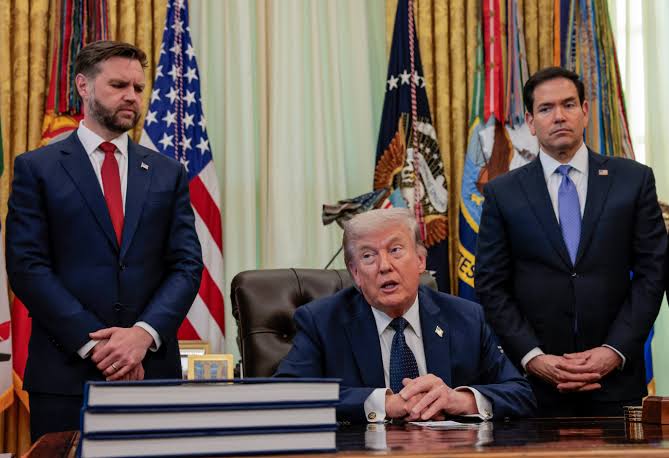
A lengthy White House press briefing on November 20 has intensified speculation about who could eventually lead the Republican Party after Trump’s presidency. Both Vance and Rubio stood alongside the president during the televised appearance, giving political observers another opportunity to assess their potential positions in the next Republican presidential contest.
The event initially focused on Trump’s recent international engagements and administration priorities. However, the presence of two possible presidential contenders quickly turned the briefing into something more politically significant.
Trump allowed both men to address reporters and defend his administration. Their contrasting speaking styles, public performances and reactions to questions about the future of the Republican Party attracted considerable attention.
The president also avoided choosing between them when asked directly who would make a better president.
Instead, Trump continued his familiar approach of praising both political allies while keeping the question of succession unresolved.
According to the Associated Press, the briefing lasted approximately 90 minutes and represented another public showcase for two Republicans widely viewed as potential contenders for the 2028 presidential nomination.
AP News+1
The development raises an important question: Is Trump preparing Vance and Rubio for a future leadership contest, or is he deliberately keeping both men competing for his political approval?
Trump Places Vance and Rubio Side by Side
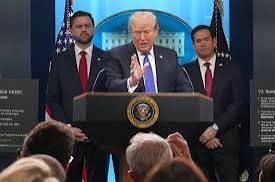
The November 20 briefing offered a particularly visible example of Trump’s approach to the 2028 GOP succession question.
Vance, the vice president, and Rubio, the secretary of state, stood close to the president throughout the event.
Both wore navy suits, white shirts and red ties. Their nearly identical appearance created an unusual visual comparison between two senior members of the administration.
The arrangement attracted attention because both men have increasingly appeared in conversations about the Republican Party’s future.
Vance has the advantage of serving as vice president. His position naturally places him near the center of the administration and makes him an obvious potential successor.
Rubio, meanwhile, has gained visibility through his responsibilities in foreign policy and national security. His international engagements have provided opportunities to demonstrate his diplomatic experience and political leadership.
Trump appeared comfortable allowing both men to share the spotlight.
Rather than presenting one as the clear favourite, he gave each an opportunity to speak before returning to questions from reporters.
The format also allowed viewers to compare their approaches to defending the president’s policies.
For Republican supporters, the briefing offered a glimpse of two possible directions for the party after Trump eventually leaves office.
For political observers, it provided another example of how Trump can turn ordinary White House appearances into discussions about his political legacy.
JD Vance Uses His Moment to Defend Trump’s Leadership
JD Vance received the first opportunity to address reporters during the briefing.
His remarks began with a lighthearted explanation of why he had remained in Washington while Trump and other senior officials travelled internationally.
Vance compared his experience to the film Home Alone, explaining that he had been left behind to hold down the fort.
He also used the moment to express his appreciation for the president.
Vance told Trump that he had missed him before shifting toward a defence of the administration’s economic record.
His remarks highlighted the relationship between the two men.
As vice president, Vance has a natural interest in maintaining Trump’s confidence while establishing his own political identity.
That balance could become increasingly important as the 2028 GOP succession discussion develops.
A potential presidential candidate must demonstrate loyalty to the current Republican leader while convincing voters that he can offer something beyond the existing administration.
Vance faces a particularly complicated challenge because his political rise has been closely connected to Trump’s movement.
His supporters may view that relationship as an advantage. However, Republicans looking for a different direction could demand a more independent political message.
The briefing demonstrated how Vance continues to navigate those competing expectations.
Vance Faces Questions About the Iran War
One of the most politically significant moments involved questions about the administration’s military decisions involving Iran.
The issue has become particularly sensitive following Republican losses in the November midterm elections.
Vance previously argued that the Iran war contributed to the party’s poor electoral performance.
During the briefing, reporters asked whether the military campaign had been worth the political consequences.
Vance avoided directly endorsing the political cost of the conflict.
Instead, he said the president makes the relevant decisions and that his responsibility is to support the president.
His answer highlighted a potential difficulty for Vance as he considers a future presidential campaign.
He must defend the administration while also addressing concerns among Republican voters about foreign military involvement, economic pressure and the political consequences of the Iran conflict.
These issues could influence the 2028 Republican primary debate.
A candidate who wants to inherit Trump’s political coalition may need to demonstrate loyalty without automatically defending every administration decision.
The Washington Post+2
Marco Rubio Uses Foreign Policy Experience to Strengthen His Position
Marco Rubio received his opportunity to speak after Vance.
Unlike the vice president, whose remarks focused partly on domestic leadership and his relationship with Trump, Rubio concentrated on international affairs.
The secretary of state discussed Trump’s recent Asia trip and defended the administration’s diplomatic engagement with major world powers, including China and Russia.
His argument centred on the importance of communication between countries with significant military and economic influence.
Rubio suggested that maintaining relationships with powerful international leaders was necessary to protect American interests and global security.
His comments reflected the responsibilities of his current position.
As secretary of state, Rubio regularly deals with international negotiations, diplomatic relationships and foreign policy challenges.
These responsibilities have increased his public profile and provided opportunities to demonstrate his experience.
For Republicans considering their options for 2028, Rubio represents a potentially different leadership profile from Vance.
He has previously competed in a Republican presidential primary and possesses extensive experience in national politics.
However, his political future remains closely connected to his relationship with Vance and his willingness to enter a potentially difficult nomination contest.
Rubio’s Position in the Republican Party
Rubio’s political appeal extends beyond his current administration responsibilities.
He has experience in the Senate, has previously sought the Republican presidential nomination and has developed relationships across different sections of the party.
His supporters could argue that he offers a combination of traditional conservative credentials and experience within Trump’s administration.
That combination may become attractive if Republican voters begin demanding a broader political approach following the party’s midterm difficulties.
However, Rubio faces an important obstacle.
He has publicly indicated that he would support Vance if the vice president decides to run for president.
This statement complicates speculation about a direct contest between the two men.
Rubio has also suggested that he would not challenge Vance for the Republican nomination.
Nevertheless, political circumstances can change considerably before the 2028 election.
The possibility of a competitive primary remains an important subject of discussion among Republican strategists.
The Washington Post+2
Trump Refuses to Choose His Preferred Successor
Perhaps the most revealing moment of the briefing came when a reporter directly asked Trump which of the two men would make a better president.
The question placed the president in an uncomfortable political position.
Choosing Vance could strengthen the vice president’s standing while potentially frustrating Rubio and his supporters.
Choosing Rubio could create questions about Trump’s confidence in his own vice president.
Trump avoided giving a direct answer.
His response maintained the uncertainty surrounding the 2028 GOP succession debate.
This approach is consistent with Trump’s previous comments about the two men.
He has praised both Vance and Rubio and has repeatedly entertained the possibility of seeing them on the same presidential ticket.
The president has also shown an interest in asking people around him which candidate they prefer.
An earlier Axios report described Trump’s informal habit of asking advisers and political associates whether they favour JD Vance or Marco Rubio for the Republican ticket.
The report suggested that Trump viewed both men as important figures in preserving his political movement.
Axios
Why Trump May Want to Keep the Competition Alive
There are several possible reasons Trump might avoid endorsing a successor too early.
First, maintaining uncertainty allows him to preserve his influence over the Republican Party.
A public endorsement could quickly change the political balance between Vance and Rubio.
Second, the president may want both officials to remain focused on their current responsibilities rather than immediately preparing for a presidential campaign.
Third, keeping both men in the spotlight allows Trump to demonstrate that his administration has multiple potential leaders.
The strategy also reflects his political style.
Trump has frequently used public praise, criticism and unexpected comparisons to create attention around political relationships.
However, it is important to distinguish between political theatre and a formal succession decision.
Trump has not officially announced a preferred Republican nominee for 2028.
For now, the competition remains largely speculative.
Stephen Miller Unexpectedly Steals the Spotlight
The briefing produced another surprising moment when White House Chief of Staff Stephen Miller entered the discussion.
After Vance and Rubio had addressed reporters, Trump called Miller forward.
Miller delivered an enthusiastic defence of the president and praised the administration’s achievements.
His remarks were considerably more focused on celebrating Trump’s leadership than discussing the competition between possible Republican successors.
Trump appeared pleased with the performance.
He subsequently joked that Miller had performed better than both Vance and Rubio.
The president even asked Miller whether he wanted to run for president.
The comment generated another moment of political humour during an event already attracting attention because of the potential 2028 contenders.
Although Trump’s remark was not a formal suggestion that Miller should seek the presidency, it demonstrated how easily the president can redirect attention during public appearances.
It also reinforced the idea that Trump enjoys keeping political figures guessing about their standing within his administration.
The Miller moment became an unexpected ending to a briefing that had increasingly resembled an informal audition for the Republican Party’s next generation of leadership.
The Washington Post+1
The 2028 GOP Succession Battle Faces a New Political Reality
The discussion surrounding Vance and Rubio has become more complicated following the Republican Party’s November 2026 midterm losses.
The results created difficult questions about the future direction of the GOP.
Republicans must now consider how to maintain their political coalition while responding to voters who expressed dissatisfaction with the administration.
The outcome could influence the presidential ambitions of both Vance and Rubio.
Vance entered the succession discussion with a significant advantage because of his position as vice president.
However, his close association with Trump also means that he could face criticism over unpopular administration policies.
Rubio may have an opportunity to present himself as an alternative.
His foreign policy experience and previous presidential campaign could help him appeal to voters who want continuity without necessarily repeating every aspect of Trump’s political approach.
Yet Rubio also serves as a senior member of the administration.
He cannot completely distance himself from the president’s decisions without creating questions about his own record.
The challenge facing both men is therefore similar.
They must decide how closely to associate themselves with Trump’s legacy while preparing to appeal to a Republican electorate that could have different priorities by 2028.
Republican Midterm Losses Change the Political Calculation
The November elections have already influenced conversations about the Republican Party’s future.
Several Republican politicians have offered explanations for the disappointing results.
Some have questioned the administration’s economic approach, while others have highlighted concerns about the Iran conflict and the party’s broader political messaging.
Vance himself linked the Iran war to the Republican losses in a post-election statement.
That position attracted attention because it suggested that even senior administration figures recognised the political consequences of controversial decisions.
Meanwhile, other Republicans have begun positioning themselves as potential leaders of a party seeking to recover.
The Washington Post reported that the midterm defeat had complicated Vance’s previously strong position and encouraged discussion about other possible contenders.
The situation could provide Rubio with an opportunity if Republican voters begin looking for a candidate with a different political profile.
However, the vice president remains a major contender.
The Washington Post+1
Vance vs. Rubio: Who Has the Advantage for 2028?
Although neither man has formally declared a presidential campaign, their political positions offer some clues about the possible Republican contest.
An early comparison based on their current political positions, not a prediction of the eventual nominee.
| Political factor | JD Vance | Marco Rubio |
|---|---|---|
| Current position | Vice President | Secretary of State |
| Relationship with Trump | Close political ally | Close administration ally |
| Presidential experience | No previous presidential campaign | Ran in 2016 |
| Main strength | MAGA movement support | Foreign policy experience |
| Potential challenge | Association with administration policies | Decision about challenging Vance |
| Public position | Has not declared a campaign | Has indicated support for Vance |
Vance Has the Advantage of Being Vice President
The vice presidency gives Vance an important political advantage.
He has direct access to the president and regularly participates in major administration decisions.
His position also makes him a natural figure for Republican voters who want continuity after Trump’s presidency.
Furthermore, Vance has developed relationships with influential conservative activists and Republican political organisations.
If he decides to run, those connections could help him build a presidential campaign.
However, the midterm results have introduced new uncertainty.
Vance may need to explain how his political approach would address the concerns that contributed to Republican losses.
Rubio Could Appeal to a Broader Republican Audience
Rubio’s potential advantage comes from his political experience and international profile.
His diplomatic responsibilities have placed him at the centre of important global developments.
He could potentially appeal to Republicans who value traditional conservative credentials alongside Trump’s political priorities.
His previous presidential campaign also gives him an understanding of the demands of national elections.
Nevertheless, Rubio would face a difficult decision if Vance enters the race.
Challenging the vice president could damage their relationship and create divisions within the administration.
For now, Rubio’s public statements suggest that he is not actively positioning himself against Vance.
Could Trump Want a Vance-Rubio Presidential Ticket?
One possibility attracting attention is a joint presidential ticket featuring Vance and Rubio.
Trump has previously suggested that the two men could work together on the same ticket.
Such an arrangement could combine different strengths within the Republican Party.
Vance could represent the continuation of Trump’s political movement, while Rubio could offer diplomatic experience and appeal to traditional conservatives.
A joint ticket might also reduce the possibility of an internal Republican conflict.
However, there are important questions.
Would Rubio be interested in serving as vice president after holding influential foreign policy responsibilities?
Would Vance want to share the political spotlight with another prominent Republican?
And would Republican primary voters support an arrangement that appears to have been encouraged by Trump?
These questions remain unanswered.
A presidential ticket will ultimately depend on political calculations, campaign decisions and the circumstances surrounding the 2028 election.
For now, the possibility remains a subject of political speculation rather than an established arrangement.
Axios+1
What the White House Briefing Means for Trump’s Political Legacy
The November 20 appearance was significant because it highlighted the importance of succession within Trump’s Republican movement.
Trump has reshaped the Republican Party through his political messaging, voter coalition and influence over conservative candidates.
However, maintaining that influence after his presidency will require another generation of Republican leaders.
Vance and Rubio represent two possible approaches to that challenge.
Vance is closely associated with Trump’s political identity.
Rubio combines experience in traditional Republican politics with his current role in the administration.
Both could potentially appeal to different sections of the Republican electorate.
Trump’s reluctance to choose between them suggests that he wants to maintain flexibility.
He may also recognise that the political environment could change significantly before the Republican primaries begin.
The party’s performance in future elections, developments involving Iran, economic conditions and public approval of the administration could all influence the eventual contest.
Another important factor is Trump’s own political influence.
Even after leaving office, his endorsement could remain valuable among Republican primary voters.
However, the November midterm results demonstrate that the party cannot ignore wider voter dissatisfaction.
The next Republican presidential candidate will need to address both realities.
Conclusion: Trump Keeps the 2028 Republican Race Unsettled
The November 20 White House briefing has added another chapter to the growing 2028 GOP succession debate.
By placing JD Vance and Marco Rubio together before television cameras, Trump created an opportunity for Americans to compare two of his most prominent political allies.
Vance used his moment to defend the administration and reinforce his relationship with the president.
Rubio highlighted Trump’s international strategy and demonstrated his foreign policy experience.
Trump, meanwhile, avoided declaring a preferred successor.
His unexpected praise for Stephen Miller added another layer of humour and political uncertainty to the event.
For now, Vance appears to have the advantage of his position as vice president, while Rubio remains a potentially influential alternative.
Neither has formally launched a presidential campaign.
The Republican Party still has considerable time to determine its direction before 2028.
One thing is clear: Trump’s influence will remain central to the succession discussion, and his decision about when to support a candidate could reshape the Republican presidential race.
Frequently Asked Questions (FAQs)
1. Why did Trump put JD Vance and Marco Rubio together at the White House briefing?
Trump placed both men in the spotlight during a November 20, 2026, White House briefing. Their appearance attracted attention because both are considered potential Republican presidential contenders for 2028.
2. Is JD Vance running for president in 2028?
Vance has not formally announced a presidential campaign. However, he is widely considered one of the leading potential Republican candidates. His allies have indicated that he is likely to consider running.
3. Is Marco Rubio challenging JD Vance for the 2028 Republican nomination?
Rubio has publicly indicated that he would support Vance if the vice president decides to run. He has not announced a presidential campaign or confirmed plans to challenge Vance.
4. Did Donald Trump endorse JD Vance or Marco Rubio?
No. During the November 20 briefing, Trump avoided choosing between the two men when asked which would make a better president.
5. What did JD Vance say about the Iran war?
Vance said that decisions about the Iran war were the president’s responsibility and that his job was to support the president. His response followed questions about the conflict’s political consequences for Republicans.
6. What did Marco Rubio discuss during the briefing?
Rubio discussed Trump’s recent Asia trip and defended the administration’s diplomatic engagement with major international powers, including China and Russia.
7. Why did Stephen Miller become part of the 2028 succession discussion?
Trump praised Miller’s performance during the briefing, joking that he had performed better than Vance and Rubio. He also jokingly asked Miller whether he wanted to run for president.
8. Could Vance and Rubio run on the same presidential ticket?
Yes, a joint ticket is a possibility that Trump has previously discussed. However, neither man has confirmed such an arrangement, and no official ticket has been announced.
9. How have the 2026 midterm elections affected the GOP succession race?
Republican losses have created questions about the party’s political direction and Trump’s policies. The results could influence the ambitions of Vance, Rubio and other potential Republican presidential candidates.
10. When will the next Republican presidential election take place?
The next US presidential election is scheduled for November 7, 2028. Republican candidates will compete in the primaries before the party formally selects its presidential nominee.
About the Author