A fresh NSA cyber warning has raised concerns about the growing risks facing America’s digital infrastructure. As major technology outages disrupt businesses, government networks, airlines and banking services, cybersecurity experts are warning that the threat landscape is changing rapidly.
A former National Security Agency (NSA) hacker has sounded the alarm about the growing capabilities of artificial intelligence (AI) in cyber operations. His warning comes at a time when organizations are struggling to maintain reliable digital services while defending increasingly complex computer networks.
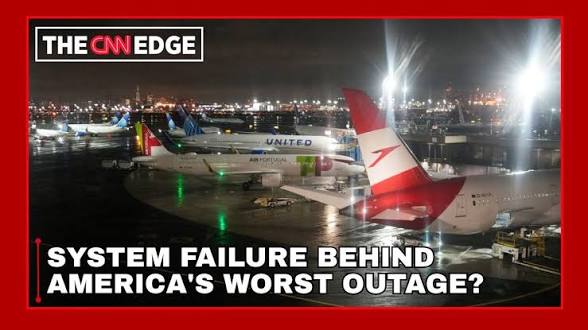
The recent wave of technology disruptions has attracted attention across Washington. Microsoft services, banking systems, airline operations and even an internal NSA communications network have experienced serious technical problems.
Although officials have said there is no evidence connecting these incidents to a coordinated cyberattack, the disruptions have exposed weaknesses in systems that millions of people depend on every day.
The bigger concern is what could happen if criminals or hostile governments deliberately exploit those weaknesses.
Cybersecurity specialists believe artificial intelligence could make attacks faster, more sophisticated and easier to automate. This creates additional pressure on companies and government agencies to strengthen their security before the next major incident occurs.
Former NSA Hacker Warns About Growing Cyber Threats
A former NSA hacker has raised concerns about how artificial intelligence is changing cybersecurity. The warning focuses on the increasing ability of AI systems to identify software weaknesses and support sophisticated cyber operations.
A November 19 report highlighted concerns that AI-powered attacks could produce more security breaches in the coming months.
The discussion featured David Kent, described as a former NSA hacker, alongside technology executive Edward Harris of Gladstone. Their discussion focused on the potential misuse of AI agents and the challenges facing existing cybersecurity defenses.
News Site
The warning is important because cybercriminals no longer need to rely entirely on traditional methods.
AI tools can help attackers examine large amounts of code, identify weaknesses and automate parts of an intrusion. These capabilities could reduce the time required to discover and exploit security vulnerabilities.
However, the warning does not establish that AI caused the recent outages.
It highlights a separate but increasingly important threat: the possibility that criminals could use advanced AI tools to attack organizations more efficiently.
The distinction matters. Technical failures and deliberate cyberattacks require different responses, even though both can produce similar disruptions.
Recent Technology Outages Raise National Security Concerns
The former hacker’s warning comes during an unusually disruptive period for American technology infrastructure.
Several major organizations have experienced service interruptions within a short period. These incidents have affected everyday services as well as systems supporting government operations.
Among the reported disruptions are:
Microsoft 365 services experiencing a widespread outage.
Banking services at JPMorgan Chase facing technical problems.
Airline operations experiencing disruptions.
Apple services suffering technical difficulties.
The Federal Aviation Administration (FAA) dealing with an air traffic system failure.
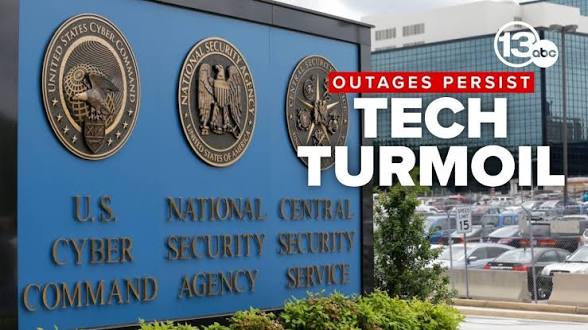
The NSA’s classified internal communications network experiencing a temporary disruption.
These incidents have raised questions about the reliability of America’s increasingly interconnected digital infrastructure.
The NSA outage attracted particular attention because the agency handles highly sensitive national security information.
According to reporting by CBS News, the agency’s internal network experienced problems following urgent software updates linked to vulnerabilities in PHP. The vulnerabilities prompted organizations to accelerate security patching.
CBS News+1
The situation demonstrates an important cybersecurity challenge.
Organizations must update their systems to protect against newly discovered threats. However, poorly tested updates or unexpected compatibility problems can also disrupt essential services.
Consequently, companies face a difficult balance between security and reliability.
Why the NSA Network Outage Matters
The National Security Agency plays a central role in America’s intelligence and cybersecurity operations.
Its responsibilities include collecting foreign signals intelligence, supporting national security missions and helping defend government networks against sophisticated cyber threats.
Therefore, any disruption involving its internal systems naturally attracts attention.
In November 2026, the NSA’s classified communications network, known as NSANet, experienced a temporary disruption.
The network is used to store and share classified information. Its interruption raised questions about how sensitive government systems handle maintenance, software updates and unexpected technical problems.
The NSA described the incident as temporary degradation during scheduled routine maintenance.
The agency also emphasized that multiple layers of redundancy help maintain operations during planned maintenance and unexpected disruptions.
Associated reporting indicated that mission-critical capabilities remained operational. However, officials did not initially disclose every technical detail surrounding the incident.
AP News+1
This distinction is important.
A network outage does not automatically mean classified information has been stolen or that an intelligence agency has been compromised.
Nevertheless, the incident highlights the importance of reliable backup systems.
Government agencies must ensure that essential operations continue even when individual networks or services become unavailable.
AI Is Changing the Cybersecurity Landscape
Artificial intelligence is becoming one of the biggest challenges facing cybersecurity professionals.
Previously, attackers often needed considerable technical knowledge and time to identify weaknesses in computer systems.
AI tools can now help automate several stages of this process.
For example, an attacker may use AI to:
Examine large amounts of software code.
Identify possible security vulnerabilities.
Research weaknesses in network infrastructure.
Generate malicious code or attack instructions.
Automate parts of a cyber intrusion.
Adapt techniques when existing defenses block an attempt.
These capabilities could make cybercrime more accessible to inexperienced attackers.
They could also allow experienced criminal groups to conduct more operations with fewer resources.
However, AI is not exclusively an offensive technology.
Cybersecurity teams are also using artificial intelligence to detect unusual network activity, investigate vulnerabilities and improve threat monitoring.
This creates a technological competition between attackers and defenders.
The concern is that malicious actors may use automated tools to discover weaknesses faster than organizations can repair them.
The former NSA hacker’s warning reflects this broader challenge. As AI becomes more capable, traditional cybersecurity strategies may require significant improvements.
Could AI-Powered Attacks Cause More Outages?
One of the biggest questions surrounding the current cybersecurity debate is whether AI could contribute to more frequent technology disruptions.
The possibility is real, but it requires careful explanation.
AI can help attackers identify vulnerable systems and develop more effective methods of exploiting them. A successful attack could potentially disrupt websites, cloud services, financial networks and government operations.
However, technology outages can also occur without malicious activity.
Software defects, faulty configurations, hardware failures and unsuccessful updates can all interrupt services.
The recent American outages demonstrate how difficult it can be to distinguish between different technical causes during the early stages of an investigation.
A November 18 report by Federal News Network explained that several recent disruptions were attributed to unrelated technical problems and maintenance activities.
Experts nevertheless argued that the incidents exposed serious weaknesses in the infrastructure supporting modern society.
Federal News Network+1
This means organizations cannot focus exclusively on preventing hackers from entering their networks.
They must also ensure that their systems can recover quickly when something goes wrong.
US Officials Reject Claims Of A Coordinated Cyberattack
Despite growing public concern, American officials have said there is no evidence that the recent technology outages were part of a coordinated cyberattack.
During a November 18 House Homeland Security Committee hearing, senior officials discussed the disruptions affecting government and private-sector systems.
Homeland Security Secretary Markwayne Mullin, Director of National Intelligence Jay Clayton and FBI Deputy Director Christopher Raia addressed lawmakers’ concerns.
Mullin said investigators had found no indication that the incidents were connected.
He also expressed strong confidence that the disruptions were not caused by malicious activity from foreign adversaries.
Clayton similarly described the outages as separate service disruptions associated with maintenance and technical changes.
His comments suggested that urgent software updates and security patching had contributed to some of the problems.
Officials also acknowledged the need to communicate more effectively with private companies and investigate the causes of major disruptions.
CBS News+1
These statements provide an important qualification to the growing cybersecurity debate.
There is currently no established evidence that the NSA outage, banking problems and airline disruptions were coordinated attacks.
However, the absence of evidence of a coordinated attack does not eliminate the broader threat of cybercrime.
Government agencies must continue monitoring suspicious activity while investigating technical failures.
Why Critical Infrastructure Is Particularly Vulnerable
Modern society depends on digital infrastructure.
Banks, hospitals, airlines, electricity providers, telecommunications companies and government agencies all rely on computer networks to deliver essential services.
When these systems fail, the consequences can extend far beyond the technology sector.
Consider an airline reservation system.
If its software becomes unavailable, passengers may experience booking problems, delayed departures and difficulties accessing travel information.
Similarly, a banking outage can prevent customers from checking balances, transferring money or completing payments.
Hospitals face even greater risks because digital systems support patient records, appointments, diagnostic equipment and administrative operations.
A prolonged disruption could create serious operational challenges.
The problem becomes more complicated when several services depend on the same technology providers.
For example, a cloud infrastructure failure could affect numerous businesses simultaneously.
This creates a concentration risk.
Instead of one organization experiencing a technical problem, multiple customers may lose access to important services because they depend on the same underlying platform.
Cybersecurity experts increasingly believe that infrastructure resilience deserves the same attention as traditional network security.
The Danger Of Connected Digital Systems
The growing number of connected devices and services has created new opportunities for businesses.
However, connectivity also introduces additional risks.
A modern organization may depend on dozens of technology providers, software applications and external networks.
Each connection can create another potential point of failure.
For example, a company may use one provider for cloud storage, another for employee communications and a third for customer payments.
If one essential provider experiences a serious disruption, other services may also become unavailable.
This problem is known as a supply-chain or third-party technology risk.
Attackers understand these dependencies.
Rather than targeting a large organization directly, criminals may attempt to compromise a smaller supplier that provides software or services to multiple customers.
A successful attack against that supplier could create wider consequences.
The SolarWinds cyber incident demonstrated how weaknesses in a trusted software supply chain can affect numerous organizations.
The current cybersecurity environment makes this risk even more important.
AI could help attackers investigate complex digital relationships and identify vulnerable suppliers.
Therefore, organizations need to examine not only their own security but also the security practices of their technology partners.
Cybersecurity Experts Call For Stronger Infrastructure Protection
The recent outages have renewed calls for greater investment in America’s digital infrastructure.
Many government systems depend on older technology that was not designed for today’s level of connectivity or computing demands.
Replacing these systems can be expensive and complicated.
However, delaying modernization may increase the likelihood of technical failures and security problems.
Former cybersecurity officials have also warned that organizations must prepare for more frequent disruptions.
Former Cybersecurity and Infrastructure Security Agency director Jen Easterly recently warned about a likely increase in incidents involving digital infrastructure.
She emphasized the importance of preparation, exercises and contingency planning.
Her comments reflect a wider concern that organizations may not have enough resources to manage the growing number of cyber threats and technology disruptions.
AOL
Experts generally identify several important priorities:
1. Modernizing outdated systems
Organizations should replace unsupported software and aging infrastructure with systems that receive regular security updates.
2. Improving backup capabilities
Critical services should have reliable backup networks and recovery systems.
3. Testing software updates
Security patches should undergo proper testing before being introduced into essential systems.
4. Strengthening employee training
Employees should understand phishing attacks, suspicious links and common security risks.
5. Improving incident response
Organizations should establish clear procedures for responding to cyberattacks and unexpected outages.
6. Monitoring third-party suppliers
Businesses should regularly assess the cybersecurity practices of external technology providers.
These measures cannot eliminate every threat. However, they can reduce the likelihood that a single technical problem will cause widespread disruption.
Could Hackers Target America’s Banking And Airline Networks?
Financial institutions and transportation networks remain attractive targets for cybercriminals.
Banks process enormous volumes of financial information and payments. Airlines manage passenger records, reservations, flight schedules and operational communications.
Disrupting these systems could create financial losses, operational delays and public anxiety.
Cybercriminals may also target organizations to steal sensitive information, demand ransom payments or disrupt essential operations.
State-sponsored groups can have different objectives. These may include intelligence gathering, espionage or creating disruption during periods of international tension.
The recent outages have therefore attracted attention from lawmakers and national security officials.
However, investigators have not established that these incidents were connected to a common attacker.
The bigger lesson is that essential services need stronger protection regardless of whether a disruption comes from a hacker, a software defect or a failed update.
AI Agents Could Make Future Cyberattacks More Sophisticated
Another concern involves autonomous AI agents.
Unlike traditional software tools that require continuous human instructions, AI agents can perform sequences of tasks with limited supervision.
In cybersecurity, these systems can be used for legitimate activities such as vulnerability testing and network monitoring.
Unfortunately, malicious actors may also use similar capabilities.
An automated system could potentially scan networks, identify weaknesses and attempt different techniques without requiring a human operator at every stage.
This could increase the speed and scale of cyber operations.
A November 18 report highlighted concerns about the use of AI-driven platforms in malicious cyber campaigns.
Google has also warned about increasingly autonomous cyber operations, while the FBI has reported malicious actors using AI-related tools against organizations across multiple industries.
Los Angeles Times+1
Nevertheless, AI-powered attacks should not be confused with every technology failure.
A malfunctioning server is not necessarily evidence of an intelligent cyberattack.
Security investigators must examine technical evidence before identifying the cause.
What Businesses And Ordinary Americans Should Do
The growing cybersecurity threat is not limited to government agencies or large corporations.
Ordinary internet users also face risks from phishing, identity theft, financial fraud and compromised accounts.
People can take several practical steps to improve their digital security.
Use strong and unique passwords for important accounts.
Enable multifactor authentication wherever possible.
Install security updates from trusted sources.
Avoid suspicious email attachments and links.
Monitor bank accounts for unusual transactions.
Back up important personal files.
Avoid sharing sensitive information with unverified websites.
Use trusted security software on personal devices.
Businesses should take additional precautions.
They should regularly test backup systems, review access permissions and maintain incident response plans.
Organizations handling sensitive information should also conduct independent security assessments.
These measures become particularly important as AI makes cyber operations more sophisticated.
Washington Faces Growing Pressure To Improve Cybersecurity
The recent outages have placed additional pressure on Washington to examine the reliability of critical technology infrastructure.
Lawmakers want clear explanations about the disruptions affecting major companies and government networks.
They also want to understand whether existing cybersecurity policies are sufficient for the AI era.
Representative Jim Himes, the ranking member of the House Intelligence Committee, said on November 18 that he had seen no evidence suggesting the recent outages resulted from malicious actors.
However, he stressed that the risk of disruptive cyberattacks remains real.
He also highlighted how advanced AI models can accelerate vulnerability discovery, creating additional pressure on organizations to install security patches.
His statement reinforces an important point: America must improve its cybersecurity defenses while ensuring that urgent security updates do not create new operational problems.
Congressman Jim Himes
The government also faces a challenge in coordinating with private companies.
Much of America’s critical infrastructure is privately owned and operated.
Therefore, effective cybersecurity requires cooperation between federal agencies, technology companies and infrastructure providers.
Better communication could help organizations prepare for maintenance-related disruptions and respond more effectively to unexpected incidents.
What Happens Next?
The coming months could be important for America’s cybersecurity strategy.
Organizations are adopting AI at a rapid pace, while attackers are exploring new ways to use the technology.
At the same time, companies must continue updating older systems to protect against newly discovered vulnerabilities.
This creates a difficult environment for technology administrators.
Delaying security updates could leave systems exposed. Installing updates without sufficient testing could introduce unexpected problems.
The solution requires better software development, stronger testing procedures and more reliable recovery systems.
The recent NSA network disruption has also demonstrated why government agencies must maintain backup capabilities for sensitive operations.
Although officials have rejected claims of a coordinated cyberattack behind the recent outages, investigations and technical assessments remain important.
The former NSA hacker’s warning adds another dimension to this debate.
His concerns about AI-powered cyber threats suggest that organizations should prepare for a more challenging security environment.
Ultimately, the question is not simply whether another major outage will occur.
It is whether governments and businesses will be prepared to limit the damage when one happens.
Conclusion
The NSA cyber warning comes at a critical moment for America’s digital infrastructure.
Recent disruptions affecting technology companies, banks, airlines and government systems have exposed how dependent modern society has become on reliable computer networks.
Although US officials have found no evidence connecting the recent outages to a coordinated cyberattack, the incidents have raised legitimate questions about software reliability and infrastructure security.
The warning from a former NSA hacker also highlights the growing influence of artificial intelligence in cybersecurity.
AI could help defenders identify vulnerabilities, but criminals may use the same technology to develop more sophisticated attacks.
For America, the priority must be stronger digital defenses, reliable backup systems and better cooperation between government agencies and private companies.
The next major cyber incident may not look like previous attacks. Preparing now could make the difference between a temporary disruption and a much larger national crisis.
Frequently Asked Questions (FAQs)
1. What is the latest NSA cyber warning about?
The warning concerns the growing cybersecurity risks associated with artificial intelligence. A former NSA hacker has highlighted how AI could make cyberattacks more sophisticated and increase security breaches.
2. Who is the former NSA hacker mentioned in the report?
David Kent is identified as a former NSA hacker in a November 19, 2026 report discussing AI-powered cyber threats alongside technology executive Edward Harris.
3. Was the recent NSA network outage caused by hackers?
There is no publicly established evidence that the recent NSA network outage was caused by hackers. The agency described the incident as temporary degradation during scheduled maintenance.
4. What is NSANet?
NSANet is the NSA’s internal classified communications network. It supports the storage and sharing of sensitive information within the agency.
5. Can artificial intelligence cause cyberattacks?
AI can help malicious actors identify software vulnerabilities, automate certain attack activities and develop sophisticated cyber operations. However, AI is also used by cybersecurity professionals to strengthen digital defenses.
6. Why are technology outages becoming a major concern?
Modern businesses and government agencies depend on interconnected digital systems. A failure involving cloud services, telecommunications or software updates can disrupt multiple organizations.
7. Were the recent US technology outages connected?
US national security officials have said they found no evidence that the recent outages were connected or part of a coordinated cyberattack.
8. Can AI-powered cyberattacks affect banks and airlines?
Yes. Banks and airlines rely on digital infrastructure that could become a target for cybercriminals. Successful attacks could disrupt payments, reservations and other essential services.
9. How can companies protect themselves from AI cyber threats?
Companies should improve network monitoring, test security updates, maintain reliable backups, train employees and regularly assess third-party software providers.
10. What does the NSA cyber warning mean for the future?
It highlights the need for stronger cybersecurity as artificial intelligence changes how attackers and defenders operate. Organizations will need better protection and faster recovery systems to manage future threats.
About the Author