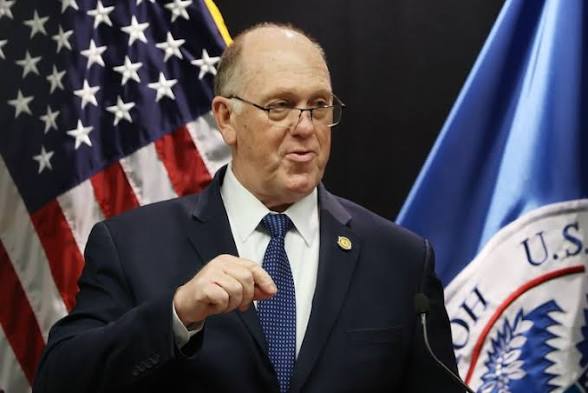
The Trump administration is intensifying its immigration enforcement campaign against commercial truck drivers operating illegally in the United States. Border Czar Tom Homan has promised a tougher nationwide response, targeting undocumented immigrants and drivers allegedly operating heavy commercial vehicles without valid authorization.
The latest announcement signals an expansion of federal enforcement beyond traditional immigration operations. Federal authorities are increasingly focusing on highways, commercial vehicle inspection points, weigh stations and major freight transportation routes.
Homan has described the effort as an extensive operation involving multiple federal agencies and state law enforcement departments. The objective is to identify drivers who allegedly lack proper immigration status, hold improperly issued commercial driver’s licenses (CDLs), or continue operating trucks after losing their legal driving privileges.
The announcement follows growing political and public attention surrounding commercial trucking safety, immigration enforcement and the licensing of foreign-born drivers.
Speaking on The Will Cain Show on November 17, Homan discussed the administration’s plans following a deadly Missouri truck crash involving a Ukrainian national who was reportedly in the United States illegally. The driver allegedly crashed a semi-truck into a minivan, killing a mother and two of her children, according to the report.
Homan’s comments have placed commercial truck drivers at the center of the administration’s latest immigration enforcement campaign.
However, the issue extends beyond immigration status. Federal officials are also examining licensing procedures, driver qualifications, English-language requirements and the responsibilities of states that issue commercial driving credentials.
The developing crackdown could have significant consequences for trucking companies, freight transportation businesses, immigrant workers and the wider American economy.
Tom Homan’s Warning After Deadly Missouri Truck Crash

The latest enforcement announcement comes after a tragic crash in Missouri renewed questions about commercial driver qualifications.
According to the November 17 report, a 39-year-old Ukrainian national allegedly operating a semi-truck crashed into a minivan. The collision reportedly killed a mother and two of her children.
The incident has intensified calls for stronger oversight of commercial vehicle operators.
Homan used the incident to highlight what the administration considers weaknesses in the current licensing and immigration enforcement systems.
His position is that drivers who lack lawful authorization or the required commercial driving credentials should not be operating large trucks on American highways.
The administration argues that commercial vehicles require a higher level of responsibility because of their size, weight and potential impact during accidents.
Nevertheless, an important distinction remains: immigration status alone does not establish whether a person is a safe or unsafe driver. Commercial driving qualifications, training, licensing records and compliance with transportation regulations must also be considered.
The Missouri investigation and any criminal proceedings should determine the individual driver’s responsibility for the crash.
For the Trump administration, however, the incident has become another reason to intensify scrutiny of commercial trucking operations.
Federal Agents Target Truck Drivers At Weigh Stations
One of the most significant developments is the growing cooperation between immigration authorities and transportation enforcement agencies.
Homan has indicated that federal agents are working with state troopers at commercial vehicle weigh stations to identify drivers who may be violating immigration or licensing laws.
Weigh stations traditionally help authorities inspect commercial vehicles for safety and regulatory compliance. Officers can examine vehicle weight, mechanical conditions, registration documents and driver credentials.
The administration now wants immigration enforcement to become part of this broader effort.
According to Homan’s November 17 remarks, federal authorities are increasing their presence at rest areas and weigh stations. These locations offer opportunities to identify drivers whose commercial licenses may have been improperly issued or revoked.
The strategy could include:
Checking commercial driver’s license records.
Identifying drivers with outstanding immigration orders.
Investigating suspected fraudulent licensing documents.
Reviewing compliance with federal transportation regulations.
Coordinating immigration arrests with state highway patrol operations.
Examining trucking companies that employ unauthorized drivers.
This approach represents a shift toward more targeted enforcement within the commercial transportation industry.
Rather than focusing exclusively on workplaces or residential locations, authorities are also examining major freight routes and transportation facilities.
However, roadside checks must still follow applicable laws and constitutional protections. Immigration status and licensing violations are separate legal questions, even when both arise during the same inspection.
Operation Highway Shield Expands Federal Trucking Enforcement
Homan’s latest announcement builds on earlier federal operations targeting commercial drivers considered unqualified or improperly licensed.
One important example is Operation Highway Shield, a joint initiative involving the Department of Transportation and the Department of Homeland Security.
On August 4, 2026, the Federal Motor Carrier Safety Administration (FMCSA) announced preliminary results from the operation’s second enforcement wave.
The three-day operation took place between July 28 and July 30 across Illinois, Indiana, Iowa and Ohio.
According to the agency, authorities detained 51 undocumented immigrants during the operation. That number included 21 drivers holding non-domiciled commercial driver’s licenses issued by California and New York.
The operation involved:
Federal Motor Carrier Safety Administration inspectors.
Immigration and Customs Enforcement (ICE).
Homeland Security Investigations (HSI).
State highway patrol agencies.
Authorities conducted roadside inspections to identify unqualified foreign drivers, investigate licensing irregularities and examine unsafe commercial vehicles.
The first wave of Operation Highway Shield took place in Florida in March 2026.
During that operation, officials reported more than 3,300 inspections. They also reported that 176 drivers were placed out of service, including 54 because of English-language deficiencies.
Additionally, authorities reported 35 arrests involving criminal-related charges and 42 people taken into custody for alleged immigration violations.
These figures demonstrate the scale of the administration’s efforts to increase oversight of the commercial trucking industry. However, an inspection, an out-of-service order and an immigration arrest represent different enforcement outcomes.
The federal government has also announced additional investigations into questionable commercial driving schools and licensing practices.
FMCSA+1
Why The Trump Administration Is Targeting Non-Domiciled CDLs
A central part of the crackdown involves non-domiciled commercial driver’s licenses.
A non-domiciled CDL is a commercial driving credential issued to someone whose permanent domicile is outside the state or jurisdiction issuing the license.
These licenses have historically provided a pathway for certain eligible noncitizens to work in the American trucking industry.
However, the Trump administration argues that weaknesses in licensing procedures have allowed some individuals to obtain commercial credentials without adequate verification of their immigration status or driving history.
Transportation officials have therefore introduced stricter eligibility requirements.
In February 2026, the Department of Transportation finalized a rule restricting eligibility for non-domiciled commercial learner’s permits and CDLs.
The rule limits eligibility for foreign-domiciled individuals to specific, verifiable employment-based nonimmigrant immigration statuses. It also establishes additional verification requirements.
The regulation became effective on March 16, 2026.
According to the Federal Motor Carrier Safety Administration, the changes are intended to improve screening and ensure that commercial drivers meet federal qualification standards.
The administration argues that better verification will help prevent individuals without the required legal authorization from obtaining commercial driving privileges.
However, the new restrictions have also created uncertainty for immigrant drivers who previously held valid licenses.
Some legally present immigrants have reported losing their ability to work after states canceled or reviewed their commercial credentials.
Therefore, the debate involves both public safety and the economic consequences of stricter licensing rules.
FMCSA+2
More Than 28,000 Commercial Licenses Under Scrutiny
The administration’s enforcement campaign has also involved a major review of commercial driver’s licenses issued to noncitizens.
Earlier in 2026, Homan discussed the revocation of more than 28,000 non-domiciled commercial driver’s licenses.
The number highlights the administration’s focus on licensing irregularities and its concerns about drivers who may no longer meet federal eligibility requirements.
The Department of Transportation has separately reported that more than 30,000 illegally issued licenses have been revoked under its broader licensing enforcement initiative.
These figures should not be treated as identical. They come from different official statements and enforcement updates.
Importantly, a revoked license does not automatically establish that its former holder committed an immigration crime.
A commercial license can be canceled because of eligibility problems, documentation issues or changes in the rules governing its issuance.
Immigration violations require their own legal assessment.
The administration nevertheless argues that removing improperly licensed drivers from commercial vehicles is necessary to protect the public.
For trucking businesses, the situation creates additional responsibilities. Companies must ensure their drivers hold valid credentials and meet applicable federal requirements.
English-Language Requirements Become Another Enforcement Priority
Immigration status is not the only issue attracting federal attention.
The Trump administration has also emphasized English-language proficiency among commercial truck drivers.
Federal transportation rules require commercial motor vehicle drivers to demonstrate sufficient English proficiency to communicate with the public, understand highway traffic signs, respond to official inquiries and complete required reports.
The administration began enforcing these requirements more strictly in 2025.
Transportation officials have argued that drivers who cannot understand important road signs or communicate during roadside inspections could create safety risks.
During the first wave of Operation Highway Shield in Florida, authorities reported that 54 drivers were removed from service because of English-language deficiencies.
The government has also reported that approximately 26,000 drivers were taken out of service for failing to meet English-language requirements under its broader enforcement campaign.
However, English proficiency and immigration status are separate requirements.
A person may have lawful immigration status but fail to meet commercial driving language standards. Similarly, an immigrant’s language ability does not establish whether that individual has lawful authorization to work.
The administration’s position is that all commercial drivers must satisfy the same applicable safety and qualification requirements.
DOJ Lawsuits Target States Over Commercial Driver Records
Another major part of Homan’s announcement involves disputes between the federal government and several states.
According to his November 17 remarks, the Justice Department is pursuing litigation involving states that have resisted sharing commercial driver information with federal transportation authorities.
The administration wants better access to records that could help agencies identify drivers whose licenses were allegedly issued improperly or whose eligibility has changed.
Homan argues that cooperation between federal and state agencies is essential to making the crackdown effective.
However, the legal battle has become more complicated.
New York has been among the states at the center of the dispute over noncitizen commercial driver’s licenses.
The federal government previously sought to withhold nearly $74 million in highway funding from New York after the state resisted demands to revoke thousands of licenses.
On November 13, 2026, the US Court of Appeals for the Second Circuit ruled that the Transportation Department acted unlawfully when it withheld the funding.
The court concluded that New York could not be penalized for failing to cancel licenses based on requirements that were not in place when those licenses were issued.
New York officials welcomed the decision, arguing that the federal government had unfairly targeted the state.
The Transportation Department defended its broader licensing crackdown, maintaining that commercial licenses should not remain valid beyond a driver’s lawful eligibility.
The ruling is significant because it demonstrates that federal immigration and transportation enforcement policies remain subject to judicial review.
It also highlights the difference between enforcing current licensing requirements and retroactively penalizing states for earlier decisions.
AP News
Trucking Companies Could Face Increased Scrutiny
The expanding crackdown could have consequences beyond individual drivers.
Commercial trucking companies play a critical role in the American economy. They transport food, construction materials, fuel, consumer products and other essential goods across the country.
The administration’s campaign could force trucking businesses to review their hiring procedures and driver qualification systems.
Companies may face increased scrutiny over:
1. Driver documentation: Employers may need to verify that drivers possess valid commercial licenses and meet applicable eligibility requirements.
2. Hiring procedures: Trucking businesses could face investigations if they knowingly employ drivers who lack the necessary authorization.
3. Commercial driving schools: Federal authorities are examining schools accused of using questionable practices to issue commercial driving credentials.
4. Transportation safety: Companies must ensure that drivers and vehicles comply with federal safety regulations.
5. Broker and contractor relationships: Authorities may also examine businesses that knowingly arrange transportation services through unqualified operators.
The crackdown could increase administrative costs for trucking companies, particularly smaller businesses that depend on independent drivers and contractors.
Some companies may also experience driver shortages if additional workers lose their commercial driving privileges.
However, businesses that maintain accurate records and follow federal requirements may be better positioned to handle the increased scrutiny.
Could The Crackdown Affect America’s Trucking Industry?
The United States relies heavily on commercial trucking to move goods between manufacturers, warehouses, distribution centers and retailers.
Immigrants represent an important part of the trucking workforce.
According to figures cited in an Associated Press report, immigrants account for approximately 20% of American truck drivers. Non-domiciled licenses represent around 5% of all commercial driver’s licenses.
These figures help explain why immigration-related licensing restrictions have become an important issue for the transportation industry.
AP News
If large numbers of drivers lose their commercial licenses, trucking companies could face difficulties filling positions.
Potential consequences include:
Increased competition for qualified drivers.
Higher recruitment and training costs.
Delays in freight transportation.
Additional pressure on smaller trucking businesses.
Increased paperwork and compliance expenses.
Greater uncertainty for immigrant workers.
The impact will depend on how many drivers are actually found to be ineligible and how quickly companies can recruit qualified replacements.
At the same time, supporters of the crackdown argue that commercial driving standards must be enforced consistently.
They believe that removing unqualified drivers could improve road safety and restore confidence in the licensing system.
The challenge for policymakers will be balancing transportation safety, immigration enforcement and the industry’s need for reliable workers.
Immigrant Truck Drivers Face Growing Uncertainty
The latest enforcement campaign has created uncertainty for thousands of immigrant workers employed in commercial transportation.
Some drivers have spent years building careers in the trucking industry. They have invested in training, purchased equipment and developed relationships with transportation companies.
However, changes to federal licensing requirements can affect their ability to continue working.
A May 2026 report by The Texas Tribune described the experiences of immigrant truckers whose commercial licenses were canceled following state enforcement actions.
The report highlighted the financial and personal difficulties faced by legally present immigrants who lost their commercial driving privileges.
For some workers, losing a CDL means losing their primary source of income.
The issue is particularly complicated for people whose immigration status allows them to remain in the United States but does not qualify them for the new non-domiciled CDL requirements.
This distinction is important.
Not every immigrant affected by the licensing changes is undocumented. Some individuals may have lawful immigration status but still fail to meet the specific eligibility requirements for a commercial license.
Consequently, the administration’s policy has drawn attention from immigrant communities, transportation businesses and civil rights advocates.
The government maintains that commercial driving credentials must follow federal law. Critics, however, argue that licensing restrictions can unfairly affect workers who previously followed the rules.
What Happens Next In Tom Homan’s Crackdown?
Homan’s latest comments suggest that the administration intends to maintain pressure on commercial transportation companies and drivers.
Several developments could shape the next phase of the campaign.
1. More Roadside Immigration Enforcement
Federal agents could continue coordinating with state highway patrol officers at weigh stations, rest areas and major transportation corridors.
These operations would allow authorities to identify potential licensing and immigration violations during commercial vehicle inspections.
2. Greater Federal-State Cooperation
The administration is likely to continue seeking access to state commercial driver records.
However, ongoing litigation could determine how much information states must provide and what penalties federal agencies can impose when cooperation breaks down.
3. Additional CDL Reviews
Federal and state authorities may continue reviewing non-domiciled commercial driver’s licenses.
Drivers who no longer meet eligibility requirements could face suspension or cancellation of their credentials.
4. Investigations Into Trucking Companies
Authorities could increase scrutiny of employers, commercial driving schools and other businesses suspected of facilitating fraudulent licensing or unauthorized employment.
5. Continued Immigration Arrests
ICE may continue targeting individuals with outstanding immigration orders or other grounds for enforcement.
However, each arrest and removal must follow the applicable immigration procedures.
The administration’s broader objective is to strengthen immigration enforcement while ensuring that commercial vehicles are operated by qualified drivers.
Public Safety Versus Immigration Enforcement: The Debate Continues
The latest crackdown has reopened a broader debate about immigration and public safety in the United States.
Supporters argue that commercial trucks can cause devastating accidents when operated by unqualified drivers. They believe stronger federal oversight is necessary to prevent licensing fraud and ensure that drivers understand transportation regulations.
They also argue that immigration laws should apply consistently, regardless of the industry in which someone works.
Critics have raised concerns about the potential consequences for legally present immigrants.
They argue that stricter licensing policies could remove experienced drivers from the workforce without necessarily improving road safety.
There are also questions about whether enforcement agencies are distinguishing properly between undocumented immigrants, legally present noncitizens and individuals whose commercial licenses were issued incorrectly.
The recent court decision involving New York adds another dimension to the debate.
It demonstrates that government agencies must follow established legal requirements when enforcing transportation and immigration policies.
Ultimately, the success of the crackdown will depend on accurate records, consistent licensing standards, lawful enforcement and effective coordination between federal and state authorities.
Conclusion: Tom Homan’s Crackdown Puts Commercial Truck Drivers On Notice
Tom Homan’s latest announcement marks another significant development in the Trump administration’s immigration enforcement campaign.
By expanding cooperation between ICE, transportation officials and state highway patrol agencies, the administration wants to identify commercial drivers who allegedly lack legal authorization or the necessary driving credentials.
The strategy builds on Operation Highway Shield, stricter non-domiciled CDL requirements and broader efforts to review commercial driver qualifications.
However, the campaign also raises important questions about immigrant employment, transportation costs, state authority and the rights of legally present workers.
For trucking companies, the message is clear: driver qualification and licensing compliance are receiving increased federal attention.
For immigrant drivers, the changing rules could bring additional uncertainty.
And for American motorists, the central question remains whether these enforcement measures will produce measurable improvements in highway safety.
As federal investigations and legal disputes continue, the commercial trucking industry will remain an important focus of the administration’s immigration agenda.
Frequently Asked Questions (FAQs)
1. What is Tom Homan’s latest crackdown about?
Tom Homan’s latest crackdown targets commercial truck drivers who allegedly lack lawful immigration status or valid commercial driving credentials. Federal authorities are increasing cooperation with state police and transportation agencies.
2. Why is Tom Homan targeting illegal truck drivers?
The administration says the campaign aims to enforce immigration laws, address questionable commercial licenses and improve highway safety by identifying drivers who do not meet federal requirements.
3. Where are federal agents checking commercial truck drivers?
According to Homan’s November 17 remarks, federal agents are increasing enforcement at weigh stations, rest areas and major transportation routes.
4. What is Operation Highway Shield?
Operation Highway Shield is a federal enforcement initiative involving the Department of Transportation, DHS, ICE, HSI and state law enforcement agencies. It targets unqualified commercial drivers, licensing violations and unsafe commercial vehicles.
5. What is a non-domiciled CDL?
A non-domiciled commercial driver’s license is issued to an eligible individual whose permanent domicile is outside the state issuing the credential. Federal rules introduced in 2026 significantly restricted eligibility for these licenses.
6. How many commercial driver’s licenses have been revoked?
The administration has cited more than 28,000 non-domiciled CDL revocations in earlier enforcement updates. The Transportation Department has separately reported more than 30,000 illegally issued licenses revoked under its broader initiative.
7. Can legal immigrants lose their commercial driver’s licenses?
Yes. Some legally present immigrants may no longer qualify under the federal eligibility requirements for non-domiciled CDLs. However, losing a commercial license does not automatically mean someone has violated immigration law.
8. Are trucking companies also being targeted?
Yes. Federal authorities are examining commercial driving schools, licensing practices and businesses suspected of employing unauthorized or unqualified drivers.
9. What role does ICE play in the crackdown?
ICE works with transportation authorities and state law enforcement agencies to identify individuals suspected of immigration violations. It may also conduct arrests when legal grounds exist.
10. Will the crackdown affect American truck deliveries?
It could. If significant numbers of drivers lose their commercial driving privileges, trucking companies may face staffing challenges, increased operating costs and transportation delays.
About the Author