Hamilton Township in southwest Ohio is facing growing public scrutiny as residents raise concerns about expanding trucking operations, alleged transportation fraud, road safety and rapid demographic changes.
The controversy has brought immigration and commercial trucking regulation into the spotlight. Residents say the growing number of trucking businesses and immigrant arrivals has changed their neighborhoods, creating concerns about traffic, school resources and public safety.
The situation gained additional attention after a multi-agency enforcement operation between October 19 and October 23, 2026. According to figures presented by Hamilton Township Police Chief Quillan Short, authorities conducted 561 traffic stops, inspected 258 trucks and issued 423 citations.
The operation also resulted in 36 arrests, including 31 involving immigration-related offenses.
These figures have intensified calls for stronger oversight of commercial trucking businesses and driver qualifications. However, the enforcement results should not be interpreted as evidence that an entire immigrant community is involved in criminal activity.
The controversy highlights a wider challenge facing local authorities: balancing public safety, transportation regulations, immigration enforcement and the rights of residents and lawful immigrant business owners.
Fox News+2
Why Hamilton Township Is Attracting National Attention
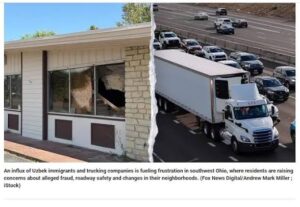
Hamilton Township is located in Warren County, southwest Ohio, within the greater Cincinnati region. The surrounding communities have experienced growth in trucking-related businesses, attracting attention from residents, local officials and national media.
The trucking industry plays an important role in the American economy. However, concerns have emerged about how some companies operate, particularly businesses suspected of using misleading registration information or avoiding transportation safety requirements.
Residents have questioned the number of commercial vehicles operating in their neighborhoods and the growing presence of trucking companies registered at residential or shared business addresses.
Some residents believe local infrastructure and enforcement resources have struggled to keep pace with these changes.
The controversy is not limited to transportation. Community members have also raised questions about population growth, language barriers, school capacity and neighborhood development.
A November 4 township meeting became an important moment in the debate. Dozens of residents reportedly attended and addressed trustees about their concerns.
The discussion included trucking operations, alleged business fraud, community safety and the expansion of religious and community facilities.
These issues have turned Hamilton Township into part of a broader national debate about immigration, commercial driver licensing and transportation oversight.
Fox News+1
Five-Day Trucking Crackdown Produces 561 Traffic Stops
One of the most significant developments was the five-day enforcement operation conducted from October 19 through October 23.
Multiple agencies coordinated the initiative to examine commercial vehicles and identify possible violations.
According to information presented by Police Chief Quillan Short, the operation produced the following results:
| Enforcement activity | Reported results |
|---|---|
| Traffic stops | 561 |
| Truck inspections | 258 |
| Citations issued | 423 |
| Vehicles placed out of service | 73 |
| Drivers placed out of service | 49 |
| Total arrests | 36 |
| Immigration-related arrests | 31 |
These figures demonstrate the scale of the enforcement effort.
The 73 vehicles placed out of service were considered unsuitable for continued operation under the relevant enforcement findings. Meanwhile, 49 drivers were also placed out of service.
The 36 arrests included 31 involving immigration-related offenses. The remaining arrests were not described in the same immigration-related category.
It is important to distinguish between an arrest, a citation and a final legal finding. An arrest does not establish guilt, and immigration-related charges do not automatically establish involvement in trucking fraud or unsafe driving.
Nevertheless, the operation has increased pressure on authorities to examine whether existing transportation regulations are being properly enforced.
For residents concerned about commercial traffic, the crackdown represents a significant enforcement response.
Fox News+1
Residents Raise Concerns About Changing Neighborhoods
Beyond the trucking industry, residents have described broader concerns about changes in their neighborhoods.
During the November 4 meeting, community members reportedly discussed experiences involving traffic congestion, commercial vehicles, school resources and interactions with some newcomers.
One resident, identified by Fox News Digital under the pseudonym Jane, described difficulties involving neighbors and said the situation eventually contributed to her decision to leave a home she had purchased in the area.
Her allegations included problems involving children, property, parked trucks and interactions with neighbors.
Other residents expressed concerns about groups gathering near residential properties and the impact of commercial vehicles on local streets.
These accounts reflect the experiences reported by individual residents. They should not be treated as independently established evidence of widespread misconduct by Uzbek immigrants or any other nationality.
The distinction matters because Hamilton Township’s debate involves several separate issues. Trucking violations require transportation enforcement. Property disputes require appropriate local responses. School capacity requires education planning. Immigration matters fall under the relevant state and federal authorities.
Combining all these issues into a single explanation risks overlooking the specific causes of each problem.
Still, residents want local officials to take their complaints seriously and provide clear answers about what can be done.
Uzbek Immigrant Community Becomes Part of the Debate
The growing presence of Uzbek immigrants has become a major focus of the controversy.
Reports describe southwest Ohio as an increasingly important location for Uzbek-owned trucking businesses and immigrant communities.
According to figures cited in recent reporting, 2024 Census data recorded approximately 1,500 Uzbekistan-born residents in Greater Cincinnati and around 3,800 across Ohio.
Community leaders have suggested that the actual population may be higher when American-born children and other family members are included.
The growth of immigrant-owned businesses is not unusual in the American economy. Immigrants have historically established businesses in transportation, construction, hospitality and other industries.
However, the rapid growth of a particular commercial sector can create challenges when local infrastructure, regulatory oversight and community engagement do not develop at the same pace.
In Hamilton Township, some residents have questioned whether authorities have sufficient resources to monitor the expanding trucking industry.
Others have expressed concerns about language barriers and cultural differences.
These issues require constructive communication rather than assumptions about people based on their nationality or religion.
The Uzbek community also has an interest in addressing legitimate public concerns. Local reporting highlighted a statement attributed to Trustee Darryl Cordrey that described mutual respect, open communication and cooperation as important ways to move forward.
The message reportedly emphasized the willingness of community members to listen to residents and work toward practical solutions.
That approach could become important as tensions continue to attract attention.
Press Pass USA+1
Alleged Trucking Fraud Raises Questions About Business Registration
Another major issue involves allegations of fraud within parts of the commercial trucking industry.
Transportation businesses must follow federal registration requirements and maintain accurate information about their vehicles, drivers and operations.
However, regulators have long faced challenges involving companies that attempt to avoid safety enforcement by changing their business identities.
One practice commonly described as a chameleon carrier involves a trucking company allegedly changing its identity or operating under a new business registration after accumulating serious safety violations.
This can make it harder for regulators, customers and insurers to identify a company’s previous compliance history.
Investigative reporting has raised questions about trucking companies operating from shared residential addresses in southwest Ohio.
Some reports have also highlighted unusual figures in federal transportation records, including claims involving exceptionally large vehicle fleets or mileage totals.
Such information can warrant regulatory scrutiny. However, an unusual registration or shared address is not, by itself, proof of fraud.
Investigators must establish whether companies deliberately provided false information or violated applicable transportation rules.
The distinction is important because legitimate trucking companies can also operate from shared commercial locations, use administrative offices and maintain complex business structures.
For Hamilton Township, the central question is whether authorities can identify companies that break the law without disrupting businesses that comply with safety and registration requirements.
A stronger system of verification could help protect legitimate operators while making it harder for fraudulent companies to escape accountability.
New York Post+1
Why Truck Safety Has Become a Major Concern
Commercial trucking safety is another major issue driving the controversy.
Large trucks share roads with passenger vehicles, motorcycles, cyclists and pedestrians. A serious collision involving a commercial vehicle can have devastating consequences.
Drivers must follow federal and state requirements involving licensing, vehicle maintenance, hours of service and safe driving practices.
Commercial Driver’s License (CDL) requirements are particularly important because operating a heavy truck requires specialized training and knowledge.
Authorities must ensure that drivers possess the necessary qualifications before allowing them to operate commercial vehicles.
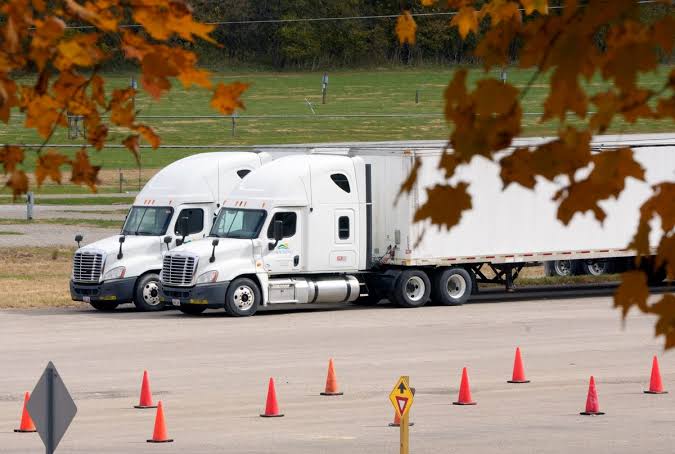
Residents in southwest Ohio have also raised concerns about trucks parked near residential areas, traffic congestion and the condition of commercial vehicles.
Poorly maintained trucks can create hazards for everyone using public roads.
Likewise, drivers who operate without appropriate qualifications can put themselves and other road users at risk.
These concerns are not specific to immigrants. Every commercial driver and trucking company must meet the same applicable safety standards.
A successful enforcement strategy should therefore focus on measurable violations rather than nationality.
Federal Immigration and CDL Enforcement Adds Pressure
The Hamilton Township controversy is unfolding alongside a broader federal effort to strengthen commercial transportation enforcement.
Federal transportation authorities have increased scrutiny of commercial driver’s licenses, driver qualifications and English-language proficiency.
The debate surrounding non-domiciled CDLs has become particularly significant.
A non-domiciled CDL is a commercial driver’s license issued to an eligible person who does not meet the standard state-domicile requirement. Federal rules establish eligibility conditions and documentation requirements for these licenses.
The federal government has raised concerns about improperly issued licenses and drivers who do not meet applicable qualification standards.
Recent enforcement figures cited in reporting include approximately 34,000 drivers placed out of service and more than 31,000 commercial licenses revoked or canceled in connection with broader regulatory efforts.
These figures concern national enforcement activities, not exclusively Hamilton Township.
English-language proficiency is another important part of the debate.
Federal commercial driving rules require drivers to demonstrate the ability to understand and communicate in English sufficiently to perform essential safety-related duties.
This includes understanding traffic signs, communicating with authorities and responding to questions during inspections.
However, language requirements must be applied according to the relevant legal standards. A driver’s accent or nationality does not establish an inability to meet those requirements.
The broader objective should be to ensure that every driver can operate safely and communicate effectively during official inspections.
Fox News+2
Ohio Lawmakers Consider Stronger Commercial Driver Requirements
The growing controversy has also attracted attention from Ohio lawmakers.
State Representative Michelle Teska has reportedly discussed efforts to tighten commercial driver’s license requirements, including English-language testing.
The issue has become part of a wider discussion about whether existing licensing procedures provide sufficient protection against unqualified drivers.
Supporters of stricter requirements argue that commercial drivers must demonstrate a clear understanding of road signs, safety instructions and communication procedures.
They believe stronger testing and verification could help prevent accidents and improve confidence in the trucking industry.
However, any legislative changes would need to follow the appropriate state and federal legal frameworks.
The state also faces a practical challenge: ensuring that stricter requirements do not unfairly exclude qualified drivers or create unnecessary barriers for legitimate businesses.
Ohio’s trucking industry depends on a large workforce to transport goods across the state and throughout the country.
Regulatory improvements must therefore balance public safety with the need for a reliable transportation workforce.
The discussion in Hamilton Township could add momentum to these legislative efforts.
Nevertheless, a proposal or public statement should not be confused with an enacted law. Any changes would depend on the legislative process and the final language adopted.
Fox News+1
Fatal Truck Crash Adds Urgency to the Safety Debate
Fatal commercial vehicle accidents have added urgency to discussions about trucking safety in Ohio and neighboring states.
One case highlighted in recent reporting involved 21-year-old Tobias Forsythe, a University of Massachusetts Lowell student and soccer goalkeeper.
Forsythe was killed in a July 5, 2026, collision involving a semi-truck near Columbus, according to reports.
The truck driver, identified as Bekhzod Asrarov, an Uzbek national, faced criminal allegations connected to the collision.
Reports also described allegations involving the handling of dash-camera evidence.
It is essential to recognize that criminal charges and allegations must be assessed through the legal process. The existence of a case does not justify blaming an entire immigrant population.
Nevertheless, fatal crashes involving commercial vehicles raise important questions about driver qualifications, vehicle safety and regulatory supervision.
Families affected by these tragedies deserve thorough investigations and accountability where violations are established.
For transportation regulators, preventing similar incidents requires consistent inspections, effective licensing procedures and reliable enforcement.
The Hamilton Township crackdown has therefore become part of a much larger conversation about how to keep American roads safe.
New York Post+1
Truck Parking and Zoning Become Local Political Issues
Commercial truck parking has emerged as another source of tension in the Hamilton Township area.
Large trucks require designated parking facilities where drivers can safely leave their vehicles during legally required rest periods.
However, parking operations located close to residential neighborhoods can create noise, traffic and land-use concerns.
Township officials have already considered measures involving standalone truck parking facilities.
A March 4, 2026, trustee meeting agenda documented discussions about a six-month moratorium intended to provide time to evaluate a potential zoning amendment.
The proposal focused on temporarily pausing the expansion of properties used solely for semi-truck storage.
Officials clarified that the measure was not intended to prevent warehouses and industrial buildings from maintaining truck parking as an accessory use.
The discussion reflected concerns about the volume of trucks and related enforcement issues associated with standalone parking operations.
This is an important distinction. The township’s zoning discussion concerned land use and truck parking, rather than a blanket prohibition on immigrant-owned businesses.
Local authorities must balance several competing interests:
Protecting residential neighborhoods from excessive truck traffic.
Providing adequate parking for commercial drivers.
Ensuring businesses follow zoning requirements.
Preventing unsafe roadside parking.
Supporting legitimate transportation and logistics operations.
A clear zoning framework could help businesses understand where truck parking is permitted while giving residents greater confidence that local regulations are being followed.
hamilton-township.org+1
Schools and Community Resources Face Additional Questions
Residents have also raised concerns about the effect of population growth on local schools.
Some community members reportedly described increasing numbers of students who speak languages other than English at home.
Schools serving growing communities may need additional resources, including language support, classroom capacity and trained staff.
These challenges are not unique to Hamilton Township. Many American communities face similar questions when population growth occurs faster than school funding and infrastructure planning.
Students who are learning English may require additional educational assistance.
At the same time, schools must ensure that every child receives equal access to education.
The issue should be addressed through enrollment data, staffing assessments and appropriate funding decisions.
It would be inaccurate to assume that immigrant children are responsible for declining educational outcomes without examining actual school performance and available resources.
Local officials and school administrators can help reduce tensions by providing transparent information about enrollment trends and resource requirements.
What Hamilton Township Officials Could Do Next
The controversy has placed local leadership under pressure to demonstrate that residents’ concerns are being addressed.
However, township officials cannot independently resolve every issue connected to commercial trucking and immigration.
Different agencies have different responsibilities.
Local police can investigate traffic violations and coordinate commercial vehicle enforcement. Zoning officials can address parking and land-use complaints. State regulators can oversee applicable licensing requirements, while federal agencies handle relevant immigration and interstate transportation matters.
A coordinated response could include several practical steps.
1. Regular commercial vehicle inspections
Authorities could continue targeted inspections to identify unsafe trucks, licensing problems and violations of applicable transportation regulations.
2. Stronger business verification
Regulators could examine suspicious company registrations and identify businesses that may be attempting to avoid enforcement.
3. Clear truck parking regulations
Township officials could establish transparent rules governing where commercial vehicles may be stored or parked.
4. Better communication with residents
Regular public meetings could provide opportunities for residents to report problems and receive updates from officials.
5. Community cooperation
Local leaders could encourage dialogue between established residents, immigrant families and business owners.
6. Transparent enforcement reporting
Publishing accurate information about inspections, citations, arrests and final case outcomes would help prevent misinformation.
These steps could address legitimate concerns while avoiding unnecessary hostility toward law-abiding residents.
Could the Crackdown Affect Ohio’s Trucking Industry?
The enforcement operation could have consequences beyond Hamilton Township.
Trucking is essential to the movement of food, construction materials, consumer products and industrial supplies.
Companies depend on qualified drivers to maintain delivery schedules and serve customers.
If regulators identify unsafe operators and remove unqualified drivers, the industry could experience short-term operational disruptions.
Businesses that rely on drivers who fail to meet licensing or safety requirements may need to recruit replacements.
Smaller companies could face additional compliance costs, particularly if they need to update documentation, improve vehicle maintenance or review their registration procedures.
However, stronger enforcement could also benefit legitimate operators.
Companies that invest in safe vehicles, qualified drivers and accurate records should not have to compete against businesses that gain an unfair advantage through regulatory violations.
There is also a wider concern about truck parking availability.
The Ohio Department of Transportation’s 2026 truck parking working paper explains that limited parking can reduce driver productivity and force truckers to search for suitable spaces during required rest periods.
This problem highlights why transportation enforcement and parking infrastructure must be considered together.
A crackdown can address violations, but long-term improvements also require sufficient legal parking facilities and effective industry planning.
Cloudinary+1
What Happens Next in Hamilton Township?
The coming months could determine whether the controversy leads to lasting changes in local enforcement and transportation policy.
Residents are likely to continue pressing township trustees for stronger oversight of trucking operations and better responses to neighborhood complaints.
The October enforcement operation has already demonstrated that local and regional agencies can coordinate large-scale inspections.
However, one five-day operation cannot establish whether problems have been permanently resolved.
Authorities will need to determine whether the violations identified during the crackdown represent isolated cases or broader patterns requiring additional investigation.
The township may also need to review its zoning policies and consider whether existing truck parking regulations adequately protect residential neighborhoods.
At the state level, proposed CDL reforms could become another important part of the discussion.
Meanwhile, immigrant business owners and community representatives have an opportunity to participate in discussions about safety, compliance and neighborhood relations.
The most effective solution will require cooperation between residents, law enforcement, regulators and responsible trucking companies.
Conclusion: Ohio Trucking Crackdown Puts Hamilton Township Under the Spotlight
Hamilton Township has become an important example of the challenges facing American communities experiencing rapid growth in commercial trucking operations.
Residents have raised concerns about road safety, alleged transportation fraud, school resources and changing neighborhoods. Meanwhile, a five-day enforcement operation produced 561 traffic stops, 258 truck inspections, 423 citations and 36 arrests.
The results have intensified calls for stronger oversight of trucking businesses and commercial driver qualifications.
However, enforcement must remain focused on individual violations rather than assumptions about an entire immigrant community.
The wider challenge is ensuring that transportation businesses follow the law, commercial drivers meet safety standards and local neighborhoods receive appropriate protection.
As Ohio lawmakers and local officials consider possible responses, Hamilton Township’s experience could contribute to the national debate over immigration, trucking regulation and public safety.
Ultimately, residents will judge the response by whether roads become safer, regulations are enforced consistently and communities can move forward without unnecessary division.
Frequently Asked Questions (FAQs)
1. Why is Hamilton Township, Ohio, facing controversy over immigration?
Hamilton Township has attracted attention because of concerns involving expanding trucking operations, immigrant arrivals, alleged business fraud, road safety and changing neighborhood conditions. Residents raised these issues during a November 4, 2026, township meeting.
2. What happened during the Ohio trucking crackdown?
A multi-agency enforcement operation conducted between October 19 and October 23 resulted in 561 traffic stops, 258 truck inspections and 423 citations. Authorities also reported 73 vehicles and 49 drivers placed out of service.
3. How many people were arrested during the crackdown?
Authorities reported 36 arrests during the five-day operation. Of those, 31 involved immigration-related offenses.
4. Why are Uzbek immigrants being mentioned in the Hamilton Township controversy?
Recent reporting has highlighted the growth of Uzbek immigrant communities and Uzbek-owned trucking businesses in southwest Ohio. Some residents have raised concerns about trucking compliance and neighborhood changes. However, individual allegations should not be attributed to the entire Uzbek community.
5. What are residents complaining about?
Residents have raised concerns about commercial truck traffic, parking, alleged business fraud, road safety, school resources and neighborhood conditions. Some have also requested stronger oversight from township officials.
6. What is a chameleon trucking company?
A chameleon carrier is a term used for a trucking business that allegedly changes its identity or registration to avoid its previous safety record and regulatory enforcement. Authorities investigate such cases to determine whether companies have violated federal transportation rules.
7. Are Ohio lawmakers considering stricter CDL requirements?
Yes. Ohio Representative Michelle Teska has reportedly discussed legislation to strengthen commercial driver’s license requirements, including English-language testing. Any proposed changes would need to pass the appropriate legislative process.
8. Does the trucking crackdown target all immigrant drivers?
No. Transportation enforcement should focus on individual drivers and companies that violate applicable laws. Immigration status or nationality alone does not establish that someone has committed a trucking violation.
9. Could the crackdown affect trucking companies in Ohio?
Yes. Companies found violating licensing, registration or vehicle safety requirements may face penalties or operational restrictions. However, stronger enforcement could also benefit legitimate trucking businesses by improving compliance across the industry.
10. What happens next in Hamilton Township?
Residents are expected to continue seeking answers from local officials. Future developments could involve additional inspections, zoning discussions, licensing reforms and greater cooperation between residents and the immigrant business community.
About the Author