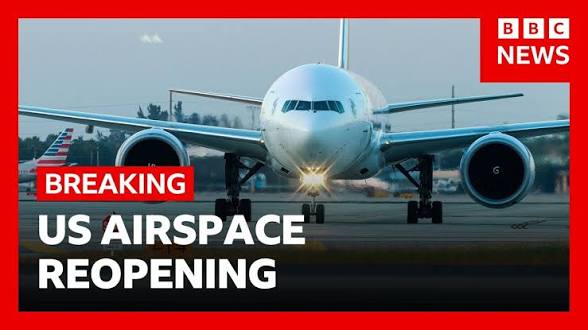
The United States is facing widespread aviation disruption after a major communications failure forced the Federal Aviation Administration (FAA) to ground flights nationwide. Thousands of passengers were stranded at airports as airlines cancelled services, delayed departures and struggled to restore normal operations.
The incident began on November 13, 2026, when problems affected the communications network used by air traffic controllers. Federal officials later identified a possible connection to a router installed during telecommunications modernization work involving L3Harris Technologies.
The outage raised serious questions about the reliability of America’s aging air traffic control infrastructure. It also placed L3Harris under intense scrutiny as investigators examined whether contractor error or defective equipment triggered the disruption.
More than 16,000 flight cancellations and widespread delays became a major concern as the aviation system struggled to recover. The overall disruption affected passengers, airlines, airports and businesses across the country.
Transportation Secretary Sean Duffy called attention to the possible router failure and demanded answers about the circumstances surrounding the incident.
However, officials have not established the precise cause. The investigation must determine whether the problem resulted from incorrect installation, human error or a faulty piece of equipment.
What Happened During the US Flight Chaos?
The aviation crisis began on Friday, November 13, when the FAA experienced telecommunications problems affecting multiple air traffic control facilities.
At approximately 3:54 p.m. Eastern Time, the agency ordered a nationwide ground stop. The decision prevented most departing flights from taking off while officials investigated the communications failure.
The restriction affected airports across the United States.
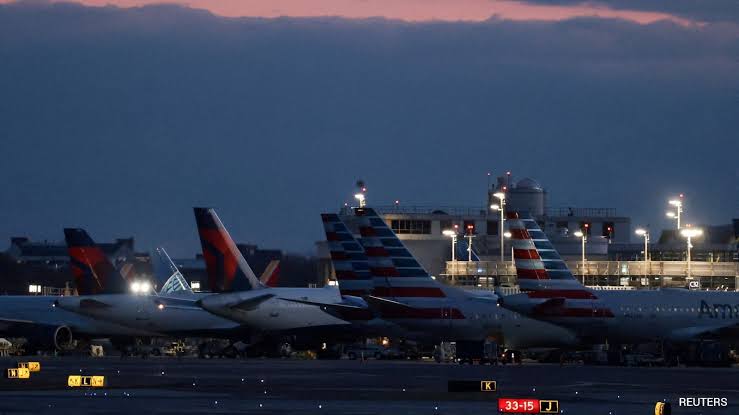
Passengers at major airports suddenly faced cancelled departures, lengthy delays and uncertainty about their travel plans.
The FAA eventually lifted the nationwide ground stop at approximately 8:15 p.m. Eastern Time. However, restoring normal operations was not immediate.
Aircraft and flight crews were already out of position. Airlines also needed time to reorganize schedules and accommodate stranded passengers.
According to reporting by Reuters, the communications failure caused widespread disruption across the American aviation network. The incident became one of the most significant nationwide flight interruptions in recent years.
The effects continued into Saturday, November 14, as airlines worked to clear the backlog.
L3Harris Router Under Investigation
L3Harris Technologies has become a central focus of the investigation.
The company is a major government contractor involved in maintaining and modernizing communications infrastructure supporting the National Airspace System.
According to Transportation Secretary Sean Duffy, the disruption may have started during routine telecommunications upgrade work.
The project involved replacing older copper communication lines with modern fiber-optic connections.
During this process, a router reportedly began sending excessive connection requests to other network devices.
This unusual activity overwhelmed parts of the communications system.
As a result, several air traffic control facilities experienced unstable communications.
Duffy questioned whether the contractor had made an installation mistake or whether the equipment itself was defective.
He also suggested that the government would hold responsible parties accountable if investigators identified failures.
However, L3Harris has not been formally established as responsible for the incident.
The company said it was cooperating with the FAA investigation and supporting efforts to understand the conditions that led to the nationwide ground stop.
The distinction is important because investigators still need to determine exactly what happened.
How a Faulty Router Could Disrupt Thousands of Flights
A router is a networking device that directs information between connected systems.
In aviation, communications networks help air traffic control facilities exchange essential information.
These systems support coordination between controllers, aircraft and other operational facilities.
When a router malfunctions, it can interrupt the flow of information across connected networks.
That creates serious problems for air traffic management.
During the November 13 incident, officials said a router may have flooded other routers with excessive connection attempts.
According to reports, the affected equipment generated approximately 1,000 connection attempts every four to five seconds.
This abnormal activity created instability across parts of the FAA communications network.
The problem reportedly affected 17 of the FAA’s 22 en route air traffic control centers.
These facilities play an important role in managing aircraft traveling between airports.
They help controllers maintain safe separation, coordinate routes and communicate important instructions.
If communication becomes unreliable, controllers cannot operate normally.
Even when aircraft remain physically capable of flying, air traffic authorities must ensure that the necessary safety systems are working.
That is why the FAA ordered the nationwide ground stop.
The decision demonstrated how a technical problem involving a limited number of network components can affect an entire national transportation system.
Why Did the FAA Ground Flights Nationwide?
The FAA’s primary responsibility is to maintain aviation safety.
Air traffic controllers depend on reliable communications to coordinate aircraft movements.
If communication systems become unstable, controllers may lose access to information needed to manage traffic safely.
The FAA therefore decided to restrict departures while technicians investigated the problem.
A nationwide ground stop is an extraordinary measure.
It can affect thousands of flights, but it also prevents additional aircraft from entering an already disrupted system.
Officials considered the communications failure serious enough to justify the restriction.
Transportation officials emphasized that the decision was precautionary.
The government also said there was no evidence that the incident resulted from a cyberattack.
This was important because the sudden nationwide shutdown initially triggered speculation about possible hacking or malicious activity.
Officials also rejected claims that a newly introduced artificial intelligence system caused the problem.
Instead, attention shifted toward aging telecommunications equipment and the modernization work being carried out across the FAA network.
More Than 16,000 Flights Affected Across America
The scale of the disruption became clearer as aviation tracking companies published updated figures.
Thousands of flights were cancelled during the initial shutdown and the recovery period.
Many additional flights experienced delays.
Different reports used different measurement periods, which explains why cancellation totals changed as the situation developed.
Reuters initially reported that approximately 10,000 flights had been cancelled, while other reports documented substantially larger combined figures for cancellations and delays.
FlightAware and Cirium data also highlighted the continuing disruption on Saturday.
The important point is that the impact extended beyond the hours when the FAA ground stop remained active.
Airlines could not immediately return aircraft and crews to their scheduled locations.
As a result, passengers continued experiencing cancellations even after the restriction was lifted.
Major airports across the country faced operational pressure.
Chicago O’Hare, Atlanta’s Hartsfield-Jackson, New York-area airports and other major transportation hubs experienced significant disruption.
For travelers, the consequences included missed connections, overnight airport stays and unexpected changes to holiday and business travel plans.
The incident also demonstrated how quickly a communications failure can create nationwide transportation problems.
Aging FAA Infrastructure Raises Serious Questions
The L3Harris router incident has renewed attention on the condition of America’s air traffic control infrastructure.
Many parts of the FAA telecommunications network rely on older technology.
The government has faced criticism for allowing important systems to remain outdated for extended periods.
Modern aviation requires reliable digital communications.
However, upgrading a nationwide network is a complicated process.
Technicians must replace old equipment while ensuring that existing systems continue supporting daily operations.
The transition from copper wiring to fiber optics is an important part of that modernization effort.
Fiber-optic technology offers several advantages.
It can support faster data transmission, greater capacity and improved network performance.
However, modernization also creates operational risks when new equipment must work alongside older infrastructure.
The November 13 disruption highlighted those risks.
According to L3Harris, more than 70% of the planned conversion from copper to fiber-optic communications had been completed.
That means substantial modernization work remains.
The incident has raised questions about testing procedures, installation standards and the safeguards needed before new equipment becomes operational.
It has also strengthened calls for additional investment in the FAA network.
Sean Duffy Demands Answers From L3Harris
Transportation Secretary Sean Duffy has publicly questioned the circumstances surrounding the outage.
He said the government was examining whether contractor mistakes or defective equipment caused the router problem.
Duffy also criticized the condition of the FAA’s aging infrastructure.
His comments highlighted the government’s dependence on contractors responsible for maintaining essential aviation technology.
The transportation secretary has argued that the United States needs significant investment to modernize its air traffic control system.
Following the disruption, Duffy renewed calls for approximately $50 billion in modernization funding.
The proposal reflects growing concerns about the long-term reliability of aviation communications.
However, funding alone will not solve every problem.
The government must also improve equipment testing, maintenance procedures and contractor oversight.
Investigators will need to establish whether the incident could have been prevented through better installation practices or additional safeguards.
The findings could influence future contracts and modernization requirements.
L3Harris Responds to the FAA Investigation
L3Harris has acknowledged the seriousness of the disruption.
The company said it was working closely with the FAA to understand the conditions that led to the November 13 ground stop.
It also emphasized its commitment to safety and reliability.
The contractor has been involved in the modernization of communications infrastructure supporting America’s National Airspace System.
Its work includes replacing legacy copper connections with fiber-optic technology.
L3Harris reported that it had completed more than 70% of the planned conversion.
The company has not publicly accepted responsibility for causing the outage.
That is an important distinction because the investigation remains ongoing.
Officials must establish whether the router malfunctioned because of defective hardware, installation problems or another technical issue.
The findings could have major consequences for the company and its relationship with federal aviation authorities.
For now, L3Harris remains under scrutiny while investigators examine the equipment and the network conditions surrounding the incident.
Was the US Flight Outage a Cyberattack?
The sudden nationwide ground stop initially created concerns about a possible cyberattack.
With flights grounded across the country, passengers and aviation observers questioned whether hackers had targeted America’s air traffic control system.
However, federal officials said they had no evidence of a cyberattack.
The investigation instead focused on a technical communications failure associated with network modernization work.
Officials also addressed speculation about artificial intelligence.
A new FAA-related AI system had attracted attention because of its recent deployment.
However, authorities said the system was not responsible for the disruption.
The available evidence points toward a problem involving communications equipment.
Still, the investigation must establish the precise technical cause before officials can provide a complete explanation.
The incident shows why clear communication from authorities is important during major transportation emergencies.
Unconfirmed cybersecurity claims can create unnecessary public concern.
Why Flights Remained Delayed After the Ground Stop Ended
One of the biggest questions for travelers was why flights continued to be cancelled after the FAA lifted its nationwide restriction.
The answer involves the complicated logistics of airline operations.
An airline schedule depends on several connected factors.
Aircraft must be available at the correct airports.
Pilots and flight attendants must also be in the right locations and comply with mandatory rest requirements.
When a nationwide shutdown occurs, these arrangements can quickly fall apart.
For example, an aircraft scheduled to fly from New York to Florida may become stranded in another state.
Its next scheduled departure cannot operate until the aircraft returns to the correct location.
Crew members may also become unavailable because of scheduling restrictions.
Airlines must therefore rebuild their schedules while handling thousands of affected passengers.
This creates a ripple effect.
A single cancelled flight can affect several later departures involving the same aircraft and crew.
That is why the November 13 disruption continued affecting air travel throughout the weekend.
Officials expected operations to improve by Sunday evening, November 15, although individual airlines could experience different recovery timelines.
What Should Passengers Do After the Flight Disruptions?
Passengers affected by the US flight chaos should check their airline’s official communication channels before travelling to the airport.
Flight information can change quickly during large-scale disruptions.
Travelers should follow several important steps.
1. Check flight status regularly
Use the airline’s website or mobile application to confirm departure times and cancellation notices.
Do not rely entirely on older airport information.
2. Contact the airline about rebooking
Passengers whose flights were cancelled should ask about available replacement services.
Several airlines introduced travel waivers for affected customers.
These policies may allow eligible passengers to change their travel dates without additional change fees.
3. Keep travel receipts
Passengers who pay for hotels, meals or alternative transportation should retain their receipts.
Refund and reimbursement policies depend on the airline, ticket conditions and applicable passenger protection rules.
4. Confirm connecting flights
Travelers with connecting services should contact their airline to confirm whether the remaining journey is still available.
A delay on the first flight can affect the entire itinerary.
5. Avoid unnecessary airport trips
If an airline confirms a cancellation, passengers should check their rebooking options before travelling.
Official updates can help prevent additional inconvenience.
What Happens Next in the L3Harris Router Investigation?
The next stage will involve determining exactly why the router caused communications instability.
Investigators are expected to examine the equipment, installation process and network configuration.
They will also need to understand why the failure affected multiple air traffic control facilities.
Several important questions remain unanswered.
Was the router defective?
Did technicians install or configure the equipment incorrectly?
Were sufficient safety checks completed before the upgrade?
Could additional network protections have prevented the failure from spreading?
The answers will help establish responsibility and identify measures to prevent another nationwide disruption.
The investigation could also influence the FAA’s future modernization strategy.
If officials discover weaknesses in the testing process, new requirements may be introduced for contractors working on critical aviation infrastructure.
L3Harris could also face increased scrutiny over its responsibilities as a major government technology contractor.
However, conclusions about liability should wait until the investigation is complete.
Why the Incident Matters for America’s Aviation Future
The November 13 outage exposed a major weakness in America’s aviation infrastructure.
The United States operates one of the world’s busiest and most complex air transportation systems.
Millions of passengers depend on reliable flights every year.
Airlines also transport essential goods, support businesses and connect communities across the country.
When air traffic communications fail, the consequences extend far beyond airport terminals.
Businesses can lose valuable time.
Travelers can miss important appointments.
Airlines can face substantial operational costs.
The disruption also creates additional pressure on airport employees and air traffic controllers.
Modernization is therefore not simply a technology project.
It is an essential investment in national transportation reliability.
The FAA must ensure that new equipment can operate safely alongside older systems.
It must also establish strong backup arrangements and effective testing procedures.
The L3Harris router incident provides a clear warning about the risks of upgrading critical infrastructure without sufficient safeguards.
Conclusion: L3Harris Faces Questions After Nationwide Flight Chaos
The nationwide US flight disruption has placed America’s aging air traffic control network under renewed scrutiny.
A possible router failure during L3Harris modernization work triggered communications problems that forced the FAA to ground flights across the country.
Thousands of cancellations and widespread delays left passengers stranded and airlines struggling to restore normal schedules.
Transportation Secretary Sean Duffy has demanded answers and questioned whether contractor error or defective equipment caused the problem.
L3Harris has confirmed that it is cooperating with the investigation.
However, the precise cause and responsibility remain unresolved.
The incident highlights the importance of reliable communications infrastructure in modern aviation.
It also demonstrates why modernization projects must include strong testing, effective safeguards and proper oversight.
As investigators continue examining the router failure, the biggest challenge for the FAA will be preventing another nationwide aviation disruption.
America’s air travel system cannot afford repeated failures involving the technology that keeps aircraft connected and safely moving through the skies.
Frequently Asked Questions (FAQs)
1. What caused the US flight chaos in November 2026?
A communications failure affecting the FAA’s air traffic control network caused the disruption. Officials are investigating whether a faulty router or contractor error during L3Harris modernization work triggered the problem.
2. What is the L3Harris router controversy?
The controversy concerns a router reportedly installed during telecommunications upgrade work. Transportation officials said it may have flooded other network devices with excessive connection requests, disrupting communications across multiple FAA facilities.
3. How many flights were cancelled during the FAA outage?
Thousands of flights were cancelled during the November 13 shutdown and its aftermath. Reports also documented tens of thousands of combined delays and cancellations, depending on the reporting period and data provider.
4. Why did the FAA ground flights nationwide?
The FAA ordered a nationwide ground stop because communications problems affected multiple air traffic control centers. The restriction was a precautionary measure intended to protect aviation safety.
5. Did L3Harris admit responsibility for the outage?
No. L3Harris said it was cooperating with the FAA investigation. Officials have not yet established whether the incident resulted from contractor error or defective equipment.
6. Was the November 2026 FAA outage caused by hackers?
Federal officials said there was no evidence that a cyberattack caused the disruption. The investigation focused on a technical communications failure.
7. Did artificial intelligence cause the flight cancellations?
Officials said the newly introduced FAA-related AI system was not responsible for the outage. Attention instead focused on telecommunications equipment and network modernization work.
8. Who is Sean Duffy, and what did he say about the outage?
Sean Duffy is the US Transportation Secretary. He questioned whether L3Harris made mistakes during the network upgrade or installed a faulty router. He also called for greater investment in air traffic control modernization.
9. When will US flights return to normal?
Officials expected airline operations to recover by Sunday evening, November 15, 2026. However, individual airlines and airports could experience continuing delays as aircraft and crews returned to their scheduled locations.
10. What is the FAA doing to prevent another nationwide flight shutdown?
The FAA is investigating the communications failure and working with L3Harris to assess the affected equipment. Longer-term efforts include replacing aging copper infrastructure with modern fiber-optic connections and improving network reliability.
11. Can passengers receive refunds after cancelled flights?
Passengers may qualify for refunds when airlines cancel flights or make significant changes, depending on applicable US Department of Transportation rules and the circumstances. Travelers should contact their airline and review their available options.
12. Why is the FAA replacing copper wires with fiber optics?
Fiber-optic connections can provide faster data transmission and greater network capacity. Replacing older copper infrastructure is part of the broader effort to modernize America’s air traffic control communications system.
About the Author