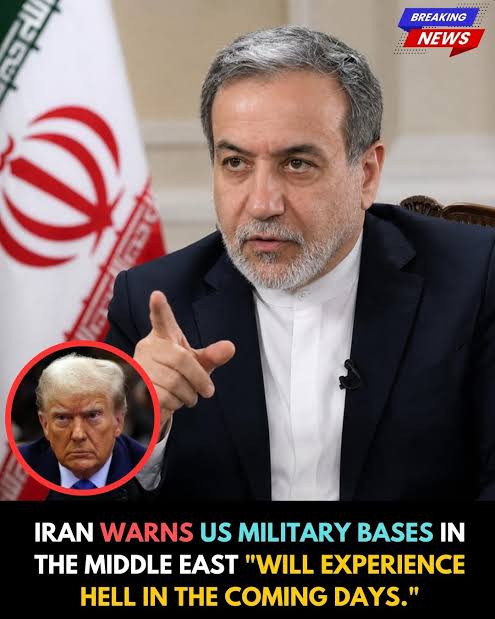
Iran has issued a defiant warning to the United States, raising tensions in an already dangerous confrontation between Washington and Tehran. Iranian Foreign Minister Abbas Araghchi has warned that Iranian forces will “rain down hell” if the United States chooses renewed military action instead of accepting Tehran’s proposed framework for ending the conflict.
The warning puts fresh pressure on US President Donald Trump as diplomatic efforts face uncertainty. Tehran insists that its two-day proposal remains on the table. However, Washington has questioned whether Iran’s demands are realistic.
The latest confrontation highlights how quickly the situation could deteriorate. Both countries continue to exchange warnings, while the future of the strategically important Strait of Hormuz remains a major concern.
Iran’s message is direct: accept its conditions and pursue peace, or face the possibility of another military confrontation.
Iran Issues Defiant Ultimatum to the United States
Iranian Foreign Minister Abbas Araghchi delivered the warning on November 8 through a post on the social media platform X.
He called on Washington to make a decision following the recent US midterm elections. According to Araghchi, the responsibility now rests with the White House to choose between diplomacy and renewed conflict.
“Our 2-day proposal stands: meet the requirements, including end to war on all fronts, and you will see results,” Araghchi wrote.
He then issued a stark warning about the consequences of rejecting the proposal.
“Or choose war, and see our alert and battle-hardened Warriors rain down hell,” he added.
The statement quickly attracted international attention because it combined a diplomatic offer with an explicit military threat.
Tehran wants Washington to understand that it remains prepared for another confrontation. At the same time, Iran is presenting its proposal as an opportunity to stop the fighting.
The warning does not mean that another attack is inevitable. However, it demonstrates how fragile the diplomatic situation has become.
What Is Behind Iran’s Two-Day Peace Proposal?
At the centre of the latest dispute is an Iranian proposal designed to establish conditions for ending the conflict.
Araghchi says the framework could produce results within two days if Washington agrees to Tehran’s requirements.
The proposal includes an end to hostilities on all fronts. It also involves arrangements concerning the Strait of Hormuz, one of the world’s most important maritime energy routes.
According to reporting by UPI, Iran’s proposed framework includes several conditions for Washington.
These reportedly include sanctions relief, changes to the American military presence in the region and the unfreezing of Iranian assets.
In return, Tehran has indicated that it could reopen shipping routes through the Strait of Hormuz.
However, the complete details of the proposal have not been publicly established. Therefore, it remains unclear whether both governments could agree on the sequence and verification of these commitments.
The central disagreement concerns what each side must surrender before the other takes action.
Iran wants significant concessions before fully implementing its commitments. Washington, meanwhile, wants assurances that any agreement will address its security concerns.
This difference could make negotiations difficult even if both governments prefer to avoid another round of fighting.
Trump Warns Iran as US Military Forces Remain Ready
President Donald Trump has also sent a strong message to Tehran.
In comments reported by Al Jazeera on November 8, Trump said renewed American strikes were highly unlikely if negotiations made progress.
However, he did not completely rule out military action.
Trump said the possibility of further strikes would depend on whether Iran agreed to a strong agreement.
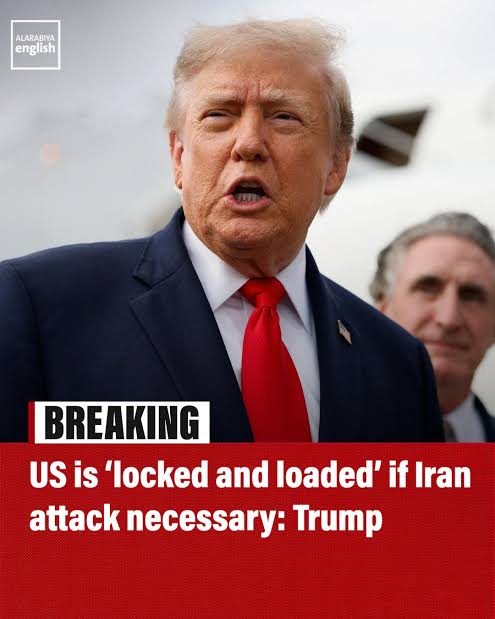
He also claimed that American forces had three aircraft carriers stationed in the region and were prepared to act if necessary.
The president further discussed potential targets inside Iran, including 38 bridges that he claimed American forces could destroy quickly.
These remarks demonstrate the pressure facing both governments.
Trump wants an agreement that addresses Washington’s demands. At the same time, his administration is maintaining a military posture designed to discourage Iran from taking further action.
For Tehran, these statements reinforce concerns about American military intentions.
For Washington, maintaining military readiness provides leverage during negotiations.
However, military threats can also make diplomacy more complicated. Each side may become reluctant to make concessions if doing so appears to weaken its position.
Iran Says Its Military Is Ready for Another Confrontation
Araghchi’s warning was accompanied by similar statements from Iranian military officials.
An adviser to the commander of Iran’s Islamic Revolutionary Guard Corps Aerospace Force warned that any new attack would trigger a severe response.
Brigadier-General Ali Belali said Iranian armed forces were prepared to respond if their opponents made what he described as a mistake.
He also claimed that Iran had upgraded its military capabilities following the previous period of fighting.
These statements appear designed to demonstrate that Tehran does not consider itself powerless in the confrontation.
Iran has repeatedly emphasised its missile capabilities, military readiness and ability to threaten targets across the wider region.
However, public statements about military strength should be treated carefully. Claims made by officials do not independently establish the operational effectiveness of particular weapons or systems.
Nevertheless, the rhetoric matters because it shows that Iranian leaders want to discourage another American attack.
The danger is that even a limited military incident could trigger a wider exchange of strikes.
Strait of Hormuz Remains a Major Point of Disagreement
The Strait of Hormuz is one of the most important elements of the ongoing dispute.
Located between Iran and Oman, the narrow waterway connects the Persian Gulf with the Gulf of Oman and the Arabian Sea.
It is a critical route for international oil and gas shipments.
Any prolonged disruption could affect energy supplies, shipping costs and global markets.
Iran’s proposal links the reopening of the waterway to broader political and security commitments from Washington.
This gives Tehran an important negotiating issue. It also creates concern among countries that depend on uninterrupted maritime trade.
For the United States and its partners, freedom of navigation remains a major priority.
For Iran, the waterway has become part of its wider strategy for influencing the conflict.
The disagreement is therefore not simply about military operations. It also concerns international trade, economic pressure and regional security.
A diplomatic agreement would need to address these competing interests.
Without a reliable arrangement, shipping companies and energy markets could continue facing uncertainty.
US Secretary of State Marco Rubio Questions Iran’s Demands
Washington has not welcomed all aspects of Tehran’s proposal.
US Secretary of State Marco Rubio expressed doubts about the possibility of an immediate diplomatic breakthrough.
Speaking to reporters on November 8, Rubio said that Iran’s demands were unacceptable in several respects.
He also questioned whether the two countries were close to reaching an agreement.
Rubio indicated that President Trump would prefer a diplomatic solution if one could be achieved.
However, he suggested that Washington would not accept conditions it considered unrealistic.
His comments reveal the central challenge facing negotiators.
Iran wants Washington to accept major changes before the conflict can fully end. The United States wants an agreement that protects its interests and provides meaningful security guarantees.
Both sides may support negotiations in principle, but that does not mean they agree on the terms.
This disagreement could keep the diplomatic process stalled.
US Midterm Elections Add Political Pressure
The latest Iranian ultimatum also came after the US midterm elections.
Araghchi suggested that the election results had affected diplomatic efforts between Washington and Tehran.
He argued that political developments in the United States had disrupted the atmosphere needed for negotiations.
According to his comments reported by Al Jazeera, mediators had not continued their previous visits following the election results.
He suggested that officials needed time to understand the political situation before diplomatic activity could resume.
The election results may also influence the political calculations surrounding the conflict.
A prolonged war can create pressure on an administration through public opinion, economic uncertainty and disagreements within Congress.
However, Iran’s interpretation of the election results should be distinguished from independently established explanations of American voters’ decisions.
The broader point is that domestic politics can influence international negotiations.
Trump must consider national security, economic consequences and political expectations when deciding how to approach Tehran.
Iran, meanwhile, may believe that political pressure in Washington creates an opportunity to secure better terms.
November 10 Update: Iran Says No Talks Are Underway
The diplomatic situation remains uncertain.
In a November 10 report, Reuters said Iranian security official Mohsen Rezaei stated that no negotiations were currently underway between Tehran and Washington.
Rezaei said Iran wanted a clear response to seven conditions outlined in an earlier interim agreement.
According to the report, Tehran was linking progress on the conditions to the reopening of the Strait of Hormuz and the resumption of talks.
The development suggests that the diplomatic process has not yet produced a breakthrough.
Although indirect communication and mediation efforts may continue, the public statements from both governments indicate substantial disagreements.
The situation is particularly sensitive because neither side has completely abandoned the possibility of military action.
Trump has played down the likelihood of major fighting restarting soon. However, he has not ruled out further strikes if negotiations fail.
Iran, for its part, continues to insist that its forces are prepared for another confrontation.
The latest developments therefore point to an uneasy situation rather than a confirmed peace agreement.
Why Iran’s Ultimatum Matters for the Middle East
Iran’s warning could have consequences beyond its immediate relationship with the United States.
The Middle East contains several important military, economic and political interests connected to the confrontation.
American forces operate across the region. Several US partners also have important security and economic relationships with Washington.
A renewed conflict could therefore increase pressure on neighbouring countries.
Regional governments may face difficult decisions about military cooperation, diplomatic mediation and protecting critical infrastructure.
There is also the possibility that tensions could affect shipping and energy markets.
Even without a direct attack on neighbouring countries, uncertainty surrounding the Strait of Hormuz could create economic consequences.
Oil prices, insurance costs and commercial shipping decisions can all respond to fears of disruption.
For countries that import substantial amounts of energy, the situation deserves close attention.
The longer the dispute continues, the harder it may become to separate military developments from wider economic consequences.
Could the United States and Iran Reach a Deal?
Despite the aggressive language, diplomacy remains a possible route forward.
Both governments have reasons to avoid an extended military confrontation.
For the United States, another prolonged conflict could create additional military and economic costs.
For Iran, continued fighting could increase pressure on its economy and infrastructure.
A negotiated arrangement could offer both sides an opportunity to reduce immediate tensions.
However, several difficult issues would need to be addressed.
First, both governments would need to agree on the order in which commitments are implemented.
Second, they would need a mechanism to verify compliance.
Third, disagreements over sanctions, military deployments and regional security would require serious negotiations.
Finally, the future of the Strait of Hormuz would need clear guarantees to restore confidence among international shipping operators.
Mediators could play an important role in helping both governments communicate without making public concessions.
Qatar has been involved in facilitating communication between Washington and Tehran, according to reporting on the proposed framework.
Nevertheless, mediation cannot guarantee success.
A breakthrough will depend on whether both governments are prepared to compromise on their most important demands.
What Happens If Diplomacy Fails?
The biggest concern is the possibility of renewed military action.
Iran has warned that it would respond forcefully if Washington launches new attacks.
The United States, meanwhile, continues to emphasise its military readiness.
If either government miscalculates the intentions of the other, the confrontation could escalate rapidly.
A new exchange of attacks could also create pressure on regional allies and increase the risk of further disruption to international shipping.
However, it is important to distinguish between official threats and confirmed military decisions.
Iran has not publicly established that it will launch a specific attack at a particular time. Similarly, Trump’s warnings do not confirm that another American strike has been authorised.
For now, the situation remains uncertain.
The coming diplomatic decisions could determine whether the latest ultimatum becomes another step towards negotiations or a warning before a fresh escalation.
Conclusion: Iran’s Warning Raises the Stakes
Iran’s defiant ultimatum has added another layer of tension to its confrontation with the United States.
Foreign Minister Abbas Araghchi has made clear that Tehran wants Washington to accept its two-day proposal and agree to conditions aimed at ending hostilities.
His warning that Iranian forces will “rain down hell” if the United States chooses war highlights the seriousness of the dispute.
Trump has indicated that diplomacy remains possible, but Washington has also rejected important elements of Iran’s demands.
The latest Reuters reporting further suggests that negotiations remain stalled, with Iranian officials saying no talks are currently underway.
The Strait of Hormuz, sanctions, military deployments and regional security remain major obstacles.
Ultimately, both governments face a choice between difficult negotiations and the risk of renewed conflict.
The world will be watching closely as the United States and Iran decide their next moves.
About the Author