His comments come at a particularly sensitive moment for the administration. Republican Representative Thomas Massie has introduced articles of impeachment against Hegseth, raising allegations involving military operations, congressional authority and the treatment of political opponents.
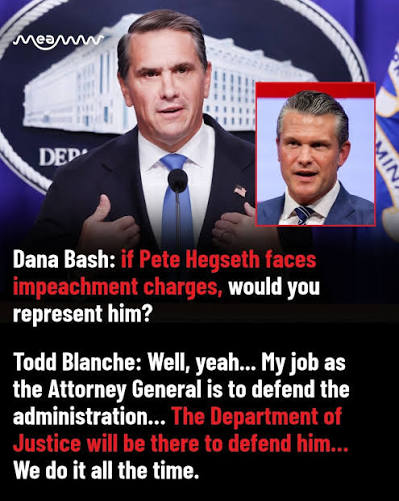
During an appearance on Fox News’ Fox & Friends on November 10, Blanche pushed back against criticism of Hegseth’s leadership. He emphasized that the defense secretary does not independently make military decisions without considering legal requirements.
The discussion has placed renewed attention on the relationship between the Pentagon and the Justice Department. It has also raised an important question: how does the administration determine whether military operations are legally justified?
Blanche’s defense offers a clear picture of the administration’s position. However, critics continue to demand greater transparency and congressional oversight.
What Todd Blanche Said About Pete Hegseth
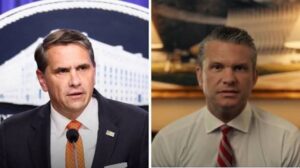
Blanche’s central argument is that Hegseth takes legal advice seriously and that the Justice Department plays an active role in reviewing military operations.
According to the Fox News interview, Blanche said Hegseth had worked with the DOJ to make sure military operations complied with the law.
This statement is important because it directly addresses one of the main criticisms surrounding the defense secretary. Opponents have questioned whether certain military actions were properly authorized and whether the administration followed constitutional requirements.
Blanche’s position is that the administration has legal oversight mechanisms in place.
Rather than presenting Hegseth as an official acting independently, Blanche described a process involving cooperation between the Pentagon and government lawyers.
The distinction matters. Military commanders and civilian defense officials operate within a legal framework that includes presidential authority, congressional oversight and domestic and international law.
Nevertheless, the existence of legal review does not automatically settle every dispute. Critics may still question the reasoning behind particular decisions, the information provided to lawmakers and the transparency of the review process.
Why Hegseth Is Facing Impeachment Pressure
The controversy surrounding Hegseth intensified after Representative Thomas Massie introduced eight articles of impeachment.
The Republican congressman has raised concerns about several aspects of Hegseth’s leadership, including the administration’s military campaign against Iran, operations involving Yemen and Venezuela, and strikes targeting suspected drug-smuggling vessels.
The allegations also include concerns about congressional war powers and the treatment of Senator Mark Kelly.
These accusations have created a difficult political situation for the administration.
Massie’s effort is particularly significant because he is a Republican criticizing a defense secretary appointed by a Republican president. His position demonstrates that disagreements over military authority are not limited to traditional party divisions.
However, impeachment allegations are not judicial findings. Each allegation requires examination, and the introduction of articles does not establish that Hegseth committed an impeachable offense.
The administration has strongly rejected the accusations.
Hegseth has described the impeachment effort as a political spectacle rather than a genuine attempt to improve government accountability.
Blanche’s comments reinforce the administration’s broader argument that military operations are being conducted within established legal procedures.
The Department of Justice’s Role in Military Operations
One of the most important elements of Blanche’s defense concerns the Justice Department’s involvement in military decision-making.
The DOJ is responsible for providing legal guidance to the executive branch and enforcing federal law. Its lawyers can help government officials understand the legal consequences of proposed actions.
Military operations can involve complicated legal questions, particularly when they take place outside American territory.
These questions may include:
Whether the president has the constitutional authority to authorize an operation.
Whether congressional authorization is required.
Whether an operation complies with federal law.
Whether military personnel are following applicable rules of engagement.
Whether international humanitarian law applies.
Whether civilians and other protected individuals receive the required legal protections.
Blanche’s argument suggests that Hegseth has not ignored these responsibilities.
Instead, he says the Pentagon has worked with the DOJ to ensure that military decisions comply with the law.
This cooperation is particularly important when military operations involve potential national security threats. Officials must consider operational objectives alongside legal restrictions.
However, legal oversight also requires accountability. Critics may reasonably ask what advice government lawyers provided, which legal standards they applied and whether lawmakers received sufficient information.
The administration’s position is that the necessary legal safeguards exist. Its critics want stronger evidence of how those safeguards operate in practice.
Iran Military Operations Become a Major Political Issue
The military campaign involving Iran has become one of the biggest sources of political pressure facing the Trump administration.
The conflict has raised questions about the president’s authority to direct military action and the role Congress should play in decisions involving prolonged hostilities.
Under the US Constitution, Congress has important powers concerning war, including the authority to declare war and regulate the armed forces. The president, meanwhile, serves as commander in chief.
These constitutional responsibilities can create disagreements when an administration launches or continues military operations without a formal declaration of war.
The War Powers Resolution of 1973 is another important part of this debate. It establishes requirements for presidential consultation with Congress and reporting on the introduction of American forces into hostilities.
Massie’s impeachment effort includes allegations that Hegseth violated these requirements through the administration’s approach to Iran.
The administration disputes the accusations and maintains that its military decisions have a lawful basis.
This disagreement is not simply about whether a particular military operation achieved its objectives. It concerns the balance of power between the executive and legislative branches.
The question is whether the president’s authority as commander in chief provides sufficient legal grounds for particular operations or whether Congress must authorize additional military involvement.
For Blanche, the DOJ’s role in reviewing military decisions is central to defending the administration’s approach.
For critics, however, legal review within the executive branch cannot replace Congress’s constitutional oversight responsibilities.
Massie’s Eight Articles Put Hegseth Under Pressure
Massie’s impeachment resolution has brought several separate controversies involving the defense secretary into one political debate.
According to reporting by Reuters and other news organizations, the eight articles address military operations, congressional authority and alleged abuses of power.
Reuters+1
The main areas of concern include:
1. Military action involving Iran
The resolution raises questions about whether the administration conducted military operations without the congressional authorization required under the War Powers Resolution.
2. Operations involving Yemen
The allegations also concern the administration’s military campaign against Iran-backed Houthi forces in Yemen.
Critics have questioned the legal basis for the operation and the circumstances under which it was authorized.
3. Military operations involving Venezuela
Another area of concern involves American military action connected to Venezuela.
The debate includes questions about executive authority and the legal justification for using military force.
4. Strikes against suspected drug-smuggling vessels
Massie has also raised concerns about military strikes targeting suspected drug-smuggling vessels in the Caribbean and eastern Pacific.
The allegations include questions about civilian protection, the legal status of those targeted and whether lethal force was justified.
5. Treatment of Senator Mark Kelly
The impeachment effort also addresses allegations that Hegseth used his position to retaliate against or intimidate Senator Mark Kelly following comments about illegal military orders.
These issues have intensified scrutiny of the defense secretary’s leadership.
Nevertheless, the accusations remain allegations. Hegseth and the administration have rejected the impeachment effort and defended their actions.
Hegseth Rejects the Allegations Against Him
Hegseth has responded forcefully to the impeachment campaign.
During a Pentagon news conference on November 10, he dismissed the effort as a political spectacle and argued that disagreements over government policy should not automatically become grounds for impeachment.
He also defended the military operations under scrutiny, saying American service members should not be treated as criminals for carrying out lawful missions.
Hegseth’s response reflects the administration’s broader argument: military decisions should be evaluated based on their legal and national security objectives rather than political disagreements.
He has also warned that impeachment proceedings against civilian defense leadership could send the wrong message to American military personnel and foreign adversaries.
The defense secretary’s position has received support from President Donald Trump.
Trump publicly praised Hegseth’s performance and expressed confidence in his leadership despite the impeachment controversy.
The president’s support is politically significant because it demonstrates that the White House is not distancing itself from the defense secretary.
However, presidential support does not resolve the legal questions raised by Massie’s resolution.
Congress retains its constitutional oversight responsibilities, and lawmakers can continue examining military decisions regardless of the administration’s political position.
ABC News+2
Why the Legal Debate Matters for the Pentagon
The controversy surrounding Hegseth highlights a fundamental issue in American government: military power must operate within legal boundaries.
The Pentagon is responsible for national defense, but its authority is not unlimited.
Military leaders must follow applicable laws, presidential directives and constitutional requirements.
At the same time, civilian officials must ensure that military decisions are consistent with the country’s legal obligations.
This is why Blanche’s comments about DOJ involvement are important.
If the Pentagon receives legal advice before carrying out military operations, that process can help identify potential legal problems.
However, the quality and scope of that advice also matter.
A legal opinion does not automatically establish that every action taken afterward is lawful. The underlying facts, applicable statutes and constitutional requirements must still be considered.
There is also an important distinction between internal legal review and independent accountability.
The Justice Department may advise the executive branch, but Congress can investigate the administration’s actions through hearings, document requests and other oversight mechanisms.
Courts may also become involved when disputes present justiciable legal questions.
Consequently, the debate is likely to extend beyond Blanche’s television appearance.
It concerns how the United States balances military effectiveness, executive authority, legal accountability and democratic oversight.
The Political Battle Between Republicans and Democrats
Although Massie’s impeachment effort began with a Republican lawmaker, Democrats are also preparing to investigate the Trump administration’s decisions.
The political environment has become increasingly challenging following the 2026 midterm elections.
Democrats have indicated that they intend to examine decisions made by senior administration officials once they assume greater congressional power.
This creates another challenge for Hegseth.
Even if Republicans successfully block the current impeachment effort, future congressional investigations could examine military operations, internal Pentagon decisions and the legal advice provided by government officials.
The situation also puts Republican lawmakers in a difficult position.
Some Republicans support Hegseth and argue that the impeachment effort undermines military leadership. Others may want greater transparency about the administration’s military decisions.
The disagreement illustrates how national security issues can create divisions within the same political party.
For Blanche, defending Hegseth is therefore about more than responding to one impeachment resolution. It is also about defending the administration’s broader approach to military authority and legal oversight.
Can the DOJ’s Legal Defense Stop Impeachment?
Blanche’s statements could strengthen the administration’s political defense, but they cannot independently prevent Congress from pursuing impeachment.
Under the US Constitution, the House of Representatives has the sole power of impeachment. The Senate has the responsibility to conduct impeachment trials and decide whether to convict.
The House can therefore consider allegations against a cabinet official even when the administration insists that its actions were lawful.
There are also important differences between political accountability and criminal liability.
An impeachment proceeding is not the same as a criminal prosecution. Lawmakers consider whether an official has committed conduct serious enough to justify removal from office.
The administration’s legal arguments may influence lawmakers, but they do not determine the outcome.
According to Reuters, Massie’s resolution contains eight articles, and the House faces pressure to consider the measure. A Senate conviction would require a two-thirds vote.
Reuters+1
This means Hegseth could face continued political scrutiny even if the impeachment effort ultimately fails.
What Blanche’s Defense Means for Trump’s Administration
Blanche’s public defense sends an important message about the administration’s position.
The White House wants to demonstrate that its military leadership remains united and that government lawyers have been involved in evaluating military decisions.
This message is particularly important because military controversies can affect public confidence in national security institutions.
The administration must address two different audiences.
First, it must reassure American military personnel that civilian leadership supports their service and believes their missions have a lawful foundation.
Second, it must convince lawmakers and the public that military power is being exercised responsibly.
Blanche’s comments primarily address the second issue by emphasizing the Justice Department’s involvement.
However, public confidence depends on more than statements from senior officials.
Transparency, credible legal explanations and meaningful congressional oversight will also influence how the controversy develops.
For Trump, keeping Hegseth in place represents a commitment to the current defense leadership despite growing criticism.
For Hegseth, the challenge is to continue leading the Pentagon while responding to questions about the legality of military operations.
What Happens Next?
Several developments could determine the future of the controversy.
First, the House impeachment proceedings will remain important. Lawmakers must decide whether the allegations deserve further consideration and whether sufficient support exists to advance the resolution.
Second, congressional investigations could expand. Democrats have signaled plans to examine administration officials and their decisions.
Third, the DOJ’s legal position may receive greater attention. Lawmakers could seek additional explanations about how government attorneys evaluated military operations.
Fourth, Hegseth will need to maintain confidence within the Pentagon. Continued political pressure could make his leadership more challenging, particularly if disagreements over military policy intensify.
Finally, the Trump administration will have to defend its military strategy. Legal arguments may help explain its position, but questions about congressional authority and civilian protection will remain important.
The coming weeks could therefore prove significant for both Hegseth and the broader administration.
Conclusion: Blanche Stands Behind Hegseth’s Military Leadership
Todd Blanche’s defense of Pete Hegseth highlights the Trump administration’s determination to stand behind its defense secretary amid mounting impeachment pressure.
By emphasizing the Department of Justice’s involvement in military decision-making, Blanche has presented the administration’s position that Hegseth takes legal requirements seriously.
However, the controversy is far from settled.
Massie’s impeachment resolution has raised important questions about military authority, congressional oversight and accountability. Hegseth has rejected the accusations, while Trump continues to support his defense secretary.
Ultimately, the debate will depend on the evidence, the constitutional responsibilities of Congress and the legal reasoning behind the military operations under scrutiny.
Blanche may be confident that Hegseth’s role is legally defensible, but the coming congressional proceedings will test that argument.
Frequently Asked Questions (FAQs)
1. Why did Todd Blanche defend Pete Hegseth?
Attorney General Todd Blanche defended Hegseth by emphasizing that the defense secretary worked with the Department of Justice to ensure military operations complied with the law.
2. What did Blanche say about Hegseth’s military role?
During a November 10, 2026, appearance on Fox News, Blanche said Hegseth worked with the DOJ to ensure military operations followed applicable legal requirements.
3. Who is trying to impeach Pete Hegseth?
Republican Representative Thomas Massie introduced eight articles of impeachment against Hegseth, raising allegations involving military operations and alleged abuses of power.
4. Why is Pete Hegseth facing impeachment?
The allegations involve military operations in Iran, Yemen and Venezuela, strikes against suspected drug-smuggling vessels, congressional war powers and the treatment of Senator Mark Kelly.
5. Does the Department of Justice approve military operations?
The DOJ provides legal advice and guidance to the executive branch. Its involvement can help officials evaluate legal questions, although legal review does not automatically settle every dispute about an operation.
6. Has Pete Hegseth responded to the impeachment allegations?
Yes. Hegseth rejected the impeachment effort and described it as a political spectacle during a Pentagon news conference on November 10, 2026.
7. Does Donald Trump support Pete Hegseth?
Yes. President Donald Trump has publicly supported Hegseth and praised his performance despite the impeachment controversy.
8. Can Congress impeach a defense secretary?
Yes. The US House of Representatives has constitutional authority to impeach federal civil officers, including cabinet officials. The Senate conducts the trial and decides whether to convict.
9. What is the War Powers Resolution?
The War Powers Resolution of 1973 establishes requirements for presidential consultation and reporting to Congress when American armed forces become involved in hostilities.
10. What happens next in the Hegseth impeachment controversy?
The House must consider the impeachment resolution. Further congressional investigations and debates about military authority and legal accountability may follow.
About the Author