The Republican Party is facing a difficult political moment following its disappointing performance in the 2026 midterm elections. With Democrats gaining control of both chambers of Congress, conservative leaders and commentators are beginning to question what went wrong and how the GOP can rebuild its political strength.
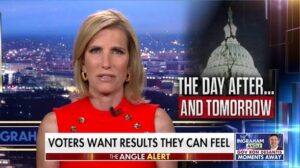
Fox News host Laura Ingraham has joined the growing conversation about the Republican Party’s future, examining the election results and the challenges facing conservatives. Her post-election commentary has focused on learning from political setbacks, reconsidering the party’s priorities and identifying a path forward.
The message is particularly important because the midterm results have created serious questions about the Republican leadership’s strategy. Republicans must now decide whether to continue defending their existing approach or make meaningful adjustments to reconnect with voters.
Ingraham’s November 5 broadcast discussed the election results, the impact of the Iran conflict and the Republican Party’s potential route back to power. A separate November 6 Fox News segment also examined the need to move beyond the immediate political fallout of the defeat.
Fox News Video+1
The debate is no longer limited to explaining why Republicans lost. It is increasingly about what the party should do next.
2026 Midterm Results Put Republicans Under Pressure
The 2026 midterm elections delivered a major setback for Republicans. Democrats secured control of the House and Senate, changing the balance of power in Washington and creating new challenges for the Trump administration.
The results were particularly painful because Republicans had entered the election cycle hoping to maintain their congressional advantage. Instead, several important races went against the party, including contests in states that Republicans had previously considered competitive or relatively safe.
According to CBS News, Democratic victories extended beyond traditional battlegrounds. Republicans suffered losses in House and Senate contests, while the election also affected gubernatorial races.
CBS News+1
These results have forced Republican officials to reconsider their political priorities.
The party now faces two immediate challenges. First, it must understand why voters rejected its candidates. Second, it must develop a strategy that can attract a broader coalition before the next major election.
For Ingraham and other conservative commentators, the important question is how Republicans respond to the defeat rather than simply how long they spend discussing it.
Moving forward will require more than changing campaign slogans. It will require a serious examination of the policies, political decisions and communication strategies that influenced voters.
Laura Ingraham Examines the Republican Party’s Next Move
Ingraham’s post-election coverage has placed attention on the Republican Party’s difficult position.
During her November 5 broadcast, she discussed the election results and the lessons Republicans should take from their losses. The segment examined the impact of the Iran war and the challenges facing the GOP as it attempts to regain political strength.
The following day, another Fox News segment featured Ingraham discussing the need for President Trump to move on from Iran after the midterm defeat. The discussion included Florida Governor Ron DeSantis, Victor Davis Hanson and Byron York.
Fox News Video+1
These discussions reflect a broader debate within conservative politics.
Some Republicans believe the party must maintain its central policy positions while improving its messaging. Others argue that the election results demonstrate a need for more substantial changes.
Ingraham’s commentary comes at a moment when conservative voters, elected officials and political strategists are searching for answers.
The message behind the discussion is straightforward: Republicans cannot change the election results, but they can decide how to respond.
That response could influence the party’s future well beyond the current congressional session.
The Iran War Becomes a Major Political Issue
One of the biggest controversies following the election concerns the US conflict with Iran.
The war became an important political issue because of its economic consequences and the administration’s handling of the conflict.
Higher energy costs, concerns about international stability and questions about the government’s priorities created difficulties for Republican candidates.
Vice President JD Vance offered a particularly direct explanation for the election results.
In a post-election statement, Vance blamed the Iran war for the Republican defeat. He argued that the conflict had created significant political costs and questioned whether those costs were worth the consequences for the Republican Party.
President Trump acknowledged that the war had contributed to higher energy prices but continued defending his decision to launch the military campaign.
The disagreement highlighted differences within the Republican leadership.
According to CBS News, Republican Senator Ted Cruz also criticized the duration of the conflict, arguing that it should have been shorter and more decisive.
CBS News+1
For Republicans, this disagreement presents a difficult political challenge.
Some voters support a strong national security policy. However, many also expect their elected officials to consider the economic consequences of military decisions.
The party must therefore explain its foreign policy decisions while addressing the concerns of ordinary Americans.
Ingraham’s discussion about moving beyond the immediate defeat comes against this background.
Cost of Living Could Determine the GOP’s Recovery
Another major lesson from the 2026 midterms concerns affordability.
For many American households, everyday expenses remain a central political concern. Food, housing, electricity, transportation and fuel costs directly influence how voters evaluate the economy.
Republicans campaigned on their economic agenda, but the election results suggest that their message did not convince enough voters.
CBS News reported that the cost of living was a major factor in voters’ decisions. Republican Senator Ted Cruz also acknowledged that the party had struggled to connect with Americans facing financial pressure.
CBS News
This creates an important opportunity for the GOP.
Instead of focusing primarily on political arguments, Republicans could rebuild their message around practical economic improvements.
For example, the party could highlight policies designed to:
Reduce everyday household expenses.
Improve employment opportunities.
Support small businesses.
Make housing more affordable.
Address rising electricity and fuel prices.
Encourage stronger economic growth.
However, promising economic improvements will not be enough.
Voters want to see measurable results. They want policies that make a noticeable difference in their daily lives.
Republicans must therefore connect their economic promises with practical solutions.
If the party fails to address affordability, Democrats could continue using the issue to attract independent and working-class voters.
DeSantis Raises Questions About the GOP’s Campaign Strategy
Florida Governor Ron DeSantis has also offered a critical assessment of the Republican Party’s election performance.
DeSantis argued that Republicans had spent too much time and money focusing on cultural issues that were not necessarily the main concerns of voters.
One example involved campaign advertisements focusing on transgender-related issues.
According to CBS News, DeSantis questioned whether the party had invested too heavily in these advertisements while overlooking issues that mattered more to voters.
He suggested that Republicans were fighting yesterday’s political battles instead of adapting to changing public priorities.
CBS News
His criticism raises an important question about the GOP’s future.
Cultural issues remain important to many conservative voters. However, political campaigns cannot assume that every issue has equal importance in every election.
A successful strategy must reflect the concerns of the people who are actually voting.
For instance, a family struggling with rising electricity bills may be more interested in economic proposals than another round of political arguments.
Similarly, younger voters may prioritize employment, housing affordability and educational opportunities.
Republicans need to understand these differences.
That does not necessarily mean abandoning conservative principles. Instead, it means presenting those principles through policies that address current problems.
Trump Faces Growing Pressure From Within His Own Party
The election defeat has also increased pressure on President Donald Trump.
Republican leaders and political strategists have questioned whether the administration needs to change its approach.
Some have called for personnel changes, stronger internal discipline and a reassessment of controversial policies.
Reuters reported that Republican allies urged Trump to reconsider aspects of his administration’s direction following the Democratic victories.
The report also highlighted concerns about the Iran war, tariffs and the political consequences of the White House’s priorities.
Reuters
However, Trump has shown little indication that he intends to completely change course.
This creates a complicated situation for Republican politicians.
On one hand, many remain closely connected to Trump’s political movement. On the other hand, the election results have increased concerns about the risks of continuing with the same strategy.
Republicans must decide how to balance loyalty to their president with the need to respond to voters.
That question could become increasingly important as the party prepares for the 2028 presidential election.
Ingraham’s call for Republicans to look ahead fits into this wider debate about political direction and leadership.
Democrats Gain New Power in Washington
The Republican defeat has significantly changed the political environment in Washington.
With Democrats controlling both chambers of Congress, the Trump administration faces a more difficult legislative situation.
Democrats can block legislation, challenge presidential nominees and investigate administration policies through congressional oversight.
This means Republicans will have fewer opportunities to advance their legislative priorities without Democratic support.
The new political balance also creates opportunities for Democrats to demonstrate their own governing strategy.
However, Democratic leaders will face expectations of their own.
Voters who supported Democratic candidates will want to see progress on affordability, employment, healthcare and other major issues.
The party must also maintain unity while managing disagreements among moderate and progressive lawmakers.
For Republicans, the change in congressional control should serve as a reminder that political power can shift quickly.
The party cannot assume that previous electoral advantages will automatically return.
Instead, it must develop a stronger strategy for competing in a political environment where Democrats have greater congressional influence.
CBS News+1
The Republican Party Must Reconnect With Independent Voters
One of the most important challenges for Republicans is rebuilding support among independent voters.
Independent voters often play a decisive role in closely contested elections. Their priorities can change depending on economic conditions, national leadership and the issues dominating public discussion.
The 2026 results suggest that Republicans need to examine how their policies and campaign messages are reaching voters outside their traditional base.
A party cannot build a lasting electoral majority by speaking only to its strongest supporters.
It must also persuade people who may disagree with some of its positions.
There are several ways Republicans could approach this challenge.
First, candidates need to communicate more clearly about economic policies. Voters should understand how proposed legislation could affect their household budgets.
Second, Republican leaders should spend more time listening to local communities. National political messaging does not always reflect the concerns of voters in individual states.
Third, the party should identify candidates who can communicate effectively with different groups.
Finally, Republicans must demonstrate that they understand public frustration.
Acknowledging mistakes does not necessarily weaken a political party. In many cases, it can help rebuild trust.
If Republicans want to recover, they must show voters that they have learned something from the election.
2028 Presidential Race Could Shape the GOP’s Future
Although the 2026 midterms are the immediate concern, Republican politicians are already thinking about the next presidential election.
The 2028 race could become a major turning point for the party.
Vice President JD Vance is widely viewed as a potential Republican presidential contender. Other names frequently discussed include Florida Governor Ron DeSantis and Secretary of State Marco Rubio.
The election defeat could influence how these potential candidates position themselves.
Vance’s criticism of the Iran war has already attracted attention because it suggests that some Republican leaders may want to establish a distinct political identity.
Reuters reported on November 7 that Vance was increasingly emphasizing economic nationalism, restrained foreign policy and public safety while mentioning Trump and his signature policies less frequently. However, Vance has not announced a presidential campaign.
Reuters
This development could have important consequences.
Republicans must decide whether their future should remain closely tied to Trump’s political identity or whether a new generation of conservative leaders should develop a different approach.
The answer will not be simple.
Trump continues to hold considerable influence over the Republican Party. Many conservative voters remain loyal to his movement and its central political ideas.
However, the midterm results have increased pressure on potential successors to demonstrate that they can appeal to a broader electorate.
The 2028 presidential contest could therefore become a debate about leadership, policy and the direction of modern conservatism.
Can Republicans Maintain MAGA Support While Changing Their Strategy?
One of the biggest questions facing the GOP is whether it can change its political approach without alienating its existing supporters.
The MAGA movement has transformed Republican politics over the past decade.
It has brought together voters who support stricter immigration policies, economic nationalism, conservative cultural positions and a more confrontational approach to Washington.
These voters remain an important part of the Republican coalition.
However, the party also needs support from suburban communities, younger voters, independents and moderate conservatives.
That creates a balancing act.
Moving too far away from Trump’s political movement could create divisions within the party. At the same time, refusing to acknowledge electoral problems could make it harder to attract voters who rejected Republican candidates.
A successful Republican recovery may require separating popular conservative policies from decisions that have become politically unpopular.
For example, Republicans could continue supporting border security while reviewing how immigration policies are implemented.
They could maintain a strong national security position while explaining the costs and objectives of military operations.
They could also defend traditional conservative values while giving greater attention to economic concerns.
This approach would allow Republicans to preserve important parts of their political identity while adapting to changing voter expectations.
What the GOP Should Learn From the Midterm Defeat
The Republican Party has several important lessons to consider after the 2026 election.
1. Economic concerns must come first
Voters expect politicians to address the cost of everyday living. Economic messaging must focus on practical improvements rather than political slogans.
2. Campaign strategies must change
Issues that worked in previous elections may not deliver the same results in future campaigns. Republicans need to identify what voters actually care about.
3. Leadership must accept criticism
A political party cannot improve if its leaders refuse to acknowledge mistakes. Honest internal discussions are essential.
4. Foreign policy needs stronger public communication
Military decisions can influence energy prices, international relationships and public confidence. Republican leaders must explain their objectives clearly.
5. The party needs a broader coalition
Independent voters and moderate conservatives will remain important in competitive elections. Republicans must find ways to reach these groups.
6. Future candidates need their own identities
The next generation of Republican leaders must demonstrate their ability to attract voters rather than simply relying on the popularity of established political figures.
These lessons could help the GOP prepare for the next electoral cycle.
However, implementing them will require cooperation between party leaders, elected officials, campaign strategists and conservative voters.
Why Moving Forward Matters More Than Blaming Each Other
Election defeats often create internal political conflicts.
Different groups begin offering competing explanations. Some blame the president, while others criticize campaign management, candidates, messaging or policy decisions.
The Republican Party is experiencing this familiar political problem.
The danger is that internal arguments could distract the party from the work required to rebuild.
Republicans have an opportunity to examine the election results honestly and identify areas where their strategy failed.
However, that process should not become an endless competition over who deserves the most blame.
The party needs a clear direction.
It must decide which policies deserve greater attention, which campaign approaches should change and how future candidates can communicate more effectively.
Ingraham’s post-election commentary is part of this wider discussion.
Her coverage has highlighted the importance of learning from failure and considering what Republicans must do to regain political strength.
The message of moving forward is particularly relevant because the party has limited time to prepare for the next election cycle.
If Republicans spend the coming months fighting among themselves, they could miss an opportunity to rebuild.
On the other hand, a disciplined approach could help them turn a major defeat into a political learning experience.
What Happens Next for the Republican Party?
The coming months will reveal whether Republicans are prepared to make meaningful adjustments.
The party must operate in a Congress where Democrats hold greater power. It must also prepare for investigations, legislative disputes and continued public debate over the Trump administration’s policies.
Republican lawmakers will face difficult decisions about which issues deserve priority.
The administration will also need to consider how its policies affect voters who are concerned about household expenses and national stability.
Meanwhile, potential 2028 candidates will have an opportunity to establish their political identities.
Some may defend Trump’s record, while others may argue for a different emphasis within the conservative movement.
The debate could reshape the party’s leadership structure and campaign strategy.
Still, one point remains clear: Republicans cannot simply expect voters to forget the midterm results.
They must demonstrate that they understand why the defeat happened and what they intend to do differently.
For Ingraham and other conservative voices, the central challenge is helping the party focus on its next political chapter rather than remaining trapped in the disappointment of Election Day.
Conclusion: Ingraham’s Message Highlights a Critical Moment for the GOP
Laura Ingraham’s post-election discussions have brought attention to an important moment for the Republican Party.
The 2026 midterm defeat has exposed serious challenges involving economic messaging, foreign policy, campaign priorities and political leadership.
Republicans now face a choice. They can continue defending every decision made during the campaign, or they can examine the results and make adjustments.
The Iran war, affordability concerns and disagreements over campaign strategy will remain central to the debate.
At the same time, the party must consider how to preserve its conservative identity while attracting voters who are increasingly dissatisfied with its political direction.
The road to recovery will not be easy.
However, the Republican Party still has an opportunity to reorganize, develop stronger leadership and prepare for future elections.
The biggest test for the GOP will be whether it can turn the 2026 midterm defeat into a genuine political reset.
As the debate continues, Ingraham’s message of learning from failure and looking ahead captures the challenge facing Republicans: moving on is only the beginning. Delivering meaningful change will determine whether the party can regain voters’ confidence.
Frequently Asked Questions (FAQs)
1. Why is Laura Ingraham discussing the GOP’s midterm defeat?
Laura Ingraham is examining the Republican Party’s disappointing 2026 midterm results and discussing the challenges conservatives face as they attempt to regain political strength.
2. What happened to Republicans in the 2026 midterm elections?
Republicans suffered significant losses, allowing Democrats to gain control of both the House and Senate. The results triggered an internal debate about the party’s leadership and political strategy.
3. What role did the Iran war play in the Republican defeat?
The Iran war became a major political issue because of its economic consequences, including higher energy costs. JD Vance and other Republicans identified the conflict as an important factor in the election results.
4. Does Laura Ingraham want Republicans to change their strategy?
Her post-election commentary has focused on learning from the defeat and examining the GOP’s path forward. Her coverage reflects the broader debate over whether Republicans need to adjust their priorities.
5. Why is affordability important to the GOP’s recovery?
Food, housing, fuel and electricity costs affect millions of Americans. Republicans will need to address these concerns if they want to rebuild support among working-class and independent voters.
6. How did Ron DeSantis react to the Republican defeat?
DeSantis criticized the party’s campaign priorities, particularly its focus on cultural issues. He argued that Republicans needed to pay greater attention to the issues motivating voters.
7. Could JD Vance become the Republican presidential candidate in 2028?
JD Vance is considered a potential Republican presidential contender. However, he has not formally announced a presidential campaign.
8. What challenges does Donald Trump face after the midterms?
Trump faces a Democratic-controlled Congress, increased political opposition, potential congressional investigations and pressure from Republicans to reconsider certain policies.
9. Can Republicans recover before the 2028 presidential election?
Yes. Republicans can attempt to rebuild by addressing economic concerns, improving campaign communication, strengthening leadership and reconnecting with independent voters.
10. What is the main message of Ingraham’s post-election coverage?
The central message is that Republicans must learn from their electoral defeat, reassess their priorities and focus on developing a stronger political strategy for the future.
About the Author