The 2026 midterm elections have dramatically changed the political landscape in Washington. Democrats have secured control of both chambers of Congress, delivering a major setback to President Donald Trump and the Republican Party. However, while Democratic leaders are celebrating their victories, Fox News chief political analyst Brit Hume has offered an important warning: winning an election does not automatically give a political party unlimited authority.
Hume believes Democrats must demonstrate that they can govern effectively now that voters have handed them greater political power. The party spent much of its campaign criticizing Trump, his administration, and the controversial war with Iran. Yet the political conversation will change once Democrats take responsibility for congressional leadership.
The question facing the party is straightforward: What will Democrats actually accomplish?
Hume’s comments highlight the difficult challenge ahead for Democratic lawmakers. They must satisfy voters who want economic improvements, address disagreements within their own party, and decide how to work with a Republican president who still has the power to veto legislation.
The election victory may have given Democrats a powerful opportunity. However, turning that opportunity into a lasting political mandate will require more than opposition to Trump.
Brit Hume Issues a Warning to Democratic Leaders

Brit Hume delivered his warning during Fox News’ election-night coverage on November 3, as Democratic victories reshaped expectations about the balance of power in Washington.
Hume discussed what could happen if Democrats gained control of both the House and Senate. He explained that Democratic lawmakers would face considerably more attention once they moved from the political minority into positions of congressional leadership.
According to Hume, Democrats would now be expected to demonstrate what their party could accomplish.
His central argument was that campaigning against a president is different from governing a country. Opposition can provide a powerful campaign message, particularly when voters are dissatisfied with the administration. However, congressional leaders eventually need to present policies and deliver measurable results.
Hume also cautioned Democrats against treating their election victories as unlimited public approval for every proposal they might introduce.
Political power, he suggested, is temporary. Voters can reward a party during one election and withdraw their support during the next.
That warning carries particular importance as Democrats prepare to exercise greater influence over federal legislation and congressional investigations.
Democrats Win Control of Congress in a Major Political Shift
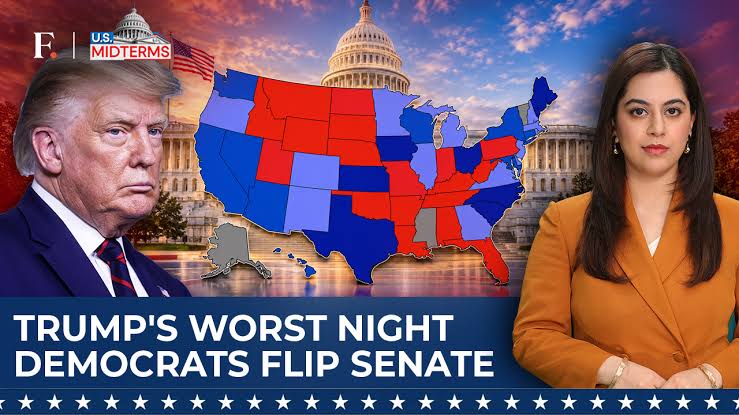
The 2026 midterm results represent a significant turning point in American politics.
Democrats captured control of both the House of Representatives and the Senate, reversing the Republican advantage that followed the 2024 presidential election.
The victories extended beyond traditional Democratic strongholds. The party also made important gains in states that have frequently supported Republican candidates.
Reuters reported that Democrats achieved significant victories in Republican-leaning areas, reflecting voter dissatisfaction with the administration’s handling of major national issues.
Economic concerns, the cost of living, and the war with Iran contributed to the political environment surrounding the election.
The results also demonstrated the importance of candidate recruitment and local campaign strategies. Democratic candidates managed to compete in races that had previously appeared difficult for their party.
These victories give Democrats greater influence over the congressional agenda.
They can shape committee leadership, determine which legislation receives consideration, conduct investigations, and challenge important administration policies.
However, congressional control does not mean Democrats can automatically enact every part of their political agenda.
President Trump remains in the White House, and his constitutional veto authority creates an important obstacle for legislation that does not receive sufficient bipartisan support.
The political victory is substantial, but the governing challenge is equally significant.
Why Hume Believes Opposition to Trump Is Not Enough
One of the most important points in Hume’s analysis concerns the strategy Democrats used during the election campaign.
Much of their political messaging focused on opposition to Trump and dissatisfaction with his administration.
That approach helped Democratic candidates connect with voters who were concerned about the direction of the country.
However, Hume questioned whether the same message would remain effective once Democrats assumed greater responsibility in Congress.
During a campaign, political parties can criticize government decisions and promise to pursue a different direction. Once they gain power, voters begin asking more specific questions.
What policies will they introduce?
How will they reduce household expenses?
What will they do about healthcare?
Can they improve economic conditions?
Will they cooperate with Republicans when necessary?
These questions cannot be answered through criticism alone.
Hume suggested that Democrats would eventually need to explain their priorities and demonstrate their ability to achieve practical results.
This is particularly important because voters who supported Democratic candidates may not necessarily agree with every policy supported by the party’s national leadership.
Some voters may have supported Democrats because they opposed Trump’s policies. Others may have been motivated by economic concerns, local issues, or dissatisfaction with Republican candidates.
A successful governing strategy must recognize these different motivations.
The Democratic Party Faces Internal Divisions
Another major challenge highlighted by Hume involves disagreements within the Democratic Party.
Democrats include moderates, progressives, traditional liberals, and democratic socialists. Although these groups often unite against Republican policies, they do not always agree on the best approach to governing.
The election results could make those differences more visible.
Progressive lawmakers may demand stronger action on healthcare, economic inequality, climate policy, and social programs.
Moderate Democrats, meanwhile, may prefer negotiations and legislation that can attract support from Republicans.
These competing priorities could complicate efforts to establish a unified congressional agenda.
Hume suggested that the Democratic coalition could become fractious as different groups compete to influence the party’s direction.
The challenge will be especially important for Democratic leaders who must maintain support across politically different districts.
A policy that attracts enthusiasm among progressive voters may create difficulties for Democrats representing moderate or conservative areas.
Likewise, a compromise with Republicans may frustrate progressive lawmakers who believe the election results justify more aggressive action.
Democratic leaders will need to manage these disagreements carefully.
Without a clear strategy, internal disputes could weaken the party’s ability to deliver the results voters expect.
Trump’s Lame-Duck Status Changes the Political Equation
Hume also discussed the political implications for President Donald Trump.
With Democrats taking control of Congress and Trump’s second term approaching its final two years, Hume described the president as becoming a lame-duck political figure.
The term refers to an elected leader whose remaining time in office is limited and whose ability to influence future political developments may be reduced.
Trump will continue to exercise presidential authority. However, Democratic control of Congress could make advancing his legislative agenda considerably more difficult.
Congressional investigations may increase, administration officials could face greater scrutiny, and Republican lawmakers may have less control over legislative priorities.
Democrats could also use their congressional majorities to challenge policies they strongly oppose.
Nevertheless, Trump will retain important constitutional powers.
He can veto legislation, issue executive orders within the limits of the law, and use the presidency to communicate directly with the American public.
This creates a complicated political environment.
Democrats will have greater congressional authority, but they will still need to negotiate with a Republican administration.
Hume’s warning therefore applies to both parties: political power has limits, and election victories do not eliminate the responsibilities of governing.
What Will Democrats Do With Their New Congressional Power?
The most important question following the election is how Democrats intend to use their majorities.
Their campaign messages created expectations among voters who want changes in Washington.
Affordability, healthcare, government accountability, and economic opportunity are likely to remain central issues.
Democratic leaders have an opportunity to turn these subjects into a practical legislative programme.
1. Addressing the Cost of Living
Household affordability remains one of the most important concerns for American voters.
Families continue to pay close attention to housing costs, groceries, healthcare expenses, transportation, and everyday bills.
Democrats will face pressure to introduce policies that offer meaningful relief.
However, promising lower costs is easier than achieving them.
Economic conditions depend on several factors, including inflation, interest rates, energy prices, supply chains, and government policy.
Democrats must explain which proposals they believe can produce measurable improvements.
2. Healthcare and Social Programmes
Healthcare is another area where Democratic lawmakers may seek action.
The party has traditionally supported wider access to affordable healthcare and protections for social programmes.
With greater congressional influence, Democrats could attempt to protect existing benefits and introduce proposals designed to reduce healthcare expenses.
Yet major legislation will face political and financial questions.
Lawmakers must explain how proposed programmes will be funded and whether they can attract sufficient support.
3. Government Accountability
Democratic leaders may also prioritize oversight of the Trump administration.
Congressional committees can investigate government decisions, request documents, conduct hearings, and question administration officials.
These powers could become a central feature of the new Democratic majority.
However, Hume’s warning raises an important question: Will investigations become the party’s main political focus, or will Democrats also concentrate on legislation that directly affects voters?
Oversight is an important congressional responsibility, but it cannot replace a broader governing programme.
4. The Iran War and Foreign Policy
The war with Iran also played an important role in the political debate surrounding the midterms.
Democratic candidates criticized the administration’s approach, while voters expressed concerns about the human, economic, and strategic consequences of the conflict.
With control of Congress, Democrats could seek greater oversight of military policy and demand explanations from the administration.
They may also push for diplomatic solutions and stronger congressional involvement in decisions involving military action.
However, foreign policy will remain complicated.
Democrats must balance national security concerns, international relationships, congressional authority, and public opposition to prolonged conflict.
A Democratic Victory Does Not Guarantee a National Mandate
One of the strongest lessons from Hume’s warning is the difference between winning an election and receiving broad public approval for an entire political programme.
An election victory gives representatives the authority to serve in office. It does not necessarily mean voters support every policy those representatives want to introduce.
Different voters may have different reasons for choosing the same candidate.
Some may want economic change. Others may oppose a particular administration decision. Some may simply prefer one candidate over another.
This makes interpreting election results difficult.
Democratic leaders should therefore avoid assuming that every voter who supported them has endorsed the party’s most ambitious proposals.
The 2026 results provide Democrats with a significant political opportunity, but maintaining public confidence will require careful decisions.
The party must show that it understands why voters supported its candidates.
It must also demonstrate that it can respond to concerns that extend beyond partisan disagreements.
The Risk of Overconfidence After a Major Election Victory
Political history provides several examples of parties winning major elections before encountering difficulties in government.
A strong electoral performance can create expectations that are difficult to satisfy.
When a party controls Congress, voters begin judging its decisions directly.
Campaign promises become policy tests, and political explanations become less persuasive when everyday problems remain unresolved.
For Democrats, the danger is that their leaders could interpret the 2026 results as a permanent rejection of Republican politics.
That would be a mistake.
American voters frequently change their political preferences. Economic conditions, presidential approval, candidate quality, and major national events can all influence future elections.
The 2026 results should therefore encourage Democratic leaders to work effectively rather than become complacent.
The party also faces a political branding challenge.
A successful election campaign does not automatically repair every problem with a party’s public image.
Axios noted that Democrats could misunderstand the meaning of their sweeping victory if they confuse an electoral breakthrough with a broader political mandate.
The distinction matters as the party looks toward the 2028 presidential election.
Can Democrats Work With Trump?
Another major question is whether Democrats will cooperate with the president when opportunities arise.
A divided government can create serious legislative obstacles.
Trump may oppose Democratic proposals, while congressional Democrats may reject administration priorities.
However, political disagreements do not make cooperation impossible.
Both parties could potentially find common ground on selected issues, including infrastructure, public safety, economic development, and other areas of shared interest.
Hume questioned whether Democrats would be willing to support measures that Trump could sign and claim as achievements.
This is a difficult political calculation.
Democrats may fear that cooperation would strengthen the president’s public image. At the same time, refusing every possible compromise could make the new majority appear unwilling to govern.
The party will need to decide when cooperation serves the public interest and when opposition is necessary.
Voters will ultimately judge whether their representatives can produce results.
What Hume’s Warning Means for the 2028 Election
Although the midterm results will shape Washington over the next two years, their consequences could extend into the 2028 presidential campaign.
Democrats now have an opportunity to demonstrate that they can lead Congress and develop a credible national policy agenda.
Successful governance could strengthen the party’s position.
However, internal divisions, legislative failures, or excessive political conflict could create problems.
The next presidential election will also require Democrats to present a candidate capable of appealing to voters beyond the party’s existing base.
A successful congressional majority does not guarantee success in a presidential election.
Republicans will also have an opportunity to rebuild their political coalition and criticize Democratic decisions.
For that reason, the coming congressional session will be an important test.
Democrats must demonstrate that their 2026 victories represent more than temporary dissatisfaction with the Republican administration.
They need to show voters what their party stands for and what it can accomplish.
Conclusion: Democrats Must Prove They Deserve Voters’ Trust
Brit Hume’s warning delivers an important message to Democratic leaders following their major 2026 midterm victories.
Winning control of Congress is a significant political achievement, but it also creates greater responsibility.
Democrats can no longer rely entirely on criticizing Donald Trump and Republican policies. They must develop a clear legislative agenda, manage disagreements within their coalition, and deliver practical results for American families.
The party will also need to work through the challenges of divided government, including Trump’s continued presidential authority and his ability to veto legislation.
Most importantly, Democrats must remember that political power comes from voters and can be taken away by voters.
The 2026 election has given the party an opportunity to demonstrate its leadership. Whether that opportunity becomes a lasting political success will depend on what happens next.
Hume’s central warning is clear: Democrats have won the opportunity to govern. Now they must prove that they know what to do with it.
About the Author