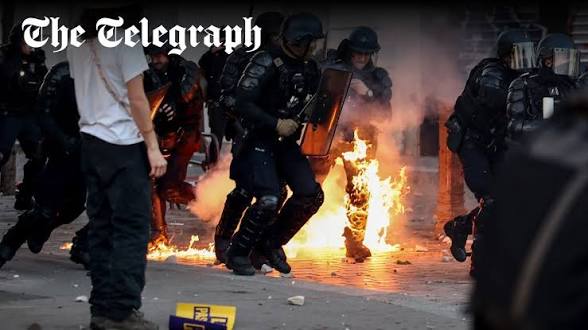
A Molotov cocktail struck French security forces during demonstrations in Paris on October 31, 2026, as protests over rising living costs and inequality turned violent in several cities. The incident left a member of the security forces with minor injuries and prompted prosecutors to open an investigation into suspected attempted homicide.
French Interior Minister Laurent Nuñez condemned the attack, describing the violence as extraordinary. Meanwhile, authorities reported hundreds of arrests across the country as police confronted groups of masked individuals during the demonstrations.
The attack has intensified concerns about public safety, political tensions, and the challenges facing France as large demonstrations continue.
Molotov Cocktail Attack Shocks Paris
The incident occurred near Porte de Charenton in Paris during clashes at the end of a demonstration.
According to the Paris prosecutor’s office, incendiary objects were thrown at security personnel, including police officers and gendarmes. A Molotov cocktail struck a member of the security forces, setting protective equipment alight.
Authorities said the officer suffered minor injuries. However, the incident demonstrated the serious danger posed by incendiary weapons during public demonstrations.
The Paris prosecutor’s office announced an investigation into suspected attempted homicide against a person exercising public authority.
The investigation will seek to establish who threw the incendiary device and whether anyone else participated in the attack.
As of November 1, authorities had not announced an arrest specifically connected to the Molotov cocktail incident.
The investigation remains separate from the broader arrests made during the demonstrations.
French Interior Minister Condemns the Violence
Interior Minister Laurent Nuñez strongly condemned the attack on the security forces.
He described the throwing of a Molotov cocktail at a gendarme as attempted murder, arguing that such an act could have caused fatal injuries.
Nuñez also criticised groups that attacked police officers and damaged property during the demonstrations.
The minister said approximately 150 planned demonstrations had taken place around France. Most remained peaceful, but violence erupted in several locations as the rallies ended.
He also warned that authorities were prepared to respond to further disorder.
The government’s response reflects the difficult balance between protecting public safety and respecting the right to peaceful protest.
Why Were Thousands Protesting Across France?
The demonstrations formed part of a wider movement against rising living costs, economic inequality, and concerns about public services.
Participants included workers, students, trade union members, and other citizens who wanted the government to address their economic concerns.
Many demonstrators expressed frustration about the cost of everyday necessities, including housing, food, and energy.
Other participants focused on public services, particularly education and healthcare.
The protests had continued for three consecutive weekends by October 31.
Organisers and participants argued that the government needed to respond more directly to the pressures facing households.
However, the demonstrations also highlighted divisions over how France should address its economic difficulties.
While many people attended peaceful marches, clashes between police and groups of masked individuals overshadowed parts of the demonstrations.
Hundreds of Thousands Join the Demonstrations
The October 31 demonstrations attracted large crowds across France.
According to figures released by the Interior Ministry, approximately 320,000 people participated in rallies nationwide.
Around 70,000 demonstrators marched in Paris.
The ministry said the number of participants was lower than the previous weekend, when approximately 410,000 people took part.
Despite the large turnout, authorities said most demonstrations remained peaceful.
The situation changed as some rallies approached their final destinations.
Groups of masked individuals began confronting security forces, throwing projectiles, and damaging property.
Police responded with tear gas, stun grenades, and other crowd-control measures.
The clashes demonstrated how quickly a largely peaceful demonstration can become dangerous when violence breaks out.
Police Officers Injured During the Clashes
The Molotov cocktail incident was among several attacks reported during the Paris demonstrations.
The Paris police prefecture reported that four police officers and one gendarme were injured.
Three members of the security forces suffered burns from Molotov cocktails.
The injuries highlighted the risks faced by officers deployed to manage large public gatherings.
Police officers and gendarmes were responsible for maintaining order, protecting demonstrators, and responding to violent incidents.
However, the use of incendiary devices created additional dangers for both security personnel and people nearby.
Authorities have not announced that every reported injury was connected to the same incident.
Investigators will need to establish the circumstances surrounding each attack.
565 Arrests Reported Across France
French authorities reported 565 arrests nationwide by late October 31.
The arrests followed clashes in Paris and other cities.
Some individuals were detained over suspected participation in violent groups, while others faced allegations involving weapons, incendiary materials, or attacks on security personnel.
The Paris prosecutor’s office reported 105 arrests connected to events in the capital by late morning on November 1.
That figure included arrests related to the demonstrations and separate Halloween-night incidents.
Authorities also reported that dozens of people remained in police custody.
These figures may change as investigations continue and prosecutors review individual cases.
An arrest does not establish guilt. Any person accused of a crime remains entitled to the legal protections and procedures provided under French law.
Paris Clashes Follow a Largely Peaceful March
The Paris demonstration began with a large procession along the city’s southeastern outskirts.
Many participants carried placards and expressed concerns about economic conditions and public services.
Some demonstrators wore Halloween costumes, adding an unusual visual element to the march.
However, tensions increased as the procession reached its final destination.
According to reports from journalists at the scene, masked individuals used tools to remove paving stones and threw them at police.
Security forces responded with tear gas and baton charges.
The Paris police prefecture said several hundred individuals had attacked security personnel with projectiles.
The clashes eventually spread beyond the immediate area of the demonstration.
Although the majority of participants had marched peacefully, the violence created serious risks for officers, residents, and other demonstrators.
Violence Reported in Other French Cities
Paris was not the only city affected by clashes.
Reports also described confrontations in Marseille, Lyon, and other locations.
In Marseille, police used tear gas and other crowd-control measures after tensions developed around a demonstration.
Some individuals reportedly set fires and erected barricades.
Authorities also reported clashes in Lyon and other cities as demonstrations ended.
The incidents formed part of a broader pattern of violence that accompanied otherwise peaceful public gatherings.
However, the circumstances differed from one city to another.
Officials have warned against treating every protest participant as responsible for the actions of violent groups.
The distinction is important because peaceful demonstrations remain a protected part of democratic life in France.
Government Faces Pressure Over Public Safety
The violence has placed additional pressure on the French government.
Officials must respond to attacks on security forces while ensuring that peaceful demonstrators can continue to exercise their rights.
The government has also faced criticism over its handling of earlier demonstrations.
Prime Minister Sébastien Lecornu previously promised a substantial police presence ahead of the latest round of protests.
The October 31 clashes will likely increase scrutiny of security planning and crowd-control procedures.
Authorities may review how officers were deployed, how dangerous objects were identified, and how police responded when violence began.
However, officials have not yet announced a complete review of the security operation.
The investigation into the Molotov cocktail attack may provide further information about the incident and the circumstances surrounding it.
The Legal Significance of an Attempted Homicide Investigation
The Paris prosecutor’s office has opened an investigation into suspected attempted homicide involving a person exercising public authority.
The announcement reflects the seriousness of the alleged attack.
Under French law, prosecutors and investigators must establish the facts and determine whether the evidence supports criminal charges.
The investigation may involve witness interviews, video footage, forensic evidence, and other material collected from the scene.
Authorities will also seek to identify the person responsible for throwing the incendiary device.
The investigation does not mean that a suspect has already been convicted.
It also does not establish that every person arrested during the demonstrations was involved in the attack.
The legal process will determine whether sufficient evidence exists to bring charges against any individual.
What Happens Next?
The immediate priority for French authorities is to investigate the attack and establish who was responsible.
Police and prosecutors are expected to continue examining evidence from the scene.
Authorities will also assess injuries, review arrests, and investigate other incidents reported during the demonstrations.
Meanwhile, the government faces continuing pressure to address the economic concerns that have motivated many protesters.
The next phase of the unrest will depend partly on whether demonstrators and officials can find a way to reduce tensions.
The government must also decide how to manage future demonstrations while protecting public safety.
For residents and businesses, the clashes have raised concerns about disruption, property damage, and the possibility of further violence.
For demonstrators, the events have renewed debate about the right to protest and the limits of police intervention.
The coming days may provide a clearer picture of the investigation and the government’s response.
Conclusion
The Molotov cocktail attack on French security forces in Paris has become one of the most serious incidents reported during the latest wave of demonstrations.
The incident left a member of the security forces with minor injuries and prompted prosecutors to open an investigation into suspected attempted homicide.
Meanwhile, authorities reported 565 arrests nationwide as clashes occurred in several cities.
Although most demonstrations remained peaceful, attacks on security personnel have intensified concerns about public safety.
The investigation will now seek to identify those responsible and establish the circumstances surrounding the attack.
At the same time, France faces the wider challenge of addressing public frustration over living costs and inequality while protecting the right to peaceful protest.
The outcome of the investigation and the government’s response may shape the next stage of the country’s demonstrations.
Frequently Asked Questions
1. What happened to French police during the October 31 protests?
A Molotov cocktail struck a member of the security forces near Porte de Charenton in Paris. The officer suffered minor injuries, and prosecutors opened an investigation into suspected attempted homicide.
2. Why did the French government call the attack attempted murder?
Interior Minister Laurent Nuñez described the attack as attempted murder because throwing an incendiary device at a security officer can cause fatal injuries.
3. How many people were arrested during the French protests?
The Interior Ministry reported 565 arrests across France by late October 31. The number may change as investigations continue.
4. How many security personnel were injured in Paris?
Authorities reported that four police officers and one gendarme were injured in Paris. Three members of the security forces suffered burns from Molotov cocktails.
5. Why were people protesting in France?
Demonstrators were protesting rising living costs, economic inequality, and concerns about public services, including education and healthcare.
6. Were all the demonstrations violent?
No. French authorities said most planned demonstrations remained peaceful. Clashes occurred in several locations as some rallies ended.
7. Has anyone been arrested for the Molotov cocktail attack?
As of November 1, authorities had not announced an arrest specifically connected to the Molotov cocktail incident.
8. What happens next in the investigation?
Investigators will examine evidence, interview witnesses, and seek to identify the person responsible for the attack. Prosecutors will determine whether the evidence supports criminal charges.
9. Does an attempted homicide investigation mean someone has been convicted?
No. An investigation is a process for establishing the facts and identifying possible suspects. A conviction can only follow the appropriate legal proceedings.
10. Could the protests continue?
Further demonstrations are possible as economic concerns remain unresolved. However, the timing and scale of any future protests will depend on decisions by organisers and developments in France.
About the Author