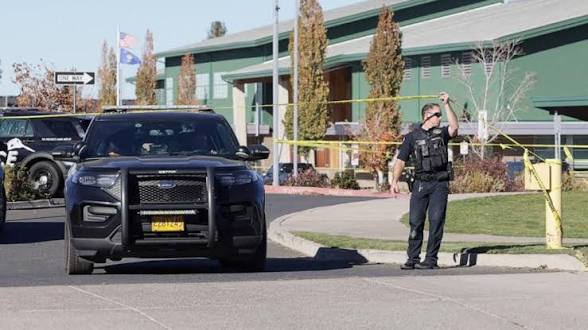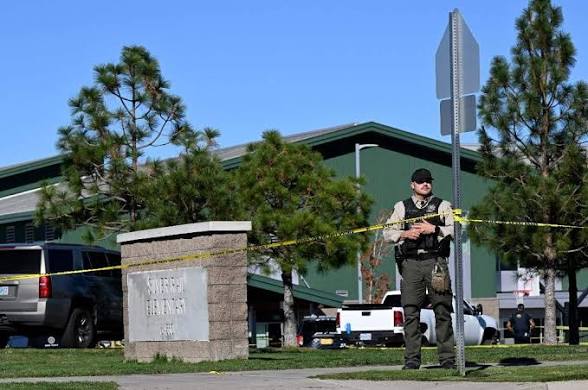
A deadly shooting at Silver Rail Elementary School in Bend, Oregon, on Thursday, October 15, 2026, left the local community grieving after three children and a teacher were killed. Authorities said the suspected gunman, described as a 16-year-old Bend resident, also died after an armed community member confronted him inside the school.
According to reports from The Associated Press and Oregon Public Broadcasting (OPB), the suspect forced his way into the building by firing at locked doors. Two additional victims, including a child and a teacher, suffered critical injuries and were taken to hospital. Investigators are working to establish the circumstances surrounding the attack, including the suspect’s possible connection to the school and his motive.
The tragedy has renewed concerns about school security, emergency preparedness and the protection of children in educational settings. However, many details remain under investigation, and authorities have not publicly released all the identities involved.
Key Facts About the Silver Rail Elementary Shooting

Here are the main details reported by authorities as of October 16, 2026:
- Location: Silver Rail Elementary School, Bend, Oregon.
- Date: Thursday, October 15, 2026.
- Suspect: A 16-year-old male from Bend, according to police.
- Victims killed: Three children, aged 5, 8 and 11, and one teacher.
- Other injuries: A 7-year-old child and a 54-year-old teacher were critically injured.
- Suspect’s death: An armed community member confronted and fatally shot the suspect, according to police.
- Initial emergency call: Approximately 12:59 p.m. local time.
- Police arrival: Officers reached the scene at approximately 1:02 p.m.
- Motive: Not publicly established in the reports reviewed.
These details come from reporting by AP, OPB and other news organizations citing police and emergency-response information. Some information, including the identities of the victims and the person who intervened, had not been publicly disclosed in the reports reviewed. Sources: AP, OPB
How the Shooting Unfolded
Emergency Calls Triggered a Rapid Police Response
The first reported emergency call came shortly before 1 p.m. on Thursday. According to Bend Police Chief Mike Krantz, a person in a vehicle near the school reported being shot at by someone carrying a long gun.
Additional emergency calls followed, reporting that an armed individual had entered the elementary school. The growing number of reports alerted emergency services to the seriousness of the incident.
Police dispatchers notified law enforcement at approximately 1 p.m. The school entered lockdown around 1:01 p.m., and the first officers arrived at approximately 1:02 p.m., according to the timeline reported by OPB and AP.
The short interval between the first call and the arrival of officers highlights how quickly the situation developed. Nevertheless, the precise sequence of every shot, movement and confrontation remains a matter for investigators.
Suspect Reportedly Forced Entry Through Locked Doors
Police said the suspect gained access to the school by shooting at locked doors. The incident raised immediate questions about how the attacker entered the building and whether existing security measures could have prevented or delayed access.
Locked doors, controlled entry points and visitor-screening procedures are important components of school security. However, no single security measure can guarantee complete protection against every form of violence.
Investigators will need to examine the school’s entry points, security systems and response procedures before drawing conclusions about possible failures. It would be premature to claim that a particular policy or piece of equipment caused or could have prevented the tragedy.
Civilian Confronted the Suspect
One of the most significant details to emerge from the initial investigation concerns the community member who confronted the suspect.
According to police, the individual saw the suspect enter the school, followed him inside and engaged him. An officer subsequently reported that the suspect had been shot. Authorities found the suspect dead at the scene.
Oregon Governor Tina Kotek praised the individual who intervened, according to news reports. However, the person’s identity and full account of the encounter had not been publicly confirmed in the reporting reviewed.
The intervention is an important part of the reported timeline, but it does not resolve the broader questions surrounding the attack. Investigators must still establish how the incident began, what happened inside the school and whether the suspect had any known connection to the victims or the school community.
Victims and Community Impact
Three Children and a Teacher Were Killed
The shooting claimed the lives of three children, aged 5, 8 and 11, as well as a teacher. Their deaths have left families and the wider Bend community facing an immense loss.
The victims’ identities had not been publicly released in the reports reviewed. Until authorities make formal identifications, responsible coverage should avoid circulating unverified names, photographs or personal details.
The loss of young children in a school setting is particularly devastating because schools are expected to provide a safe environment for learning, social development and daily routines. Families entrust educators and school staff with their children’s care for a significant part of each day.
The teacher’s death also highlights the risks faced by school employees who work to protect and support students during emergencies.
Two People Were Critically Injured
Police also reported that a 7-year-old child and a 54-year-old teacher suffered critical injuries. Both were transported to St. Charles Medical Center for treatment, according to news reports.
Their medical conditions may change as treatment continues. Therefore, readers should rely on updated statements from authorities or the hospital rather than social media speculation.
For families awaiting news about injured loved ones, uncertainty can make an already traumatic experience even more difficult. Clear communication from officials is essential during this period.
Families Were Reunited After the Lockdown
As officers secured the scene, students and staff were moved through emergency procedures. Reports described children being transported to a nearby church serving as a reunification location, where families could reconnect.
Family reunification is an important part of school emergency planning. During a crisis, parents may not know whether their children are safe or where they should go to collect them.
A designated reunification site helps authorities control access, verify identities and provide families with reliable information. It can also give school staff a central location to coordinate student accountability.
Even after children are physically safe, they may need reassurance and emotional support. Some students may have witnessed frightening events, heard gunfire or experienced separation from their caregivers.
Investigation: What Authorities Still Need to Establish
The Suspect’s Identity and Possible Connection to the School
Authorities described the suspect as a 16-year-old Bend resident. However, reports reviewed on October 16 did not establish whether he attended Silver Rail Elementary, knew any of the victims or had another connection to the school.
Investigators will likely examine relevant background information, communications, relationships and other evidence to establish the circumstances leading up to the shooting.
Because the suspect was a minor, the release of personal information may be subject to additional legal and investigative considerations. Until officials confirm further details, claims about his identity or personal history should be treated cautiously.
The Motive Remains Unclear
A central unanswered question is why the attack occurred.
Investigators may review digital evidence, interviews, prior reports and other relevant material. These steps can help establish whether the attack was planned, whether there were warning signs and whether the suspect communicated any intention to commit violence.
However, a motive should not be inferred from rumours, online posts or unverified claims. Even when investigators identify relevant background information, establishing a clear explanation for an act of violence can take time.
As the investigation progresses, officials may release additional information through formal briefings. Until then, the most accurate description is that the motive remains unconfirmed.
Evidence and the Civilian’s Intervention
Investigators must also reconstruct the encounter between the suspect and the community member who shot him.
That process may involve witness interviews, forensic examinations, available surveillance footage and a review of emergency communications. Authorities will need to establish the timing and circumstances of the confrontation.
The fact that the suspect died does not eliminate the need for a detailed investigation. A complete account is important for understanding the sequence of events and answering questions from affected families.
Police had not publicly identified the civilian in the reports reviewed. Readers should avoid assuming the person’s relationship to the school or the victims unless officials confirm it.
School Safety Questions After the Bend Shooting
The attack has brought renewed attention to school safety and emergency preparedness. Although every incident has its own circumstances, the shooting highlights several issues that school districts and public authorities may need to review.
Controlled Entry and Building Security
Schools commonly use locked exterior doors, visitor check-in procedures and staff monitoring to limit unauthorized entry. These measures can reduce opportunities for unwanted access, but they must be maintained and reviewed regularly.
Following a serious incident, a security assessment can examine entry points, door hardware, communication systems and procedures for responding to a threat near the building.
The purpose of such a review should be to identify practical improvements based on evidence rather than to assume that one security measure would have prevented the attack.
Emergency Communication and Lockdown Procedures
Clear instructions can help teachers, staff, students and families respond during an emergency. Schools need procedures that explain how alerts are issued, who contacts emergency services and how students are accounted for afterward.
Families also benefit from knowing how the school will communicate updates and where reunification will take place.
Emergency drills should be age-appropriate and designed to build familiarity without unnecessarily frightening children. Staff training should also address how to communicate calmly and follow established procedures under pressure.
Mental Health and Support Services
School violence affects more than the people who are physically injured. Students, educators, parents and emergency responders may experience grief, anxiety, sleep difficulties or other stress reactions.
Access to school counsellors, mental health professionals and community support can help affected people process what happened. Children may need simple, honest explanations and opportunities to ask questions without being exposed to graphic details.
Support should remain available beyond the first few days. Emotional reactions can emerge later, particularly when students return to the classroom or encounter reminders of the incident.
Bend Community Faces Grief and Uncertainty
The shooting has affected a community where families rely on schools as places of education, connection and stability. In the aftermath, residents must navigate grief while waiting for answers from investigators.
Community vigils and other gatherings can give people an opportunity to remember victims, support families and express solidarity. Reports described people gathering in Bend to mourn those who died.
At the same time, community members may need practical help, including counselling, family assistance and accurate information about school closures or reopening arrangements.
Local authorities and school leaders play an important role in providing consistent updates. Clear information can help prevent rumours and reduce uncertainty for families who are already experiencing distress.
It is also important to respect the privacy of grieving families. Graphic imagery, unverified allegations and intrusive speculation can compound the harm caused by the tragedy.
School Closures and the Next Steps for Families
Reports indicated that schools across the Bend-La Pine School District would suspend classes, sports and other activities on Friday following the shooting.
Families should check official school district communications for the latest information about closures, reopening dates, transportation and support services. Plans may change as law enforcement continues its work and school officials assess the situation.
Parents can also help children by maintaining familiar routines where possible, listening to their concerns and explaining events in language appropriate to their age.
If a child shows persistent distress, has difficulty sleeping or becomes unusually fearful, families may wish to seek advice from a qualified mental health professional.
The return to school will require more than reopening buildings. Students and staff may need time, reassurance and additional support to feel secure again.
Conclusion
The Bend Oregon school shooting at Silver Rail Elementary on October 15, 2026, left three children and a teacher dead, with two other victims reported critically injured. Police said the 16-year-old suspect forced his way through locked doors and was fatally shot by an armed community member who confronted him inside the school.
Although the initial timeline has emerged through police statements and news reporting, important questions remain unanswered. Authorities have not established a public motive in the reports reviewed, and details about the suspect’s connection to the school and the civilian who intervened remain limited.
For now, the priority is to support the victims’ families, protect the privacy of those affected and allow investigators to establish the facts. Further reporting should distinguish confirmed information from speculation as the investigation continues.
About the Author