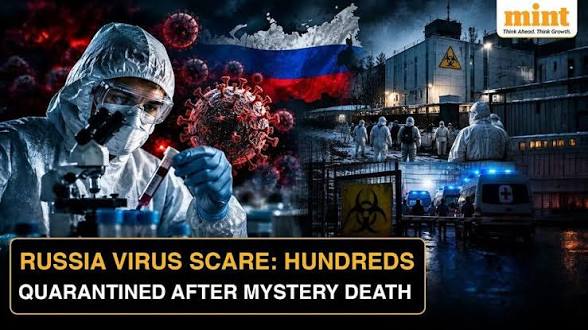
A mysterious death at a plague research facility in Siberia has triggered international concern, with the United States demanding greater transparency from Moscow as authorities investigate what happened.
A 28-year-old laboratory worker, identified by multiple reports as Darya Shipilova, died on October 2 after developing pneumonia of unknown origin. She worked at the Irkutsk Anti-Plague Research Institute of Siberia and the Far East, a facility specializing in plague and other dangerous infectious diseases.
The circumstances surrounding her illness remain unclear.
Russian authorities have repeatedly said that there is no confirmed plague outbreak. They have also reported that testing found no dangerous pathogen connected to the laboratory worker’s professional activities. However, the death prompted precautionary measures, including the monitoring of roughly 200 people who may have had contact with her.
That combination has fueled questions about whether a laboratory accident could have occurred.
At this stage, there is no confirmed evidence that a plague bacterium escaped from the laboratory. Reports of a broken test tube and a possible laboratory exposure remain unverified.
The uncertainty is precisely why Washington and the World Health Organization are seeking more information from Russia.
US Demands More Information From Moscow

The United States has been closely monitoring the Siberian incident through health and national security agencies.
US Secretary of State Marco Rubio said Russia should share more information with the international community. He stressed that a disease event involving a laboratory deserves close attention, particularly because authorities still do not have a complete picture of what happened.
The Trump administration has also indicated that Washington is prepared to help if Russia requests assistance.
President Donald Trump said the United States was watching the situation closely and offered support to Moscow while the investigation continued.
US officials have emphasized that the situation does not currently appear to pose a major threat to Americans.
Instead, the immediate concern is determining what caused the laboratory worker’s illness and whether anyone else was exposed.
That distinction is important.
The United States is not currently announcing a confirmed Russian plague outbreak. Rather, American officials are seeking information because the circumstances surrounding the death remain unresolved.
What Happened in Siberia?
The incident centers on the Irkutsk Anti-Plague Research Institute in southeastern Siberia.
The institute was established to study plague and other dangerous infectious diseases. Its work makes the death of an employee from unexplained pneumonia particularly sensitive.
According to reports, Shipilova became ill in late September and was hospitalized. She died on October 2.
Russian authorities subsequently began a public-health response.
People who had contact with the woman were identified and monitored. The hospital where she died was placed under quarantine, while additional precautionary measures were reported at medical facilities in the area.
Initial reports suggested that approximately 200 people were placed under observation.
Reuters later reported that about 60% of those initially quarantined had been released, while Russian officials continued to insist that there was no evidence of an epidemic.
The measures have nevertheless intensified international scrutiny.
Is This Really a Plague Lab Leak?
This is the central question surrounding the story.
At present, the answer is not confirmed.
Some Russian media reports have circulated claims that the laboratory worker may have been exposed to pneumonic plague following an accident involving a test tube. However, those reports have not been independently established.
Russian health authorities have rejected the suggestion that the worker’s death was caused by a pathogen associated with her work.
Rospotrebnadzor, Russia’s public-health watchdog, has described the illness as pneumonia of unknown etiology. It has also said testing did not identify microorganisms connected to the woman’s professional activities.
That leaves a significant gap between online speculation and verified evidence.
The World Health Organization has also said it needs more information.
WHO officials have acknowledged that they do not yet understand exactly what caused the woman’s illness and death. The agency has requested additional information from Russian authorities while assessing the broader public-health risk.
Therefore, describing the event as a confirmed “bioweapon” incident or confirmed “lab leak” would go beyond the available evidence.
Why Pneumonic Plague Is Causing Alarm
The concern is understandable because pneumonic plague is one of the most serious forms of plague.
Plague is caused by the bacterium Yersinia pestis. The disease naturally circulates among certain small mammals and their fleas.
There are several forms of plague, including bubonic, septicemic and pneumonic plague.
Pneumonic plague affects the lungs and can be transmitted between people through respiratory droplets during close contact. According to the CDC, transmission generally requires close exposure rather than the kind of prolonged airborne spread associated with diseases such as measles.
The WHO says plague symptoms can develop within one to seven days after infection. Untreated pneumonic plague can become rapidly fatal, making early diagnosis and treatment particularly important.
That does not mean every unexplained pneumonia case is plague.
In fact, Russian authorities have repeatedly stated that no plague has been identified among the people being monitored in connection with the Siberian case.
Plague Is Treatable
Despite the frightening history associated with plague, modern medicine has changed the picture dramatically.
Plague is treatable with antibiotics when it is recognized and treated promptly.
The CDC recommends beginning appropriate treatment as soon as plague is suspected rather than waiting for final laboratory confirmation. Several antibiotics can be used depending on the patient’s condition and clinical circumstances.
The WHO similarly says early diagnosis and antibiotic treatment can save lives.
That is one reason health authorities are using monitoring and quarantine measures in the Siberian case.
The objective is not simply to determine whether the deceased worker had plague. Officials also need to establish whether anyone else was exposed and whether additional infections are developing.
Why the Quarantine Matters
The reported quarantine of nearly 200 people has attracted significant attention.
However, quarantine does not automatically mean that those people are infected.
Public-health authorities frequently isolate or monitor people who may have been exposed to a dangerous pathogen before infection is confirmed.
In this case, Russian officials have said contacts were tested and monitored. Reports have indicated that no additional confirmed plague infections were identified among those under observation.
The hospital where the worker died was also subjected to restrictions.
Such measures can help health authorities identify potential symptoms quickly and prevent transmission if a dangerous infectious disease is eventually confirmed.
WHO Wants More Answers
The United States is not alone in asking Moscow for additional information.
The WHO has also requested more details about the incident.
Maria Van Kerkhove, WHO’s director of epidemic and pandemic preparedness and prevention, said the organization still did not know what caused the laboratory worker’s illness.
That uncertainty is significant because investigators need to understand the chain of events before they can determine the actual risk.
WHO has said the current public-health risk appears low based on available information. However, the agency continues to seek information from Russian authorities.
This creates a delicate balance.
Authorities must avoid unnecessary panic while also ensuring that a potentially serious biological incident is not dismissed prematurely.
Russia Says There Is No Epidemic
Moscow has sought to reassure the public.
Russia’s health regulator says there is no evidence of an epidemic and that extensive testing has not detected dangerous pathogens among the contacts of the deceased worker.
Reuters reported that Russian authorities said thousands of laboratory tests had been conducted and that no epidemic risk had been identified.
The Kremlin has also criticized what it considers inaccurate or alarmist reporting.
Russian officials have encouraged people to rely on information from Rospotrebnadzor rather than social-media speculation.
That response has not stopped international questions.
The reason is simple: officials in Washington and Geneva want independently verifiable information about what happened inside or around a facility that works with highly dangerous pathogens.
Why Transparency Has Become a Major Issue
The incident is unfolding against a backdrop of heightened global sensitivity toward laboratory safety.
The COVID-19 pandemic dramatically increased public attention on laboratory biosafety, pathogen research and the possibility of accidental exposure.
Consequently, even an unexplained illness involving a laboratory employee can quickly become an international concern.
US officials have made clear that they want Russia to provide accurate information quickly.
Rubio’s comments reflected that position. He said Russia should be transparent and share more information with the world.
The WHO is similarly seeking additional information.
The issue is not simply political.
If an infectious disease is genuinely suspected, international health authorities need timely information to assess risks, prepare hospitals and advise travelers and neighboring countries.
What About Bioweapon Fears?
The phrase “bioweapon” has appeared prominently in online discussions of the Siberian incident.
However, there is currently no public evidence establishing that the death was caused by a biological weapon or deliberate release.
The bacterium responsible for plague, Yersinia pestis, is considered a high-risk biological agent because of its ability to cause serious disease. The CDC classifies it as a Tier 1 Select Agent.
But that classification does not mean every plague-related incident is connected to biological warfare.
Plague exists naturally in wildlife populations in several parts of the world, including regions of Asia and parts of Russia.
The more immediate question is whether the Siberian death represents a naturally occurring infection, an unrelated respiratory illness, an occupational exposure or something else.
Investigators need laboratory evidence to answer that question.
Could Plague Spread From Person to Person?
If the illness were confirmed to be pneumonic plague, person-to-person transmission would be possible.
However, the disease does not spread in the same way as highly transmissible airborne viruses.
The CDC says pneumonic plague is transmitted through respiratory droplets and generally requires close contact.
That is why contact tracing is so important.
People who have had close contact with a confirmed pneumonic-plague patient can be monitored and, when medically appropriate, receive preventive antibiotics.
The WHO recommends protective measures for healthcare workers and rapid treatment of confirmed or suspected cases.
What Investigators Need to Determine
Several questions now sit at the center of the investigation.
First, investigators need to establish the actual cause of Shipilova’s death.
Second, they need to determine whether Yersinia pestis was present.
Third, they need to examine whether the laboratory worker had any documented exposure to a dangerous pathogen.
Fourth, investigators must determine whether anyone else developed compatible symptoms.
Finally, officials need to establish whether the incident involved a laboratory accident at all.
Until those questions are answered, claims of a confirmed Siberian plague leak remain premature.
What the US Is Watching
Washington is monitoring the situation because biological incidents can cross borders if an infectious disease spreads beyond an initial location.
US agencies have been coordinating their response and gathering information about the Russian case.
The US State Department has urged Moscow to provide accurate information quickly and openly.
Trump has also indicated that the United States is prepared to offer assistance.
At the same time, US officials have stressed that the current risk to Americans appears limited.
That assessment could change if Russia confirms pneumonic plague, identifies additional infections or discovers evidence of a laboratory exposure.
For now, the emphasis remains on surveillance and information gathering.
Why Panic Would Be Premature
The words “plague,” “laboratory” and “quarantine” naturally create fear.
Yet the available evidence does not support claims that a new global pandemic has begun.
There is no confirmed Siberian plague outbreak based on the latest information available.
There is also no confirmed evidence that a laboratory leak occurred.
What is confirmed is that a laboratory employee died after developing unexplained pneumonia, authorities placed contacts under observation, and international health officials are requesting more information.
That is serious enough to investigate.
But it is not the same as confirming a bioweapon incident or an uncontrolled outbreak.
What Happens Next?
The next stage will depend on laboratory testing and epidemiological monitoring.
Russian authorities are expected to continue tracking people who were potentially exposed.
WHO officials will continue seeking information from Moscow.
The United States is also expected to monitor developments and evaluate whether additional measures are necessary.
If Yersinia pestis is detected, investigators will need to establish whether the infection originated naturally or through occupational exposure.
If testing continues to find no evidence of plague, attention may shift toward other possible causes of the laboratory worker’s pneumonia.
Either outcome would provide valuable information.
The most important development would be a clear, independently verifiable explanation of what happened.
The Bigger Lesson for Global Biosecurity
The Siberian case demonstrates why transparency is critical when potentially dangerous pathogens are involved.
A mysterious illness at a research facility can generate international alarm even before scientists know what caused it.
Clear communication can reduce speculation.
Delayed or contradictory information can do the opposite.
For the United States, WHO and other governments, the immediate priority is therefore not simply determining whether Russia experienced a plague case.
It is establishing the facts.
Until those facts are available, the responsible position is to take the incident seriously without treating unconfirmed laboratory-leak claims as established truth.
The Siberian investigation remains active, and international officials are watching closely.
For now, the evidence points to a mysterious fatal pneumonia case and a precautionary public-health response—not a confirmed bioweapon release or confirmed plague laboratory leak.
Further testing and greater transparency from Moscow will determine whether those fears are ultimately justified.
FAQs
What happened at the Siberian plague research laboratory?
A 28-year-old laboratory worker at the Irkutsk Anti-Plague Research Institute died on October 2 after developing pneumonia of unknown origin. Russian authorities subsequently monitored people who had contact with her.
Was there a confirmed Siberian plague lab leak?
No. There is currently no confirmed evidence that plague escaped from the laboratory. Reports of a possible laboratory accident remain unverified, while Russian health authorities say testing found no pathogen connected to the worker’s professional activities.
How many people were quarantined?
Reports initially indicated that roughly 200 people were placed under medical observation or quarantine measures following the laboratory worker’s death. Russian officials later said many had been released and that no epidemic had been identified.
Did the woman die from pneumonic plague?
That has not been confirmed. Russian health authorities have described her condition as pneumonia of unknown etiology. WHO officials have said they still need more information about the cause of her illness and death.
What is pneumonic plague?
Pneumonic plague is a severe form of plague that affects the lungs. It is caused by Yersinia pestis and can spread between people through respiratory droplets during close contact.
Is plague treatable?
Yes. Plague can be treated with antibiotics, especially when treatment begins early. Health authorities recommend starting appropriate treatment promptly when plague is strongly suspected.
Why is the United States demanding answers from Russia?
US officials want Russia to provide more information about the laboratory worker’s death, the testing performed and the public-health measures that followed. Secretary of State Marco Rubio has called for greater transparency.
Is there a global plague outbreak?
There is no evidence at present of a global plague outbreak linked to this Siberian incident. WHO has assessed the current public-health risk as low based on available information.
Could this become an international health emergency?
That depends on what investigators discover. If additional cases or confirmed laboratory exposure emerge, authorities could reassess the risk. For now, officials are monitoring the situation while seeking more information.
What should people believe about the alleged bioweapon connection?
There is currently no confirmed evidence that the Siberian incident involved a biological weapon. Claims of a deliberate release or bioweapon event should be treated as unverified unless supported by credible laboratory and investigative evidence.
About the Author