Chaos Erupts Across France as 6,100 Arrested and Hundreds Injured in Student Protests
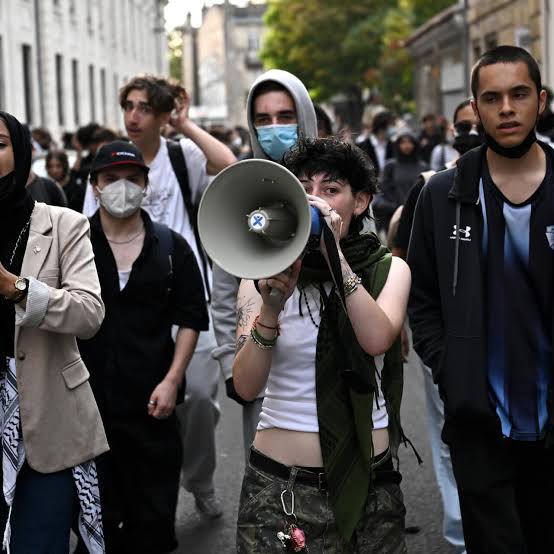
What began in September as a campaign over teacher shortages, poor school buildings and overcrowded classrooms has developed into a nationwide political crisis. By October 6, authorities reported about 6,100 arrests, most involving minors. Hundreds of students, teachers, school staff and police officers have also been injured.
The scale of the demonstrations has surprised the French government. Tens of thousands of people joined marches on Tuesday, while students continued blocking school entrances.
At the same time, clashes between protesters and police have raised serious questions about public order, the use of force and the safety of young demonstrators.
The crisis is also unfolding months before France’s next presidential election, giving the protests a much wider political significance.
How the France Student Protests Began
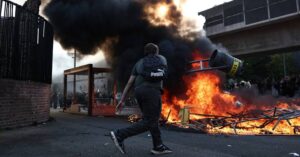
The current movement began in the Paris region in September.
Students and teachers initially protested problems inside schools. Their complaints included teacher shortages, overcrowded classrooms, poor infrastructure and difficult learning conditions.
The movement quickly spread through social media. Students in other parts of France began organizing school blockades and demonstrations.
According to reporting from Le Monde, the protests grew rapidly after beginning around a high school in Créteil. Within days, the movement expanded beyond the Paris suburbs and reached cities and smaller communities across France.
The timing also proved important.
Students returned to school facing concerns about staff shortages and deteriorating facilities. Meanwhile, France was already dealing with economic pressure, budget constraints and political uncertainty.
As a result, education grievances became a broader expression of frustration among young people.
More Than 6,100 People Arrested
The arrest figures have become one of the defining features of the crisis.
France’s Interior Ministry said around 6,100 people had been arrested since the protests began. The majority were under 18.
The Justice Ministry had previously reported 5,060 people placed in police custody. Of those, 87% were minors.
The ministry said 1,802 people were facing prosecution, including 1,483 minors. It also reported 14 pre-trial detention orders and hundreds of alternative legal measures.
These numbers demonstrate how quickly the situation has escalated.
However, an important distinction should be made between arrests, police custody and prosecutions. Being arrested does not automatically mean that a person has been convicted of a crime.
That distinction is particularly important because so many of those detained are teenagers.
Hundreds Injured During the Protests
The demonstrations have also produced a growing injury toll.
Government figures cited on October 6 indicated that at least 215 teenagers and 715 police officers had been injured.
Other reporting has provided slightly different totals depending on the date and category of injuries counted.
Le Monde, for example, reported that as of October 5, 190 students, 650 law enforcement officers and 78 school staff had been injured.
The differences reflect the rapidly changing situation and different reporting cutoffs.
Some injuries have been especially serious.
A 15-year-old in Lens suffered devastating injuries to his hand during a confrontation involving a police grenade. A teenager in Tours reportedly suffered severe eye injuries, while another young protester suffered serious facial injuries. Several incidents are now being investigated.
These cases have intensified criticism of police tactics.
Police Response Comes Under Scrutiny
French authorities have defended the need to maintain public order.
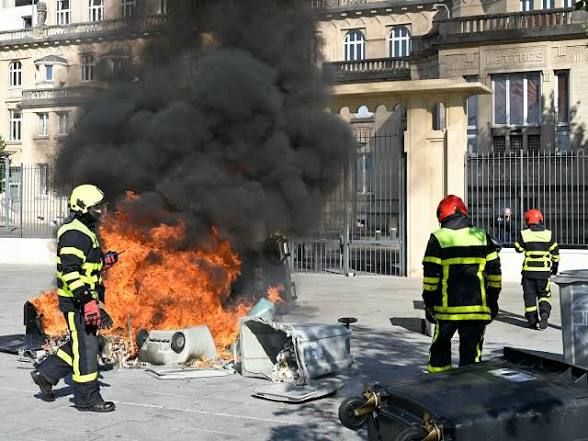
Police have faced burning objects, thrown projectiles, damaged property and attacks in some locations. The Justice Ministry said the unrest had resulted in damage to schools and urban infrastructure costing millions of euros to repair.
However, rights groups and opposition politicians have questioned whether police responses have been proportionate.
The Inspectorate General of the National Police, known as IGPN, has opened investigations into allegations involving police conduct.
Amnesty International has also expressed concern about the reported use of tear gas, batons and other crowd-control methods against young demonstrators.
The controversy is particularly sensitive because many protesters are minors.
The debate therefore goes beyond the traditional question of maintaining public order. It also concerns how authorities should respond when large numbers of teenagers participate in political demonstrations.
Students Say Their Schools Are Failing Them
Despite the violence surrounding some demonstrations, students insist that their original concerns remain the central issue.
They want more teachers and better school facilities.
Other demands include repairs to aging buildings, improvements to classroom conditions and changes to long school days.
Some students have also complained about missing teachers who are not replaced quickly enough.
In poorer areas, protesters say educational inequality is particularly visible.
Students have described problems ranging from overcrowded classrooms to deteriorating buildings. Some have also reported uncomfortable classroom temperatures and inadequate facilities.
For many protesters, the issue is therefore not simply about money.
They argue that the quality of public education directly affects their future.
Nearly 2,000 Schools Affected
The protests have caused significant disruption to the French education system.
On October 6, the High School Students Union said that nearly 1,800 high schools had been blockaded or closed for the day, although figures differed depending on how schools were classified.
The movement has affected both general and vocational schools.
Some schools have shifted to remote learning because buildings were damaged or authorities could not guarantee safe access.
Earlier in the movement, the Education Ministry reported that more than 1,000 schools had been affected by strikes or protests.
The disruption creates another dilemma for the government.
Authorities must protect students and staff while also ensuring that education continues.
Tens of Thousands Join Nationwide Demonstrations
Tuesday’s protests demonstrated that the movement is no longer confined to individual schools.
The Interior Ministry estimated that around 86,000 people demonstrated outside Paris during the morning, with additional protesters expected in the capital later in the day.
Large demonstrations were reported in cities including Marseille, Lyon, Nantes, Strasbourg and Rennes.
Parents and teachers have increasingly joined students.
Their participation has helped transform the movement from a high-school campaign into a broader debate about public services and France’s future.
Teachers’ unions have expressed solidarity with students while also calling for restraint.
That support could become important if the demonstrations continue.
Government Promises Action
Prime Minister Sébastien Lecornu has attempted to address the underlying grievances.
The government has identified several issues for action, including replacing absent teachers, reviewing school schedules and repairing aging school buildings.
The Education Ministry has also launched a national consultation for high school students.
The consultation runs from October 5 through October 23 and invites students to anonymously explain their problems and suggest changes to the education system.
The initiative could provide the government with a way to shift the discussion from street protests toward institutional dialogue.
However, protesters are demanding concrete action rather than promises.
Political Tensions Add Another Layer
The France student protests are taking place at an extremely sensitive political moment.
France is preparing for the 2027 presidential election, and youth dissatisfaction could become an important political issue.
The government has accused the radical-left France Unbowed party, or LFI, of exploiting the protests.
LFI leaders strongly support the students’ demands but reject claims that they created the movement.
Jean-Luc Mélenchon has backed the protesters while calling for non-violence.
The political dispute has created a second battle alongside the street demonstrations.
The government says maintaining order is necessary.
Opposition figures argue that excessive policing could make the situation worse.
Why the Protests Are Growing
Several factors explain the rapid growth of the movement.
1. Education Problems
Teacher shortages and deteriorating facilities are at the heart of the protests.
Students want reliable teaching and better environments in which to study.
2. Economic Anxiety
Young people are entering adulthood during a period of economic uncertainty.
Concerns about employment, housing and living costs have added to frustration.
3. Political Distrust
Many students believe politicians have failed to listen to them.
The protests therefore represent more than a demand for school repairs.
They also reflect a broader feeling that young people have limited influence over national decisions.
4. Social Media
Videos of protests and clashes have spread rapidly online.
That has helped students in different cities see themselves as part of the same movement.
At the same time, viral footage of violence can increase tensions and encourage further confrontation.
Violence Risks Overshadowing the Students’ Demands
One of the biggest challenges facing the movement is the growing gap between its original demands and the scenes of unrest.
Many demonstrations remain peaceful.
However, fires, property damage and clashes with police have dominated some news coverage.
The French Justice Ministry said 24 schools had been burned or ransacked during the unrest.
That creates a difficult situation for student leaders.
If violence continues, the government may gain stronger public support for tougher policing.
On the other hand, if police actions result in more serious injuries, public anger could increase.
Either scenario could make negotiations harder.
The Government Faces a Difficult Balancing Act
French authorities now have to solve two problems at once.
First, they must protect schools, students, teachers and police officers.
Second, they must address the educational problems that helped create the protests.
A purely security-focused response could leave the original grievances unresolved.
However, ignoring violence and property destruction could undermine public confidence.
The government’s new consultation process suggests that officials recognize the need for dialogue.
Still, the protests show that many young people want visible results.
What Happens Next?
The future of the movement remains uncertain.
The protests could lose momentum if the government delivers meaningful reforms.
Alternatively, further arrests or serious injuries could fuel another wave of demonstrations.
The involvement of parents, teachers and trade unions also means that the movement could expand beyond high school students.
Political parties are watching closely.
With the 2027 presidential election approaching, youth anger could become an important campaign issue.
For now, the most immediate concern is preventing further injuries.
Both protesters and police face pressure to avoid escalation.
France Student Protests Could Become a Defining Political Issue
The current unrest is already one of France’s most significant youth protest movements in years.
The numbers are striking: thousands of arrests, hundreds of injuries, widespread school disruption and tens of thousands of people taking part in demonstrations.
Yet the most important question may be what happens after the streets become quiet.
Students are asking whether their schools will receive more teachers, better buildings and greater investment.
The government must now demonstrate that those concerns can be addressed without allowing violence to dominate the national debate.
France’s response could shape more than the remainder of the school year.
It could influence how an entire generation views its government and political institutions.
For that reason, the France student protests are no longer simply an education dispute.
They have become a national test of policing, public spending, political leadership and France’s relationship with its youngest citizens.
FAQs About France Student Protests
Why are students protesting in France?
Students are protesting poor school conditions, teacher shortages, overcrowded classrooms, inadequate infrastructure and concerns about the quality of education.
How many people have been arrested in the France student protests?
French authorities reported around 6,100 arrests since the protests began, with most of those arrested being minors.
How many people have been injured?
Government figures cited on October 6 reported 215 teenagers and 715 police officers injured. Separate reporting has produced somewhat different totals depending on the date and categories included.
When did the protests begin?
The current wave began in the Paris region in September 2026 before spreading rapidly to other parts of France.
Are the France student protests peaceful?
Many demonstrations have been peaceful, but some have involved fires, property damage, thrown objects and clashes with police.
Are most people arrested minors?
Yes. France’s Justice Ministry reported that 87% of the 5,060 people placed in police custody were minors in its October 5 update.
What is the French government doing?
The government has promised measures addressing teacher shortages, school infrastructure and school schedules. The Education Ministry has also opened a national consultation allowing students to submit their concerns and proposals.
Could the protests affect French politics?
Yes. The demonstrations are taking place ahead of the 2027 presidential election and have already become part of a wider political debate over education, policing, public spending and youth dissatisfaction.
What is the biggest concern now?
The immediate concern is preventing further violence and serious injuries while addressing the educational problems that sparked the movement. Both the government and protesters face pressure to prevent further escalation.
How useful was this post?
Click on a star to rate it!
Average rating 0 / 5. Vote count: 0
No votes so far! Be the first to rate this post.
About the Author

usa5911.com
Administrator
Hi, I’m Gurdeep Singh, a professional content writer from India with over 3 years of experience in the field. I specialize in covering U.S. politics, delivering timely and engaging content tailored specifically for an American audience. Along with my dedicated team, we track and report on all the latest political trends, news, and in-depth analysis shaping the United States today. Our goal is to provide clear, factual, and compelling content that keeps readers informed and engaged with the ever-changing political landscape.